
Last updated: October 3, 2026
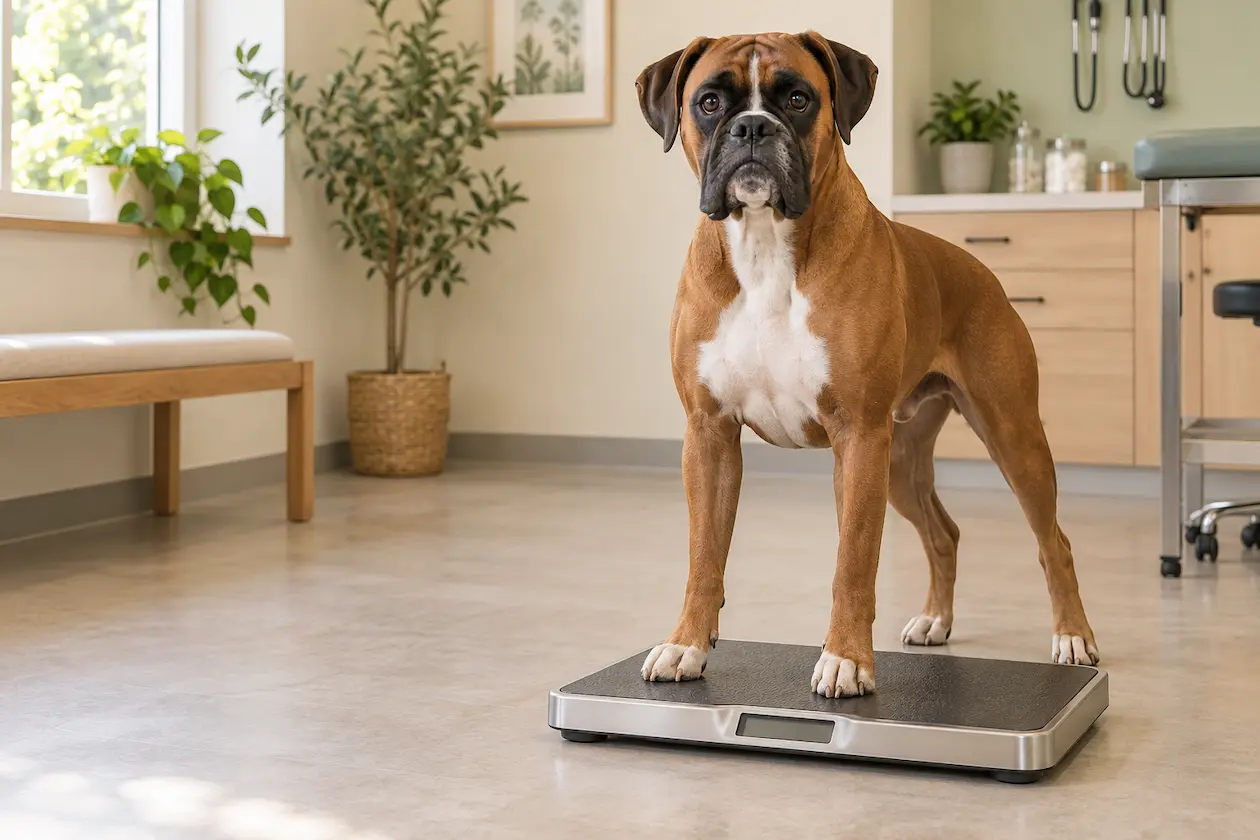
How To Use
Enter your Boxer's sex, age, and current weight to check if they are within the healthy weight range for their stage of life.
Quick Steps
- 1 Select your Boxer's Sex.
- 2 Select their Age.
- 3 Enter their Current Weight in pounds.
- 4 Click Calculate to see the weight assessment and full growth chart.
Boxer Weight Calculator
Fill Out The Fields Below
About Boxer Weight
Boxers are a medium-to-large, muscular breed with a distinctive square muzzle, deep chest, and athletic build. They are predisposed to heart disease (aortic stenosis and Boxer cardiomyopathy), bloat (GDV), hip dysplasia, and cancer — all conditions significantly worsened by excess body weight. Keeping a Boxer lean is one of the most impactful things you can do for their health and longevity.
Key Weight Characteristics
- • Adult males 65–80 lbs; females 50–65 lbs — muscular and athletic
- • Full height by 18 months; fills out with muscle until 2–3 years
- • Males noticeably larger and more muscular than females
- • Predisposed to heart disease (aortic stenosis, ARVC), bloat, hip dysplasia, and cancer
Body Condition Check
- ✓ You should be able to feel each rib with light finger pressure through a thin layer of fat — Boxers are naturally lean and muscular.
- ✓ From above, a clear waist should be visible behind the ribs — a barrel or rounded shape indicates excess weight.
- ✓ From the side, the belly should tuck up noticeably — a straight or sagging underline is a warning sign.
- ✓ Boxers carry a lot of muscle, so they often weigh more than they look — use BCS, not just the scale.
Boxer Weight: Healthy Ranges for Males and Females
Boxers are a medium-to-large, muscular breed with a distinctive square muzzle, deep chest, and powerful athletic build. Adult male Boxers weigh 65–80 lbs (29–36 kg) and females weigh 50–65 lbs (23–29 kg) per AKC breed standards. Males stand 23–25 inches at the shoulder; females 21.5–23.5 inches.
Despite their solid, muscular build, Boxers should look lean and athletic — not bulky or round. The breed's deep chest and narrow waist give them a distinctly tucked-up profile when they're at a healthy weight. Because Boxers carry a lot of muscle relative to their frame, they often weigh more than they appear to. A Boxer that looks "thin" may actually be at the perfect weight.
Weight management is especially important for Boxers because the breed is predisposed to heart disease (aortic stenosis, dilated cardiomyopathy), bloat (GDV), hip dysplasia, and cancer — all conditions that excess body weight worsens significantly. Keeping your Boxer lean is one of the single most impactful things you can do for their health and longevity.
Boxer Weight Chart by Age: Puppy to Adult
Boxers grow rapidly during their first year, gaining an average of 5–10 lbs per month during the fastest growth phase (3–8 months). Males are noticeably heavier than females from puppyhood onward. The table below shows healthy weight ranges by age and sex based on AKC breed data and veterinary growth references.
| Age | Male (lbs) | Female (lbs) |
|---|---|---|
| 8 weeks | 8 – 12 | 7 – 10 |
| 3 months | 16 – 22 | 14 – 19 |
| 4 months | 23 – 32 | 20 – 28 |
| 5 months | 30 – 40 | 26 – 35 |
| 6 months | 41 – 55 | 35 – 48 |
| 8 months | 50 – 64 | 43 – 56 |
| 10 months | 55 – 70 | 48 – 60 |
| 12 months (1 year) | 58 – 73 | 50 – 62 |
| 18 months | 60 – 77 | 50 – 64 |
| Adult (2+ years) | 65 – 80 | 50 – 65 |
Sources: AKC breed standard, veterinary growth references. Individual Boxers may fall slightly outside these ranges.
Boxer growth curve — shaded areas show healthy weight range; solid line shows breed average. Data: AKC breed standards.
Boxer Growth Chart: When Is a Boxer Fully Grown?
Boxers have a two-phase growth pattern. They reach their full adult height by approximately 18 months, but continue filling out with muscle mass until 2–3 years of age. This is especially true for males, who can add significant chest, shoulder, and hindquarter muscle between 18 months and 3 years.
During the rapid growth phase (3–8 months), Boxer puppies can gain 5–10 lbs per month. Growth slows considerably after 10–12 months, transitioning from height gain to muscle development. A lean, gangly 12-month-old Boxer is perfectly normal — don't overfeed to try to "fill them out" faster, as excess weight during skeletal development increases the risk of hip dysplasia and other joint problems.
Key milestones: At 6 months a Boxer is roughly 60–70% of their adult weight. At 12 months they're around 85–90%. Final adult weight is usually reached between 18 and 24 months, with some males continuing to add muscle until 3 years.
Is My Boxer Overweight? Body Condition Score Guide
The number on the scale only tells part of the story. A Body Condition Score (BCS) is a hands-on assessment that veterinarians use to evaluate whether a dog's body fat is in a healthy range. For Boxers — a breed that naturally carries significant muscle — BCS is especially useful because a muscular Boxer may weigh more than the breed average while still being at a perfectly healthy body composition.
Underweight (BCS 1–3)
- Ribs, spine, and hip bones easily visible
- Little or no fat covering over the ribcage
- Prominent waist and deep abdominal tuck
- Visible loss of muscle mass on shoulders and hips
Ideal (BCS 4–5)
- Ribs easily felt with light finger pressure
- Clear waist visible from above behind the ribs
- Noticeable belly tuck when viewed from the side
- Well-muscled shoulders, chest, and hindquarters
Overweight (BCS 6–9)
- Ribs difficult to feel under a layer of fat
- No visible waist — barrel or rounded shape from above
- Little or no belly tuck from the side
- Fat deposits along the spine, neck, and base of tail
Use the checklist above to assess your Boxer's body condition at home.
Boxer Health Risks and Weight: Heart Disease, Bloat & Hip Dysplasia
Boxers face several serious health conditions where weight plays a direct role:
Heart disease is the most significant health concern for Boxers. The breed is predisposed to aortic stenosis (a narrowing of the aortic valve) and Boxer cardiomyopathy (also called arrhythmogenic right ventricular cardiomyopathy, or ARVC). Excess body weight forces the heart to work harder with every beat. For a breed already prone to cardiac issues, even a few extra pounds can meaningfully increase cardiac workload and accelerate disease progression.
Bloat (GDV) — gastric dilatation-volvulus — is a life-threatening emergency that Boxers are at elevated risk for due to their deep, narrow chest. The stomach fills with gas and can twist on itself, cutting off blood supply. Overweight Boxers may face higher GDV risk. Prevention tips: feed two smaller meals instead of one large meal, avoid vigorous exercise within an hour of eating, use a slow-feeder bowl, and discuss preventive gastropexy surgery with your vet.
Hip dysplasia affects roughly 12% of Boxers evaluated by the OFA. It's a condition where the hip socket doesn't fully cover the ball portion of the thigh bone, leading to pain, lameness, and arthritis. Every extra pound of body weight increases the mechanical load on already-vulnerable hip joints. Keeping your Boxer lean — especially during the growth phase — is one of the most effective ways to slow joint deterioration.
Cancer is unfortunately common in Boxers, with the breed having higher rates of mast cell tumours, lymphoma, and brain tumours compared to other breeds. While the relationship between weight and cancer in dogs is still being studied, research in both humans and animals links chronic inflammation from excess body fat to increased cancer risk. Maintaining a healthy weight supports a stronger immune system.
Boxer health risk summary — excess weight worsens all four major breed-specific conditions.
Boxer Lifespan: How Long Do Boxers Live?
Boxers have an average lifespan of 10–12 years, which is slightly below average for a breed their size. Some healthy, well-cared-for Boxers reach 13–14 years, while those with serious cardiac conditions may have shorter lives. Females tend to live slightly longer than males on average.
Weight is one of the most controllable factors influencing how long your Boxer lives. A landmark Purina lifespan study showed that dogs maintained at ideal body condition lived 1.8–2.5 years longer than their overweight littermates. For a breed with a 10–12 year lifespan, that's a potential 15–25% increase in life expectancy simply from maintaining a healthy weight.
The connection is especially strong for Boxers because of their predisposition to heart disease. An overweight Boxer's heart works harder with every beat, accelerating wear on an organ the breed is already genetically vulnerable in. Lean Boxers also show lower rates of arthritis, cancer, and metabolic disease — all of which affect quality of life in their senior years.
Maintaining a healthy weight can add 1.8–2.5 years to your Boxer's life.
Boxer Feeding Guide: How Much to Feed by Age
Boxers are an active, muscular breed with moderate-to-high caloric needs. However, they can gain weight quickly if overfed or under-exercised. The right amount depends on your Boxer's age, weight, activity level, and whether they're spayed/neutered.
Puppies (8 weeks – 12 months): Feed a high-quality large-breed puppy food. Puppies need 3–4 meals per day until 4 months, then 3 meals per day until 12 months. Large-breed puppy formulas have controlled calcium and phosphorus ratios to support steady bone growth without promoting too-rapid weight gain.
Adults (1–7 years): Most adult Boxers need approximately 1,500–2,200 calories per day. Very active dogs or those in working roles may need up to 2,500 calories. Feed two meals per day (not one large meal) to reduce bloat risk. A 65-lb adult Boxer at moderate activity typically needs about 3–4 cups of high-quality kibble per day, split between morning and evening.
Seniors (7+ years): Metabolism slows with age. Senior Boxers typically need 15–20% fewer calories than active adults. Switch to a senior formula with joint-support ingredients (glucosamine, chondroitin, omega-3 fatty acids). Continue feeding twice daily and monitor weight monthly — senior Boxers can gain weight quickly as exercise naturally decreases.
After neutering/spaying: Reduce daily calories by approximately 20% and monitor weight closely for the first 3–6 months, as metabolic rate drops after desexing.
Boxer feeding guide — adjust portions based on your dog's activity level and body condition.
Boxer Exercise Needs: How Much Exercise Does a Boxer Need?
Boxers are a high-energy, athletic breed originally developed for working roles. They need 1–2 hours of exercise daily to stay physically and mentally healthy. Without adequate exercise, Boxers are prone to weight gain, destructive behaviour, and anxiety.
Puppies (under 12 months): Follow the 5-minutes-per-month-of-age rule for structured exercise, twice daily. A 4-month-old Boxer should get about 20 minutes of walking or controlled play per session. Avoid high-impact activities like jumping, stairs, and long runs until growth plates close (around 12–18 months) to protect developing joints.
Adults (1–7 years): Aim for 60–90 minutes of vigorous activity daily. Boxers excel at fetch, running, hiking, and agility. They're playful and love interactive games. Break exercise into two sessions — morning and evening — and avoid exercise immediately after meals to reduce bloat risk. Boxers are brachycephalic (short-nosed), so watch for overheating in hot weather and provide water breaks.
Seniors (7+ years): Reduce intensity but maintain daily activity. Two 20–30 minute walks plus gentle play keeps senior Boxers mobile without stressing ageing joints. Swimming is excellent low-impact exercise for older Boxers with arthritis or hip dysplasia.
When to See a Vet About Your Boxer's Weight
While gradual weight changes with age are normal, certain patterns warrant a vet visit:
Unexplained weight loss: If your Boxer is losing weight despite eating normally, it could indicate heart disease, cancer, intestinal parasites, diabetes, or thyroid dysfunction. Boxers are particularly prone to cardiac conditions that can cause weight loss as the disease progresses.
Rapid weight gain: Sudden weight gain that isn't explained by increased food intake may signal hypothyroidism, Cushing's disease, or fluid retention from heart problems. Don't assume weight gain is simply from overfeeding.
Puppy growth concerns: If your Boxer puppy's weight deviates significantly from the growth chart ranges above — either much heavier or much lighter than expected — discuss it with your vet. Steady, proportional growth is the goal.
BCS above 7: If your Boxer scores above 7 on the 9-point body condition scale, work with your vet on a structured weight loss plan rather than simply cutting food — crash diets can be dangerous, especially for breeds prone to heart conditions.
Exercise intolerance: If your Boxer becomes winded or reluctant to exercise at a level that was previously comfortable, this could be a weight issue or — critically for this breed — an early sign of heart disease. Get a cardiac evaluation.
Boxer Weight Quick Reference
| Breed | Boxer |
| Adult Male Weight | 65–80 lbs (29–36 kg) |
| Adult Female Weight | 50–65 lbs (23–29 kg) |
| Height (Male) | 23–25 inches |
| Height (Female) | 21.5–23.5 inches |
| Fully Grown | 18 months (height); 2–3 years (muscle mass) |
| Lifespan | 10–12 years |
| Daily Calories (Adult) | 1,500–2,200 kcal |
| Daily Exercise | 1–2 hours |
| Key Health Risks | Heart disease, bloat (GDV), hip dysplasia, cancer |
Boxers and Labradors share similar weight ranges; Pit Bulls are typically lighter and more compact.
To work out how many calories your Boxer needs each day, use our Dog Calorie Calculator, and for daily portions our Dog Feeding Calculator.
FAQs
Frequently Asked Questions
What is the ideal weight for a Boxer?
Adult male Boxers typically weigh 65–80 lbs (29–36 kg) and adult females weigh 50–65 lbs (23–29 kg) per AKC breed standards. Within these ranges, ideal weight depends on your individual dog's frame size, muscle mass, and body condition score — a Boxer at the lower end of the range is not necessarily underweight if they have a lean, athletic build.
How much should a Boxer weigh at 6 months?
At 6 months, a male Boxer typically weighs 41–55 lbs and a female weighs 35–48 lbs. Boxers are in the middle of their fastest growth phase at this age. They should look lean and gangly — don't try to bulk up a Boxer puppy. Excess weight during growth puts dangerous stress on developing joints.
When is a Boxer fully grown?
Boxers reach their full adult height by about 18 months, but continue filling out with muscle until 2–3 years of age. Males especially can add significant chest and shoulder mass between 18 months and 3 years. Don't mistake a lean 18-month-old for underweight — they're still maturing.
How do I know if my Boxer is overweight?
Run your hands along your Boxer's ribcage — you should be able to feel each rib with light pressure through a thin layer of fat. From above, a clear waist should be visible behind the ribs. From the side, the belly should tuck up noticeably. If the ribs are hard to find, the waist is absent, or the belly hangs level with the chest, your Boxer is carrying excess weight.
How much should I feed my Boxer?
Most adult Boxers need 1,500–2,200 calories per day depending on their weight, age, and activity level. Active adults may need closer to 2,200 calories, while seniors or less active dogs need around 1,500. Divide daily food into two meals to reduce bloat risk. Puppies need 3–4 smaller meals per day.
How long do Boxers live?
Boxers have an average lifespan of 10–12 years. Some well-cared-for Boxers reach 13–14 years. Maintaining a healthy weight is one of the most impactful things you can do — studies show that dogs kept at ideal body condition live 1.8–2.5 years longer than overweight dogs. Boxers are particularly prone to heart disease and cancer, and excess weight worsens both.
Are Boxers prone to hip dysplasia?
Yes. Boxers are moderately prone to hip dysplasia, a condition where the hip joint doesn't fit together properly, causing pain and arthritis. The Orthopedic Foundation for Animals (OFA) reports that roughly 12% of Boxers evaluated show hip dysplasia. Excess weight significantly accelerates joint deterioration — keeping your Boxer lean is one of the best preventive measures.
What is bloat (GDV) and why are Boxers at risk?
Gastric dilatation-volvulus (GDV), commonly called bloat, is a life-threatening emergency where the stomach fills with gas and twists on itself. Boxers are a deep-chested breed, which makes them one of the higher-risk breeds for GDV. Feed two smaller meals instead of one large one, avoid vigorous exercise within an hour of eating, and discuss preventive gastropexy with your vet.
Why is my Boxer so skinny?
Boxers are naturally lean, muscular dogs — a young Boxer under 2 years often looks leggy and thin, which is normal. However, if ribs, spine, and hip bones are prominently visible with no muscle covering, or if your adult Boxer is losing weight unexpectedly, consult your vet. Intestinal parasites, thyroid issues, and heart disease can all cause weight loss in Boxers.
How much exercise does a Boxer need?
Adult Boxers need 1–2 hours of exercise daily. They're an athletic, high-energy breed that thrives on vigorous activity like running, fetch, and play sessions. Puppies should have shorter, controlled exercise to protect growing joints — a good rule is 5 minutes of structured exercise per month of age, twice daily. Senior Boxers still need daily walks but at a gentler pace.
When should I neuter or spay my Boxer?
Most veterinary research suggests waiting until a Boxer is at least 12–18 months old before neutering or spaying. Early desexing (before 12 months) has been linked to increased risk of joint disorders and certain cancers in large breeds. Discuss the optimal timing with your vet based on your individual dog's health and development.
What is a Boxer's weight at 8 weeks?
At 8 weeks, a male Boxer puppy typically weighs 8–12 lbs and a female weighs 7–10 lbs. Puppies from larger parents will be at the higher end of this range. Boxer puppies grow rapidly — they can gain 5–10 lbs per month during the first 6 months.
Do Boxers gain weight after neutering?
Neutering can reduce a Boxer's metabolic rate by roughly 20–30%, making weight gain more likely if feeding portions aren't adjusted. After neutering, reduce daily calories by about 20% and monitor weight closely for the first 3–6 months. Regular weigh-ins help catch any creeping weight gain early.
What is a Boxador and how much do they weigh?
A Boxador is a Boxer-Labrador Retriever mix. They typically weigh 50–90 lbs as adults, depending on which parent they take after more. Like both parent breeds, Boxadors can be prone to obesity and joint issues, so weight management is important.
Other Calculators for Dogs
Dog Calorie Calculator by Breed — Free Daily Calorie & Feeding Tool
Free dog calorie calculator by breed. Find out exactly how many calories your dog needs per day by weight, breed, age, and activity level. Get instant kcal and feeding portions for Labradors, German Shepherds, Chihuahuas, and every breed in between. Try it now.

Puppy Calorie Calculator | Puppy Nutrition Calculator by Breed - Free Tool
Free puppy calorie calculator and nutrition tool. Calculate your puppy
Senior Dog Calorie Calculator - Free Daily Calorie Tool
Free senior dog calorie calculator. Calculate your older dog\
Other Pet Weight Calculators
Australian Shepherd Weight Calculator | Is Your Aussie a Healthy Weight? | The Pet Calculator
Check your Australian Shepherd\
Beagle Weight Calculator | Healthy Weight for 13-Inch & 15-Inch Beagles
Free Beagle weight calculator — check your Beagle\
Bearded Dragon Weight Chart by Age | Free Weight Calculator
Free bearded dragon weight calculator plus a bearded dragon weight chart by age. Check if your bearded dragon is a healthy weight, from hatchling to adult, with growth milestones and care tips.
Free dog printables
Keep these dog care guides handy
A rotating selection of practical dog guides chosen from our free printable library.Raw Feeding Reference Card
A printable BARF and 80/10/10 portion guide.
Dog Budget Checklist
Plan monthly, annual, and one-time dog costs.
Dog Quality of Life Checklist
Track the HHHHHMM quality-of-life measures.