
Last updated: October 3, 2026
Coping & Understanding Grief
How to Cope With Pet Loss
Losing a pet can break your heart in a way that surprises even you. There is no perfect way to grieve, but there are gentle, practical things that can help you carry it.

Whatever you’re feeling right now, you’re not alone. There is no timeline you’re failing to keep and no “right” way to do this. Take what helps from the gentle ideas below, and leave the rest.
Gentle ways to cope
Let yourself feel it
Grief is love with nowhere to go. Trying to push the pain away usually makes it louder, so allow it. Cry when you need to, say your pet’s name out loud, and talk about them. The waves of sadness are a sign of how much your companion mattered.
Take care of the basics
In the early days, set the bar low: drink water, eat small meals even without an appetite, and rest when your body lets you. Step outside for a few minutes if you can. You do not need to be productive right now. You only need to get through today.
Find ways to remember
Give your grief somewhere to go. Write your pet a letter, light a candle, or frame a favorite photo. Writing down the small moments can be deeply healing.
Try a pet grief journal →Lean on people who understand
Grief is lighter when it is shared. Reach out to friends who get it, and look beyond your circle when you need to. It is okay to step back from anyone who minimizes your loss.
Find a support group →Move at your own pace
Grief rarely moves in a straight line. Some days feel lighter and others knock you flat, often without warning. That is normal, and the sharpest pain usually softens with time.
Understand the stages of grief →Be patient with healing
Healing is slow and uneven. Forgive yourself for the hard days, and remember there is no schedule you are failing to keep. Carrying the loss gently is its own kind of progress.
How long does grief last? →Knowing when to ask for more support
Reaching out for help is a sign of strength. If your grief feels unbearable, if you cannot function for a long stretch, or if you notice signs that your sadness is tipping into depression, please talk to your doctor or a grief counselor. You deserve care too. If you are ever in crisis or having thoughts of harming yourself, contact a mental health professional or a local crisis line right away.
This article offers general support and is not a substitute for professional medical or mental health advice.
Coping With Pet Loss: Common Questions
Gentle answers to questions many grieving owners ask.
How do I deal with the first few days after losing my pet?
Be gentle with yourself and lower your expectations. In the early days, focus on the basics: drink water, eat something small, and rest when you can. Let yourself cry. Tell one or two people who care so you are not carrying it entirely alone. You do not have to make any big decisions right away.
Is it healthy to keep my pet’s things, or should I put them away?
There is no right answer, only what helps you. Some people find comfort in keeping a collar or bed nearby, while others need to put things away for a while. You can box items up without throwing them out, and revisit them when you feel ready. Let your comfort, not pressure from others, guide the timing.
How do I cope when other people don’t understand?
Seek out the people and spaces that do understand. Pet loss support groups, online communities, and grief hotlines exist precisely because this grief is real and deserves support. You are allowed to step back from people who minimize your loss and lean toward those who honor it.
When should I reach out for extra help?
Consider reaching out to a grief counselor or your doctor if the pain feels unbearable, if you cannot function for an extended period, or if you have thoughts of harming yourself. These are signs you deserve support, not signs of weakness. If you are in crisis, please contact a mental health professional or a local crisis line right away.
You don’t have to do this alone
Explore gentle tools and support to help you through the days ahead.
Free printable support
Choose the resource that helps today
Each book is a free, 10-page A4 PDF designed to print and complete by hand.Pet Grief Journal
Ten gentle pages for memories, grief waves, letters, support, and carrying the bond forward.
Complete Pet Loss Guide
Compassionate guidance for grief reactions, children, surviving pets, aftercare, and support.
What to Do After a Pet Dies
A calm checklist for the first hours, provider questions, aftercare, records, and memorial choices.
Printable companion · Printable PDF
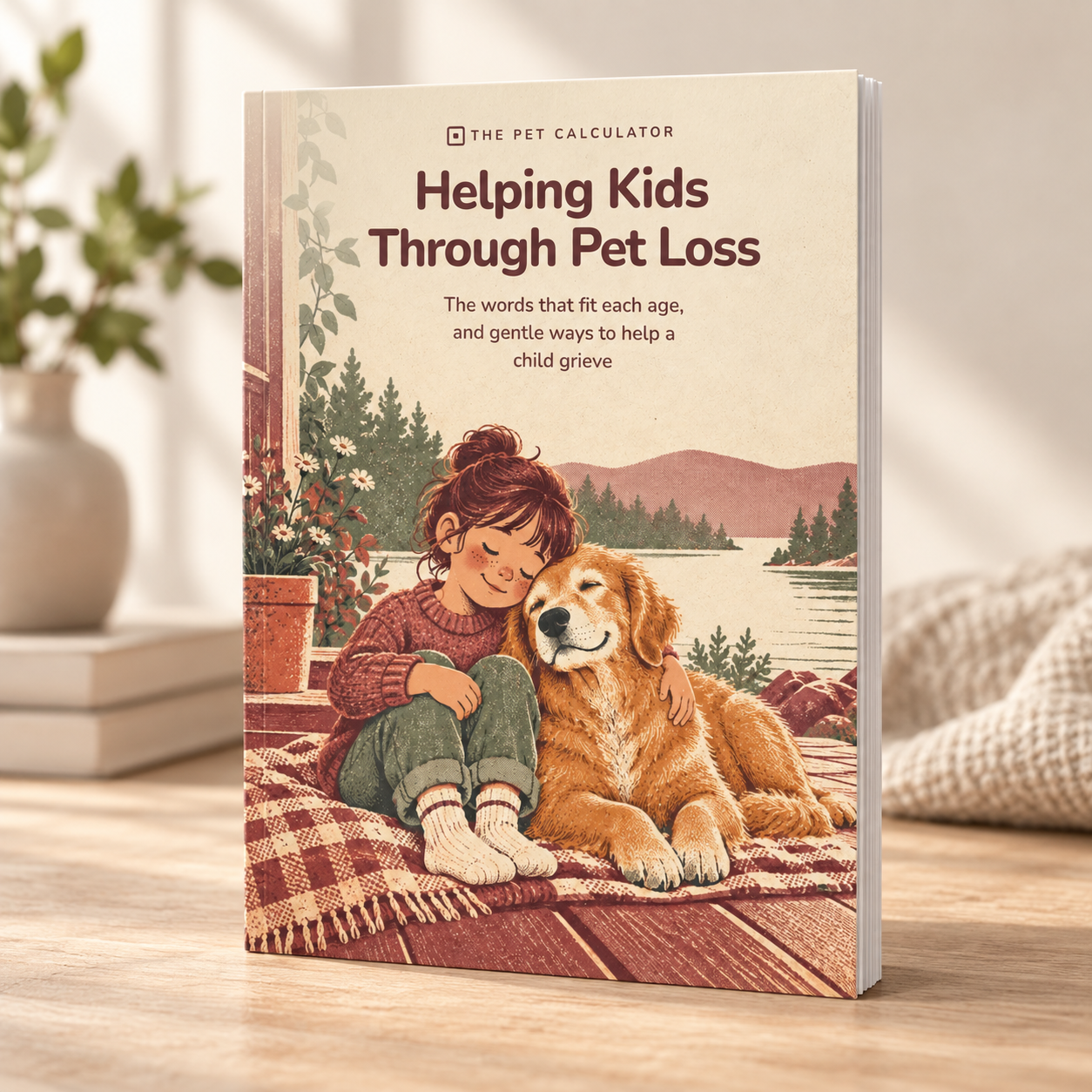
Helping Kids Through Pet Loss
A gentle memory book for children and families.
A draw-and-write keepsake that helps children remember a beloved pet, express difficult feelings, and move through grief at their own pace.