
Last updated: October 3, 2026
How To Use
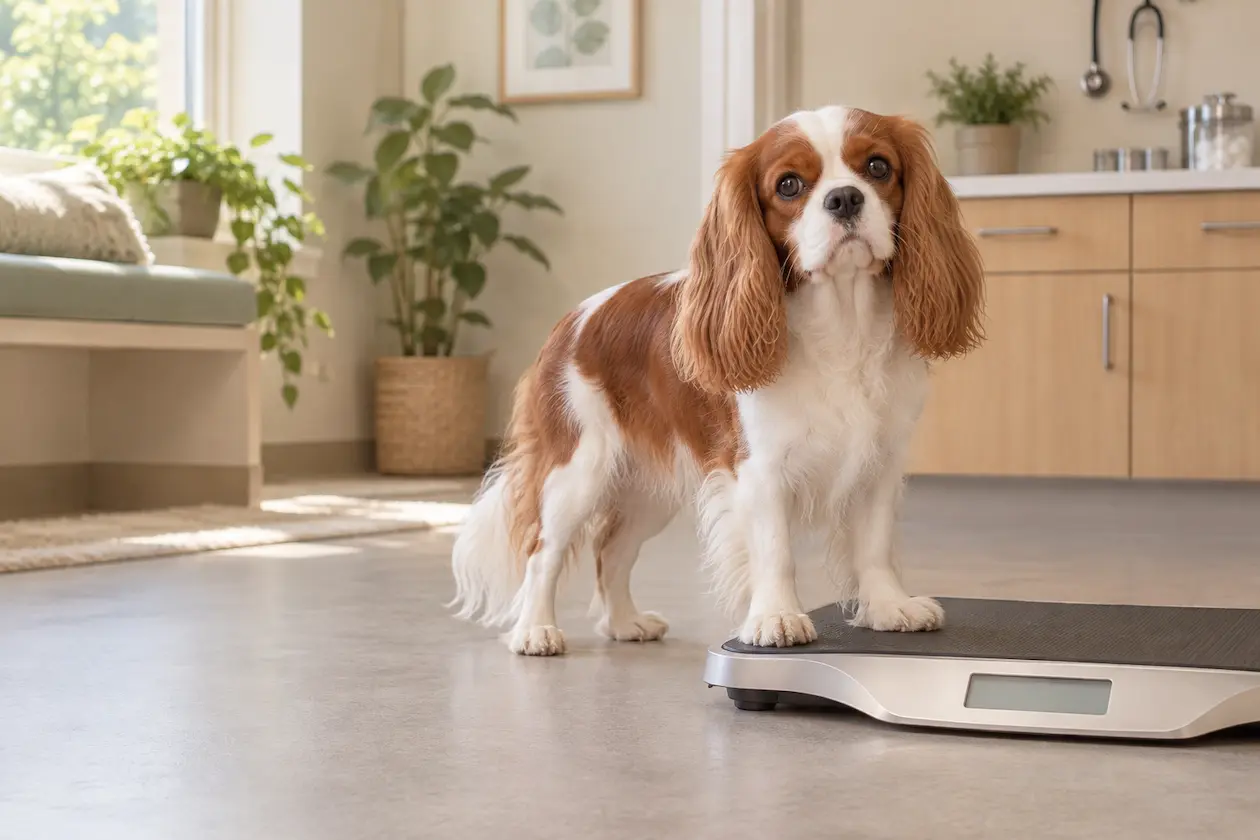
Enter your Cavalier King Charles Spaniel's sex, age, and current weight to check if they are within the healthy weight range for their stage of life.
Quick Steps
- 1 Select your Cavalier King Charles Spaniel's Sex.
- 2 Select their Age.
- 3 Enter their Current Weight in pounds.
- 4 Click Calculate to see the weight assessment and full growth chart.
Cavalier King Charles Spaniel Weight Calculator
Fill Out The Fields Below
About Cavalier King Charles Spaniel Weight
The Cavalier King Charles Spaniel is a gentle, affectionate toy breed bred for companionship. Known as the "velcro dog," Cavaliers thrive on human closeness and are happiest when beside their person. Their silky coat, sweet temperament, and adaptable nature make them beloved family dogs — but the breed carries a significant inherited health burden, particularly mitral valve disease (MVD), which affects the majority of Cavaliers by age 10.
Key Weight Characteristics
- • Fully grown at 12–18 months; adult weight 12–18 lbs for both sexes
- • Silky medium-length coat — requires brushing 3–4 times per week to prevent matting
- • Mitral valve disease (MVD) affects over 50% of Cavaliers by age 5 and nearly all by age 10
- • Syringomyelia — a neurological condition caused by skull malformation — affects an estimated 25–70% of Cavaliers
Body Condition Check
- ✓ The silky coat can hide weight changes — run your hands firmly along the ribcage to assess fat cover.
- ✓ Ribs should be easily felt with light pressure but not visible through the coat.
- ✓ From above, a subtle waist should be visible behind the ribcage.
- ✓ Cavaliers prone to MVD should be kept lean — every extra pound increases cardiac workload.
Cavalier King Charles Spaniel Temperament
The Cavalier King Charles Spaniel is widely regarded as one of the most affectionate and adaptable dog breeds in existence. Often called the "velcro dog," Cavaliers bond intensely with their people and are happiest when physically close — following you from room to room, settling on your lap, and leaning against your leg while you work. This isn't just a personality quirk; it reflects centuries of selective breeding for human companionship in the court of King Charles II of England.
Cavaliers are gentle, patient, and almost universally friendly — with children, strangers, other dogs, and cats. They rarely show aggression and are not territorial. Their calm disposition combined with their size makes them one of the most popular therapy dogs. However, this extreme social nature has a flip side: Cavaliers can struggle significantly with being left alone. Separation anxiety is common in the breed — expect restlessness, vocalization, or destructive behavior if your Cavalier is regularly alone for more than 4–5 hours.
Energy-wise, Cavaliers sit comfortably in the middle. They enjoy a 30–45 minute walk and a play session, then they're perfectly content to nap beside you for the rest of the day. They adapt to both apartment living and homes with large yards. They do well with both active families and quieter households — what they cannot tolerate is being ignored or isolated.
What first-time Cavalier owners sometimes don't expect: These dogs are emotionally perceptive. They pick up on your mood and mirror it. If you're anxious, your Cavalier will be anxious. If you're calm and relaxed, they settle quickly. This emotional attunement makes them wonderful companions but means they need owners who can provide a stable, warm home environment.
Healthy Weight Ranges for Cavalier King Charles Spaniels
The AKC breed standard calls for 12–18 lbs (5.4–8.2 kg) for both males and females, making the Cavalier a true toy breed on the larger end of the category. In practice, males typically run slightly heavier (13–18 lbs) and females slightly lighter (12–17 lbs).
Cavalier King Charles Spaniel healthy weight ranges per AKC breed standard.
| Sex | Healthy Range (lbs) | Healthy Range (kg) | Ideal Target |
|---|---|---|---|
| Male | 13–18 lbs | 5.9–8.2 kg | 14–16 lbs (6.4–7.3 kg) |
| Female | 12–17 lbs | 5.4–7.7 kg | 13–15 lbs (5.9–6.8 kg) |
Why weight matters for Cavaliers more than most breeds: Extra body weight directly increases cardiac workload — a significant concern given the breed's near-universal susceptibility to mitral valve disease. Cavalier cardiologists consistently recommend keeping these dogs lean. Even 2–3 lbs of excess weight is meaningful on a 14 lb dog: that's a 15–20% excess body weight ratio, equivalent to a 180 lb person carrying an extra 30 lbs.
You cannot reliably assess your Cavalier's weight by looking at them — the silky coat obscures body condition. Always feel, don't just look. Run your fingers firmly along the ribcage: you should feel each rib with light pressure but not see ribs through the coat. From above, there should be a subtle waist visible behind the last rib.
Cavalier King Charles Spaniel Growth Chart — When Are They Fully Grown?
Cavaliers reach their full height at approximately 9–12 months and their adult weight between 12 and 18 months. They are a small breed, so growth happens quickly — most of the notable size changes occur in the first six months of life.
Cavalier King Charles Spaniel weight by age. Shaded bands show the healthy min–max range. Based on AKC breed standards and breeder data.
| Age | Male (lbs) | Female (lbs) | Milestone |
|---|---|---|---|
| 8 weeks | 2–4 lbs | 2–3 lbs | Typical adoption age |
| 3 months | 4–7 lbs | 3–6 lbs | 3 meals/day; rapid growth phase |
| 6 months | 9–13 lbs | 8–12 lbs | Switch to 2 meals/day; spay/neuter window |
| 9 months | 11–16 lbs | 10–15 lbs | Near full height; growth slowing |
| 12 months | 12–18 lbs | 12–17 lbs | Full height; transition to adult food |
| 18 months+ | 13–18 lbs | 12–17 lbs | Fully grown — maintain this weight |
If your Cavalier puppy is significantly below these ranges, schedule a vet visit to rule out parasites, congenital conditions, or inadequate nutrition. If consistently above the range, assess feeding portions and treat intake — Cavaliers have a reputation for being excellent beggars.
Mitral Valve Disease: The Heart Condition Every Cavalier Owner Needs to Know
Mitral valve disease (MVD) is the most important health issue in the Cavalier King Charles Spaniel breed. It is an inherited, progressive condition in which the mitral valve — which controls blood flow between the left atrium and left ventricle — gradually degenerates, causing blood to leak backwards (regurgitation) instead of flowing forward efficiently.
How prevalent is MVD in Cavaliers? Studies suggest over 50% of Cavaliers have a detectable heart murmur by age 5, and the condition is found in nearly 100% of Cavaliers by age 10. This is not a rare risk — it is the expected health trajectory for the breed. This is why cardiologist-supervised heart screening is standard practice for Cavaliers, not a luxury.
Stages of MVD (ACVIM Classification):
| Stage | Description | Management |
|---|---|---|
| Stage A | At-risk breed — no murmur detected yet | Annual heart auscultation; maintain lean weight |
| Stage B1 | Heart murmur present; no heart enlargement; no symptoms | 6-monthly vet checks; echocardiogram to monitor |
| Stage B2 | Murmur + cardiac enlargement detected on echo; no symptoms | Pimobendan typically started; 6-monthly echo |
| Stage C | Congestive heart failure — coughing, breathlessness, fatigue | Medications (pimobendan, furosemide, enalapril); dietary sodium restriction |
| Stage D | Refractory heart failure — not responding to standard treatment | Advanced management; quality-of-life decisions |
The weight-heart connection: Every extra pound of body weight forces the heart to pump harder. In a dog already managing a leaking valve, excess weight accelerates the disease progression. Cavalier cardiologists consistently recommend keeping MVD dogs at the lower end of their healthy weight range — ideally 13–15 lbs for males and 12–14 lbs for females. If your Cavalier has been diagnosed with a murmur, ask your vet about an ideal target weight at that appointment.
What to tell your vet: Ask for an annual cardiac auscultation (stethoscope exam) starting at age 1. Once a murmur is detected, ask for a referral to a veterinary cardiologist for echocardiography. The cardiologist will stage the disease and guide medication timing. The landmark EPIC Trial (2016) showed that starting pimobendan at Stage B2 — before clinical symptoms appear — extended the time to heart failure by an average of 15 months.
MVD Breeding Protocol: When buying a puppy, ask whether both parents were examined by a cardiologist and found murmur-free at the time of mating (ideally both parents at least 2.5 years old and clear). This protocol, developed specifically for Cavaliers, significantly reduces early-onset MVD in offspring.
MVD prevalence rises sharply with age — nearly all Cavaliers are affected by age 10. Early monitoring and lean weight management are critical.
Cavalier King Charles Spaniel Health Problems
Beyond MVD, Cavaliers carry a cluster of serious inherited health conditions that every owner and prospective buyer should understand.
Syringomyelia (SM) and Chiari-Like Malformation (CMSM)
Syringomyelia is a neurological condition where cavities filled with cerebrospinal fluid form within the spinal cord. It is caused by Chiari-like malformation — the Cavalier's skull is too small for the brain, causing tissue to herniate through the base of the skull and obstruct fluid flow.
Studies suggest 25–70% of Cavaliers have some degree of Chiari-like malformation, though not all develop painful syringomyelia. Clinical signs include: scratching at the neck, shoulder, or ear without making contact ("phantom scratching"), whimpering or yelping when touched around the head or neck, scoliosis, weakness in the hind limbs, and sensitivity to touch on the head. Diagnosis requires MRI. Treatment ranges from pain management (gabapentin, pregabalin) to surgical decompression in severe cases.
Genetic testing for CMSM is not yet available commercially, but MRI-based breeding schemes exist in the UK to reduce prevalence.
Episodic Falling Syndrome (EFS)
EFS is a paroxysmal dyskinesia unique to Cavaliers in which the dog experiences episodes of muscle hypertonia (extreme stiffening). During an episode — triggered by exercise, excitement, or stress — the dog may fall forward with all four legs extended, arch their back dramatically, or appear frozen with a "prayer position" posture. The dog remains fully conscious. Episodes last seconds to a few minutes. A DNA test is available; responsible breeders test all breeding stock. Mildly affected dogs can often be managed through exercise limitation and anti-anxiety approaches.
Eye Conditions
Cavaliers are prone to several eye problems: retinal disorders (including progressive retinal atrophy in some lines), cataracts, and corneal dystrophy. Annual ophthalmologist exams are recommended for breeding dogs. Signs of eye trouble include cloudiness, squinting, discharge, or bumping into objects in low light.
Ear Infections
The Cavalier's long, pendulous ears reduce air circulation inside the ear canal, creating a warm, moist environment ideal for bacterial and yeast growth. Chronic ear infections are common. Weekly ear cleaning with a veterinary ear cleanser and keeping the inside of the ear flap free of heavy hair growth helps significantly. Signs: head shaking, scratching at ears, dark or smelly discharge, redness.
Luxating Patella
Patellar luxation — where the kneecap slips out of its groove — affects a notable proportion of small breeds including Cavaliers. Mild cases (Grade 1–2) are managed conservatively with weight control and anti-inflammatories when needed. Severe cases (Grade 3–4) may require surgical correction. Keeping your Cavalier lean reduces mechanical stress on the joint.
What to Ask Your Breeder
Before buying a Cavalier puppy, ask for documentation of: MVD Breeding Protocol compliance (both parents clear of murmurs at mating, ideally with cardiologist certs), EFS DNA test results for both parents, MRI screening results for CMSM, and ophthalmologist exam results. A responsible breeder will have this paperwork ready. If they can't provide it, that's your signal to look elsewhere.
Cavalier King Charles Spaniel health overview. Annual cardiac auscultation and regular vet checks are standard care for this breed.
Shedding and Grooming the Cavalier King Charles Spaniel
Cavaliers shed moderately year-round with heavier shedding in spring and autumn coat blows. They are not hypoallergenic. Despite their beautiful silky coat, they require significantly less grooming effort than many long-coated breeds — but they do require consistent effort to prevent matting.
Weekly grooming routine:
Brush the full body 3–4 times per week using a slicker brush followed by a fine-toothed comb. Pay special attention to mat-prone zones: behind the ears (the Cavalier's most common tangle spot), under the armpits, around the collar area, and the "feathering" on the legs and chest. A single weekly brushing is insufficient — the silky coat tangles quickly at friction points.
Bathe every 4–6 weeks with a conditioning shampoo formulated for silky coats. Always detangle before bathing — wet mats become cement. After bathing, blow-dry on a low heat setting while brushing to prevent the coat from matting as it dries.
Professional grooming: Most Cavalier owners have their dogs professionally groomed every 8–12 weeks for a bath, blow-dry, ear cleaning, nail trim, and tidying of the feathering. This runs $60–$100 per session depending on location. Show-style Cavaliers are never clipped — their coat is trimmed only minimally. Many pet owners opt for a "puppy cut" (shorter all-over trim) to reduce maintenance.
Grooming and body condition assessment: Because the coat obscures the body outline, you cannot reliably assess your Cavalier's weight by looking at them. A fluffy winter coat can mask 2–3 lbs of fat gain. Always part the coat and run your hands along the ribcage, spine, and hip bones to feel actual body condition. Your vet does the same at wellness exams.
Consistent brushing 3–4 times per week is the most important grooming habit for Cavaliers — it prevents the painful matting that can develop quickly in the silky coat.
Body Condition Score: How to Tell if Your Cavalier Is Overweight
The Body Condition Score (BCS) is a 1–9 scale veterinarians use to assess body fat. For Cavaliers — with their silky coat hiding their frame — the hands-on feel test is essential. Here's what to feel for at each zone:
⚠️ Underweight (BCS 1–3)
- • Ribs visible through coat or easily felt with zero pressure
- • Spine and hip bones prominent when touched
- • Obvious waist and abdominal tuck when viewed from the side
- • No fat layer felt anywhere on the body
- • Possible causes: parasites, dental pain, illness, inadequate feeding
✅ Ideal (BCS 4–5)
- • Ribs felt easily with light pressure but not visible through coat
- • Thin layer of fat over ribs — like feeling knuckles through a sheet
- • Subtle waist visible from above behind ribcage
- • Gentle abdominal tuck visible from the side
- • Spine palpable with slight pressure but not prominent
🔴 Overweight (BCS 6–9)
- • Ribs difficult to feel through a fat layer — like feeling knuckles through a fist
- • No waist visible from above — sides bulge outward
- • No abdominal tuck — belly is level or rounded
- • Fat deposits over the base of the tail and neck
- • Extra weight directly increases cardiac workload — critical in MVD dogs
Note for Cavaliers with long feathering: The leg feathering can make it hard to see the waist from above. Always assess BCS from a directly overhead view after parting or pulling the coat aside, not from an angle.
Cavalier King Charles Spaniel Feeding Guide
Cavaliers are easy to overfeed — they are enthusiastic eaters who will readily eat more than they need. Always measure portions; do not free-feed. Here are general daily feeding guidelines based on target body weight:
| Life Stage | Target Weight | Daily Calories | Dry Food (approx.) | Meals/Day |
|---|---|---|---|---|
| Puppy (2–6 mo) | 2–10 lbs | 200–350 kcal | ½–¾ cup | 3 |
| Puppy (6–12 mo) | 10–15 lbs | 300–450 kcal | ¾–1 cup | 2–3 |
| Adult (active) | 12–18 lbs | 330–480 kcal | ¾–1¼ cup | 2 |
| Adult (spayed/neutered) | 12–18 lbs | 290–420 kcal | ¾–1 cup | 2 |
| Senior (7+ years) | 12–18 lbs | 270–380 kcal | ½–¾ cup | 2 |
Cup measurements assume a standard ~370 kcal/cup dry kibble. Check the calorie density on your specific food's label and adjust accordingly. Treats should not exceed 10% of daily calories.
For Cavaliers with MVD (Stage C+): Ask your veterinary cardiologist about low-sodium diets. Excess sodium promotes fluid retention, which worsens congestive heart failure. Many standard commercial dog foods are appropriate; prescription cardiac diets exist for advanced cases.
Best food for Cavalier King Charles Spaniels: Look for a small-breed formula with moderate fat (12–18%), high-quality protein as the first ingredient, and omega-3 fatty acids (fish oil) for coat health and cardiac support. Avoid foods with excessive sodium. Grain-free diets have been associated with dilated cardiomyopathy (DCM) in some studies — a relevant concern for a cardiac-prone breed. Until more research is available, grain-inclusive diets with named protein sources are a reasonable choice for Cavaliers.
Approximate daily portions based on ~370 kcal/cup dry kibble. Always check your specific food's calorie density and adjust accordingly. Measure every meal — Cavaliers gain weight easily.
Cavalier King Charles Spaniel Lifespan and Senior Care
The average Cavalier King Charles Spaniel lives 9–14 years, with most dogs reaching 10–12 years. Dogs from MVD Protocol-compliant breeding lines tend to live longer than those from untested parents. Heart disease is the primary driver of shorter lifespans in the breed.
Cavaliers are considered "senior" from around age 8. From this point, bi-annual vet visits (rather than annual) are recommended. Key changes to watch for in senior Cavaliers:
Heart disease progression is the most urgent monitoring priority — ask your vet about 6-monthly cardiology check-ups once any murmur is detected. Weight management becomes even more important as older dogs are less active: reduce calorie intake gradually to prevent weight creep. Senior dogs may develop cognitive dysfunction syndrome (dog dementia) — signs include nighttime restlessness, confusion, staring at walls, and forgetting housetraining. Joint stiffness and luxating patella symptoms often worsen with age; maintaining a lean weight reduces joint pain significantly.
Lifespan and heart murmur: A Cavalier diagnosed with a heart murmur can still live for many additional years — early detection and appropriate medication timing are the key variables. The EPIC Trial demonstrated that early intervention at Stage B2 significantly extends life quality and quantity. Regular cardiology monitoring is not a luxury for this breed; it is standard responsible care.
Health-tested Cavaliers from MVD Protocol-compliant breeders statistically live longer. Ask for cardiologist clearance certificates before buying a puppy.
Cavapoo and Cavachon — How Big Do They Get?
Cavalier crosses are among the most popular designer dog breeds, particularly the Cavapoo (Cavalier × Poodle) and Cavachon (Cavalier × Bichon Frise). Here's what to expect size-wise:
| Mix | Parent Breeds | Adult Weight | Fully Grown |
|---|---|---|---|
| Toy Cavapoo | Cavalier × Toy Poodle | 10–18 lbs (4.5–8.2 kg) | 10–12 months |
| Mini Cavapoo | Cavalier × Miniature Poodle | 15–25 lbs (6.8–11.3 kg) | 12–18 months |
| Cavachon | Cavalier × Bichon Frise | 15–25 lbs (6.8–11.3 kg) | 12–18 months |
| Cavapoochon | Cavachon × Toy Poodle | 10–18 lbs (4.5–8.2 kg) | 10–12 months |
| Golden Cavalier | Cavalier × Golden Retriever | 35–55 lbs (15.9–25 kg) | 18–24 months |
Important for Cavapoo and Cavachon buyers: Mixed breeds inherit health traits from both parents. Cavapoos can inherit MVD from the Cavalier side and Addison's disease from the Poodle side. Cavachons can inherit MVD and luxating patella. Health testing of parent breeds matters just as much for crosses as for purebreds — perhaps more, since two breeds' health risks are combined.
Size in Cavapoo and Cavachon litters can vary considerably. A "Mini Cavapoo" from a Miniature Poodle parent will be larger than a "Toy Cavapoo" from a Toy Poodle parent. Ask the breeder the exact weights of both parents — adult offspring typically fall somewhere between the two parents.
Weight ranges for Cavalier mixes are estimates — actual size depends heavily on the exact parents used. Toy Poodle crosses stay smaller; Miniature Poodle crosses run larger.
Teacup and Miniature Cavalier King Charles Spaniels
"Teacup Cavalier" and "Miniature King Charles" are marketing terms — there is no official teacup or miniature variety recognized by the AKC or any major kennel club. Dogs sold as teacup Cavaliers are typically either runts of litters (which carry higher health risks) or small dogs achieved through generations of breeding the smallest individuals together (which compounds genetic health problems).
The official breed standard calls for 12–18 lbs. Dogs consistently under 10 lbs are outside the healthy range for this breed. Smaller Cavaliers are not "better" — they are more likely to have hypoglycemia, fragile bones, dental crowding, and compounded versions of the breed's already significant health issues.
If you're looking for a smaller companion dog that resembles a Cavalier, a Toy Cavapoo (Cavalier × Toy Poodle) or a Cavapoochon legitimately produces smaller dogs (10–14 lbs) from health-tested parent stock. These are a more responsible path than buying from breeders marketing "teacup" purebred Cavaliers.
Cavalier King Charles Spaniel Colors and Coat Varieties
The AKC recognizes four official color patterns for the Cavalier King Charles Spaniel:
| Color | Description | Notes |
|---|---|---|
| Blenheim | Chestnut patches on pearl white background | Most common; may have a "lozenge" (chestnut thumbprint) on the skull |
| Tricolor | Black and white with tan markings over eyes, cheeks, inside ears, inside legs, underside of tail | Second most common; rich tan markings preferred |
| Ruby | Solid rich red with no white markings | Any white markings are a show fault; deep mahogany tone preferred |
| Black and Tan | Jet black with rich tan points; same placement as Tricolor tan | Rarest of the four; no white markings |
Color has no bearing on temperament or health in Cavaliers. All four colors are equally predisposed to MVD and other breed health conditions. Color preference is purely aesthetic.
Cost of Owning a Cavalier King Charles Spaniel
Cavaliers are one of the more expensive dog breeds to own long-term, primarily because of cardiac health costs. Here's what to budget:
| Expense | Annual Cost | Notes |
|---|---|---|
| Purchase price | $2,000–$4,500 (one-time) | Health-tested breeders; rescue adoption $200–$600 |
| Food | $400–$700 | Small breed — relatively low food cost |
| Routine vet care | $400–$800 | Wellness exams, vaccines, flea/heartworm prevention |
| Cardiology monitoring | $300–$700 | Echocardiogram $200–$500 when needed; auscultation at each wellness visit |
| Cardiac medications (Stage B2+) | $600–$2,000+ | Pimobendan, furosemide, enalapril — ongoing for years |
| Grooming | $480–$1,200 | 4–6 professional sessions/year at $60–$100 each; plus brushing supplies |
| Pet insurance | $700–$1,500 | Strongly recommended — cardiac treatment can reach $5,000–$10,000 over a dog's lifetime |
Total annual cost range: $1,500–$6,000+ depending on health stage. The wide range reflects the reality that a healthy young Cavalier is relatively affordable to maintain, while a Cavalier in Stage C or D heart failure on multiple medications becomes one of the more expensive small dogs to care for responsibly.
Pet insurance tip: Enroll your Cavalier as a puppy before any heart murmur is detected. Once MVD is diagnosed, it becomes a pre-existing condition excluded from most policies. Compare policies specifically for hereditary condition coverage.
Cavalier King Charles Spaniel — Quick Reference
| Attribute | Male | Female |
|---|---|---|
| Adult weight | 13–18 lbs (5.9–8.2 kg) | 12–17 lbs (5.4–7.7 kg) |
| Height | 12–13 inches | 11–12 inches |
| Fully grown | 12–18 months | |
| Lifespan | 9–14 years (avg. 10–12) | |
| Daily calories | 330–480 kcal | 290–420 kcal |
| Exercise needs | 30–45 min/day; moderate intensity | |
| Shedding | Moderate year-round; not hypoallergenic | |
| Grooming | Brush 3–4×/week; professional groom every 8–12 weeks | |
| #1 health concern | Mitral valve disease (MVD) — affects nearly all by age 10 | |
| Good with kids? | Yes — gentle and patient; supervise with toddlers | |
| Good for apartments? | Yes — adapts well; needs daily walks | |
| Annual cost estimate | $1,500–$6,000+ (higher with cardiac medication) | |
Looking for more information? See our Cocker Spaniel Weight Calculator for another spaniel breed comparison, or the Yorkshire Terrier Weight Calculator for another toy breed. Use our Dog Nutrition Calculator to get precise daily calorie targets for your Cavalier's current weight and activity level.
FAQs
Frequently Asked Questions
What is the ideal weight for a Cavalier King Charles Spaniel?
The AKC breed standard calls for 12–18 lbs (5.4–8.2 kg) for both males and females. Males typically land at 13–18 lbs and females at 12–17 lbs. Cavaliers should feel lean and well-muscled — not bony and not padded with fat. Because of their heart disease risk, keeping them in the lower half of their healthy range is generally recommended by cardiologists.
How much does a Cavalier King Charles Spaniel weigh when fully grown?
Adult Cavaliers weigh 12–18 lbs (5.4–8.2 kg). They reach their full height at around 9–12 months and their full adult weight between 12 and 18 months. Males are typically 13–18 lbs and females 12–17 lbs. Anything consistently over 18 lbs warrants a vet conversation, as extra weight puts additional strain on the heart.
What is the Cavalier King Charles Spaniel temperament like?
Cavaliers are gentle, affectionate, and highly adaptable. They are one of the most people-oriented dog breeds — often called "velcro dogs" because they follow their owners everywhere. They are excellent with children, seniors, and other pets. They are not suited to being alone for long periods and can develop separation anxiety. They are moderately energetic, enjoying both cuddles on the couch and outdoor walks.
Do Cavalier King Charles Spaniels shed?
Yes — Cavaliers are moderate shedders year-round with heavier shedding in spring and autumn. Their silky medium-length coat requires brushing 3–4 times per week to prevent matting, especially behind the ears, under the armpits, and around the collar. They are not considered hypoallergenic. Regular brushing significantly reduces loose hair around the home.
What is mitral valve disease in Cavaliers?
Mitral valve disease (MVD) is a progressive heart condition where the mitral valve degenerates over time, causing blood to leak backwards. MVD is the leading cause of death in Cavaliers — over 50% are affected by age 5 and nearly all by age 10. Responsible breeders screen breeding dogs using the MVD Breeding Protocol. Early stages are managed with monitoring; advanced stages are treated with medications like pimobendan and enalapril.
What is syringomyelia in Cavalier King Charles Spaniels?
Syringomyelia (SM) is a painful neurological condition where fluid-filled cavities form in the spinal cord, caused by a skull malformation (Chiari-like malformation) that restricts cerebrospinal fluid flow. Signs include scratching at the neck or shoulder without making contact, whimpering when touched around the head or neck, and reluctance to exercise. MRI is required for diagnosis. An estimated 25–70% of Cavaliers have some degree of Chiari-like malformation, though not all develop clinical SM.
How long do Cavalier King Charles Spaniels live?
The average lifespan for a Cavalier King Charles Spaniel is 9–14 years, with most living 10–12 years. Heart disease significantly impacts longevity — dogs with advanced MVD typically live 1–3 years after diagnosis depending on the stage and treatment. Cavaliers from health-tested breeding lines with MVD Breeding Protocol clearances tend to live longer than those from untested lines.
Are Cavalier King Charles Spaniels good with kids?
Yes — Cavaliers are one of the best family dogs. They are gentle, patient, and rarely aggressive. Their small size means they can be knocked over by very young toddlers, so supervision is recommended with children under 5. They are also excellent with seniors and are commonly used as therapy dogs.
Are Cavalier King Charles Spaniels good apartment dogs?
Yes. Cavaliers adapt well to apartment living provided they get daily walks (30–45 minutes total) and regular indoor play. They are not excessive barkers and their exercise needs are moderate compared to most breeds. Their biggest challenge in apartments is being alone — they thrive best with someone home most of the day or with a dog companion.
How much does a Cavalier King Charles Spaniel cost?
From a reputable health-tested breeder, Cavaliers typically cost $2,000–$4,500 in the US, with health-focused breeders often at the higher end. Rescue adoption runs $200–$600. Annual ownership costs are $1,500–$4,000+/year depending on health — Cavaliers with MVD can accrue significant cardiology and medication expenses. Pet insurance is strongly recommended for this breed.
How much should I feed my Cavalier King Charles Spaniel?
Most adult Cavaliers need 1/2 to 1 cup of high-quality dry food per day, split into two meals. Exact amounts depend on the food's calorie density, your dog's age, activity level, and whether they are spayed/neutered. Puppies need 3 meals per day until 6 months. Cavaliers can easily become overweight — measure portions and avoid free-feeding.
Are Cavalier King Charles Spaniels easy to train?
Yes — Cavaliers are eager to please and respond well to positive reinforcement. They are not stubborn like many terriers, and their desire to be close to their owners makes them highly motivated. They can be sensitive, so harsh corrections are counterproductive. Cavaliers excel at basic obedience and therapy dog work but generally lack the drive for high-level competition sports.
What are the main health problems in Cavalier King Charles Spaniels?
The three most significant health conditions are: (1) Mitral valve disease (MVD) — progressive heart condition affecting nearly all Cavaliers by age 10; (2) Syringomyelia — neurological condition caused by skull malformation; (3) Episodic falling syndrome — a paroxysmal dyskinesia causing muscle stiffening episodes. Other concerns include eye conditions (retinal problems, cataracts), ear infections, luxating patella, and hip dysplasia.
What is episodic falling syndrome in Cavaliers?
Episodic falling syndrome (EFS) is an inherited muscle condition unique to Cavalier King Charles Spaniels. Dogs experience episodes of muscle hypertonia (stiffening) triggered by exercise, excitement, or stress. During an episode the dog may fall forward, arch their back, or appear frozen. Episodes typically last seconds to minutes and the dog remains conscious. A DNA test is available — affected dogs carry two copies of the EFS mutation.
How big does a Cavapoo get?
A Cavapoo (Cavalier King Charles Spaniel × Poodle mix) typically weighs 12–25 lbs as an adult, depending on whether the Poodle parent is a Toy or Miniature. Toy Cavapoos reach 12–18 lbs; Miniature Cavapoos reach 18–25 lbs. They are usually fully grown by 12–18 months. Size can vary considerably within the same litter.
How big does a Cavachon get?
A Cavachon (Cavalier King Charles Spaniel × Bichon Frise mix) typically reaches 15–25 lbs as an adult. They are fully grown by 12–18 months. Most Cavachons fall in the 15–20 lb range. Their size is more predictable than Cavapoo size since Bichon Frises have a narrower weight range than Poodles.
What is the difference between a Cavalier King Charles Spaniel and a King Charles Spaniel?
These are two distinct breeds. The Cavalier King Charles Spaniel (CKCS) has a flat skull and a longer muzzle, weighs 12–18 lbs, and was developed in the 20th century to recreate the spaniels in old royal portraits. The King Charles Spaniel (English Toy Spaniel) has a domed skull and much flatter face, weighs 8–14 lbs, and is a separate AKC breed. The Cavalier is far more common in the US.
What are the Cavalier King Charles Spaniel coat colors?
The AKC recognizes four color patterns: Blenheim (chestnut and white), Tricolor (black, white, and tan), Ruby (solid rich mahogany red), and Black and Tan (black with tan points). Blenheim is the most common. Ruby Cavaliers sometimes have a "lozenge" — a chestnut spot on top of the head — which is considered a show marking.
What is the MVD Breeding Protocol for Cavaliers?
The MVD Breeding Protocol (developed by Dr. Steve Swift and the breed health community) recommends that: (1) neither parent should be diagnosed with a heart murmur before age 2.5 years, (2) both parents should be examined by a cardiologist and found clear of murmurs at the time of mating. Puppies from MVD Protocol-compliant litters statistically develop heart disease later in life than those from untested parents.
Other Calculators for Dogs
Dog Calorie Calculator by Breed — Free Daily Calorie & Feeding Tool
Free dog calorie calculator by breed. Find out exactly how many calories your dog needs per day by weight, breed, age, and activity level. Get instant kcal and feeding portions for Labradors, German Shepherds, Chihuahuas, and every breed in between. Try it now.
Puppy Calorie Calculator | Puppy Nutrition Calculator by Breed - Free Tool
Free puppy calorie calculator and nutrition tool. Calculate your puppy
Senior Dog Calorie Calculator - Free Daily Calorie Tool
Free senior dog calorie calculator. Calculate your older dog\
Other Pet Weight Calculators
Australian Shepherd Weight Calculator | Is Your Aussie a Healthy Weight? | The Pet Calculator
Check your Australian Shepherd\
Beagle Weight Calculator | Healthy Weight for 13-Inch & 15-Inch Beagles
Free Beagle weight calculator — check your Beagle\
Bearded Dragon Weight Chart by Age | Free Weight Calculator
Free bearded dragon weight calculator plus a bearded dragon weight chart by age. Check if your bearded dragon is a healthy weight, from hatchling to adult, with growth milestones and care tips.
Free dog printables
Keep these dog care guides handy
A rotating selection of practical dog guides chosen from our free printable library.Dog Body Condition Chart
A printable 1–9 body condition reference.
Raw Feeding Reference Card
A printable BARF and 80/10/10 portion guide.
Puppy Calorie Guide
Calorie targets by breed size and age.