
Last updated: October 3, 2026
Cat Weight Calculator & Growth Guide
Everything you need to know about cat weight, size, growth, and feeding, from newborn kittens to senior cats. Learn normal cat weight by age, breed-specific ranges (Siamese, Domestic Shorthair, tabby, and more), growth milestones, and how to predict how big your cat will get. Then check your own cat with our free Cat Weight Calculator, Cat BMI Calculator, and Cat Calorie Calculator.
How much should a cat weigh?
Most adult domestic cats weigh 8–12 lbs (3.6–5.4 kg), but the healthy range depends on age and breed, with small breeds running 5–8 lbs while a Maine Coon can reach 12–20 lbs. Use the cat weight chart by age below, then check your own cat with the Cat Weight Calculator, Cat BMI Calculator, or Cat Calorie Calculator.
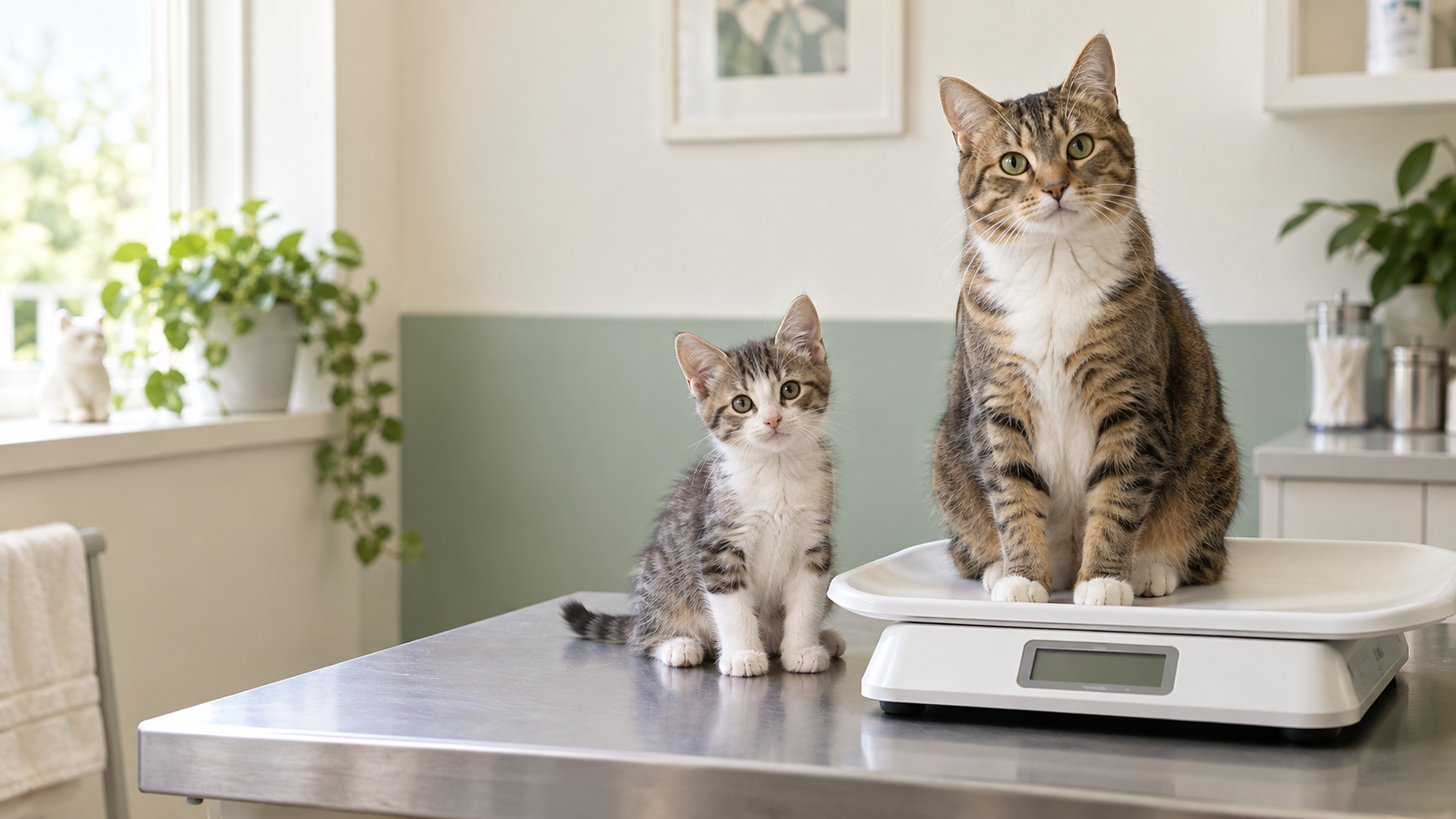
Understanding Cat Weight by Age
A comprehensive guide to feline physical development
Normal Cat Weight Ranges
Most domestic cats weigh between 8-12 pounds, with males typically weighing 1-2 pounds more than females. However, weight varies significantly by breed, body frame, and age. Small breeds like Singapura may weigh 4-8 pounds, while large breeds like Maine Coon can weigh 12-20 pounds. Understanding what's normal for your cat's breed and frame is essential for assessing their health.
Cat Weight by Age
Kittens grow rapidly in their first year, doubling their birth weight in the first week and reaching adult size by 12 months. Newborn kittens weigh 3-4 ounces, while 8-week-old kittens typically weigh 1.5-2 pounds. By 6 months, most kittens reach 5-6 pounds. Adult cats maintain relatively stable weight, though senior cats (10+ years) may experience weight loss due to age-related changes.
Average Cat Weight
The average weight for a domestic cat is 10-12 pounds (4.5-5.4 kg). However, this is just a general guideline. Breed-specific averages range from 5-10 pounds for Siamese cats to 12-20 pounds for Maine Coons. Body Condition Score (BCS) is often more reliable than weight alone for assessing health, as it accounts for body frame and muscle mass.
Assessing Your Cat's Weight
Use both weight and Body Condition Score to assess your cat's health. A healthy cat should have ribs easily felt but not visible, a visible waist behind the ribs, and minimal abdominal fat. Our Cat Weight Calculator compares your cat's weight to breed standards, while our Cat BMI Calculator assesses body condition using visual and tactile evaluation.
Cat Weight Chart by Age
Normal cat weight ranges in pounds (lbs) and kilograms (kg)
| Age | Weight (lbs) | Weight (kg) |
|---|---|---|
| 2 weeks | 0.25-0.5 | 0.1-0.2 |
| 4 weeks | 0.5-1 | 0.2-0.5 |
| 6 weeks | 1-1.5 | 0.5-0.7 |
| 8 weeks | 1.5-2 | 0.7-0.9 |
| 12 weeks | 2-3 | 0.9-1.4 |
| 16 weeks | 3-4 | 1.4-1.8 |
| 6 months | 5-6 | 2.3-2.7 |
| Adult (1 year+) | 8-12 | 3.6-5.4 |
Adult weight varies by breed. Small breeds: 5-8 lbs (2.3-3.6 kg). Medium: 8-12 lbs (3.6-5.4 kg). Large (e.g. Maine Coon): 12-20 lbs (5.4-9 kg).
Explore Our Cat Weight Guides
Our cat weight guides cover every stage and question: track a kitten week by week with the Kitten Growth Chart, compare sizes with Average Cat Weight by Breed, score body condition, predict adult size, tell if your cat is overweight, plan Maine Coon and kitten feeding, and dose flea treatment safely by weight. Pick a guide below to go deeper.
Cat Weight Chart
The quick reference: healthy cat weight by age and by breed in lbs and kg, with frame-based ranges and how to read a weight chart.
Read Guide →
Kitten Growth Chart
Track your kitten's growth from newborn to adulthood. Learn about weekly weight milestones, temperature requirements, and when kittens reach full size.
Read Guide →Kitten Growth Chart by Breed
Compare kitten weight by age across popular breeds, from Siamese and Bengal to Ragdoll and Maine Coon, with a weight-by-age table for each size category.
Read Guide →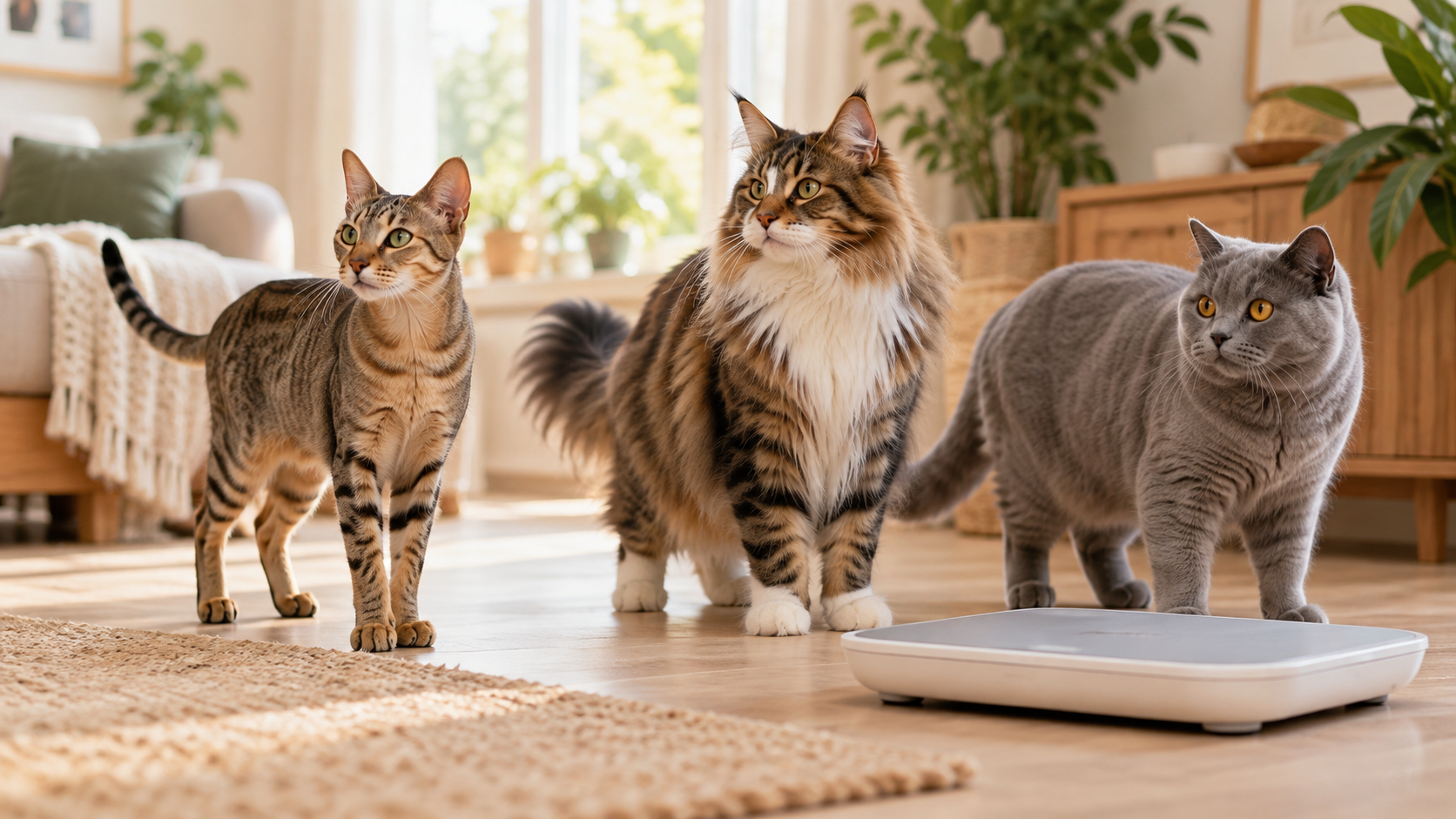
Average Cat Weight by Breed
Compare weight ranges across popular cat breeds. Learn about Siamese, Persian, Maine Coon, and other breed-specific weight standards.
Read Guide →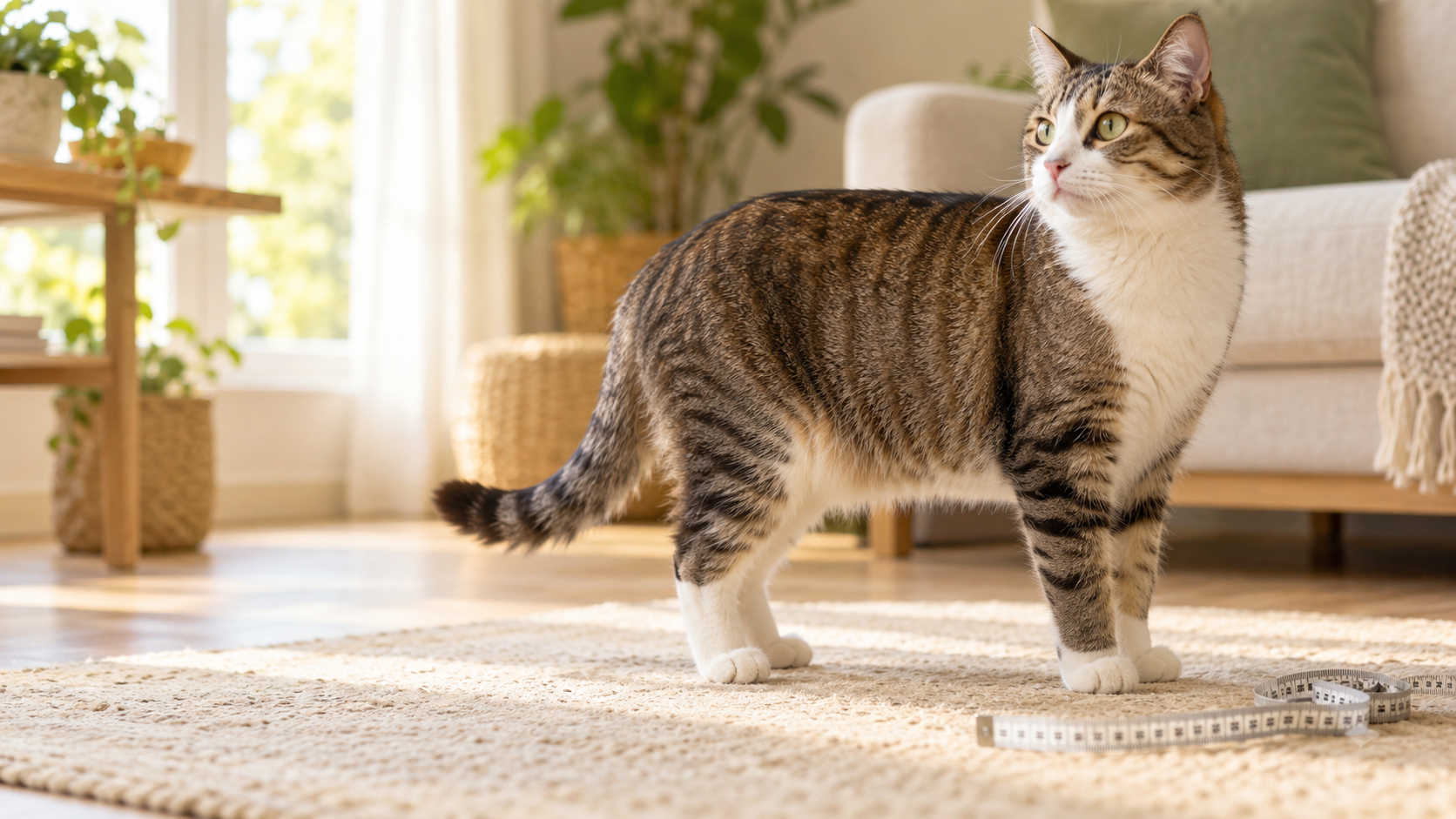
Cat Body Condition Score
Learn how to assess your cat's body condition using visual and tactile evaluation. Includes a visual guide to identify underweight, ideal, and overweight cats.
Read Guide →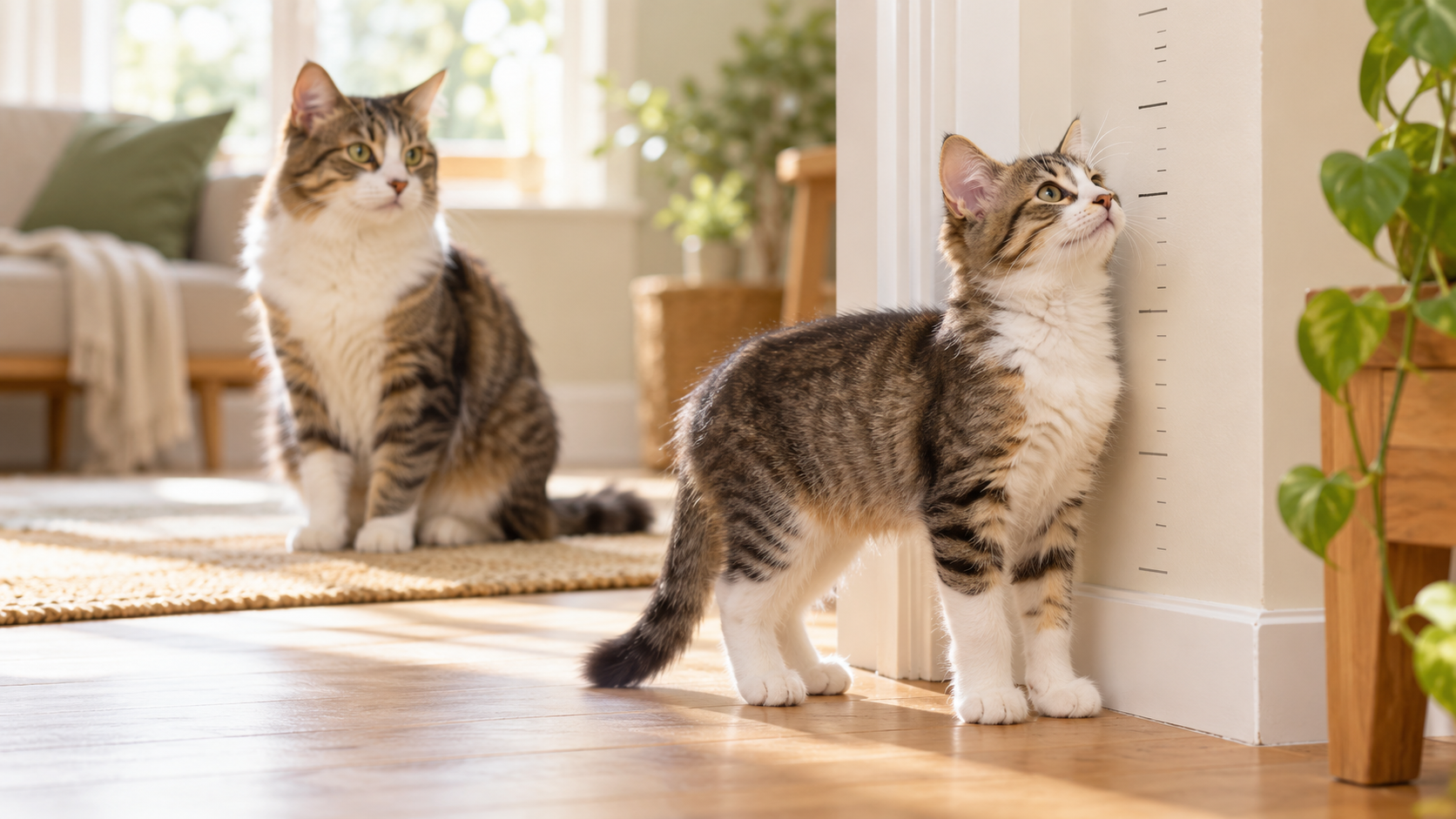
How Big Will My Cat Get?
Predict your kitten's adult size using age, current weight, and breed. Learn about factors that influence adult size and growth patterns.
Read Guide →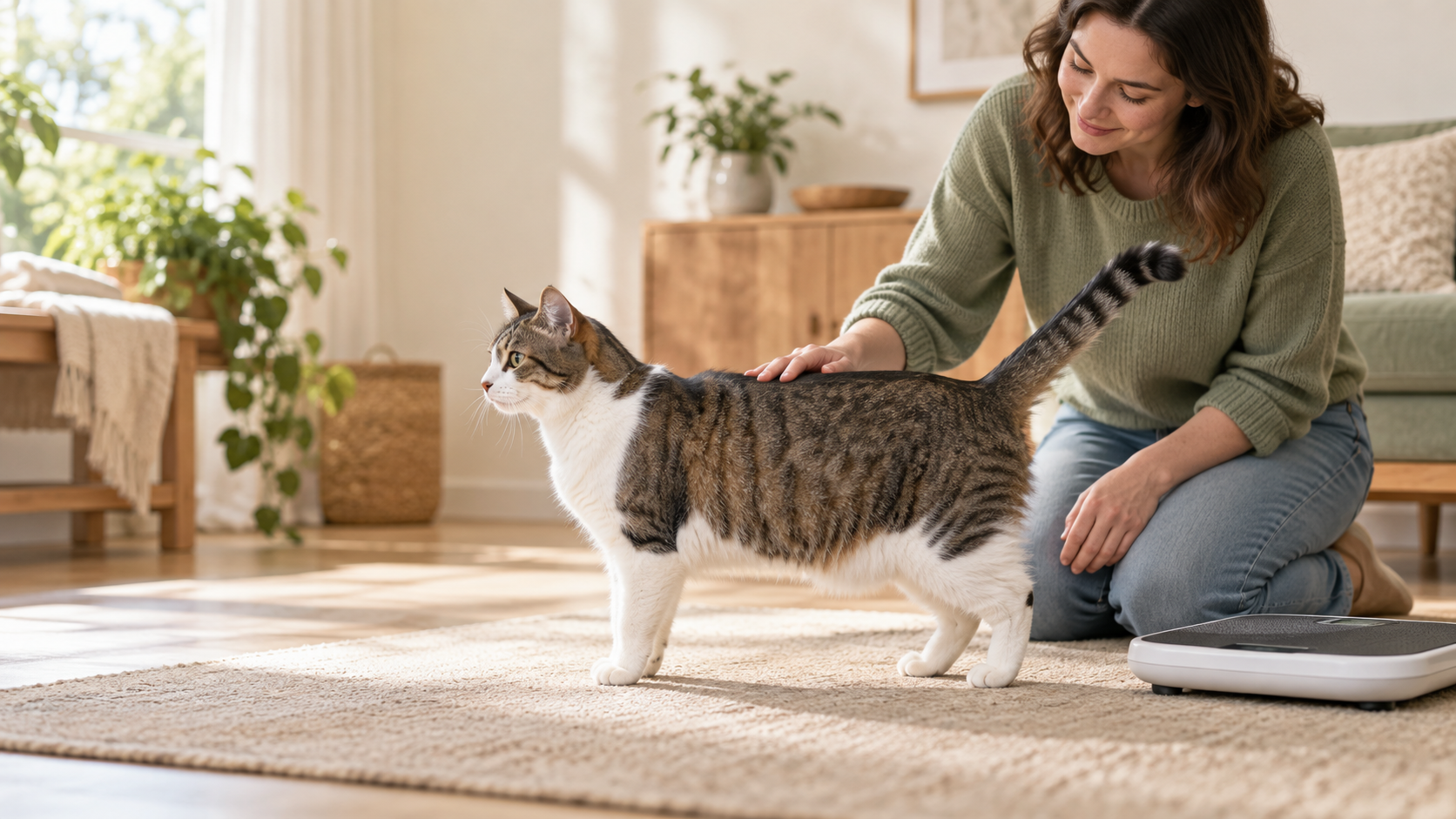
Is My Cat Overweight?
Understand weight benchmarks for small, average, and large frame cats. Learn to distinguish between naturally large cats and obesity.
Read Guide →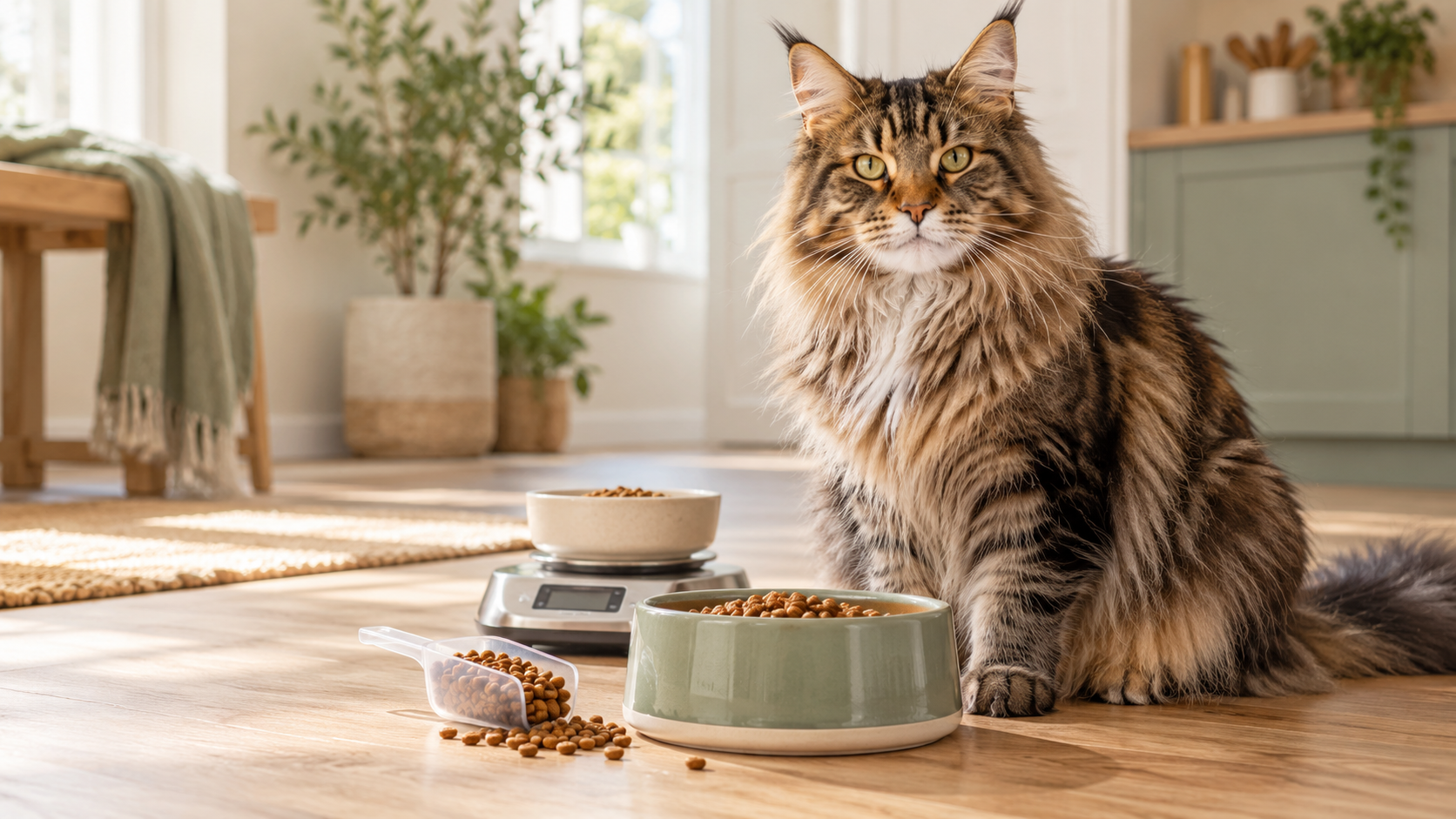
Maine Coon Feeding Chart
Calorie guidelines and feeding schedule for Maine Coon cats at every life stage, from kitten to senior. Includes portion sizes and meal frequency.
Read Guide →Flea Treatment for Cats
The main treatment types, how to dose safely by your cat's weight, how often to treat, and the safety rules every cat owner should know.
Read Guide →Kitten Feeding Guide
How much to feed a kitten by age and weight, wet vs dry food, a feeding schedule from newborn to 12 months, and a weight-based portion table.
Read Guide →Cat Weight by Age
A month-by-month weight chart in kg and lb from newborn kitten to adult, answering how much a cat should weigh at every age.
Read Guide →Senior Cat Weight
Healthy weight norms for older cats, why senior cats lose weight, and when weight loss is a red flag worth a vet visit.
Read Guide →Cat Weight in kg and lb
A healthy cat weight chart in both metric and imperial, plus a quick kg to lb conversion reference for common cat weights.
Read Guide →Cat Weight Charts by Breed & Type
Weight varies a lot by breed. Pick your cat's breed or type for an ideal-weight chart by age, male vs female ranges in kg and lb, and body-condition guidance tailored to that cat.
Maine Coon
Largest breed, grows for 3 to 5 years
Ragdoll
Large, slow to mature
Persian
Medium, cobby build under the coat
Bengal
Lean, muscular, very active
British Shorthair
Stocky and dense, matures to 3 years
American Shorthair
Sturdy, muscular working-cat build
Norwegian Forest
Large, thick double coat, slow to mature
Russian Blue
Fine-boned but dense and muscular
Scottish Fold
Medium, rounded, keep lean for joints
Sphynx
Hairless, high metabolism, eats more
Abyssinian
Small, lean, fine-boned, rarely overweight
Siamese
Lean, athletic, long and slender
Domestic Shorthair
The common house cat, wide size range
Tabby
A coat pattern, not a breed
Cat Weight, BMI & Nutrition Calculators
Put the guides into practice with our free cat calculators. Check your cat against healthy weight ranges, score body condition, work out daily calories and feeding amounts, and build a safe weight loss plan.
Cat Weight Calculator
Check your cat's weight against healthy ranges by frame, breed, and age.
Cat BMI Calculator
Estimate feline body mass index and find out if your cat is overweight.
Cat Calorie Calculator
Get daily calorie needs and feeding amounts based on weight and activity.
Cat Feeding Calculator
Work out how much wet, dry, or mixed food to feed your cat each day.
Cat Food Carb Calculator
Calculate the carbohydrate percentage in your cat's food on a dry-matter basis.
Cat Weight Loss Calculator
Set a target weight and a safe calorie deficit plan for an overweight cat.
Cat Food & Feeding Guides
Choosing what to feed your cat is one of the biggest levers on their weight and health. These guides help you pick the right food and feed the right amount.
Best Cat Food
How to choose the right food, with category picks
Kitten Food
What to feed a kitten and how much
Wet vs Dry Cat Food
Pros and cons, and how to mix them
Grain Free Cat Food
A balanced, evidence-based take
Cat Treats
Healthy picks and the 10 percent rule
Best Cat Food for Weight Loss
What to feed an overweight cat
Homemade Cat Food
Balance, safety, and recipe frameworks
Raw Feeding for Cats
Safety, balance, and how much to feed
What Can Cats Eat?
Safe and toxic human foods
Can Cats Eat Lettuce?
Is it safe, and how to offer it
Taurine for Cats
Why it is essential and where it comes from
Wet Kitten Food
How much to feed and what to look for
Maine Coon Cat Food
Choosing the right diet for the breed
Stainless Steel Water Fountains
Hydration, materials, and what to look for
Kitten Growth & Weight Guides
Track development milestones and understand the life-stage changes that affect a cat's weight.
Key Topics Covered
Everything you need to know about cat weight and growth
Kitten Growth & Development
Learn about kitten growth milestones from birth to adulthood. Understand weekly weight expectations, temperature requirements for newborns, and when kittens reach full size. Use our Kitten Growth Calculator to track your kitten's progress.
Breed-Specific Weight Standards
Compare weight ranges across popular cat breeds. Understand how Siamese, Persian, Maine Coon, and other breeds differ in size. Learn about male vs. female weight differences and how to assess mixed breed cats.
Body Condition Assessment
Master the Body Condition Score (BCS) system to assess your cat's health visually and tactually. Learn to identify underweight, ideal, and overweight cats. Understand why BCS is often more reliable than weight alone.
Size Prediction
Predict your kitten's adult size using age, current weight, and breed information. Learn about factors that influence adult size, including genetics and nutrition. Use our Kitten Weight Calculator for personalized predictions.
Weight Benchmarks
Understand weight benchmarks for different body frames. Learn to distinguish between naturally large cats and obesity. Get guidance on when to be concerned about your cat's weight.
Health Troubleshooting
Learn what to do if your cat is underweight or overweight. Get guidance on safe weight gain and weight loss strategies. Understand when to consult your veterinarian for weight-related concerns.
Frequently Asked Questions About Cat Weight
Common questions about cat weight by age, breed, and health assessment
What is a normal cat weight?
Normal cat weight varies by breed, age, and body frame. Most domestic cats weigh between 8-12 pounds, with males typically weighing 1-2 pounds more than females. Small breeds like Singapura may weigh 4-8 pounds, while large breeds like Maine Coon can weigh 12-20 pounds. Use our Cat Weight Calculator to compare your cat's weight to breed standards.
How much should a cat weigh by age?
Kittens grow rapidly in their first year. Newborn kittens weigh 3-4 ounces, doubling their weight in the first week. By 8 weeks, kittens typically weigh 1.5-2 pounds. By 6 months, most kittens reach 5-6 pounds, and by 1 year, they reach their adult weight. Adult cats maintain relatively stable weight, though senior cats may lose weight due to age-related changes. See our Kitten Growth Chart for detailed milestones.
What is the average weight for a cat?
The average weight for a domestic cat is 10-12 pounds (4.5-5.4 kg). However, this varies significantly by breed. Siamese cats average 5-10 pounds, while Maine Coons average 12-20 pounds. Body frame also matters - a 10-pound cat with a small frame may be overweight, while a 15-pound Maine Coon may be ideal. Check our Average Cat Weight by Breed guide for breed-specific ranges.
How do I know if my cat is at a healthy weight?
Use both weight and Body Condition Score (BCS) to assess your cat's health. A healthy cat should have ribs easily felt but not visible, a visible waist behind the ribs, and minimal abdominal fat. Use our Cat BMI Calculator to assess body condition, or our Cat Weight Calculator to compare to breed standards. If your cat is outside the ideal range, consult your veterinarian.
Is my cat overweight?
Signs of an overweight cat include difficulty feeling ribs under fat, no visible waist, and abdominal fat pads. Cats with a Body Condition Score of 4-5 are considered overweight to obese. A cat weighing 15+ pounds may be overweight unless it's a large breed like Maine Coon. Use our "Is My Cat Overweight?" guide to understand weight benchmarks, or try our Cat Weight Loss Calculator for a personalized plan.
How can I help my cat maintain a healthy weight?
Feed your cat appropriate portions based on their weight, age, and activity level using our Cat Nutrition Calculator. Provide regular exercise through play. Monitor weight monthly and adjust food intake as needed. For overweight cats, use our Cat Weight Loss Calculator to create a safe weight loss plan. Always consult your veterinarian before making significant dietary changes.
Do different cat breeds have different weight ranges?
Yes, cat breeds vary significantly in size. Small breeds like Singapura (4-8 lbs) and Devon Rex (6-9 lbs) are much smaller than large breeds like Maine Coon (12-20 lbs) and Norwegian Forest Cat (8-16 lbs). Medium breeds like American Shorthair (10-15 lbs) and Siamese (5-10 lbs) fall in between. See our Average Cat Weight by Breed guide for a complete comparison table.
When do kittens stop growing?
Most kittens reach their full adult size by 12 months (52 weeks), though large breed cats like Maine Coons may continue growing until 18-24 months. Kittens grow most rapidly in their first 6 months, reaching about 75% of adult size by 6 months. Use our Kitten Growth Calculator to track growth milestones and predict adult size.
Ready to Assess Your Cat's Weight?
Use our free calculators to get personalized weight assessments and health recommendations for your cat.
Free cat printables
Keep these cat care guides handy
A rotating selection of practical cat guides chosen from our free printable library.Cat Feeding Guide
Portions by weight, age, and life stage.
Kitten Growth Chart
Week-by-week weight and development milestones.
Cat Body Condition Chart
A printable body condition reference for cats.