
Last updated: October 3, 2026
Euthanasia & Saying Goodbye
Deciding to say goodbye to a beloved pet is one of the hardest and most loving choices you will ever make. Whether you are wrestling with the question of when it is time, trying to understand what euthanasia involves, or carrying the weight of guilt afterward, these gentle guides walk beside you. There is no perfect answer here, only the deep care that brought you to this page.

You Are Facing This Because You Love Them
Compassionate support for the decision no one wants to make
There is no wrong reason to be here
Maybe the vet mentioned it today, maybe you have been watching your pet decline for months, or maybe you simply cannot stop wondering. Wherever you are in this, seeking guidance is not giving up. It is trying to do right by a companion who has given you everything.
Choosing to end suffering is an act of love
Euthanasia is often the last and kindest gift we can give. It spares a suffering pet pain we would never wish on them, even though it costs us dearly. Making that choice out of love, not convenience, is not something to feel ashamed of.
Whatever you decide, you are not alone
Countless pet owners have stood exactly where you stand, torn between holding on and letting go. These guides gather their hardest questions and gentlest answers so you can find some clarity, and some comfort, in a moment that feels impossible.
Not Sure If It Is Time? Start With a Quality-of-Life Check
When love and fear cloud your judgment, a structured assessment can help you see your pet’s comfort more clearly. Our quality-of-life calculators walk you through the key signs, one gentle question at a time, so you can face this decision with a little more clarity and a little less doubt.
Guides for Every Part of This
From the decision itself to the days that follow, find the support you need right now
Knowing When It Is Time
The question that keeps you awake at night. Learn the signs that a pet is nearing the end, how to weigh good days against bad, and how to trust yourself with a decision that has no perfect answer.
Read Guide →When It Is Time for a Cat
Cats hide illness so well that this decision feels especially uncertain. Learn the quiet signs a cat is nearing the end, and how to weigh their comfort with clear eyes.
Read Guide →Quality of Life Assessment
A gentle, structured way to look clearly at your pet through the fog of love and fear. Understand quality-of-life scales, what each factor really measures, and how to use them without guilt.
Read Guide →What to Expect During Euthanasia
Not knowing what will happen can make the fear worse. Walk through each step of the euthanasia process, from the sedative to the final moments, so nothing takes you by surprise.
Read Guide →In-Home Pet Euthanasia
Many families choose to say goodbye at home, in a familiar bed or sunny spot. Learn how in-home euthanasia works, what it costs, and how to decide whether it is right for your pet.
Read Guide →Being Present at the End
Should you stay in the room? There is no wrong choice, only the one that is right for you. Understand what being present is like and how to make peace with whatever you decide.
Read Guide →Children and Euthanasia
Helping a child through a pet’s euthanasia takes honesty and care. Learn what to say, whether they should be present, and how to explain a loving goodbye in words a child can hold.
Read Guide →Talking to Your Vet
Your veterinarian is your partner in this decision. Learn the questions to ask, how to raise the subject of euthanasia, and how to work together toward the most peaceful goodbye.
Read Guide →The Cost of Euthanasia
Money is a painful thing to think about now, but it matters. Understand what pet euthanasia and aftercare typically cost, what affects the price, and where to find help if you need it.
Read Guide →Anticipatory Grief
The grief often begins before the goodbye does. Learn why you may be mourning a pet who is still here, and how to hold both the sadness and the time you have left.
Read Guide →Preparing for Your Pet's Death
Knowing the goodbye is coming is its own heartbreak. A gentle guide to preparing emotionally and practically, what to decide in advance, and how to make the time left count.
Read Guide →Coping With Guilt Afterward
Almost everyone wonders if they chose the right time. Understand why guilt is such a common part of this loss, and find gentle ways to forgive yourself and grieve in peace.
Read Guide →Guilt After Putting Your Dog Down
Saying goodbye to your most loyal friend carries a guilt all its own. Understand why it hurts so deeply, and find gentle ways to forgive yourself and remember the love.
Read Guide →Did I Euthanize Too Soon?
The fear that you said goodbye too early is one of the most painful parts of this loss. Learn where the doubt comes from, and how to make peace with the timing.
Read Guide →What These Guides Help You Through
Honest, compassionate support at every stage of saying goodbye
Making the decision
Understand the signs that a pet is nearing the end, how to weigh quality of life honestly, and how to work with your veterinarian toward a choice you can live with.
Understanding the process
Learn exactly what euthanasia involves, whether at the clinic or at home, so the unknown does not add to your fear on an already painful day.
The moment itself
Find gentle guidance on being present, saying goodbye, and creating a peaceful final experience for your pet and yourself, whatever you choose.
Supporting your family
Learn how to talk with children about euthanasia honestly and kindly, and how to help everyone in the home grieve a shared loss.
Coping with guilt and doubt
The second-guessing is normal and nearly universal. These guides help you understand it, quiet it, and begin to forgive yourself for an impossible decision.
Grief before and after
From anticipatory grief in the waiting to the deep loss that follows, find compassion for feelings that can begin long before the goodbye and last well beyond it.
Frequently Asked Questions About Pet Euthanasia
Gentle answers to the questions that weigh on you most
How do I know when it is time to euthanize my pet?
There is rarely a single clear moment. Most people look at their pet’s overall quality of life: whether they can eat, move, and rest comfortably, whether the good days still outnumber the bad, and whether the things that once brought them joy still do. A quality-of-life assessment and an honest conversation with your veterinarian can help you see clearly when love and fear make it hard. If your pet is suffering and there is no path back to comfort, choosing euthanasia is an act of mercy, not failure.
What actually happens during pet euthanasia?
In most cases the veterinarian first gives a sedative so your pet becomes calm, sleepy, and free of pain. Once they are fully relaxed, a second injection gently stops the heart, usually within seconds. It is peaceful and painless, and you can be there to hold and speak to your pet if you choose. Knowing each step ahead of time helps many people feel less afraid of the moment itself.
Should I stay in the room during the euthanasia?
This is a deeply personal choice, and there is no right or wrong answer. Many people find comfort in being present so their pet’s last moments are spent hearing a familiar voice. Others find it too painful, and that is understandable too. Your pet is not abandoned either way, and your grief is not measured by whether you could stay. Do what you can bear, and be gentle with yourself about it.
Is it normal to feel guilty after putting a pet to sleep?
Yes, guilt is one of the most common feelings after euthanasia. You may replay the timing, wonder if you acted too soon or waited too long, or second-guess a decision made with love. These thoughts do not mean you did anything wrong. Choosing to end suffering is one of the kindest and hardest things a pet owner can do. Guilt is grief looking for somewhere to land, and it eases with time, compassion, and support.
Can I have my pet euthanized at home?
Often, yes. Many veterinarians and specialized services offer in-home euthanasia, allowing your pet to pass in a familiar, comfortable place surrounded by family. It can feel calmer than a clinic visit for both you and your pet, though it usually costs more and requires scheduling in advance. Ask your veterinarian whether it is available in your area and whether it is a good fit for your pet’s situation.
How should I explain euthanasia to my children?
Use clear, honest, age-appropriate language and avoid confusing phrases like "put to sleep," which can make children afraid of sleep or the vet. Explain that the pet is very sick or very old, that their body has stopped working, and that the veterinarian is helping them die gently and without pain. Let children ask questions, share your own sadness, and invite them to help say goodbye or create a small memorial if they wish.
Take This One Gentle Step at a Time
You do not have to have it all figured out today. Start wherever feels right, and know that seeking guidance is itself an act of love.
Free printable support
Choose the resource that helps today
Each book is a free, 10-page A4 PDF designed to print and complete by hand.Pet Grief Journal
Ten gentle pages for memories, grief waves, letters, support, and carrying the bond forward.
Complete Pet Loss Guide
Compassionate guidance for grief reactions, children, surviving pets, aftercare, and support.
What to Do After a Pet Dies
A calm checklist for the first hours, provider questions, aftercare, records, and memorial choices.
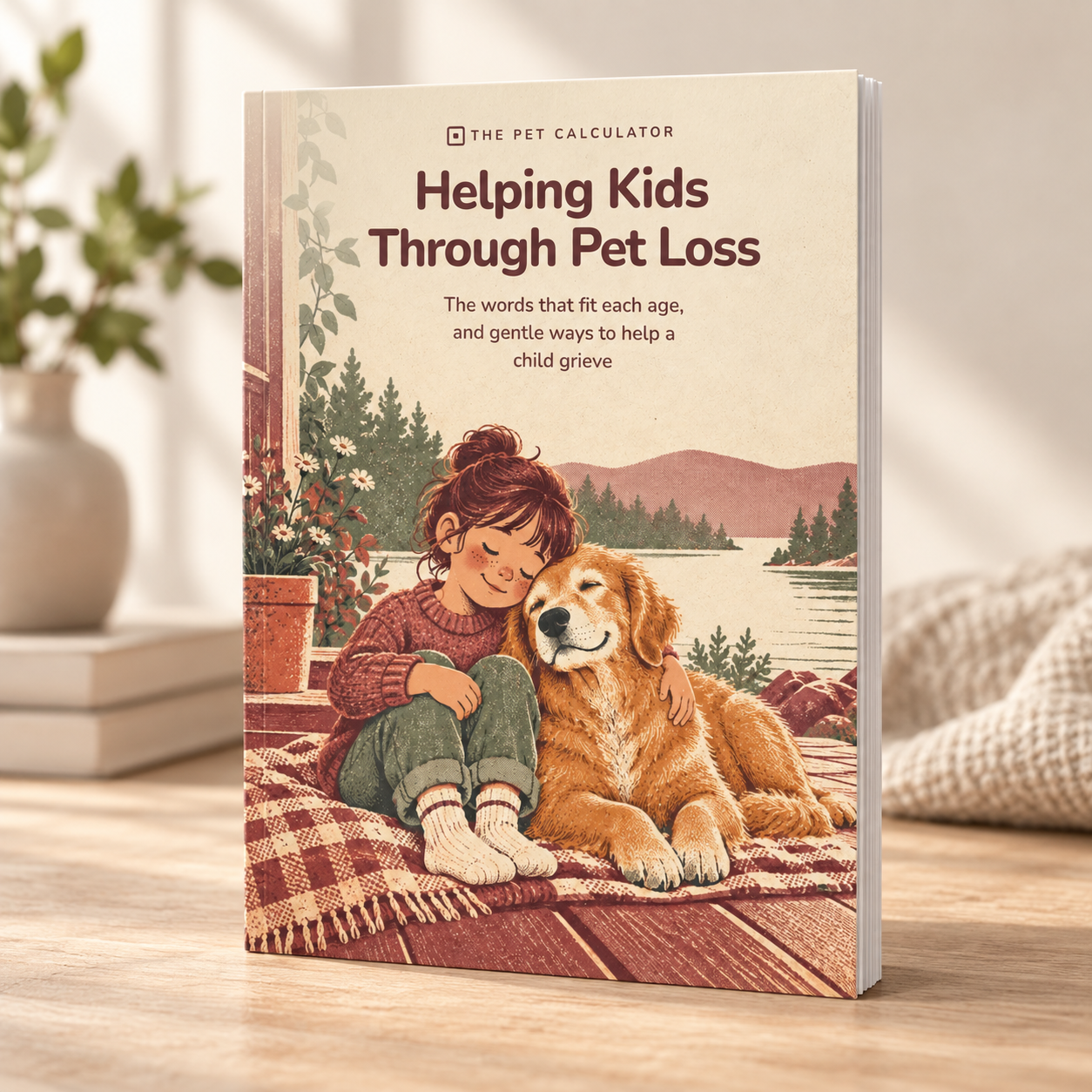
Printable companion · Printable PDF
Helping Kids Through Pet Loss
A gentle memory book for children and families.
A draw-and-write keepsake that helps children remember a beloved pet, express difficult feelings, and move through grief at their own pace.