
Last updated: October 3, 2026
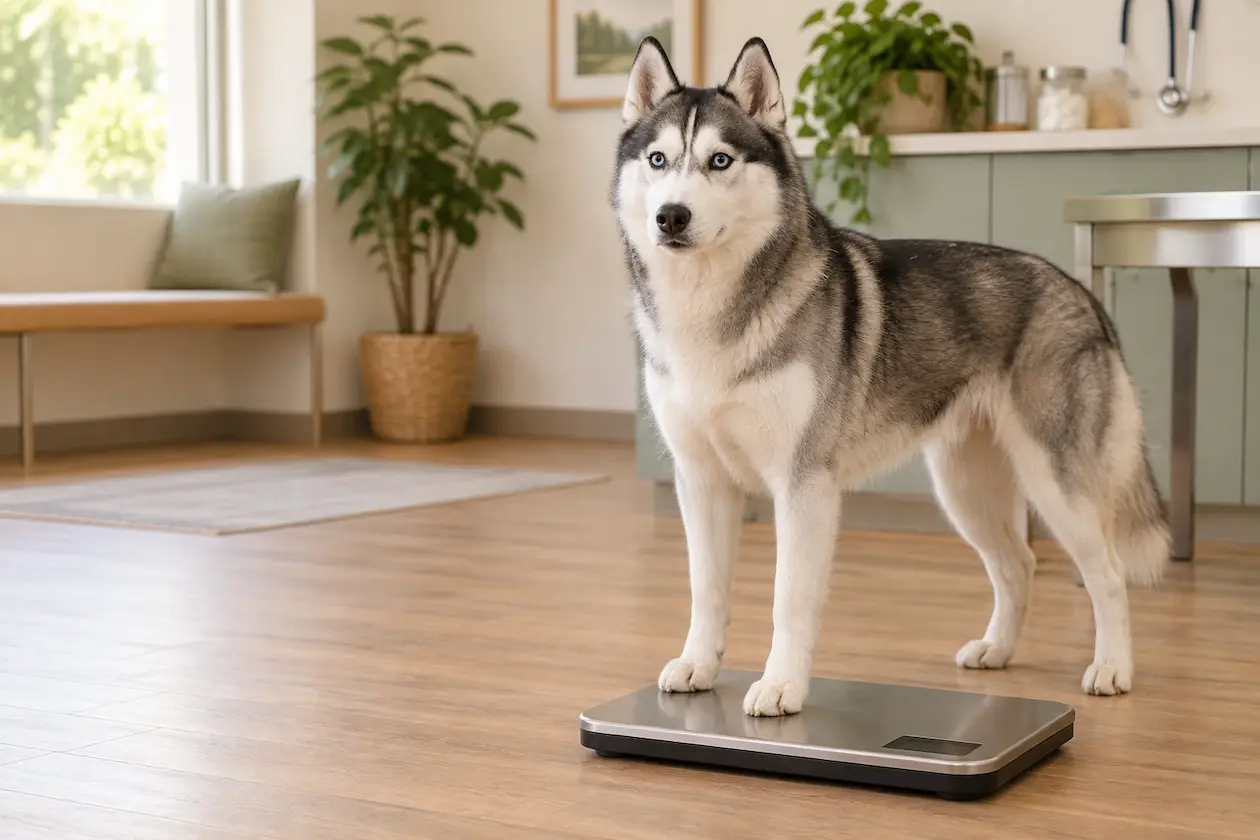
How To Use
Enter your Siberian Husky's sex, age, and current weight to check if they are within the healthy weight range for their stage of life.
Quick Steps
- 1 Select your Siberian Husky's Sex.
- 2 Select their Age.
- 3 Enter their Current Weight in pounds.
- 4 Click Calculate to see the weight assessment and full growth chart.
Siberian Husky Weight Calculator
Fill Out The Fields Below
About Siberian Husky Weight
Siberian Huskies are a medium-sized working breed built for endurance, originally bred to pull sleds across frozen tundra. Adult males weigh 45–60 lbs and females 35–50 lbs per AKC standards. Despite their thick double coat making them appear larger, Huskies are naturally lean and athletic. They have high exercise requirements and an efficient metabolism — bred to run long distances on relatively little food. Excess weight is particularly harmful for this breed because it stresses joints, impairs their ability to regulate body temperature through their dense coat, and reduces their stamina.
Key Weight Characteristics
- • Adult males 45–60 lbs; females 35–50 lbs — medium-sized and athletic
- • Full height by 12 months; fills out with muscle until 18–24 months
- • Thick double coat can mask weight gain — regular hands-on checks are essential
- • High exercise needs — 1–2 hours of vigorous activity daily to maintain healthy weight
- • Efficient metabolism — bred to work hard on modest food portions
Body Condition Check
- ✓ You should be able to feel each rib with light finger pressure through their dense double coat — if you cannot, your Husky is likely overweight.
- ✓ From above, a defined waist should be visible behind the ribs despite the fluffy coat.
- ✓ From the side, the belly should tuck up noticeably — a straight or rounded underline indicates excess weight.
- ✓ Huskies' thick coat hides weight changes — weigh regularly and do hands-on body condition checks.
Siberian Husky Weight: Healthy Ranges for Males and Females
A healthy adult male Siberian Husky weighs 45–60 lbs (20–27 kg) and a female weighs 35–50 lbs (16–23 kg) according to AKC breed standards. Males stand 21–23.5 inches at the shoulder, while females stand 20–22 inches. The 10–20% weight difference between sexes is consistent across the breed.
Siberian Huskies are naturally lean, athletic dogs with an efficient metabolism. Unlike many popular breeds, Huskies were bred to run long distances on relatively little food — so they tend to eat less than you might expect for their size. Don't be alarmed if your Husky self-regulates food intake or occasionally skips a meal; this is normal breed behaviour.
Their thick double coat is one of the biggest challenges for weight assessment. It can add visual bulk and hide both weight gain and weight loss. That's why hands-on body condition scoring — running your fingers along the ribcage, checking for a waist from above, and looking for a belly tuck from the side — is essential for Huskies. Don't rely on appearance alone.
Use the calculator above to enter your Husky's sex, age, and current weight. You'll get an instant assessment of whether they're underweight, at a healthy weight, or overweight — plus a full growth chart showing breed-specific weight milestones from puppy to adult.
Physical signs of a healthy-weight vs overweight Siberian Husky. Based on veterinary body condition scoring guidelines.
Siberian Husky Weight Chart by Age
The table below shows healthy weight ranges for male and female Siberian Huskies from 8 weeks through adulthood. These ranges are based on AKC breed standards and veterinary growth data.
Male Siberian Husky Weight Chart
| Age | Weight Range (lbs) | Average (lbs) | Weight Range (kg) |
|---|---|---|---|
| 8 weeks | 8–12 | 10 | 3.6–5.4 |
| 3 months | 17–23 | 20 | 7.7–10.4 |
| 4 months | 22–30 | 26 | 10.0–13.6 |
| 5 months | 27–37 | 32 | 12.2–16.8 |
| 6 months | 32–43 | 37 | 14.5–19.5 |
| 8 months | 37–50 | 43 | 16.8–22.7 |
| 10 months | 40–55 | 47 | 18.1–24.9 |
| 12 months | 43–57 | 50 | 19.5–25.9 |
| 18 months | 44–59 | 51 | 20.0–26.8 |
| Adult (2+ years) | 45–60 | 52 | 20.4–27.2 |
Female Siberian Husky Weight Chart
| Age | Weight Range (lbs) | Average (lbs) | Weight Range (kg) |
|---|---|---|---|
| 8 weeks | 6–10 | 8 | 2.7–4.5 |
| 3 months | 14–20 | 17 | 6.4–9.1 |
| 4 months | 18–25 | 21 | 8.2–11.3 |
| 5 months | 22–31 | 26 | 10.0–14.1 |
| 6 months | 26–36 | 31 | 11.8–16.3 |
| 8 months | 30–42 | 36 | 13.6–19.1 |
| 10 months | 32–45 | 38 | 14.5–20.4 |
| 12 months | 34–47 | 40 | 15.4–21.3 |
| 18 months | 35–49 | 42 | 15.9–22.2 |
| Adult (2+ years) | 35–50 | 42 | 15.9–22.7 |
Siberian Husky Growth Chart: When Are Huskies Fully Grown?
Siberian Huskies reach their full adult height by about 12 months, but they continue filling out with muscle and reaching their final adult weight until 18–24 months. Males tend to mature slightly slower than females.
Growth follows a predictable curve: Husky puppies gain weight rapidly between 3–8 months (the peak growth period), then growth slows significantly from 8–12 months as they approach adult height. The final 10–15% of body weight comes from muscle development and filling out between 12–24 months.
Avoid overfeeding puppies to accelerate growth. Rapid weight gain puts stress on developing joints and can contribute to hip dysplasia. A steady, controlled growth rate is healthier. If your Husky puppy is tracking above the weight range for their age, reduce portions slightly rather than trying to "grow them faster."
Siberian Husky weight by age. Shaded bands show healthy min–max range; lines show average. Based on AKC breed standards and veterinary growth data.
How to Tell if Your Siberian Husky Is Overweight
Siberian Huskies' thick double coat makes visual weight assessment unreliable. A Husky can look perfectly proportioned while carrying several extra pounds hidden under their fur. That's why veterinarians use Body Condition Score (BCS) — a hands-on assessment that works regardless of coat thickness.
Use the three-check method below to assess your Husky's body condition at home. Do this every 2–4 weeks, as weight changes can happen gradually and go unnoticed.
Underweight (BCS 1–3)
- Ribs, spine, and hip bones easily visible even through the coat
- No palpable fat layer over the ribs
- Obvious waist when viewed from above — looks "bony"
- Pronounced belly tuck from the side
- Muscle wasting visible on hindquarters
Ideal Weight (BCS 4–5)
- Ribs easily felt with light finger pressure through the coat
- Thin fat layer over the ribs — can feel each rib individually
- Clear waist visible from above behind the ribs
- Noticeable belly tuck when viewed from the side
- Athletic, lean silhouette with defined muscle tone
Overweight (BCS 6–9)
- Ribs difficult to feel — covered by thick fat layer
- No visible waist from above — barrel-shaped body
- Little to no belly tuck from the side — straight or rounded underline
- Fat deposits around neck, base of tail, and over hips
- Reluctance to exercise, overheating easily, heavy panting
How Long Do Siberian Huskies Live? Lifespan and Weight Connection
Siberian Huskies have a lifespan of 12–14 years, which is above average for a medium-sized breed. Their relatively long lifespan is partly due to their athletic build and the breed's generally robust genetic health compared to many other purebreds.
However, weight has a profound impact on how long your Husky lives. A landmark study on Labrador Retrievers (the breed with the most longevity research) found that dogs kept at a lean body condition lived 1.8 years longer on average than their overweight littermates. The lean dogs also had a later onset of chronic disease — meaning more years of healthy, active life.
For Huskies specifically, excess weight accelerates wear on joints (increasing hip dysplasia risk), impairs temperature regulation through their dense double coat, and reduces the endurance they were bred for. Maintaining a lean body condition — ideally in the lower half of the healthy weight range — is one of the most impactful things you can do for your Husky's longevity.
Estimated lifespan impact by body weight category. Lean Huskies consistently live 1.8–2.5 years longer than overweight counterparts. Source: Kealy et al. (2002).
Siberian Husky Health Problems Linked to Weight
While Siberian Huskies are generally a healthy breed, several conditions are directly worsened by excess body weight:
Hip dysplasia is one of the most common orthopaedic conditions in Huskies. The hip joint doesn't fit properly into the socket, causing pain, arthritis, and reduced mobility. Excess weight puts additional mechanical stress on the joint, accelerating cartilage breakdown. Keeping your Husky lean — especially during the rapid growth phase from 3–12 months — is one of the best ways to reduce hip dysplasia severity.
Heat sensitivity is a critical concern. Huskies' thick double coat is designed for sub-zero temperatures, not warm climates. They regulate body temperature primarily through panting (they don't sweat through their skin). Extra body fat acts as insulation, making it even harder for overweight Huskies to cool down. In warm climates, a lean body weight is essential for safety.
Eye conditions — Siberian Huskies are predisposed to cataracts, progressive retinal atrophy (PRA), and corneal dystrophy. While these are primarily genetic, obesity-related inflammation and oxidative stress can accelerate the onset and progression of eye disease.
Exercise intolerance — An overweight Husky tires quickly, pants excessively, and may refuse exercise. This creates a vicious cycle: less exercise leads to more weight gain, which leads to even less exercise. Breaking this cycle requires gradual calorie reduction combined with slowly increasing activity levels.
Health outcomes at healthy vs overweight body condition for Siberian Huskies. PRA = progressive retinal atrophy, a hereditary Husky eye condition.
How Much to Feed a Siberian Husky by Age
Siberian Huskies have a uniquely efficient metabolism. Unlike most breeds their size, Huskies were bred to run for hours on minimal food. This means they typically eat less than you might expect — and that's perfectly normal. Don't be alarmed if your Husky occasionally skips a meal or seems uninterested in food, especially in warm weather.
Puppies (8 weeks – 6 months): Feed 3 meals per day. Husky puppies need approximately 800–1,200 calories daily depending on age and size. Use a high-quality puppy food formulated for medium-sized breeds (not large-breed puppy food, as Huskies are medium-sized). Puppies at this age are growing rapidly and need consistent nutrition.
Adolescents (6–18 months): Transition to 2 meals per day around 6 months. Calorie needs peak during this period at 1,000–1,400 calories daily. Growth is slowing but muscle development is ongoing. Begin monitoring portions more closely — this is when Huskies start approaching adult metabolism.
Adults (18 months+): Feed 2 meals per day. Most adult Huskies need 860–1,200 calories per day, which translates to roughly 2–3 cups of high-quality dry food daily. Active working Huskies (sled dogs, regular runners) may need up to 1,800 calories. Sedentary Huskies in warm climates may need as few as 700–900 calories.
Seniors (8+ years): Reduce calories by 15–20% as activity levels naturally decrease. Feed a senior or joint-support formula. Weigh your senior Husky monthly — both weight gain (reduced activity) and weight loss (dental issues, organ disease) are common in older dogs.
Always measure portions with a cup or kitchen scale. Free-feeding (leaving food out all day) is not recommended — even though Huskies are better at self-regulating than many breeds, measured meals give you better control over their weight.
Siberian Husky daily feeding guidelines by life stage. Active and working Huskies may need up to 1,800 kcal/day. Always measure portions — never free-feed.
Siberian Husky Exercise Needs and Weight Management
Siberian Huskies were bred as endurance athletes — they can run 100+ miles per day pulling a sled. While your pet Husky doesn't need that level of activity, they need 1–2 hours of vigorous exercise daily to stay at a healthy weight and maintain good behaviour.
Puppies (under 12 months): Follow the 5-minute rule — 5 minutes of structured exercise per month of age, twice per day. A 4-month-old puppy gets 20 minutes of walking twice daily, plus free play. Avoid repetitive high-impact activities (long runs on hard surfaces) until growth plates close around 12–14 months.
Adults (1–7 years): Aim for 1–2 hours daily. Ideal activities include running, hiking, bikejoring (pulling you on a bike), canicross (running with your dog on a harness), swimming, and off-lead play in secure areas. Huskies thrive with activities that use their endurance and working drive.
Seniors (8+ years): Reduce intensity but maintain consistency. Two 30-minute walks plus gentle play sessions work well. Watch for signs of joint pain — limping, reluctance to jump, or difficulty rising. Swimming is an excellent low-impact option for senior Huskies.
Heat warning: Siberian Huskies are extremely heat-sensitive. In temperatures above 20°C (68°F), exercise early morning or late evening only. Watch for excessive panting, drooling, or lethargy — these are signs of heat stress. Overweight Huskies are at even greater risk of overheating.
Siberian Husky vs Alaskan Malamute: Size and Weight Comparison
Siberian Huskies and Alaskan Malamutes look similar but differ significantly in size. Male Huskies weigh 45–60 lbs, while male Malamutes weigh around 85 lbs — nearly 50% heavier. Female Huskies weigh 35–50 lbs compared to around 75 lbs for female Malamutes.
In height, Huskies stand 20–23.5 inches at the shoulder, while Malamutes stand 23–25 inches. The Malamute is also more heavily boned and muscular, with a broader chest and thicker frame.
The breeds were built for different jobs: Huskies are speed and endurance dogs (light loads, fast pace, long distances), while Malamutes are power and freight dogs (heavy loads, slower pace). This is why an overweight Husky that looks "Malamute-sized" is genuinely unhealthy — the Husky's skeleton and joints aren't built to carry that much weight.
If your Husky weighs more than 65 lbs (male) or 55 lbs (female), they are almost certainly overweight by breed standards — regardless of how "big-boned" they may appear. Use our calculator to check.
Siberian Husky vs Alaskan Malamute size comparison. The bar widths are proportional to weight. A Husky approaching Malamute size is carrying significant excess weight. Source: AKC breed standards.
When to See a Vet About Your Siberian Husky's Weight
Schedule a vet visit if your Siberian Husky's weight is consistently outside the healthy range for their age and sex, or if you notice any of the following:
Sudden weight changes — gaining or losing more than 5% of body weight in a month without a change in diet or exercise. Rapid weight loss can indicate thyroid issues, parasites, dental problems, or organ disease. Rapid weight gain (outside of puppyhood growth) may indicate hypothyroidism or Cushing's disease.
Appetite changes — while Huskies are known for occasionally skipping meals, persistent food refusal (more than 48 hours) or a sudden dramatic increase in appetite warrants investigation.
Exercise intolerance — if your previously energetic Husky becomes reluctant to exercise, tires easily, or limps after activity, a vet check is needed. This could indicate joint problems worsened by weight, heart issues, or other conditions.
Even if your Husky appears healthy, include a weight check at every routine vet visit (every 6–12 months for adults, every 6 months for seniors over 8). Early detection of weight trends allows for gradual, safe correction before health consequences develop.
Siberian Husky Weight Quick Reference
Key Facts
- Adult male weight: 45–60 lbs (20–27 kg)
- Adult female weight: 35–50 lbs (16–23 kg)
- Height (male): 21–23.5 inches
- Height (female): 20–22 inches
- Fully grown: 12 months (height), 18–24 months (weight)
- Lifespan: 12–14 years
Feeding & Exercise
- Adult calories: 860–1,200 kcal/day
- Daily food: 2–3 cups dry food (adults)
- Meals per day: 2 (adults), 3 (puppies)
- Exercise: 1–2 hours vigorous daily
- Heat sensitive: Yes — exercise in cool hours
- Common health risks: Hip dysplasia, cataracts, PRA
FAQs
Frequently Asked Questions
What is the ideal weight for a Siberian Husky?
According to AKC breed standards, adult male Siberian Huskies should weigh 45–60 lbs (20–27 kg) and females 35–50 lbs (16–23 kg). The ideal weight for your individual Husky depends on sex, age, bone structure, and activity level. Use our calculator above to check where your Husky falls within the healthy range.
How much should a Siberian Husky weigh at 6 months?
At 6 months, a male Siberian Husky typically weighs 32–43 lbs (average 37 lbs) and a female weighs 26–36 lbs (average 31 lbs). At this age, Huskies have reached roughly 60–70% of their adult weight. They will continue filling out until 18–24 months.
How long do Siberian Huskies live?
Siberian Huskies have a lifespan of 12–14 years, which is above average for a medium-sized breed. Studies consistently show that dogs kept at a healthy weight live 1.8–2.5 years longer than overweight dogs. Maintaining a lean body condition is one of the most effective ways to maximise your Husky's lifespan.
When is a Siberian Husky fully grown?
Siberian Huskies reach their full adult height by about 12 months of age, but they continue filling out with muscle and reaching their final adult weight until 18–24 months. Males mature slightly slower than females. Avoid overfeeding puppies to accelerate growth — steady, controlled growth protects joint health.
How can I tell if my Siberian Husky is overweight?
A Husky's thick double coat can hide weight gain, so hands-on body condition checks are essential. You should be able to feel each rib with light finger pressure. From above, a clear waist should be visible behind the ribs. From the side, the belly should tuck up noticeably. If you can't feel the ribs or see any waist, your Husky is likely overweight.
How much should I feed my Siberian Husky?
Most adult Siberian Huskies need 860–1,200 calories per day depending on weight and activity level. A moderately active adult typically eats 2–3 cups of high-quality dry food per day, split into two meals. Huskies have an efficient metabolism and naturally eat less than many dogs their size — don't be alarmed if your Husky sometimes skips meals.
How much exercise does a Siberian Husky need?
Siberian Huskies need 1–2 hours of vigorous exercise daily. They were bred for endurance — pulling sleds across frozen terrain for hours. Activities like running, hiking, bikejoring, or canicross are ideal. Without sufficient exercise, Huskies quickly gain weight, become destructive, and develop behavioural issues.
What is the difference between a Siberian Husky and an Alaskan Malamute in size?
Siberian Huskies are noticeably smaller than Alaskan Malamutes. Adult male Huskies weigh 45–60 lbs and stand 21–23.5 inches tall, while male Malamutes weigh 85 lbs and stand 25 inches tall. Malamutes are built for power (hauling heavy loads slowly), while Huskies are built for speed and endurance (pulling light loads fast).
Is my Siberian Husky too skinny?
Siberian Huskies are naturally lean and athletic — visible ribs are not normal, but they should be easily felt with light pressure. If ribs, spine, and hip bones are prominently visible, your Husky may be underweight. Huskies are known to self-regulate their food intake and may eat less in warm weather. If your Husky is consistently below the healthy range, consult your vet to rule out parasites, thyroid issues, or other conditions.
How much should a Siberian Husky puppy weigh?
Siberian Husky puppy weights vary significantly by age and sex. At 8 weeks, males weigh 8–12 lbs and females 6–10 lbs. At 3 months: males 17–23 lbs, females 14–20 lbs. At 6 months: males 32–43 lbs, females 26–36 lbs. Use our growth chart above to track your puppy's weight against breed-specific milestones.
Do male and female Siberian Huskies weigh differently?
Yes. Adult male Siberian Huskies weigh 45–60 lbs, while females weigh 35–50 lbs — a 10–20% difference. Males are also taller (21–23.5 inches at the shoulder vs 20–22 inches for females). Our calculator adjusts the healthy weight range based on the sex you select.
Does neutering or spaying affect a Siberian Husky's weight?
Yes. Spaying or neutering reduces metabolic rate by approximately 20–30%, making weight gain more likely. Most vets recommend reducing calorie intake by 10–20% after the procedure. Monitor your Husky's weight closely in the 3–6 months following surgery and adjust feeding portions accordingly.
When should I see a vet about my Siberian Husky's weight?
See your vet if your Husky's weight is consistently outside the healthy range for their age and sex, if you notice sudden weight gain or loss (more than 5% in a month), if they're refusing food for more than 48 hours, or if they show signs of lethargy, difficulty breathing, or reluctance to exercise. Regular vet check-ups every 6–12 months should include a weight assessment.
What are common health problems linked to weight in Siberian Huskies?
Overweight Huskies face increased risk of hip dysplasia, eye conditions (cataracts, progressive retinal atrophy), exercise intolerance, heat sensitivity, and reduced lifespan. Excess weight also impairs their ability to regulate body temperature through their thick double coat. Underweight Huskies may have parasites, thyroid issues, or dental problems preventing proper eating.
Other Calculators for Dogs
Dog Calorie Calculator by Breed — Free Daily Calorie & Feeding Tool
Free dog calorie calculator by breed. Find out exactly how many calories your dog needs per day by weight, breed, age, and activity level. Get instant kcal and feeding portions for Labradors, German Shepherds, Chihuahuas, and every breed in between. Try it now.

Puppy Calorie Calculator | Puppy Nutrition Calculator by Breed - Free Tool
Free puppy calorie calculator and nutrition tool. Calculate your puppy
Senior Dog Calorie Calculator - Free Daily Calorie Tool
Free senior dog calorie calculator. Calculate your older dog\
Other Pet Weight Calculators
Australian Shepherd Weight Calculator | Is Your Aussie a Healthy Weight? | The Pet Calculator
Check your Australian Shepherd\
Beagle Weight Calculator | Healthy Weight for 13-Inch & 15-Inch Beagles
Free Beagle weight calculator — check your Beagle\
Bearded Dragon Weight Chart by Age | Free Weight Calculator
Free bearded dragon weight calculator plus a bearded dragon weight chart by age. Check if your bearded dragon is a healthy weight, from hatchling to adult, with growth milestones and care tips.
Free dog printables
Keep these dog care guides handy
A rotating selection of practical dog guides chosen from our free printable library.Puppy Calorie Guide
Calorie targets by breed size and age.
Raw Feeding Reference Card
A printable BARF and 80/10/10 portion guide.
Dog Quality of Life Checklist
Track the HHHHHMM quality-of-life measures.