
Last updated: October 3, 2026
How To Use
This calculator estimates the cost of shipping your pet. Enter your pet's type, weight, origin, destination, and shipping method to get an estimated cost range. Actual costs may vary based on provider, route, and additional services.
Quick Steps
- 1 Select your Pet Type (dog or cat).
- 2 Enter your Pet's Weight in pounds.
- 3 Enter the Origin location (city, state).
- 4 Enter the Destination location (city, state).
- 5 Select the Shipping Method (standard, express, or overnight).
- 6 For express/overnight shipping, optionally enter Crate Dimensions (affects cost).
- 7 Click the Calculate button to see the cost estimate.
Pet Shipping Cost Estimate
Fill Out The Fields Below
Pet Transport Cost Calculator: What Affects the Price?
Pet shipping costs depend on several key factors. Understanding these can help you budget accurately and choose the right transport option for your pet.
Distance and Route
Longer distances cost more. Cross-country pet transport (e.g., coast to coast) typically runs $800–$2,000+, while regional moves within a few hundred miles may cost $300–$600. Direct routes are cheaper than those requiring connections.
Pet Size and Weight
Larger pets require bigger crates and more space, increasing costs. A small dog or cat (under 20 lbs) ships for significantly less than a large breed dog (70+ lbs). Use the calculator above to see how your pet's weight affects the estimate.
Shipping Method
Ground transport is the most affordable option for shorter distances. Air transport is faster but costs more, especially for larger pets. Specialty pet transport services offer door-to-door convenience at a premium price.
How Much Does It Cost to Ship a Dog or Cat? Example Routes
Actual pet shipping costs vary widely by route and method. The table below shows typical price ranges so you can sanity-check the calculator's estimate against real-world examples.
| Route / Scenario | Method | Typical Cost |
|---|---|---|
| Regional (under ~300 miles) | Ground | $300–$600 |
| Cross-country (e.g. coast to coast) | Ground | $800–$1,500 |
| Cross-country, large dog | Air cargo | $1,000–$2,000+ |
| Small dog or cat, in-cabin | Air (in-cabin) | $95–$250 airline fee |
| International (with paperwork & customs) | Air + broker | $1,000–$6,000+ |
Ranges are indicative. For a personalized number, use the calculator above, or compare with our cross-country pet transport cost and pet relocation services cost guides.
Domestic vs International Pet Shipping
Domestic shipping (within the same country) is the simpler and cheaper case, typically $300–$2,000 depending on distance, pet size, and whether you choose ground or air. You'll usually need an up-to-date health certificate and proof of vaccinations.
International shipping adds flight costs, an IATA-compliant travel crate, import permits, microchipping, rabies titer tests, and sometimes quarantine, pushing total costs to $1,000–$6,000+. Requirements vary sharply by destination country, so start the paperwork 1–6 months ahead.
Airline vs Ground Pet Transport: Which Is Cheaper?
Ground transport (pet-transport vans or a pet "nanny") is usually the most cost-effective for trips under ~1,000 miles and is less stressful for anxious pets, though it takes longer, often 1–5 days with multiple stops.
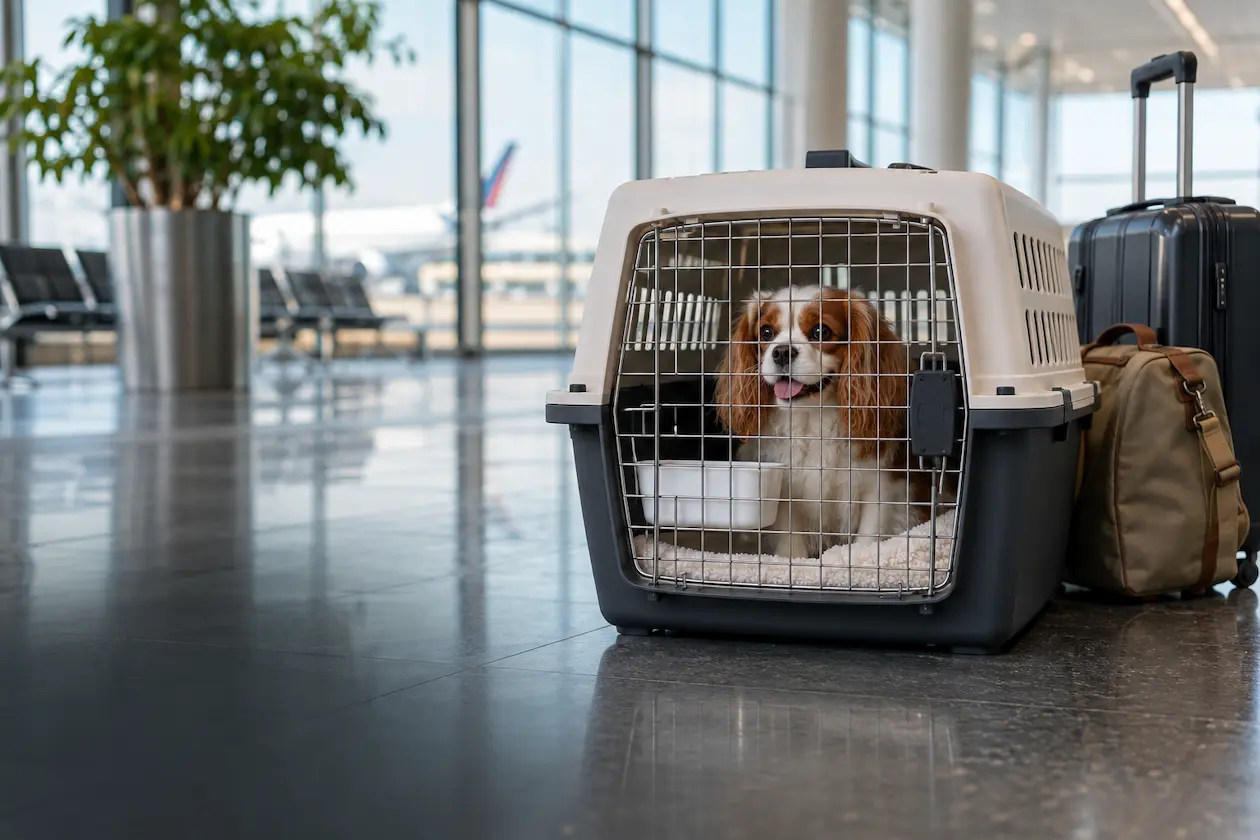
Air transport is faster and often the only practical option cross-country or internationally. Small pets may fly in-cabin for a $95–$250 airline fee; larger pets fly as checked baggage or air cargo, which costs more and requires an airline-approved crate. Compare both before booking, and for long domestic moves, see our Pet Transport Cost Calculator.
How to Save Money on Pet Shipping
Pet shipping is rarely cheap, but a few choices can meaningfully lower the bill without compromising your pet's safety:
- Choose ground over air when the distance is under ~1,000 miles. Ground transport usually costs less and avoids airline crate and cargo fees.
- Book in advance. Last-minute and peak-season (summer, holidays) bookings carry premium pricing. Reserving 4–8 weeks ahead gives you the best rates.
- Share a shared-ride route. Many ground transporters consolidate multiple pets on one run, splitting fuel and driver costs across customers.
- Fly small pets in-cabin. If your dog or cat fits under the seat, an in-cabin fee of $95–$250 is far cheaper than cargo shipping.
- Buy your own IATA-compliant crate rather than renting one from the shipper, and reuse it for future travel.
- Get the paperwork done early. Rushed health certificates and expedited permits cost more than ones arranged on a normal timeline.
Always weigh savings against your pet's comfort and safety. The cheapest option is not always the right one for a senior, brachycephalic (flat-faced), or anxious animal.
Choosing a Reputable Pet Shipping Company
Price matters, but the safest moves come from vetted, professional transporters. Before you book, confirm the company:
- Is registered with the USDA and, for international moves, a member of the International Pet and Animal Transportation Association (IPATA).
- Carries insurance that covers your pet during transit.
- Provides a clear, itemized quote with no vague "fees to be determined later."
- Offers tracking or regular updates so you know where your pet is throughout the journey.
- Has verifiable reviews and references from recent customers.
Be wary of quotes that are dramatically below the typical ranges shown above. Unusually cheap pet shipping offers are a common sign of online pet scams, especially for "free" or deeply discounted puppies that require an upfront shipping payment.
Preparing Your Pet for Shipping Day
Good preparation reduces stress for your pet and avoids costly delays or last-minute rebooking. In the weeks before transport:
- Crate-train early. Let your pet eat and nap in the travel crate for a week or two so it feels familiar rather than frightening.
- Schedule a vet visit. Get the health certificate dated within the window your shipper or airline requires (often 10 days of travel).
- Confirm vaccinations and microchip. Rabies and core vaccines must be current; international destinations often require an ISO-standard microchip.
- Label the crate with your name, contact details, the destination address, and "Live Animal" markings.
- Avoid sedatives unless your vet specifically advises them, since sedation can be dangerous at altitude.
- Limit food before travel but keep water available, and attach a small supply of food for longer trips.
Once you've planned your route and budget, run your specific numbers through the calculator above, then cross-check against our pet relocation services cost guide for full-service moves.
FAQs
Frequently Asked Questions
What is the difference between shipping methods?
Standard shipping is the most economical and takes the longest. Express shipping is faster and more expensive. Overnight shipping is the fastest option but also the most costly.
How long does pet shipping take?
Shipping time depends on the method and distance. Standard shipping typically takes 3-7 days, express shipping takes 1-3 days, and overnight shipping delivers within 24 hours.
What documentation is required for pet shipping?
Most pet shipping requires health certificates, vaccination records, and sometimes import permits depending on the destination. Check with your shipping provider for specific requirements.
What are typical dog shipping rates?
Dog shipping rates vary by size, distance, and method. Small dogs typically cost $200-$500, medium dogs $300-$700, and large dogs $400-$1000+ for standard shipping. Express and overnight shipping cost significantly more.
How much does it cost to ship a dog?
Shipping a dog typically costs $300–$1,200 domestically depending on size, distance, and method. Ground transport over a few hundred miles runs $300–$600; cross-country air or specialty transport for a large dog can reach $1,000–$2,000+. International dog shipping ranges from $1,000 to $6,000+ once flights, crates, vet paperwork, and customs are included.
How much does it cost to ship a cat?
Shipping a cat usually costs less than a dog because cats are smaller and need a smaller crate. Expect $250–$600 for domestic transport and $1,000–$4,000+ for international moves including health certificates and an airline-approved carrier.
How is breeder puppy transport pricing calculated?
Breeder puppy transport pricing is based on the puppy's weight and crate size, the distance and route, the transport method (ground nanny vs air cargo vs in-cabin), and required health documentation. Most breeder-to-buyer puppy transports range from $300 (regional ground) to $800–$1,500 (cross-country air with a pet flight service). Always confirm vaccination and health-certificate requirements before booking.
Other Calculators for Dogs

Dog Calorie Calculator by Breed — Free Daily Calorie & Feeding Tool
Free dog calorie calculator by breed. Find out exactly how many calories your dog needs per day by weight, breed, age, and activity level. Get instant kcal and feeding portions for Labradors, German Shepherds, Chihuahuas, and every breed in between. Try it now.

Puppy Calorie Calculator | Puppy Nutrition Calculator by Breed - Free Tool
Free puppy calorie calculator and nutrition tool. Calculate your puppy

Senior Dog Calorie Calculator - Free Daily Calorie Tool
Free senior dog calorie calculator. Calculate your older dog\
Other Pet Transport Calculators
Cross Country Pet Transport Cost | Estimate Long Distance Pet Moving Costs - Free Tool
Free cross country pet transport cost calculator. Estimate the cost and duration of transporting your pet across states. Compare ground vs air transport options for long distance moves.

Pet Relocation Services Cost | International Pet Moving Cost Calculator - Free Tool
Free pet relocation services cost calculator. Estimate the cost of relocating your pet internationally, including quarantine, documentation, and customs clearance services.

Pet Transport Cost Calculator | Pet Shipping Cost & Dog Shipping Cost - Free Tool
Free pet transport and pet shipping cost calculator. Estimate dog shipping cost, cat shipping cost, and pet transportation costs by type, weight, distance, and transport method. Get cost ranges for ground and air transport.
Free dog printables
Keep these dog care guides handy
A rotating selection of practical dog guides chosen from our free printable library.Dog Quality of Life Checklist
Track the HHHHHMM quality-of-life measures.
Raw Feeding Reference Card
A printable BARF and 80/10/10 portion guide.
Free cat printables
Keep these cat care guides handy
A rotating selection of practical cat guides chosen from our free printable library.Kitten Calorie Guide
Calorie targets by kitten age and weight.
Cat Pregnancy Timeline
A week-by-week kittening calendar and checklist.