Last updated: October 3, 2026
How To Use
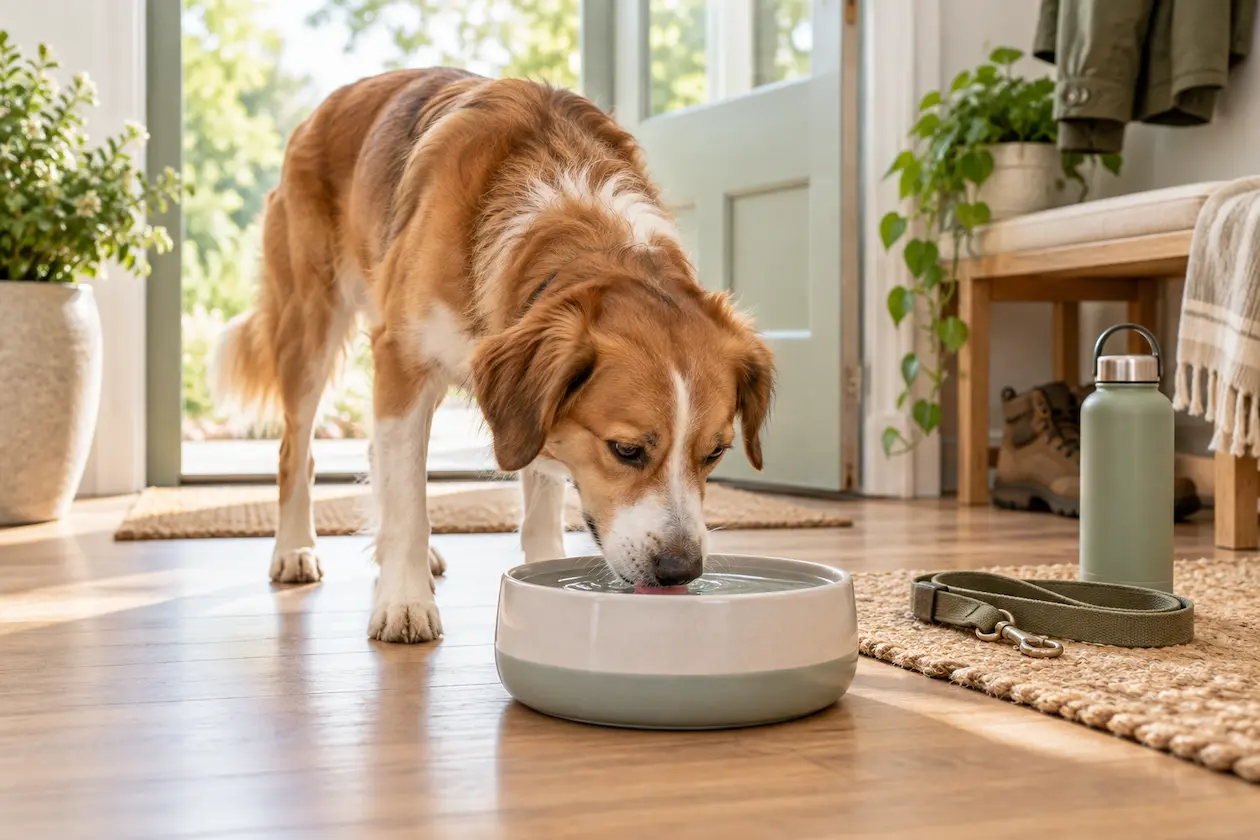
Calculate how much water your dog should drink each day based on their weight, activity level, and the weather. Fresh water intake is essential for kidney health, digestion, and overall wellbeing.
Quick Steps
- 1 Enter your Dog's Weight in pounds.
- 2 Select their Activity Level.
- 3 Select the typical Weather / Temperature.
- 4 Select your dog's Life Stage.
- 5 Click Calculate to see daily water requirements.
Dog Water Intake Calculator
Fill Out The Fields Below
How to Use the Dog Water Intake Calculator
The calculator turns the standard "1 ounce per pound of body weight" rule into a personalised daily target by adjusting for activity, weather, and life stage. Here is how to read each input:
- Weight: Enter your dog's current weight in pounds. This sets the baseline, since water needs scale almost directly with body size.
- Activity level: A working or highly active dog loses more fluid through panting and effort, so the target rises above the resting baseline.
- Weather: Hot or humid conditions increase water loss. The calculator nudges the estimate up in warm weather and down in cool weather.
- Life stage: Puppies and nursing mothers have higher relative needs, while healthy adults sit near the baseline.
The result is shown in ounces, cups, and millilitres so you can measure it with whatever you have to hand. Treat it as a daily target, not a strict limit, and always keep fresh water available.
Dog Water Intake Chart by Weight
This chart shows the typical baseline daily water requirement for a healthy adult dog at rest in mild weather, based on the 1 oz per pound rule. Active dogs and hot weather can push these figures 50% higher.
| Dog Weight | Daily Water (oz) | Daily Water (cups) | Daily Water (ml) |
|---|---|---|---|
| 10 lbs | 10 oz | 1.25 cups | 300 ml |
| 20 lbs | 20 oz | 2.5 cups | 600 ml |
| 40 lbs | 40 oz | 5 cups | 1.2 litres |
| 60 lbs | 60 oz | 7.5 cups | 1.8 litres |
| 80 lbs | 80 oz | 10 cups | 2.4 litres |
| 100 lbs | 100 oz | 12.5 cups | 3 litres |
What Affects How Much Water Your Dog Needs
The baseline rule is a starting point. Several everyday factors can raise or lower your dog's actual daily water requirement:
- Activity and exercise: Running, hiking, or working dogs pant more and need extra water before, during, and after exertion.
- Temperature and humidity: Hot, humid days increase fluid loss through panting and can push needs well above baseline.
- Diet: Dogs on dry kibble drink more from the bowl than dogs on wet or raw food, which already contains 70–80% moisture.
- Life stage: Puppies, nursing mothers, and some seniors have higher relative needs than healthy adult dogs.
- Health and medication: Fever, vomiting, diarrhoea, diabetes, kidney disease, and certain medications all change water needs, sometimes dramatically.
Worked Examples: Calculating Daily Water Needs
Numbers are easier to apply with real scenarios. Here are three common examples showing how weight and conditions come together:
Example 1: A 25 lb adult dog at rest
Using the 1 oz per pound rule, a 25 lb dog needs about 25 oz (roughly 3 cups or 740 ml) of water on a normal, mild-weather day. On a cool, low-activity day the lower end of 0.5–0.7 oz/lb (13–18 oz) is also normal.
Example 2: A 60 lb dog on a hot, active day
The 60 oz baseline can climb to 90 oz (about 11 cups or 2.6 litres) when a 60 lb dog is exercising in hot weather. Offer water in small amounts throughout the day rather than one large drink after exertion.
Example 3: A 12 lb puppy
A 12 lb puppy has a baseline near 12 oz per day, but because puppies dehydrate quickly, the goal is steady access rather than one target. Offer about half a cup every couple of hours during active periods.
Signs of Dehydration and Overhydration in Dogs
Knowing the warning signs in both directions helps you act early. Dehydration is far more common, but drinking too much can also signal a problem.
Signs of Dehydration
- Dry, sticky, or tacky gums
- Loss of skin elasticity (skin "tents" when gently pinched)
- Sunken or dull eyes
- Lethargy and reduced appetite
- Thick saliva and reduced urination
Signs of Drinking Too Much
- A sudden, sustained jump in thirst (polydipsia)
- Frequent urination or new accidents indoors
- Drinking far above the chart values day after day
- Possible links to diabetes, kidney disease, or Cushing's
- Bloating or discomfort after rapid gulping
If signs of dehydration persist for more than 24 hours, or if thirst suddenly spikes without an obvious cause like heat or exercise, contact your vet.
Why Hydration Matters: The Research
Water is involved in nearly every bodily process, and even mild dehydration affects how a dog feels and functions:
- Dogs are mostly water. Roughly 60% of an adult dog's body weight is water, and losing as little as 10–15% can become life threatening.
- It regulates temperature. Dogs cool themselves largely by panting, which depends on adequate fluid; hydration is central to preventing heatstroke.
- It protects the kidneys. Steady water intake supports kidney function and helps flush waste, lowering the risk of urinary and kidney problems.
- It aids digestion. Water helps break down food and absorb nutrients, and supports healthy joint lubrication.
- Small deficits add up. Even mild, ongoing under-drinking can contribute to lethargy, constipation, and concentrated urine over time.
FAQs
Frequently Asked Questions
How much water should a dog drink per day?
The general rule is approximately 1 ounce (30 ml) of water per pound of body weight per day. A 20 lb dog needs roughly 20 oz (2.5 cups / 600 ml) daily; a 50 lb dog needs roughly 50 oz (6.25 cups / 1.5 litres). This is a baseline — use the calculator above for a personalised estimate based on your dog's activity, weather, and life stage.
How much water does a dog need in a day?
Most dogs need between 0.5 and 1.5 oz of water per pound per day depending on conditions. At rest in cool weather, 0.5–0.7 oz/lb is typical. Active dogs in hot weather or nursing mothers may need up to 1.5–2 oz/lb. Puppies also have higher relative water needs than adult dogs.
How much water should a puppy drink per day?
Puppies generally need about half a cup of water every 2 hours during the day. By weight, aim for approximately 0.5 oz per pound every few hours during active periods. Puppies dehydrate faster than adult dogs — always ensure fresh water is accessible.
My dog isn't drinking enough — what should I do?
Try refreshing the water bowl more frequently, placing bowls in multiple locations, adding a small amount of low-sodium chicken broth, or switching to a pet fountain. If reduced water intake persists for more than 24 hours or is accompanied by lethargy, see a vet.
Can my dog drink too much water?
Yes — excessive thirst (polydipsia) can be a sign of diabetes, kidney disease, Cushing's disease, or other conditions. If your dog is suddenly drinking significantly more than usual, consult a vet.
Does wet food count toward my dog's daily water intake?
Yes. Wet food is approximately 70–80% moisture, which counts toward total fluid intake. Dogs on a wet food diet may drink noticeably less water from their bowl — this is normal and expected.
What are signs of dehydration in dogs?
Key signs include dry or sticky gums, loss of skin elasticity (skin "tents" when gently pinched and released slowly), sunken eyes, lethargy, and reduced urination. Severe dehydration requires emergency vet care.
Other Calculators for Dogs
Dog Calorie Calculator by Breed — Free Daily Calorie & Feeding Tool
Free dog calorie calculator by breed. Find out exactly how many calories your dog needs per day by weight, breed, age, and activity level. Get instant kcal and feeding portions for Labradors, German Shepherds, Chihuahuas, and every breed in between. Try it now.
Puppy Calorie Calculator | Puppy Nutrition Calculator by Breed - Free Tool
Free puppy calorie calculator and nutrition tool. Calculate your puppy
Senior Dog Calorie Calculator - Free Daily Calorie Tool
Free senior dog calorie calculator. Calculate your older dog\
Other Pet Health Calculators
Cat BMI Calculator - Check Your Cat
Free cat BMI calculator. Check your cat
How Long Are Cats Pregnant? Cat Pregnancy Calculator & Due Date Tool
How long are cats pregnant? Cat pregnancy averages 63–65 days (about 9 weeks). Use our free cat pregnancy calculator to find the estimated due date, current week, and a week-by-week kitten care guide.
Cat Quality of Life Calculator, Free HHHHHMM Scale for Cats | Senior Cat QoL Tool
Free cat quality of life calculator using the HHHHHMM scale. Assess your senior cat
Free dog printables
Keep these dog care guides handy
A rotating selection of practical dog guides chosen from our free printable library.Dog Body Condition Chart
A printable 1–9 body condition reference.
Puppy Calorie Guide
Calorie targets by breed size and age.
Dog Pregnancy Timeline
A week-by-week whelping calendar and checklist.