
Last updated: October 3, 2026
How To Use
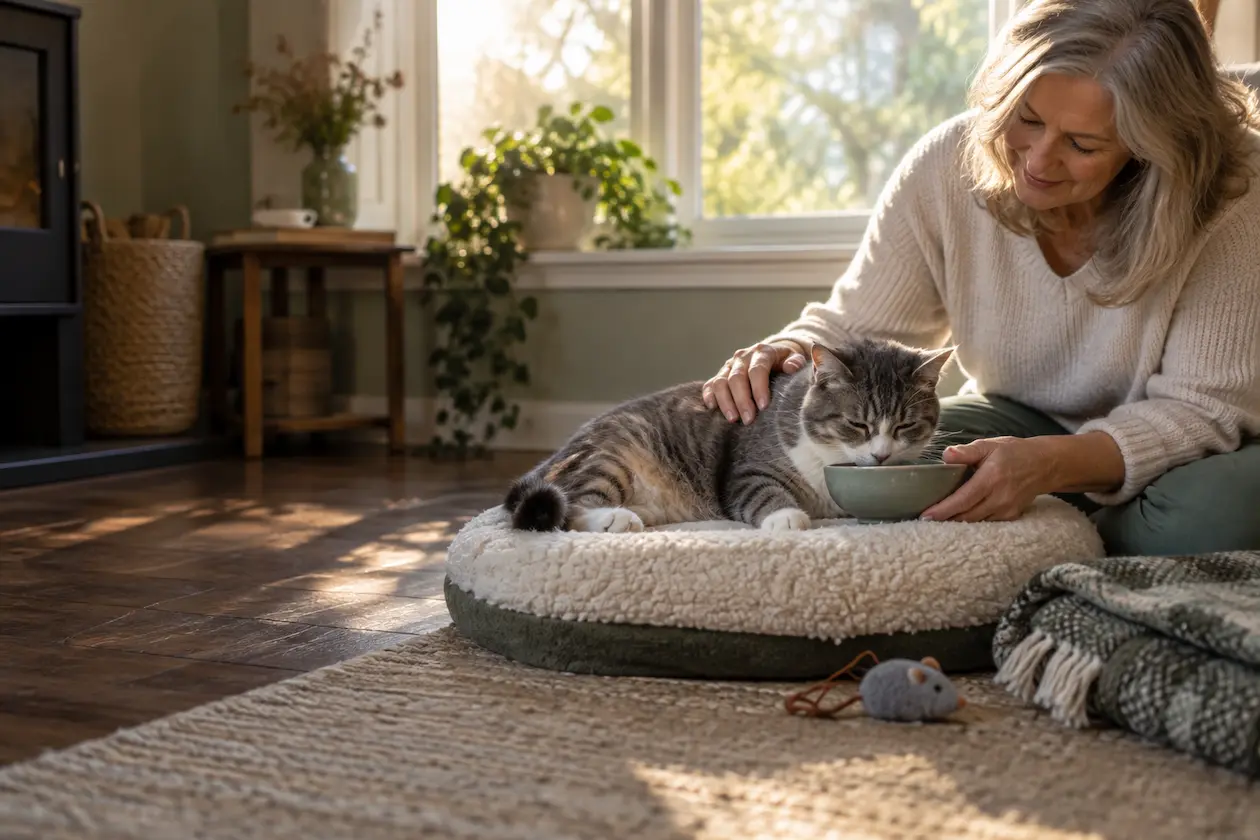
The HHHHHMM Quality of Life Scale (developed by Dr. Alice Villalobos) adapted for cats. Rate each factor from 1 (severe problems) to 10 (no problems). This tool is especially useful for senior cats, cats with chronic illness, or when facing difficult care decisions. Cats are masters at hiding pain — be observant and honest in your ratings. Always discuss results with your veterinarian.
Quick Steps
- 1 Rate each of the 7 HHHHHMM factors from 1 (severe problems) to 10 (no problems).
- 2 Be honest about your cat's current condition — cats hide pain well.
- 3 Click Calculate to see the total score and assessment.
Cat Quality of Life Calculator
Fill Out The Fields Below
Signs of Pain & Declining Quality of Life in Cats
Cats instinctively hide pain and illness, a survival behavior inherited from their wild ancestors. By the time a cat shows obvious signs, they may have been suffering for weeks. Learning subtle signs helps you catch issues earlier and score the HHHHHMM scale more accurately.
Physical Signs
- Hiding more than usual: seeking isolation is a primary pain indicator
- Hunched posture: tense, tucked-up body while resting
- Squinted eyes: the "Feline Grimace Scale" measures facial tension
- Changes in grooming: either stopped grooming (matted fur) or over-grooming one area
- Appetite changes: eating less, approaching food but not eating, or drooling
- Litter box changes: accidents outside the box, straining, or changes in output
Behavioral Signs
- Withdrawal: no longer seeking attention or interaction
- Aggression when touched: especially in areas that didn't bother them before
- Reluctance to jump: avoiding favorite high spots, using stairs slowly
- Sleep pattern changes: sleeping much more or restless/unable to settle
- Vocalization changes: yowling at night, growling, or unusually quiet
- Loss of interest: no longer playing, watching birds, or responding to treats
Understanding the HHHHHMM Scale for Cats
The HHHHHMM scale provides a structured way to assess your cat's quality of life. Here's how to score each factor specifically for cats:
| Factor | Score 8–10 (Good) | Score 4–7 (Fair) | Score 1–3 (Poor) |
|---|---|---|---|
| Hurt | No pain, relaxed posture, purrs | Some discomfort, managed with meds | Unmanaged pain, hiding, grimacing |
| Hunger | Good appetite, eats normally | Eats with encouragement, picky | Refuses food, needs force-feeding |
| Hydration | Drinks well, skin snaps back | Needs sub-Q fluids occasionally | Severely dehydrated, needs daily fluids |
| Hygiene | Grooms self, uses litter box | Occasional accidents, less grooming | Soiled, matted, can't use litter box |
| Happiness | Purrs, seeks attention, plays | Less interactive, some interest | Withdrawn, no interest, depressed |
| Mobility | Walks, jumps to favorite spots | Slower, avoids some jumps | Can barely walk, can't reach food/water |
| More Good Days | Mostly good days | Mixed, some bad days | Bad days outnumber good |
We also have a Dog Quality of Life Calculator using the same HHHHHMM scale. For cat weight monitoring, try our Cat Weight Calculator or Cat BMI Calculator. For deeper reading on senior cat care, see our cat weight guides.
What Your Cat's Quality of Life Score Means
Once you have added up all seven factors, your cat's total falls somewhere between 7 and 70. The ranges below offer a gentle way to read that number. They are a starting point for reflection and conversation, not fixed thresholds, because every cat and every family is different.
50 to 70: Reasonable quality of life
Your cat is likely still enjoying many good days. Keep scoring regularly, stay on top of any chronic conditions, and note which single factors are lowest so you can gently support them before they decline further.
36 to 49: Borderline, worth a closer look
Some factors are pulling the total down. This is a good moment to talk with your vet about pain relief, appetite support, or mobility aids. Many cats in this range improve once a specific problem, especially unmanaged pain, is treated.
35 or below: Significant concerns
A score in this range suggests your cat may be struggling. It does not automatically mean it is time to say goodbye, but it is a clear signal to have an honest, timely conversation with your veterinarian about comfort, palliative care, and, when the time comes, humane options.
Please remember: this calculator is a guide to help you notice and describe changes in your cat, not a diagnosis or a substitute for professional advice. Your veterinarian knows your cat's history and can examine what a score cannot see. If you are weighing a difficult decision, our gentle guides on knowing when it is time for a cat and on quality of life assessment may help you feel less alone.
Health Conditions That Affect Cat Quality of Life
A low quality of life score is usually driven by one or more underlying conditions. Knowing which conditions are common in senior cats helps you interpret your HHHHHMM results and ask the right questions at your vet visit.
Chronic Kidney Disease (CKD)
Affects 30–40% of cats over 10. Causes dehydration, weight loss, and poor appetite, so it pulls down Hydration, Hunger, and More Good Days scores. Sub-Q fluids and a renal diet often improve well-being substantially.
Arthritis & Joint Disease
Up to 90% of cats over 12 have arthritis. It lowers Mobility and Hygiene scores (cats stop jumping and grooming hard-to-reach areas). Pain relief, ramps, and low-entry litter boxes help.
Hyperthyroidism
Common in older cats. Causes weight loss despite a big appetite, restlessness, and a poor coat. Often treatable with medication, diet, or radioactive iodine therapy.
Cancer & Diabetes
Both can dramatically affect Hurt, Hunger, and Happiness. Many cases respond well to treatment, appetite stimulants, or palliative care, so a low score is not automatically an end-of-life signal.
How to Improve Your Cat's Quality of Life
The real value of the HHHHHMM scale is that it shows you which specific factors are low so you can target them. Small, practical changes often raise a score by several points within a week or two.
- Pain management: Ask your vet about cat-safe pain relief. Untreated pain is one of the most fixable causes of a low score.
- Appetite support: Warm food slightly, try strong-smelling toppers, or ask about appetite stimulants if Hunger is low.
- Hydration help: Add water fountains, feed wet food, and learn to give sub-Q fluids at home for cats with kidney disease.
- Mobility aids: Provide ramps or steps to favorite spots, soft heated beds, and litter boxes with low sides.
- Grooming assistance: Gently brush cats who can no longer groom themselves to keep Hygiene and comfort high.
- Comfort and enrichment: Keep food, water, and litter close by; offer quiet sunny resting spots and gentle play to support Happiness.
Example Cat Quality of Life Assessments
Seeing how scores come together helps you apply the scale to your own cat. These examples show how the same total can point to very different next steps.
Example 1: Managed senior cat, score 58/70
A 14-year-old cat with early kidney disease scores high on Happiness, Hunger, and Mobility but lower on Hydration. A total of 58 suggests good quality of life; the low Hydration score points to adding wet food and fluids.
Example 2: Arthritic cat in pain, score 42/70
A 16-year-old cat scores low on Hurt and Mobility but still eats and interacts. A total of 42 is borderline; pain relief and mobility aids could lift several factors and improve the trend.
Example 3: Declining cat, score 28/70
A cat refusing food, hiding, and barely moving scores low across most factors. A total of 28 is a clear signal to have an urgent, honest conversation with your vet about comfort, palliative care, and humane options.
How to Track Your Cat's Quality of Life Over Time
A single score is a snapshot, but the trend tells the real story. One bad day does not mean a poor quality of life, and a temporarily high score can mask a slow decline. Tracking your cat's scores over weeks gives you and your vet objective data instead of relying on memory.
- Assess on a schedule: Score every 1–2 weeks for chronically ill or senior cats, more often after a diagnosis or medication change.
- Keep a journal: Write down the date, total score, and which factors changed. Note appetite, litter box habits, and activity.
- Watch the direction: A steady decline over several assessments is far more concerning than one low day.
- Share with your vet: Bring your scoring history to appointments so treatment decisions are based on real trends.
Download our printable HHHHHMM checklist below to record scores by hand and bring them to every visit.
FAQs
Frequently Asked Questions
How do I assess my cat's quality of life?
Assess your cat by scoring seven factors on the HHHHHMM scale (Hurt, Hunger, Hydration, Hygiene, Happiness, Mobility, and More good days than bad), each from 1 to 10. Watch how your cat eats, drinks, grooms, moves, uses the litter box, and interacts with you over a few days, then rate each factor honestly. Add the scores for a total out of 70 and repeat every 1 to 2 weeks to see the trend. This is a guide to help you notice changes, not a diagnosis, so share your results with your veterinarian.
What is a good quality of life score for a cat?
On the HHHHHMM scale (total out of 70), a score above 50 generally suggests a reasonable quality of life, while a total of 35 or below points to significant concerns worth discussing with your vet promptly. Scores in between are a signal to look at which specific factors are low and what can be improved. No single number tells the whole story, so watch the trend over several weeks rather than one score, and treat the result as guidance rather than a diagnosis.
What is the HHHHHMM quality of life scale for cats?
The HHHHHMM scale (developed by Dr. Alice Villalobos) assesses seven factors: Hurt, Hunger, Hydration, Hygiene, Happiness, Mobility, and More good days than bad. Each is scored 1–10. A total of 35 or below may indicate poor quality of life; 50+ suggests reasonable quality. This scale works for both dogs and cats, and you should always discuss results with your veterinarian.
When should I use a cat quality of life calculator?
Use this calculator for senior cats (11+ years), cats with chronic illness (kidney disease, hyperthyroidism, cancer, diabetes), or when facing difficult care decisions. It helps you objectively assess well-being and identify specific areas needing attention.
How do I know if my cat is in pain?
Cats are masters at hiding pain. Signs include: hiding more than usual, decreased grooming or over-grooming one area, loss of appetite, reluctance to jump, hunched posture, dilated pupils, aggression when touched, and changes in litter box habits. The Feline Grimace Scale is another validated tool for assessing pain in cats.
What does a low quality of life score mean for my cat?
A score of 35 or below suggests significant quality of life concerns. This doesn't necessarily mean end-of-life decisions are needed immediately. It means you should discuss pain management, palliative care, and treatment options with your vet. Some factors (like pain) can often be improved with medication.
How often should I assess my cat's quality of life?
For cats with chronic illness or senior cats, assess every 1–2 weeks. Keep a journal of scores over time, since trends matter more than any single score. A declining trend over several weeks is more concerning than one bad day.
Is this the same quality of life scale used for dogs?
Yes. The HHHHHMM scale was originally developed for dogs but is widely used for cats as well. The factors (Hurt, Hunger, Hydration, Hygiene, Happiness, Mobility, and More good days than bad) apply equally to cats. We also have a dedicated Dog Quality of Life Calculator.
What are common quality of life concerns in senior cats?
Common issues include: chronic kidney disease (affects 30–40% of cats over 10), hyperthyroidism, arthritis (up to 90% of cats over 12), dental disease, diabetes, and cognitive dysfunction. Regular vet check-ups every 6 months catch these early.
Can quality of life improve after a low score?
Yes, in many cases. Pain medication, appetite stimulants, subcutaneous fluids, environmental modifications (ramps, heated beds, low-entry litter boxes), and treating underlying conditions can significantly improve scores. The goal is to identify which specific factors are low and address them.
Other Calculators for Cats
Cat Food Carb Calculator | Free Carbohydrate Calculator for Cat Food
Free cat food carb calculator. Calculate carbohydrate content in wet and dry cat food from the guaranteed analysis label. Compare carbs on a dry matter basis. Essential for low-carb and diabetic cat diets.
Cat Calorie Calculator - Daily Calories & Feeding Amounts for Cats
Free cat calorie calculator. Enter your cat
Kitten Calorie Calculator - Free Daily Calorie Needs Tool
Free kitten calorie calculator. Enter your kitten
Other Pet Health Calculators
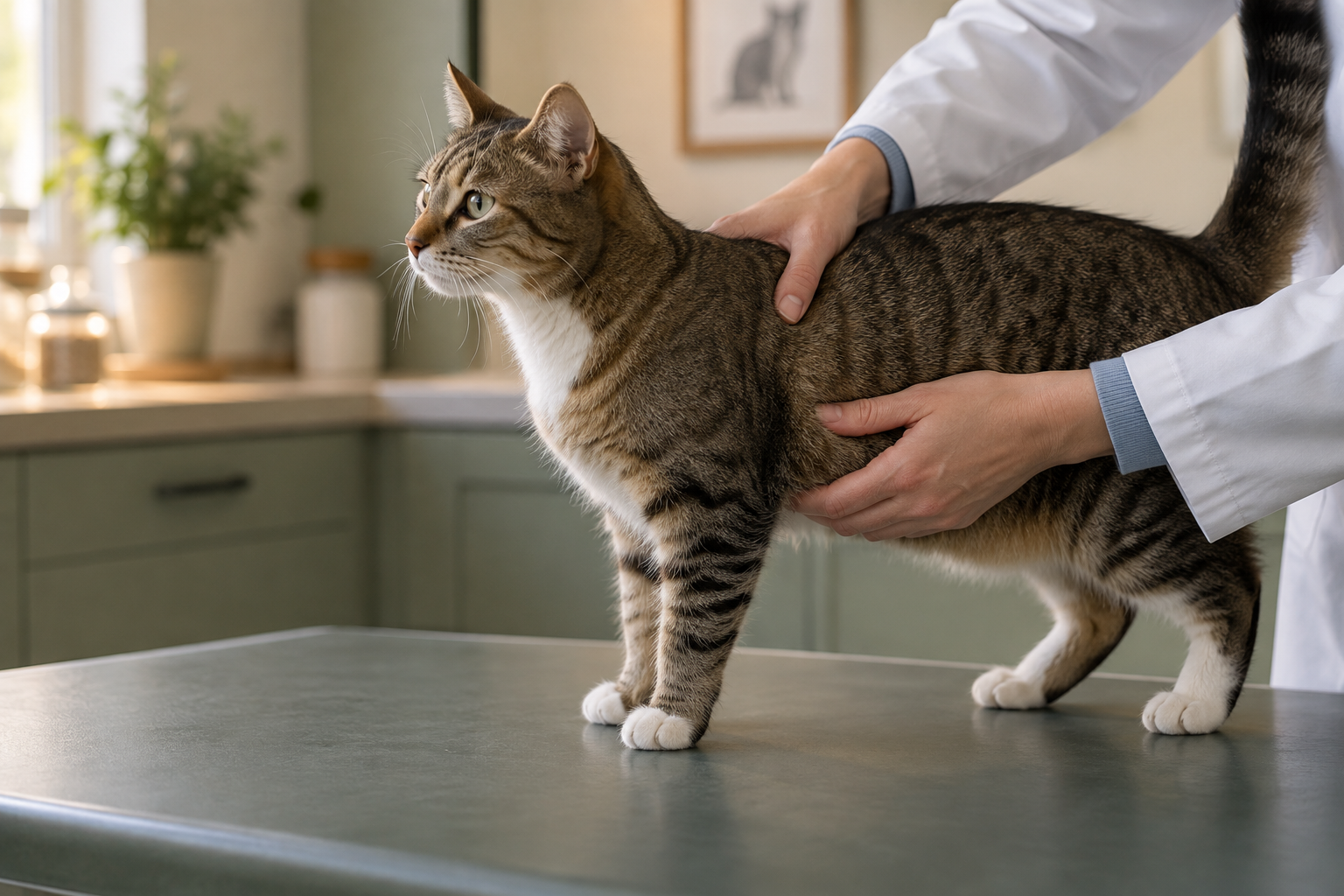
Cat BMI Calculator - Check Your Cat
Free cat BMI calculator. Check your cat
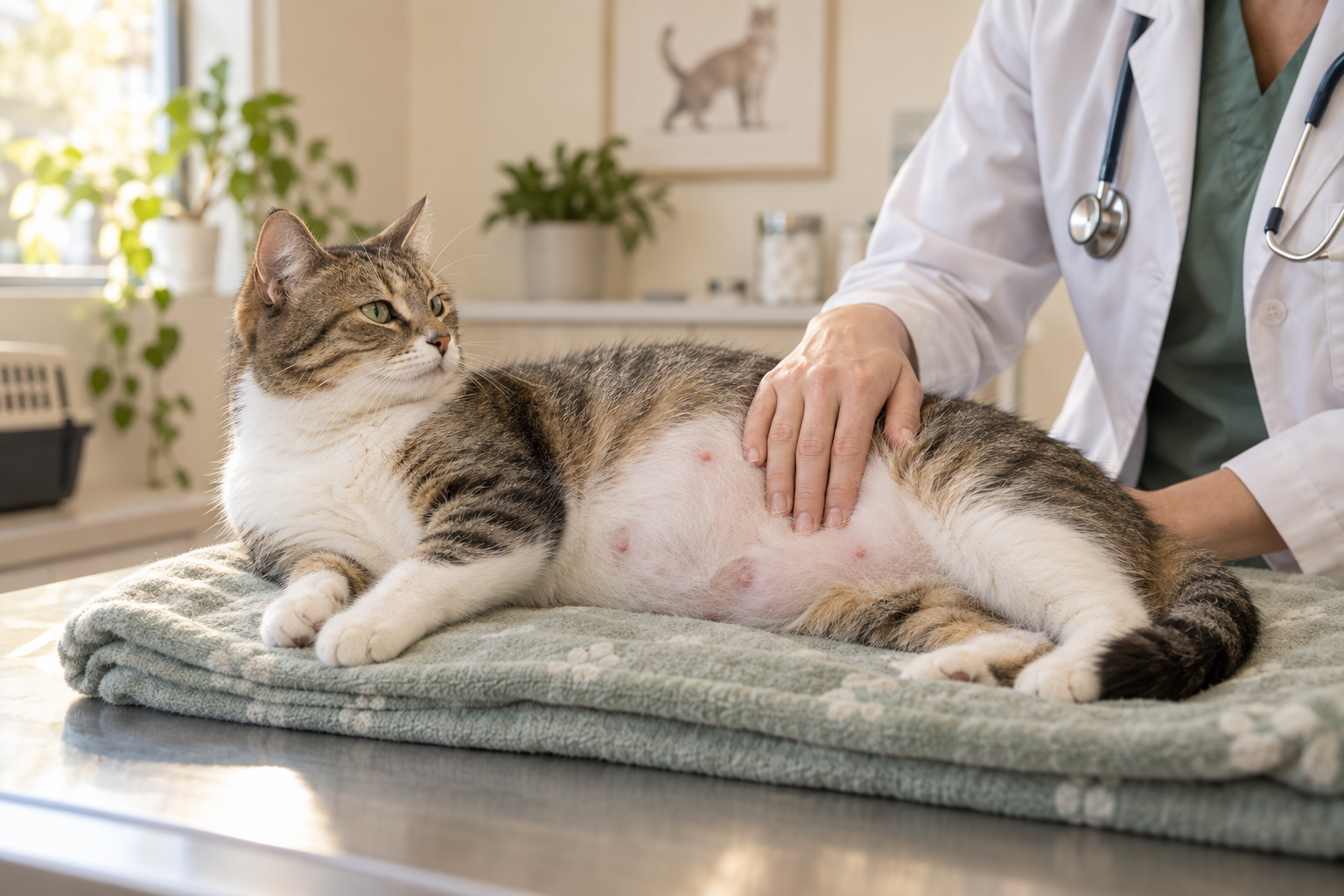
How Long Are Cats Pregnant? Cat Pregnancy Calculator & Due Date Tool
How long are cats pregnant? Cat pregnancy averages 63–65 days (about 9 weeks). Use our free cat pregnancy calculator to find the estimated due date, current week, and a week-by-week kitten care guide.

Dog BMI Calculator - Free Body Condition Score Tool for Dogs
Free dog BMI calculator and body condition score tool. Check whether your dog is overweight, underweight, or ideal using the 1-9 BCS scale, and get personalized diet and exercise next steps based on your dog
Free cat printables
Keep these cat care guides handy
A rotating selection of practical cat guides chosen from our free printable library.Cat Body Condition Chart
A printable body condition reference for cats.
Cat Quality of Life Checklist
Track the HHHHHMM quality-of-life measures.
Cat Feeding Guide
Portions by weight, age, and life stage.