
Last updated: October 3, 2026
Cat Nutrition
Can Cats Eat Watermelon?
Watermelon is a summer favorite, and a curious cat may want a taste. The good news is that the flesh is safe in small amounts. The catch is the seeds, the rind, and the sugar. Here is how to share it safely and how much is too much.
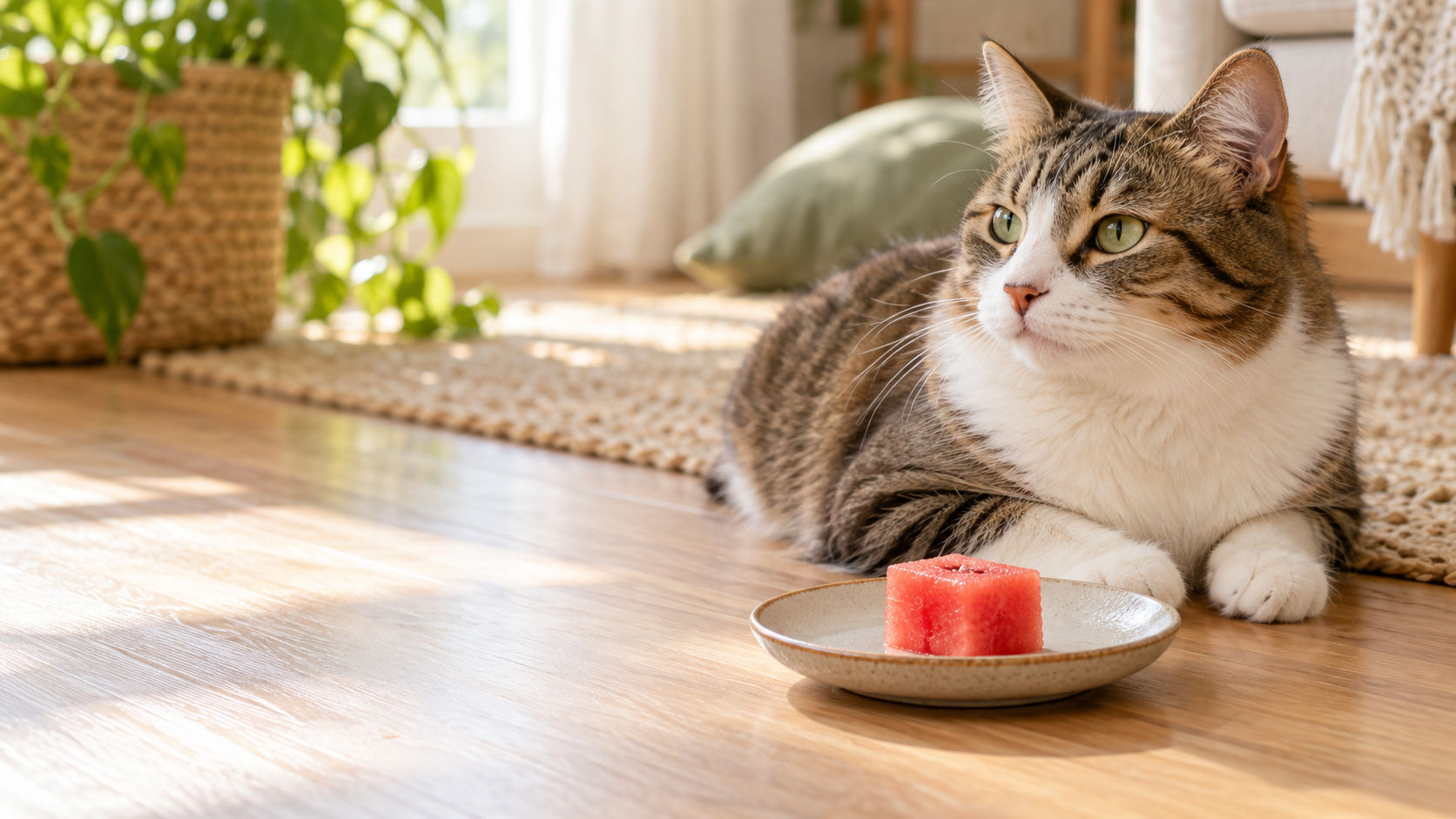
The short answer
Yes, cats can eat a small amount of seedless watermelon flesh as an occasional treat. Always remove the seeds and rind, keep the portion to a cube or two, and skip it for diabetic cats. Watermelon is mostly water and sugar, so it is a novelty, not a nutrition source.
This guide is general information, not veterinary advice. Every cat is different. Check with your veterinarian before adding any new food, especially if your cat is diabetic, overweight, or has a health condition, and call your vet if your cat reacts badly to something it has eaten.
What Watermelon Does and Does Not Offer a Cat
A treat to enjoy in moderation, not a health food
Mostly water
Watermelon is roughly 90 percent water, so a small piece can be a hydrating novelty on a hot day. It is not a substitute for fresh drinking water, though, and a cat that seems to be seeking out moisture or drinking a lot may need a vet check.
Naturally sugary
The flip side of that sweet flesh is sugar. Cats have no dietary need for sugar and cannot taste it, and too much can cause loose stool or contribute to weight gain, which is why portions must stay tiny and diabetic cats should skip it.
Some vitamins, little benefit
Watermelon contains vitamins A and C and some antioxidants, but cats make their own vitamin C and get what they need from a complete cat food. So while these nutrients sound good, they add little for a cat already eating a balanced diet.
Meat is still the point
As obligate carnivores, cats thrive on animal protein and fat, not fruit. Watermelon can be a fun shared moment, but it should never displace any part of a proper cat diet.
Which Parts of the Watermelon Are Safe
The flesh is the only part to share. Everything else is best kept out of reach.
| Part | Verdict | Notes |
|---|---|---|
| Pink flesh (seedless) | Safe in small amounts | Non-toxic and mostly water. A couple of small, bite-sized pieces make a fine occasional treat for most healthy cats. |
| Black (mature) seeds | Remove first | Contain small amounts of cyanide compounds and are a choking and blockage risk in a small animal. Always take them out. |
| White (immature) seeds | Best avoided | Softer and lower risk than black seeds, but still worth removing so you are not relying on your cat to chew carefully. |
| Green rind | Do not feed | Tough and hard to digest, and a real choking or obstruction hazard. Keep the rind away from your cat. |
| Watermelon juice or flavored products | Avoid | Added sugar, and sometimes artificial sweeteners such as xylitol, which is toxic to cats. Stick to fresh flesh only. |
How to Serve Watermelon Safely
Preparing watermelon for a cat is simple, and a little care removes almost all of the risk:
- Choose plain, fresh flesh and cut away all of the green and white rind.
- Pick out every seed, or use seedless watermelon to be safe.
- Cut the flesh into small, bite-sized pieces your cat cannot choke on.
- Offer one or two pieces, then wait a day before offering it again.
- Skip any watermelon-flavored candy, drink, or product, since these often contain sugar or xylitol.
If your cat gets loose stool or an upset stomach after watermelon, leave it off the menu. And if your cat is drinking a lot of water or seems unusually hungry for moisture, that can be a health sign worth discussing with your vet rather than something to solve with fruit. To keep treats in proportion, our cat nutrition calculator shows how small your cats treat budget really is.
Frequently Asked Questions About Cats and Watermelon
Common questions about seeds, rind, and safe amounts
Is watermelon safe for cats?
Plain watermelon flesh is not toxic to cats, so a small piece is safe for most healthy cats as an occasional treat. The important caveats are that you must remove the seeds and rind, and that watermelon is high in water and natural sugar with little that a cat actually needs. Because cats are obligate carnivores, watermelon should only ever be a tiny extra, not a regular snack.
Can cats eat watermelon seeds?
No, you should remove the seeds before offering watermelon. The black, mature seeds contain small amounts of cyanide-producing compounds, and although a seed or two is unlikely to poison a cat, seeds are also a genuine choking and intestinal blockage risk in an animal as small as a cat. Seedless watermelon, or flesh with the seeds picked out, is the only version to offer.
Can cats eat watermelon rind?
No. The tough green rind is difficult to chew and digest and can cause choking or an intestinal obstruction. Cut the soft pink flesh away from the rind and discard the rind entirely. If your cat chews on a piece of rind, watch for vomiting, straining, or a loss of appetite, and contact your vet if you see them.
How much watermelon can I give my cat?
Keep it to one or two small, seedless, bite-sized cubes, offered occasionally rather than daily. Treats of any kind should stay under about 10 percent of your cats daily calories, and while watermelon is low in calories, its sugar and water can still cause loose stool if you overdo it. Introduce it in a tiny amount first and see how your cat tolerates it.
Can diabetic or overweight cats have watermelon?
Be cautious. Watermelon is naturally high in sugar, so it is not a good choice for diabetic cats or cats on a weight-control plan, and you should check with your vet before offering any sugary food to a cat with a health condition. For these cats, a small piece of cooked plain meat is a safer treat than fruit.
Why is my cat interested in watermelon at all?
Cats cannot taste sweetness, so a cat drawn to watermelon is usually attracted to the moisture, the cool texture, or simply your interest in it rather than the sugar. Some cats like the water content, which is why watermelon appeals to them on a hot day. It is a curiosity treat, not something they need, so a small taste is plenty.
Explore More Cat Nutrition Guides
Know what is safe before you share from your plate.
Free cat printables
Keep these cat care guides handy
A rotating selection of practical cat guides chosen from our free printable library.Kitten Growth Chart
Week-by-week weight and development milestones.
Cat Body Condition Chart
A printable body condition reference for cats.
Cat Feeding Guide
Portions by weight, age, and life stage.