
Last updated: October 3, 2026
How To Use
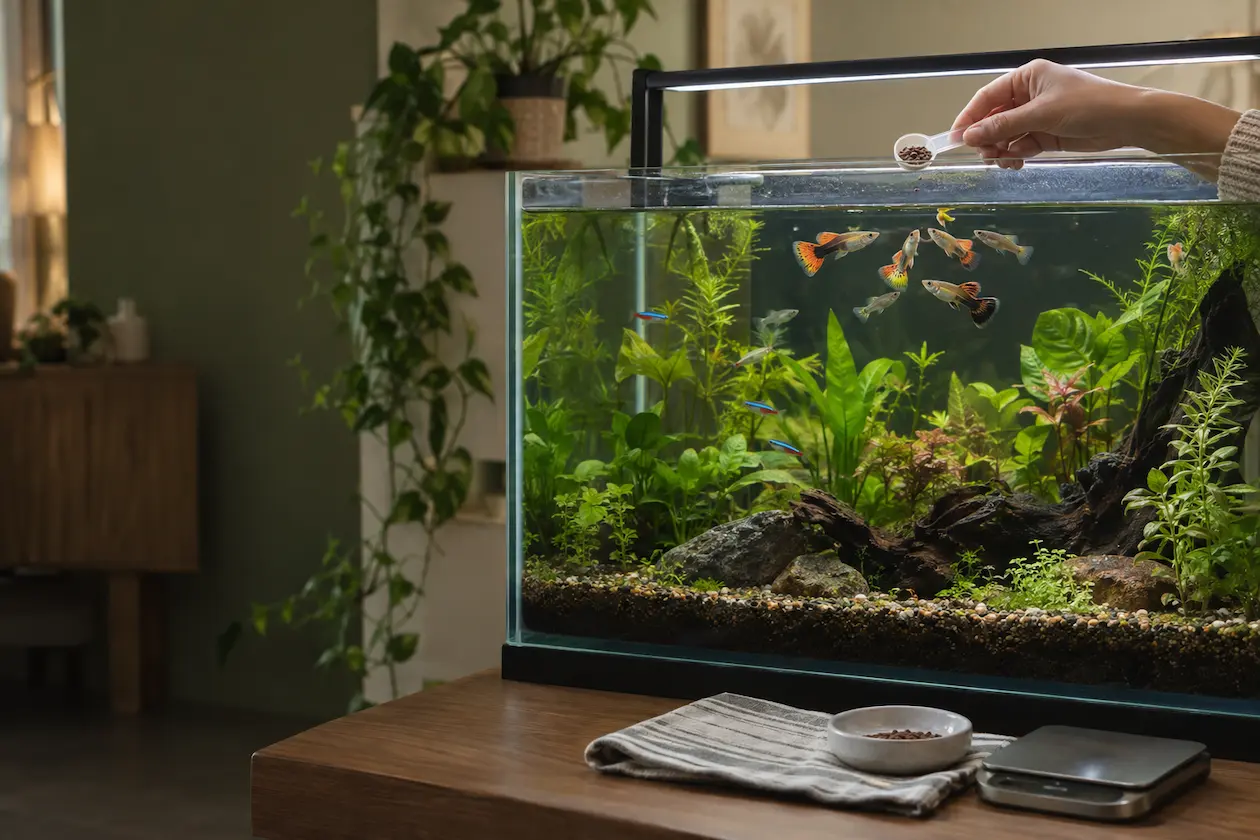
This tool helps estimate the daily calorie requirements for your fish based on their species, age, feeding frequency, water temperature, and tank size.
Simply fill out the fields and click Calculate to get started.
Quick Steps
- 1 Select the Species of your fish.
- 2 Enter the Age of your fish in years.
- 3 Select the Feeding Frequency of your fish.
- 4 Enter the Water Temperature in degrees Fahrenheit.
- 5 Select the Tank Size in gallons.
- 6 Click the Calculate button to see the estimated daily calorie requirement.
Fish Nutrition Calculator
Fill Out The Fields Below
Result
Fish Species Information
| Species | Description | Feeding Frequency |
|---|---|---|
| Goldfish | A popular freshwater fish known for its bright coloration and ease of care. | Varies; typically once or twice a day, adjust based on size and dietary needs. |
| Betta | A small, colorful fish often kept in small tanks or bowls, known for its unique behaviors. | Varies; typically once or twice a day, adjust based on size and water conditions. |
| Guppy | Small, livebearing fish popular in community tanks, known for their vibrant colors. | Varies; typically once or twice a day, adjust based on size and breeding status. |
| Angelfish | Tall, graceful fish with distinctive fins, popular in larger community aquariums. | Varies; typically once or twice a day, adjust based on size and tank mates. |
| Cichlid | Colorful, territorial fish found in freshwater habitats, known for their diverse species. | Varies; typically once or twice a day, adjust based on size and aggression level. |
| Pleco | Bottom-dwelling fish with sucker-like mouths, often used for algae control in aquariums. | Varies; typically once or twice a day, adjust based on size and algae availability. |
| Tetra | Small, schooling fish found in many colors, popular for their peaceful nature. | Varies; typically once or twice a day, adjust based on size and tank conditions. |
| Gourami | Labyrinth fish with unique respiratory system, known for their colorful patterns. | Varies; typically once or twice a day, adjust based on size and tank setup. |
Understanding Fish Daily Caloric Needs
| Factor | Description |
|---|---|
| Species | Select the fish species from the dropdown list; different species have different calorie requirements. |
| Age | Fish age, influencing calorie needs (young fish may need more). |
| Feeding Frequency | How often the fish is fed per day, affecting total daily calorie intake. |
| Water Temperature | Provide the average water temperature of the tank to adjust calorie needs based on metabolic rate. |
| Tank Size | The size of the tank in gallons, affecting fish activity level and calorie expenditure. |
Our fish nutrition calculator estimates how much food your fish need each day based on their species, size, tank conditions, and activity level. Unlike mammals, fish are cold-blooded, so their metabolism and appetite rise and fall with water temperature. This fish food calculator gives you a species-aware starting point so you can feed the right amount, keep water quality high, and support healthy growth and color in your aquarium or pond.
How the Fish Nutrition Calculator Works
Fish do not eat to a fixed daily calorie target the way a dog or cat does. Instead, their needs shift with water temperature, life stage, and species. The calculator combines the details you enter to produce an estimated feeding amount, then leaves room for you to fine-tune based on how quickly the food is eaten and how your fish look and behave.
- Species: A goldfish, a betta, a community tetra, and a large cichlid all have different appetites, gut lengths, and dietary preferences.
- Size: Larger fish need more total food, but small fish burn energy quickly relative to their body weight.
- Tank conditions: Temperature drives metabolism, so warmer water usually means a bigger appetite and colder water means less.
- Activity level: Active swimmers and predatory species use more energy than sedentary bottom-dwellers.
Treat the result as an informed starting estimate rather than an exact prescription. The most reliable guide is still observation: offer a small amount, watch how much is eaten in a couple of minutes, and adjust from there.
How Much and How Often to Feed Your Fish
The classic rule of thumb is to feed only what your fish can finish in about two to three minutes, once or twice a day. Overfeeding is by far the most common mistake in the hobby, and it causes more problems than underfeeding ever does.
- Portion size: A pinch of flakes or a small number of pellets per feeding is usually plenty for a typical community tank.
- Frequency: Most adult fish do well with one or two feedings a day; some hobbyists split food into smaller meals to reduce waste.
- Fasting days: Many keepers skip feeding one day a week to aid digestion and let fish clear their gut, which is normal and healthy for most species.
- Remove leftovers: Net out any uneaten food after a few minutes so it does not decay and pollute the water.
When you enter your fish details into the calculator, use the estimate as a per-day target and divide it across your chosen number of feedings. If food is left sitting on the substrate, you are feeding too much.
Essential Nutrients for Fish Health
A complete fish diet supplies the same broad categories of nutrients that other animals need, balanced for the way fish digest and use energy. Matching the balance to your species is what keeps color vivid, growth steady, and immune systems strong.
- Protein: The most important nutrient for most fish, especially carnivores and growing juveniles, who need high-quality animal protein to build muscle.
- Fats: A concentrated energy source that also supplies essential fatty acids for healthy cell function and reproduction.
- Carbohydrates: Used more by herbivorous and omnivorous species; carnivores handle them poorly and need less.
- Vitamins and minerals: Support immune function, bone and scale development, and the pigments that create bright coloration.
- Fiber: Herbivores such as many plecos and mollies need plant matter and roughage to keep digestion moving.
High-quality commercial foods are formulated to hit these targets, which is why a species-appropriate flake, pellet, or wafer usually beats a single homemade ingredient.
Carnivores, Herbivores, and Omnivores: Matching Food to Species
Feeding the wrong type of food is a slow-motion health problem. A carnivore fed a plant-heavy diet or a herbivore fed rich protein pellets will not thrive, even if the quantity is correct.
- Carnivores (bettas, many cichlids, oscars, predatory catfish): Need high-protein diets built around meaty foods such as bloodworms, brine shrimp, and carnivore pellets.
- Herbivores (many plecos, mollies, some tangs and cichlids): Need plant-based foods like algae wafers, spirulina, and blanched vegetables to match their long, plant-processing gut.
- Omnivores (goldfish, tetras, guppies, danios): Do best on a varied diet that mixes quality flakes or pellets with occasional live or frozen treats and some vegetable matter.
When you select or describe your species in the calculator, keep its feeding style in mind. Offering variety within the right category, rather than the same food every day, helps cover any gaps in a single product.
How Water Temperature Changes Feeding Needs
Because fish are cold-blooded, water temperature is one of the biggest drivers of how much they should eat. Their metabolism speeds up in warm water and slows down when it is cold, and feeding should follow that curve.
- Warm water: Tropical species in properly heated tanks digest quickly and generally need regular daily feeding.
- Cool water: As temperatures drop, appetite falls; pond fish and goldfish in cold water eat far less and digest slowly.
- Cold ponds: When pond water falls near or below the low 50s Fahrenheit, many keepers stop feeding entirely because fish cannot digest food properly and it will rot in the gut.
- Seasonal shifts: Outdoor fish need a gradual transition, easing feeding down in autumn and back up in spring.
Enter your tank or pond conditions so the estimate reflects your water temperature. In an unheated or seasonal setup, revisit the calculation whenever the temperature changes significantly.
Signs of Overfeeding and Underfeeding
Fish cannot tell you when they are full, so reading the tank and their bodies is essential. Overfeeding usually shows up in the water before it shows up in the fish.
- Signs of overfeeding: Uneaten food on the substrate, cloudy or foul-smelling water, algae blooms, and rising ammonia or nitrate readings.
- Signs of underfeeding: Lethargy, a thin or sunken belly, faded color, slowed growth, and increased aggression as fish compete for food.
- Behavior clues: Healthy, well-fed fish are active and interested at feeding time but not frantic or emaciated between meals.
If you see the warning signs of overfeeding, cut back the portion and remove leftover food promptly. If fish look underfed, increase the amount gradually and make sure shy or slower feeders are actually getting their share.
Frequently Asked Questions About Fish Nutrition
How much food should I feed my fish daily?
Feed only what your fish can finish in about two to three minutes, once or twice a day. The exact amount depends on species, size, and water temperature, so use the calculator above for a tailored estimate and adjust based on how quickly the food disappears. If food is left sitting on the bottom, you are feeding too much.
What type of food is best for my fish species?
Match the food to your fish's natural diet. Carnivores need high-protein foods like bloodworms and carnivore pellets, herbivores need algae wafers and vegetable matter, and omnivores do best on varied flakes or pellets with occasional treats. A quality, species-appropriate commercial food is a reliable base for most tanks.
Can I overfeed my fish?
Yes, and overfeeding is the most common mistake in fishkeeping. Excess food decays and pollutes the water, causing cloudy water, algae, and dangerous spikes in ammonia and nitrate. Feed small amounts, remove any leftovers after a few minutes, and consider a weekly fasting day for most species.
Should I stop feeding pond fish in winter?
In cold water, a fish's metabolism slows dramatically. When pond temperatures fall near or below the low 50s Fahrenheit, many keepers stop feeding entirely because fish cannot digest food and it will rot in the gut. Ease feeding down gradually in autumn and resume slowly as the water warms in spring.
How can I tell if my fish is overfed or underfed?
Overfeeding shows up as uneaten food, cloudy water, and algae growth, along with rising ammonia and nitrate readings. Underfed fish may look thin or lethargic, lose color, and grow slowly. Watching both the water quality and your fish's body condition is the best way to strike the right balance.
FAQs
Frequently Asked Questions
How much food should I feed my fish daily?
The amount of food you should feed your fish daily depends on the species, age, and size. Generally, feed them an amount they can consume in 2-3 minutes, twice a day.
What type of food is best for my fish species?
Different fish species have specific dietary needs. Research your fish species to determine if they require flakes, pellets, live food, or a mix of these to meet their nutritional requirements.
What nutrients are essential for my fish's health?
Essential nutrients for fish include proteins, fats, vitamins, and minerals. A balanced diet with these nutrients promotes healthy growth, vibrant colors, and overall well-being.
How can I tell if my fish is overfed or underfed?
Signs of overfeeding include uneaten food, cloudy water, and algae growth. Underfed fish may appear lethargic, have sunken bellies, or show signs of malnutrition.
How do I adjust my fish's diet based on their age and size?
Younger fish generally require more protein for growth, while adult fish need a balanced diet to maintain health. Adjust the portion size and frequency of feeding as your fish grow.
Other Pet Nutrition Calculators
Bird Nutrition & Feed Calculator | How Much Do Birds Eat?
Free bird nutrition and feed calculator. Find out how much your bird should eat a day, in grams and calories, based on weight, size, type, age, and feeding frequency. Works for budgies, cockatiels, parrots, and more.

Cat Food Carb Calculator | Free Carbohydrate Calculator for Cat Food
Free cat food carb calculator. Calculate carbohydrate content in wet and dry cat food from the guaranteed analysis label. Compare carbs on a dry matter basis. Essential for low-carb and diabetic cat diets.
Cat Calorie Calculator - Daily Calories & Feeding Amounts for Cats
Free cat calorie calculator. Enter your cat