
Last updated: October 3, 2026
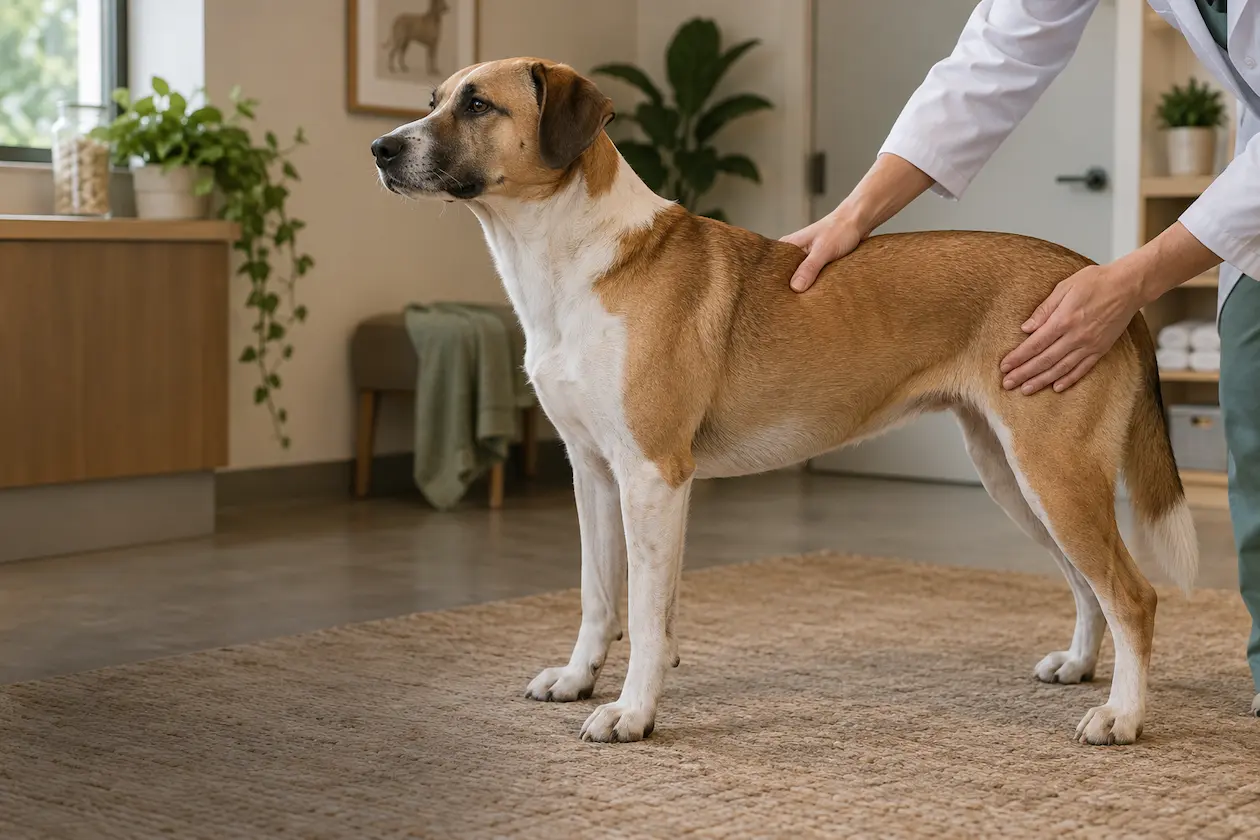
How To Use
This tool helps assess your dog's body condition and calculate an estimated BMI based on their Body Condition Score (BCS).
Note: BMI is calculated from your BCS assessment, not from weight. BCS is the primary and more accurate assessment tool for pets. Weight is collected for reference and validation purposes only.
The Body Condition Score uses a 1-9 scale where 4-5 is ideal. Simply fill out the fields and click Calculate to get started.
Quick Steps
- 1 Enter your Dog's Weight in pounds.
- 2 Select your Dog's Body Condition Score based on the descriptions below.
- 3 Click the Calculate button to see the BMI assessment and recommendations.
Dog BMI Calculator
Fill Out The Fields Below
Dog Body Condition Score Guide
| BCS | Description |
|---|---|
| 1 - Emaciated | Ribs, spine, and hip bones are highly visible. No body fat. Severe abdominal tuck. |
| 2 - Very Thin | Ribs, spine, and hip bones are easily visible. Minimal body fat. Obvious abdominal tuck. |
| 3 - Thin | Ribs are easily visible. Spine and hip bones are prominent. Clear waist and abdominal tuck. |
| 4 - Underweight | Ribs are easily felt with minimal fat covering. Waist is easily visible. Abdominal tuck present. |
| 5 - Ideal | Ribs are easily felt but not visible. Waist is visible behind ribs. Minimal abdominal fat. |
| 6 - Overweight | Ribs are difficult to feel under fat. Waist is barely visible or absent. Abdominal fat pad present. |
| 7 - Heavy | Ribs are very difficult to feel under heavy fat layer. No waist. Large abdominal fat pad. |
| 8 - Obese | Ribs cannot be felt under very heavy fat layer. No waist. Very large abdominal fat pad. Fat deposits on back and base of tail. |
| 9 - Severely Obese | Massive fat deposits over entire body. Ribs completely obscured. No waist. Extremely large abdominal fat pad. |
Understanding Your Dog's BMI and Body Condition Score
While BMI gives a useful numeric snapshot, veterinarians rely primarily on the Body Condition Score (BCS) to assess whether a dog is at a healthy weight. Here's how to interpret your results:
| BCS Score | Condition | What to Look For | Action |
|---|---|---|---|
| 1–3 | Underweight | Ribs, spine, and hip bones easily visible; minimal body fat; obvious waist | Consult your vet — may indicate illness or inadequate nutrition |
| 4–5 | Ideal | Ribs easily felt with light pressure; visible waist from above; abdominal tuck from side | Maintain current diet and exercise routine |
| 6–7 | Overweight | Ribs difficult to feel under fat; waist barely visible; rounded abdomen | Reduce calories by 10–20%; increase exercise; use our Dog Weight Loss Calculator |
| 8–9 | Obese | Ribs cannot be felt; no waist; large abdominal fat pads; fat deposits on back and tail | Vet-supervised weight loss plan needed — health risks increase significantly |
Over 50% of dogs in the US are overweight or obese. Regular body condition assessments help you catch weight gain early. Use the calculator above to check your dog's BCS, and pair it with our Dog Calorie Calculator to dial in the right daily calorie intake.
Dog BMI vs. Body Condition Score: Which Matters More?
Human BMI works because people share a fairly consistent body shape. Dogs do not. A 70-pound Greyhound and a 70-pound Bulldog have wildly different frames, so a single height-and-weight formula can label a lean, athletic dog as "overweight" or miss fat on a stocky breed. That is why veterinarians treat BMI as a rough starting point and lean on the hands-on Body Condition Score instead.
Think of BMI as the number you track over time and BCS as the reality check. BMI is quick, objective, and easy to log at every weigh-in, which makes it useful for spotting trends. BCS captures what a scale cannot: where the fat and muscle actually sit on your dog's body. Used together, they give a far more accurate picture than either one alone.
| Factor | Dog BMI | Body Condition Score |
|---|---|---|
| What it measures | Weight relative to size, as a single number | Body fat and muscle by look and feel |
| Breed accuracy | Low — ignores frame and body type | High — works across all breeds |
| Best use | Tracking change over time | Judging current health status |
| Who uses it | Owners, quick screening | Veterinarians, clinical standard |
The bottom line: use the BMI number to notice change, and use BCS to decide whether that change is a problem. Our calculator reports both so you never rely on a single metric.
How to Assess Your Dog's Body Condition at Home
You do not need special equipment to check your dog's body condition. A two-minute hands-on exam, repeated every couple of weeks, is enough to catch weight changes before they become a problem. Run through these three checks:
1. The rib test
Run your palms along both sides of the ribcage with light pressure. In an ideal dog, the ribs feel like the back of your hand: you can count them easily without pressing, but they are not sharply visible. If you have to push through a layer of fat to find them, your dog is likely overweight. If they feel like sharp knuckles, your dog may be underweight.
2. The waist check (from above)
Stand over your dog and look down. A healthy dog has a visible waist that narrows behind the ribs, giving an hourglass shape. A straight or bulging outline from ribs to hips signals excess weight; an extremely pinched, bony waist signals too little.
3. The abdominal tuck (from the side)
View your dog from the side at their level. The belly should tuck up from the ribcage toward the hind legs. A belly that hangs level with or below the ribcage indicates fat accumulation, while a severely tucked, tucked-up look can indicate an underweight dog.
Once you have matched your dog to a score, enter it into the calculator above along with their weight for a full assessment and tailored next steps.
Dog BMI Examples by Size and Breed
Because the same weight can mean very different things depending on the dog, these examples show how weight and body condition come together in real cases. Use them as reference points, not strict targets, since ideal weight varies within every breed.
| Dog | Typical Healthy Range | Example Scenario | Assessment |
|---|---|---|---|
| Chihuahua (small) | 4–6 lb | 8 lb, ribs hard to feel | Overweight (BCS ~7) — small dogs hide extra pounds easily |
| Beagle (medium) | 20–30 lb | 26 lb, visible waist, ribs felt easily | Ideal (BCS 5) |
| Labrador Retriever (large) | 55–80 lb | 90 lb, no waist, fat over ribs | Obese (BCS ~8) — a common issue in the breed |
| Greyhound (lean build) | 60–70 lb | 62 lb, ribs and hip bones visible | Ideal (BCS 4) — normal for sighthounds, not underweight |
Notice how the Greyhound looks "thin" but is perfectly healthy, while the Chihuahua's few extra pounds represent a much larger percentage of its body weight. This is exactly why breed and body type matter. For breed-specific targets, browse our dog weight calculators.
Health Risks of an Overweight or Underweight Dog
Keeping your dog at an ideal body condition is one of the most impactful things you can do for their longevity. A landmark lifelong study found that dogs kept at a lean body condition lived nearly two years longer on average than their overweight littermates. Extra weight is not just cosmetic; it strains nearly every system in the body.
Risks of excess weight (BCS 6–9)
- Osteoarthritis and joint pain from added load on hips and knees
- Higher risk of diabetes mellitus and insulin resistance
- Heart disease, high blood pressure, and reduced stamina
- Breathing difficulty and heat intolerance
- Greater anesthetic and surgical risk
- Shortened lifespan and reduced quality of life
Risks of being underweight (BCS 1–3)
- Weakened immune function and slower healing
- Muscle loss and low energy
- Poor coat quality and nutrient deficiencies
- May signal underlying illness such as parasites, dental disease, or organ problems
If your dog's score falls outside the ideal 4–5 range, treat it as a prompt to talk with your veterinarian rather than a reason to panic. Small, steady adjustments to diet and exercise usually get a dog back on track.
Helping Your Dog Reach a Healthy Weight
If the calculator flags your dog as overweight, the good news is that most dogs respond well to a few consistent changes. Aim for gradual, sustainable progress rather than crash diets, which can be dangerous. A safe target is roughly 1–2% of body weight lost per week.
- Measure every meal. Use a proper measuring cup or a kitchen scale instead of eyeballing portions. Free-feeding is a leading cause of gradual weight gain.
- Rethink treats. Treats should make up no more than 10% of daily calories. Swap high-calorie biscuits for green beans, carrots, or pieces of your dog's regular kibble.
- Add movement gradually. Extra daily walks and play sessions burn calories and build muscle. Increase activity slowly, especially for out-of-shape or senior dogs.
- Weigh in regularly. Recheck weight and BCS every two to four weeks and log the trend so you can adjust as needed.
- Work with your vet. For obese dogs or those with health conditions, a veterinarian can recommend a prescription weight-management diet and rule out medical causes.
To translate these steps into exact numbers, use our Dog Weight Loss Calculator for a target weight and timeline, and our Dog Nutrition Calculator to find the right daily calorie intake.
Frequently Asked Questions About Dog BMI
How often should I check my dog's BMI and body condition?
For a healthy adult dog, a monthly hands-on check plus a weigh-in is plenty. If your dog is on a weight-loss or weight-gain plan, check every two weeks so you can spot the trend early and adjust. Puppies and seniors benefit from more frequent monitoring since their needs change faster.
Does breed change what a healthy BMI looks like?
Absolutely. Lean, athletic breeds like Greyhounds and Whippets naturally show ribs and hip bones at a healthy weight, while stocky breeds like Bulldogs carry more mass on a compact frame. Always interpret BMI alongside a breed-appropriate body condition assessment rather than a universal cutoff.
Can a puppy's BMI be measured the same way?
Growing puppies carry weight differently and gain rapidly, so BMI is less meaningful for them. Focus on keeping a light body condition where ribs are easily felt, and follow your vet's growth-chart guidance. Our Puppy Growth Calculator can help you track expected growth.
Is the calculator a substitute for a vet visit?
No. This tool is an educational screening aid to help you monitor trends between appointments. Sudden weight changes, a score outside the ideal range, or any signs of illness should always be evaluated by a veterinarian who can perform a full physical exam.
FAQs
Frequently Asked Questions
What is a Body Condition Score for dogs?
Body Condition Score (BCS) is a visual and tactile assessment tool that evaluates your dog's body fat using a 1-9 scale. A score of 1-3 indicates underweight, 4-5 is ideal, and 6-9 is overweight to obese.
How do I determine my dog's Body Condition Score?
You can assess your dog's BCS by feeling their ribs, spine, and hip bones, and observing their waist and abdominal area. Use our detailed BCS guide in the calculator to match your dog's condition.
What is a healthy BMI for a dog?
A healthy BMI for dogs typically ranges from 18-25, though this can vary significantly by breed and body type. The Body Condition Score is often more reliable than BMI alone for assessing dog health.
What should I do if my dog is overweight?
If your dog is overweight (BCS 6-9), consult your veterinarian for a weight loss plan. They may recommend a calorie-restricted diet and increased exercise. Use our Dog Nutrition Calculator to determine appropriate calorie intake.
What should I do if my dog is underweight?
If your dog is underweight (BCS 1-3), consult your veterinarian immediately. Underweight dogs may have underlying health issues that need to be addressed. A veterinarian can help create a safe weight gain plan.
Is my dog overweight?
You can determine if your dog is overweight by using our Dog BMI Calculator, which assesses Body Condition Score (BCS). Dogs with a BCS of 6-9 are considered overweight to obese. Signs include difficulty feeling ribs, no visible waist, and excessive abdominal fat. Consult your veterinarian for a professional assessment.
How do I know if my dog is obese?
Dogs with a Body Condition Score (BCS) of 8-9 are considered obese. Obese dogs have ribs that cannot be felt under heavy fat, no visible waist, very large abdominal fat pads, and fat deposits on the back and base of tail. Use our Dog BMI Calculator to assess your dog's condition and consult your veterinarian for a weight management plan.
Other Calculators for Dogs
Dog Calorie Calculator by Breed — Free Daily Calorie & Feeding Tool
Free dog calorie calculator by breed. Find out exactly how many calories your dog needs per day by weight, breed, age, and activity level. Get instant kcal and feeding portions for Labradors, German Shepherds, Chihuahuas, and every breed in between. Try it now.

Puppy Calorie Calculator | Puppy Nutrition Calculator by Breed - Free Tool
Free puppy calorie calculator and nutrition tool. Calculate your puppy
Senior Dog Calorie Calculator - Free Daily Calorie Tool
Free senior dog calorie calculator. Calculate your older dog\
Other Pet Health Calculators
Cat BMI Calculator - Check Your Cat
Free cat BMI calculator. Check your cat
How Long Are Cats Pregnant? Cat Pregnancy Calculator & Due Date Tool
How long are cats pregnant? Cat pregnancy averages 63–65 days (about 9 weeks). Use our free cat pregnancy calculator to find the estimated due date, current week, and a week-by-week kitten care guide.

Cat Quality of Life Calculator, Free HHHHHMM Scale for Cats | Senior Cat QoL Tool
Free cat quality of life calculator using the HHHHHMM scale. Assess your senior cat
Free dog printables
Keep these dog care guides handy
A rotating selection of practical dog guides chosen from our free printable library.Raw Feeding Reference Card
A printable BARF and 80/10/10 portion guide.
Dog Body Condition Chart
A printable 1–9 body condition reference.
Dog Quality of Life Checklist
Track the HHHHHMM quality-of-life measures.