Last updated: October 3, 2026
Dog Health
Bland Diet for Dogs
A bland diet is a simple, low-fat, easy-to-digest meal that gives an upset stomach a chance to settle. Here is when to use one, what to feed, roughly how much by your dogs weight, how long to feed it, how to move back to normal food, and the warning signs that mean you should call your vet instead.
This guide is general information, not veterinary advice. Every dog is different, and portion figures here are approximate. If your dog is unwell, or you are unsure whether a bland diet is appropriate, contact your veterinarian, who can confirm the right food, amount, and duration for your dogs situation.
Do not wait for a bland diet to work. Call your vet or an emergency clinic now if you see any of these
- Blood in the vomit or stool, or vomit that looks like coffee grounds, or black, tarry stool
- Repeated vomiting, or a dog that cannot keep even water down
- A swollen, hard, or painful belly, or unproductive retching, which can signal bloat, a life-threatening emergency
- Suspected poisoning, or eating a toxic food, plant, medication, or object
- Lethargy, collapse, pale gums, weakness, or signs of significant pain
- A puppy, senior dog, or dog with an existing health condition, who should be seen sooner rather than later
Puppies and small dogs can become dehydrated or drop their blood sugar quickly, so a stomach upset that would be minor in a healthy adult should not be left to run its course in them.
When to Feed a Bland Diet
The mild, short-term situations where resting the stomach with plain food can help
Mild vomiting or diarrhea
For a single bout of vomiting or a short run of loose stool in an otherwise bright, healthy adult dog, a bland diet gives the gut a gentle break while it recovers. If the upset keeps going beyond 24 to 48 hours, or your dog seems unwell, it is time to call the vet rather than keep waiting.
Dietary upset stomach
Dogs that raid the trash, wolf down a rich treat, or have a sudden change of food can get an unsettled stomach. Once anything dangerous has been ruled out, a couple of days of plain, low-fat food often helps things settle. A slower food change next time can prevent a repeat.
Recovery and appetite support
When a dog is coming off a mild illness and eating tentatively, easy-to-digest food can be more tempting and gentler than regular kibble. It is a short bridge back to a normal diet, not a replacement for it, and any dog that is refusing food for long needs veterinary attention.
After surgery, only if your vet advises it
Some dogs are offered light, easy meals for a day or two after a procedure or anesthesia. Always follow the specific feeding instructions from your veterinary team, since post-surgery advice depends on the procedure. Do not start a bland diet on your own after surgery without checking first.
What to Feed: Chicken and Rice and Alternatives
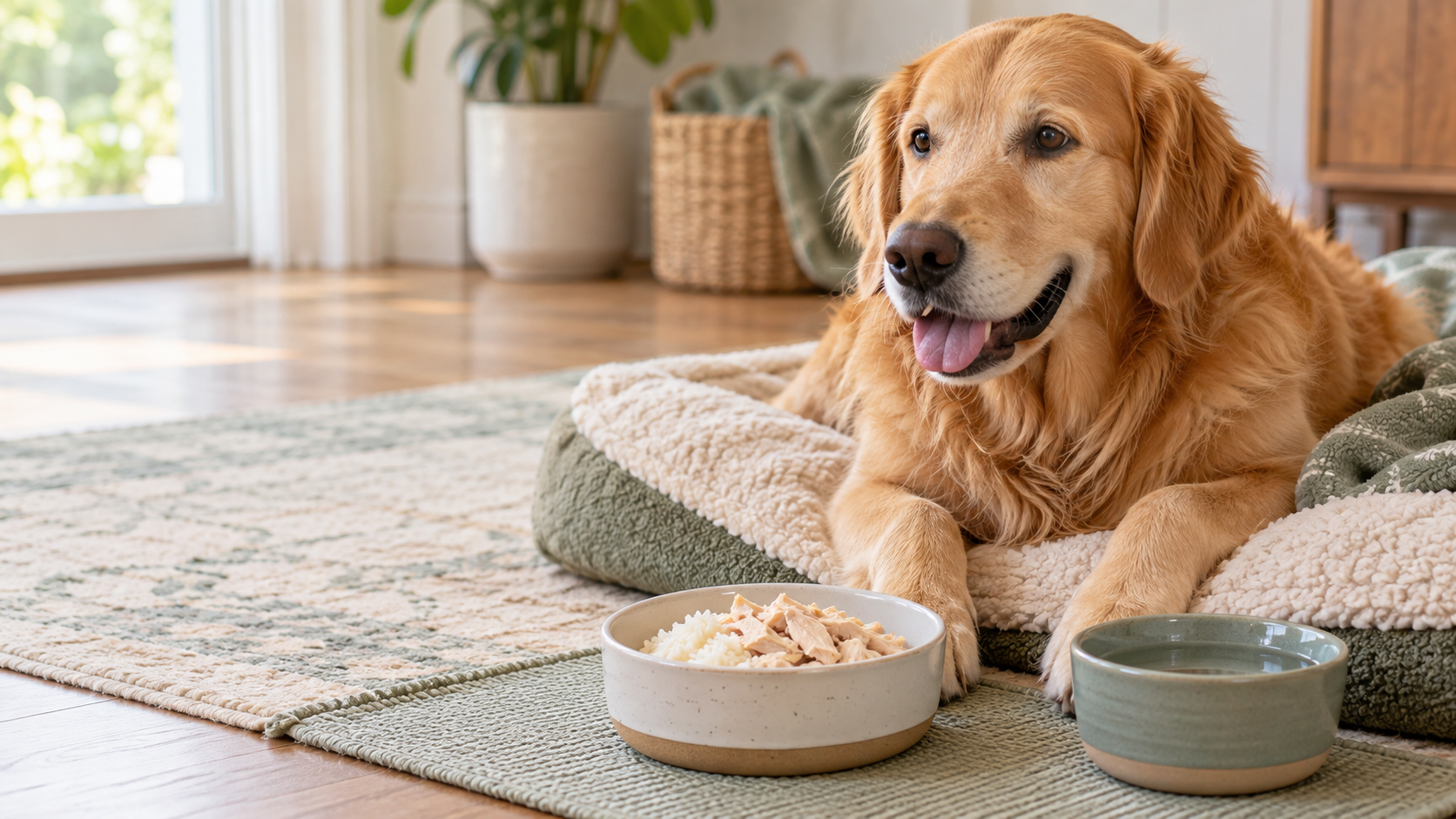
The classic bland meal is boiled, skinless, boneless chicken breast with plain white rice. Boil the chicken in plain water with no salt, oil, butter, or seasoning, drain off the fat, and shred it. Cook the white rice soft in water. A widely used ratio is about 1 part chicken to 2 parts rice, so roughly one third protein and two thirds gentle carbohydrate. Serve it plain and lukewarm, never with gravy, broth, or added fat.
If chicken does not suit your dog, or you want another option, these are commonly used bland choices, all cooked plain and served in modest amounts:
- Boiled lean ground turkey, with the fat drained, in place of chicken
- Plain cooked white rice as the standard base, since it is easy to digest
- Plain canned pumpkin (pure pumpkin, not pie filling), a spoonful of which can help firm up loose stool
- Low-fat plain cottage cheese in small amounts, though skip dairy for dogs that are sensitive to it
- Plain boiled potato or sweet potato, peeled and with no butter or salt, as an alternative starch
Keep it simple and low fat, and introduce only one recipe at a time so you can tell how your dog responds. A bland diet like this is not complete and balanced for the long term, so it is meant for a few days, not as a permanent way of feeding. When your dog is back to normal, our dog feeding calculator and dog nutrition calculator can help you get everyday portions right.
Approximate Bland Diet Portions by Dog Weight
These are rough starting ranges, not exact prescriptions. Feed small, frequent meals, start on the low side, and confirm the right amount and duration with your vet.
| Dog weight | Approx. total bland food per day | Notes |
|---|---|---|
| Under 10 lb (toy and small) | About 1/4 to 1/2 cup total per day | Split into 4 or more tiny meals. Small dogs have little reserve and can dip low on blood sugar, so do not withhold food for long without vet advice. |
| 10 to 25 lb (small) | About 1/2 to 1 cup total per day | Offer small amounts every few hours. Start on the low side and increase only if it stays down. |
| 25 to 50 lb (medium) | About 1 to 2 cups total per day | Divide into 3 or 4 meals. Watch that each meal is kept down before offering the next. |
| 50 to 80 lb (large) | About 2 to 3 cups total per day | Feed frequent modest meals rather than one or two big ones. Adjust to appetite and how the stomach settles. |
| Over 80 lb (giant) | About 3 to 4 cups total per day | Larger dogs still do best with several smaller meals. Confirm amounts with your vet, as needs vary widely. |
The amounts above are cooked, plain chicken-and-rice mixture and are meant as general guidance only. A dogs real needs depend on age, body condition, activity, and health, so treat these as a starting point and adjust to how your individual dog is doing. To sense-check your dogs size and condition, see our dog weight calculator and the dog body condition score guide.
How Often to Feed and How Long to Continue
A stomach that is recovering copes better with small, frequent meals than with one or two large ones. Rather than serving a full bowl, divide the daily amount into several small portions spread through the day, and offer the next portion only once the last one has stayed down. Small and toy breeds especially benefit from little and often, since they have less reserve.
Most mild upsets settle on a bland diet within about 2 to 3 days. Watch for stools firming up and vomiting stopping, then begin the switch back to normal food. Because a bland diet is not nutritionally complete, it is not meant to be fed for weeks. If your dog is not clearly improving within 24 to 48 hours, or gets worse at any point, stop and contact your vet rather than extending the bland diet on your own.
How to Transition Back to Normal Food
Once your dog is bright, keeping food down, and passing normal stools, move back to their regular diet gradually rather than all at once. A sudden switch can undo the progress and upset the stomach again. A gentle transition over several days often looks like this:
- Days 1 to 2: about three quarters bland food mixed with one quarter regular food
- Days 3 to 4: roughly half bland food and half regular food
- Days 5 to 6: about one quarter bland food with three quarters regular food
- Day 7: back to the full regular diet if everything has stayed settled
Go slower if your dog shows any sign of a setback, and drop back a step if loose stools return. Some dogs need a longer, gentler changeover than others. If symptoms come back during the transition, pause and check in with your vet.
Foods to Avoid in a Bland Diet
The whole point of a bland diet is to be gentle, so anything that is rich, greasy, or highly flavored works against it. While your dogs stomach is recovering, leave out:
- Fats and oils. Chicken skin, butter, cooking oils, and fatty cuts of meat are hard on a recovering gut and can worsen diarrhea.
- Salt and seasoning. No salt, stock cubes, gravy, or spices. Cook everything plain in water.
- Onion, garlic, chives, and leeks. These are toxic to dogs and must never be added, including as powders or in seasoning blends.
- Rich or spicy human food. Table scraps, sauces, and fried foods defeat the purpose of a bland meal.
- Dairy for sensitive dogs. Many dogs do not digest lactose well, so skip milk and go easy on cottage cheese if your dog is prone to loose stools.
- Cooked bones and skin. These add fat and pose a choking or obstruction risk. Use plain, boneless, skinless meat only.
Keep fresh water available throughout, since dogs recovering from vomiting or diarrhea can dehydrate. If your dog cannot keep water down, that is a reason to call the vet rather than push fluids.
When to See the Vet
A bland diet is only appropriate for a mild, short-lived upset in an otherwise healthy dog. It is not a treatment for a serious problem, and using it to delay a needed vet visit can let something worse go unchecked. Contact your veterinarian if:
- There is blood in the vomit or stool, or the stool is black and tarry
- Vomiting or diarrhea continues beyond 24 to 48 hours, or keeps returning
- Your dog cannot keep water down, or shows signs of dehydration such as tacky gums or lethargy
- Your dog seems weak, painful, or unusually flat, or the belly looks swollen or hard
- You suspect poisoning, a swallowed object, or a toxic food
- Your dog is a puppy, a senior, pregnant, or has an existing health condition, all of whom should be seen sooner
When in doubt, it is always reasonable to call. Your vet would far rather hear from you early than see a dog that has been quietly getting worse. For more on spotting when a symptom needs attention, browse our dog health guides.
Frequently Asked Questions About a Bland Diet for Dogs
Common questions about when to use a bland diet, what to feed, how much, and how long
What is a bland diet for dogs?
A bland diet is a simple, easy-to-digest meal fed for a short time to rest an upset stomach. The classic version is boiled skinless chicken and plain white rice, with no fat, oil, salt, or seasoning. The idea is to give the gut gentle, low-fat food while it recovers from vomiting, diarrhea, or a mild upset. It is a temporary measure, not a long-term diet, since on its own it is not complete and balanced.
How much bland food should I feed my dog?
Portions depend on your dogs weight, and the figures on this page are approximate general guidance rather than exact amounts. A common approach is to feed small, frequent meals that together add up to a normal daily amount, starting on the low side to see whether it stays down. When in doubt, feed a little less more often. Your vet can give you an amount tailored to your dogs weight, age, and condition.
What is the chicken and rice ratio for a bland diet?
A widely used ratio is about 1 part boiled skinless chicken to 2 parts plain white rice, so roughly one third protein to two thirds rice. The rice provides gentle, easy-to-digest carbohydrate, and the lean chicken adds protein without much fat. Some dogs do better with a bit more or less rice, so you can adjust slightly. Keep everything plain, with no butter, oil, broth, or seasoning.
How long should a dog stay on a bland diet?
A bland diet is usually fed for about 2 to 3 days, just until the stomach settles and stools return to normal, then you transition back to regular food over several more days. It is not meant to be fed long term because it is not nutritionally complete. If your dog is not clearly improving within 24 to 48 hours, or gets worse at any point, stop waiting and contact your vet.
When should I call the vet instead of trying a bland diet?
Call your vet before or instead of a bland diet if you see blood in vomit or stool, repeated vomiting, an inability to keep water down, a swollen or hard belly, suspected poisoning, or signs of pain, weakness, or collapse. Puppies, senior dogs, and dogs with existing health conditions should be seen sooner, since they have less reserve. A bland diet is only appropriate for mild, otherwise healthy upsets.
Get Your Dogs Everyday Portions Right
Once the upset has passed, dial in the right daily amount for your dog.
Free dog printables
Keep these dog care guides handy
A rotating selection of practical dog guides chosen from our free printable library.Dog Quality of Life Checklist
Track the HHHHHMM quality-of-life measures.
Raw Feeding Reference Card
A printable BARF and 80/10/10 portion guide.
Dog Feeding Guide
Portion guidance by weight, age, and life stage.