Last updated: October 3, 2026
Dog Health
Cherry Eye in Dogs
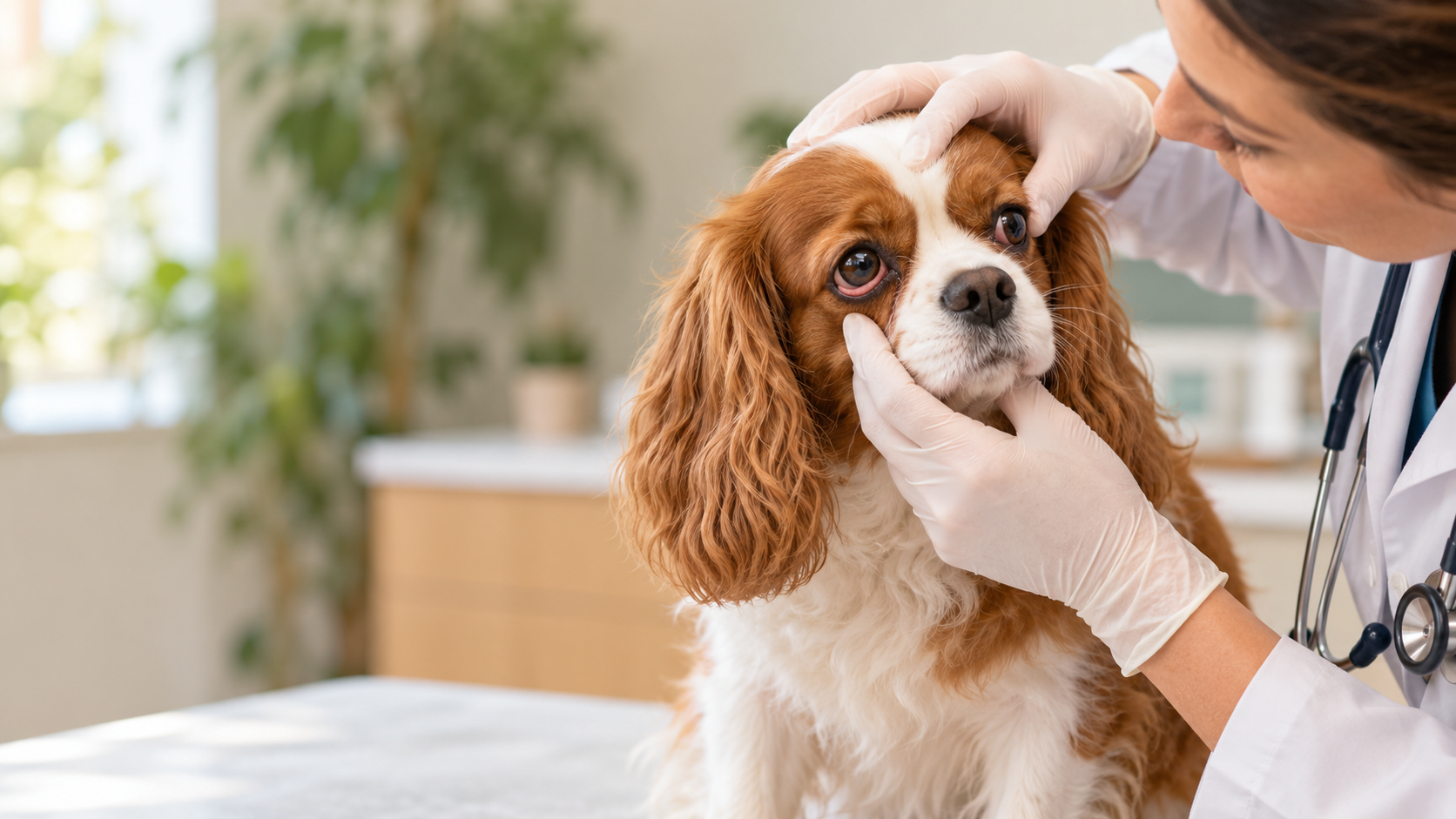
That sudden red, swollen lump in the inner corner of your dog's eye is almost always cherry eye, a prolapse of the third eyelid's tear gland. It looks alarming, but it is a well-understood condition. Here is what it is, why some breeds are prone to it, and why it needs a vet rather than a home fix.
This guide is general information, not veterinary advice. Every dog is different. If your dog has a red lump in the corner of the eye, or the eye is sore, cloudy, or discharging, contact your veterinarian, who can examine the eye and recommend the right treatment for your dog's specific situation.
See a vet promptly, and do not try to fix it at home
- Book a veterinary appointment soon after the lump appears, rather than waiting to see if it settles
- Do not try to push the gland back in yourself, as this can damage the gland and the surface of the eye
- Stop your dog from rubbing or pawing at the eye, which can worsen swelling and cause injury
- Left untreated, cherry eye can lead to chronic dry eye, ongoing irritation, and damage to the gland
Cherry eye is rarely an emergency in the middle of the night, but it should not be left for weeks. The sooner the gland is repositioned, the better the chance of preserving normal tear production.
Signs of Cherry Eye
What the condition looks like and how it tends to behave
A red, cherry-like lump
The classic sign is a smooth, red or pink swelling in the inner corner of the eye, near the nose. It can appear suddenly, sometimes overnight, and may be small at first or large enough to cover part of the eye. Both eyes can be affected, either together or weeks to months apart.
Irritation and discharge
Because the gland is now exposed rather than tucked away, the eye may look irritated, watery, or reddened. Some dogs develop a mucous or slightly sticky discharge, and the eye can appear uncomfortable, though many dogs are not in obvious pain.
Pawing and rubbing
Dogs often paw at the affected eye or rub their face along furniture and the floor. This is a response to the irritation, but it can make things worse by inflaming the gland further or scratching the surface of the eye, which is one reason prompt care matters.
Dryness if it is left untreated
The prolapsed gland cannot work normally while it is out of place, and over time a chronically exposed gland can stop producing tears well. This can lead to dry eye, also called keratoconjunctivitis sicca or KCS, which causes ongoing discomfort and can threaten vision if not managed.
What Causes Cherry Eye and Which Breeds Are Affected
Dogs have a third eyelid in the inner corner of each eye, and it carries a gland that produces a large share of the eye's tears. Normally a small band of connective tissue holds that gland tucked neatly out of sight. Cherry eye happens when this tissue is weak and the gland slips out of position, popping into view as the familiar red lump.
That underlying weakness is largely genetic, which is why cherry eye runs strongly in certain breeds and usually appears in young dogs, often under two years of age. It is not caused by anything the owner did, and in most cases it is not the result of an injury or infection. Flat-faced brachycephalic breeds and several others are far more prone to it because of how their facial and eye tissue is built.
Commonly affected breeds include Bulldogs of all kinds, French and English Bulldogs, Beagles, Cocker Spaniels, Cane Corso, Shih Tzu, Boston Terriers, Lhasa Apso, and mastiff-type breeds, along with other brachycephalic and predisposed dogs. If you have one of these breeds, it is worth knowing what cherry eye looks like so you can act quickly if it appears. Keeping an eye on your dog's overall condition also helps, and our dog body condition score guide is a good companion for routine health checks.
Breeds and Risk Factors for Cherry Eye
Predisposition varies, but these breeds and factors come up again and again. Any dog can develop cherry eye.
| Breed or factor | What to know |
|---|---|
| English and French Bulldogs | Among the most commonly affected. Their flat faces and shallow eye sockets seem to go hand in hand with weaker gland attachments, and both eyes can be involved. |
| American Bulldogs | Frequently seen, often at a young age. Owners of these breeds should watch closely, as the second eye may prolapse weeks or months after the first. |
| Beagles | A well-known predisposed breed. Cherry eye often shows up in the first year or two of life and is usually treated surgically. |
| Cocker Spaniels | A classic breed for this condition. Their prominent eyes make the prolapsed gland easy to spot in the inner corner. |
| Cane Corso and mastiffs | Large brachycephalic and mastiff-type breeds carry a higher risk, and their loose facial tissue can make the gland more likely to slip out of place. |
| Shih Tzu, Lhasa Apso, Boston Terrier | Small flat-faced breeds that commonly develop cherry eye, often while still young. Prompt vet care helps preserve the gland. |
| Young dogs under two | Not a breed, but a strong risk factor. The connective tissue weakness that allows the gland to prolapse most often shows itself early in life. |
Treatment Options
The goal of treatment is to get the gland back where it belongs and keep it working. The preferred approach is surgical repositioning, where the vet tucks the gland back into place and secures it, often using a tacking suture or a pocket technique. This preserves the gland and the tears it produces, which is why it has become the standard of care.
Removing the gland is generally avoided. Because the third eyelid gland produces a large share of the eye's tears, taking it out significantly raises the risk of chronic dry eye, or KCS, which then needs lifelong management. Repositioning keeps that tear production intact, so it is nearly always the better long-term choice even though it is a more involved procedure.
While surgery is being arranged, your vet may recommend temporary measures such as lubricating drops or anti-inflammatory treatment to keep the eye comfortable and reduce swelling. These are holding measures, not a cure, and they do not put the gland back. It is worth knowing that cherry eye can recur after repair, and the other eye may prolapse later, since the underlying tissue weakness affects both sides.
Aftercare and Recurrence
After surgery, most dogs recover well with straightforward home care. Your vet will usually send your dog home with an e-collar to stop rubbing or scratching at the eye while it heals, along with prescribed medications such as eye drops or ointment and sometimes anti-inflammatories. Using the collar consistently, even when it seems like a nuisance, protects the repair during the vulnerable early days.
Follow the medication schedule exactly, keep the eye clean as directed, and limit rough play until your vet clears it. A follow-up appointment lets the vet check that the gland is staying in place and the eye is healing. Watch for increased redness, swelling, discharge, or the lump reappearing, and contact your vet if you see any of these.
Cherry eye can recur even after a well-performed repair, and this does not always mean something went wrong. If the gland prolapses again, a second procedure may be needed. Because the condition reflects a general tissue weakness, keep watching the other eye too. If you are ever weighing up your dog's comfort and overall wellbeing during a health issue, our dog quality of life calculator can help you think it through, and our dog weight calculator is handy for keeping tabs on the basics.
Frequently Asked Questions About Cherry Eye in Dogs
Common questions about what cherry eye is, what causes it, and how it is treated
What is cherry eye in dogs?
Cherry eye is the common name for a prolapse of the gland of the third eyelid. Dogs have a third eyelid in the inner corner of each eye, and it carries a tear-producing gland. When the small band of tissue holding that gland in place is weak, the gland pops out of position and appears as a red, swollen, cherry-like lump in the corner of the eye. It is not painful in the way an injury is, but it should be seen by a vet.
What causes cherry eye in dogs?
The underlying cause is a weakness in the connective tissue that anchors the third eyelid gland. This weakness is largely genetic and breed-related, which is why certain breeds are far more prone to it. It is not caused by anything the owner did, and it is not the result of an injury or infection in most cases. It usually appears in young dogs, often under two years of age, when that tissue first gives way.
Can I push my dog's cherry eye back in myself?
No. You should not try to push the gland back in yourself. Home attempts can injure the delicate gland and the surface of the eye, introduce infection, and rarely hold anyway. Cherry eye needs a veterinary exam so the gland can be properly repositioned. Until you can get to the vet, keep your dog from rubbing or pawing at the eye and follow any advice your vet gives over the phone.
How is cherry eye treated?
The preferred treatment is surgery to reposition and secure the gland back into place, often called a tacking or pocket technique. This preserves the gland and its tear production. Removing the gland is generally avoided because it produces a large share of the eye's tears, and losing it raises the risk of chronic dry eye. Your vet may suggest lubricating drops and anti-inflammatory treatment in the short term while surgery is arranged.
Can cherry eye come back after surgery?
Yes, it can recur even after a well-performed repair, and the other eye may develop cherry eye later since the underlying tissue weakness affects both sides. Recurrence does not always mean anything went wrong. If the gland prolapses again, contact your vet, as a second procedure may be needed. Following the aftercare instructions, using the e-collar, and keeping to the recheck schedule give the repair the best chance of holding.
Explore More Dog Health Guides
Understand your dog's symptoms and know when to call the vet.
Free dog printables
Keep these dog care guides handy
A rotating selection of practical dog guides chosen from our free printable library.Dog Pregnancy Timeline
A week-by-week whelping calendar and checklist.
Raw Feeding Reference Card
A printable BARF and 80/10/10 portion guide.
Dog Feeding Guide
Portion guidance by weight, age, and life stage.