
Last updated: October 3, 2026
Dog Health
Fleas on Dogs
Fleas are one of the most common problems dog owners deal with, and the scratching you see is only part of the story. Here is how to tell if your dog has fleas, the health risks that matter, which treatments work for dogs of different sizes, and how to keep fleas away for good.
This guide is general information, not veterinary advice. Every dog is different. If your dog is unwell or you are worried, contact your veterinarian, who can examine your dog and recommend the right flea treatment for their specific weight, age, and health.
Pale gums or weakness in a puppy can be an emergency
In a heavy infestation, the blood that fleas take can add up fast. In puppies and small dogs this can cause anemia, which can become life threatening. Contact your vet or an emergency clinic promptly if you notice any of these:
- Pale or white gums instead of a healthy pink
- Weakness, lethargy, or collapse in a puppy or small dog
- Fast breathing or a rapid heartbeat alongside a visible flea burden
- A puppy that is not eating and seems to be fading despite obvious fleas
Puppies have far less blood in reserve than an adult dog, so a heavy flea burden can make them unwell quickly and should not wait.
How to Tell If Your Dog Has Fleas
The signs to look for, from obvious to easy to miss
Scratching, biting, and hot spots
Frequent scratching, biting, or chewing at the skin, especially around the tail base, belly, and hind legs, is often the first clue. Over time you may see red irritated skin, scabs, thinning fur, or a hot spot, a raw moist patch of inflamed skin that can appear quickly and get infected if left alone.
Live fleas and flea dirt
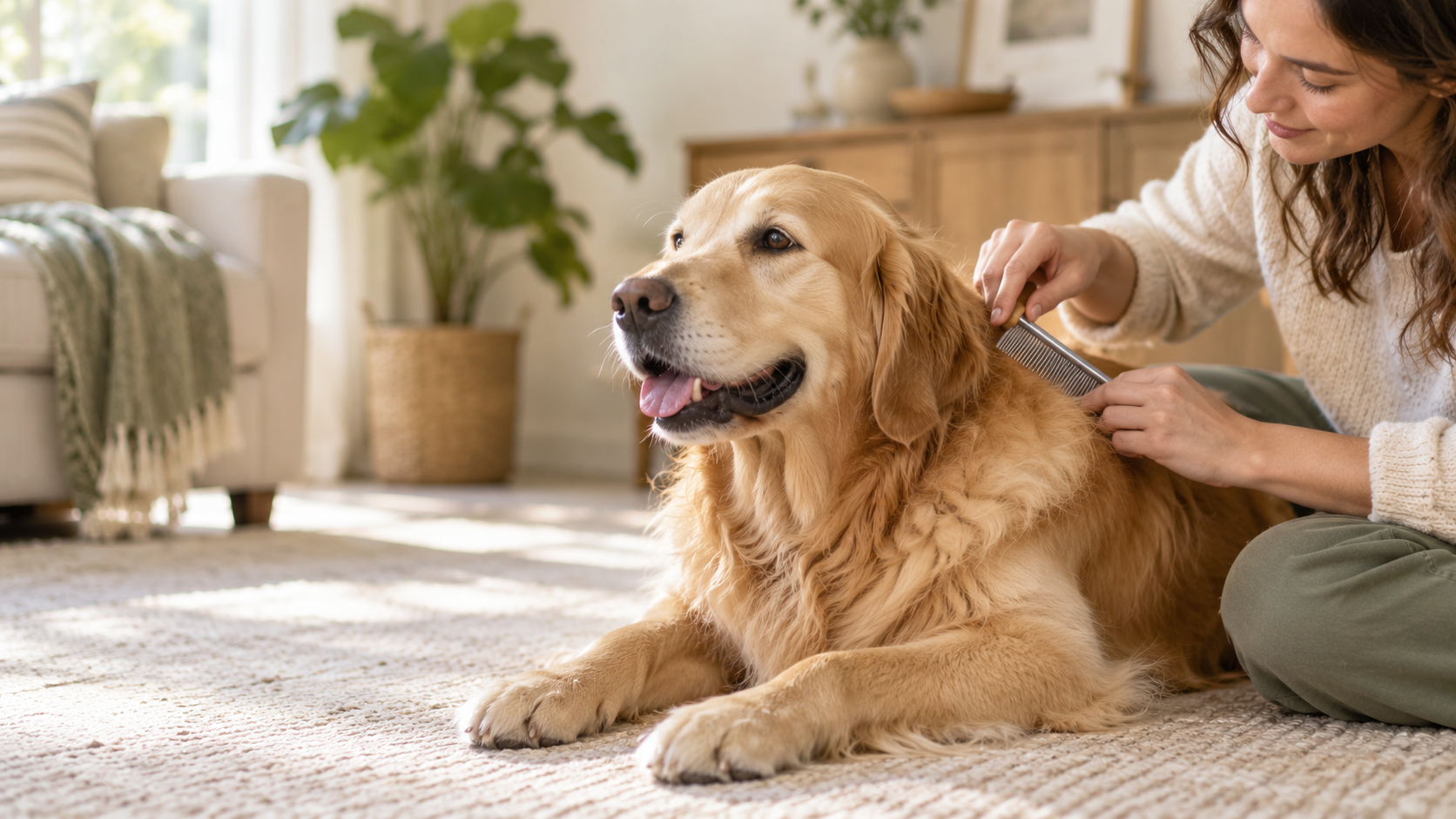
Part the fur, particularly on the belly and near the base of the tail, and look for small fast-moving brown insects. Even if you see none, check for flea dirt, the tiny black specks fleas leave behind. Comb them out onto a damp white paper towel: if they smear red-brown, that is digested blood, which confirms fleas even when you never catch a live one.
Health Risks of Fleas
Fleas are more than a nuisance. Flea allergy dermatitis is one of the most common skin conditions in dogs. It is an allergic reaction to proteins in flea saliva, and in a sensitive dog even a few bites can trigger intense itching, scabbing, hair loss, and hot spots that far outlast the bite itself.
Because dogs swallow fleas while grooming or nibbling at an itch, fleas are also a leading way dogs pick up tapeworm. If you see small rice-like segments near your dogs rear or in their bedding, treating both the fleas and the worms matters. Our guide to worms in dogs covers what to look for and how deworming works.
In a heavy infestation, the blood that fleas take can add up, and in puppies, small breeds, or older dogs this can cause anemia. Pale gums, weakness, and low energy are warning signs that can become life threatening, so treat them as urgent. A run-down dog copes less well with parasites, so keeping an eye on body condition matters too. Our dog body condition score guide can help you judge whether your dog is at a healthy weight.
Flea Treatment Options for Dogs
Every product is dosed by weight, so pick one labeled for dogs and sized for your dog. Your vet can confirm the right choice.
| Treatment type | How it works | Good to know |
|---|---|---|
| Spot-on and topical treatments | A liquid applied to the skin between the shoulder blades that spreads over the body and kills fleas on contact, usually for about a month | Convenient and widely used. Choose a dog-labeled product dosed for your dogs weight, and keep it away from cats until dry, as some dog products are toxic to cats. |
| Oral preventives (chews and tablets) | A flavored chew or tablet your dog swallows. Fleas are killed when they bite and take a blood meal, breaking the life cycle | No residue on the coat, so nothing to rub off, and easy to combine with tick or heartworm prevention. Your vet can match the product and dose to your dogs size. |
| Flea shampoos, sprays, and combs | Shampoos and sprays kill fleas on the dog at the time of use, while a fine flea comb physically removes fleas and flea dirt | Useful for a quick knockdown or for young puppies too small for some products. They give little lasting protection, so pair them with a longer-acting preventive. |
| Home and yard treatment | Vacuuming, hot washing of bedding, and pet-safe household or yard products that target eggs, larvae, and pupae in the environment | Essential, since most of a flea population lives off the dog. Treating the dog alone will not clear an infestation. Follow every label carefully around pets and children. |
How to Get Rid of Fleas on Dogs
The single most important thing to understand is that the fleas on your dog are only a small fraction of the population. Most of it lives in your home and yard as eggs, larvae, and pupae in carpet, bedding, and soil, and pupae can stay dormant for weeks before emerging. That is why a single bath never works and why fleas seem to come back after you thought they were gone. Clearing an infestation means hitting the dog, the home, and every other pet at the same time, consistently, over several weeks.
- Treat your dog with a modern, dog-labeled, vet-recommended product dosed for their weight. Dose by weight matters, so confirm your dogs weight first with our dog weight calculator if you are unsure.
- Treat every pet in the household, not just the one that is scratching. Cats and dogs share the same fleas, so one untreated pet keeps the cycle going. Never use a dog flea product on a cat, as many contain permethrin, which is toxic to cats.
- Wash bedding hot and launder blankets and washable soft furnishings on the hottest setting the fabric allows, repeating during treatment.
- Vacuum thoroughly and often, covering carpets, rugs, upholstery, and along skirting boards and floor cracks. Vacuuming removes eggs and larvae and helps coax dormant pupae to emerge. Empty or seal the contents and dispose of them outside.
- Treat the environment and yard if the infestation is established, using pet-safe household or yard products and following every label carefully.
Skip the home remedies. Essential oils, garlic, and vinegar are not reliable, they do nothing about the eggs and pupae in your home, and some are actually harmful to pets. Because of the life cycle, expect it to take several weeks to a couple of months to fully clear an infestation, and keep every pet on treatment throughout.
Preventing Fleas on Dogs
Prevention is far easier and cheaper than clearing an infestation. The most effective approach is consistent, year-round flea treatment for every pet in the household, using a dog-labeled product dosed for your dog. Fleas can survive indoors through winter, so a gap in treatment during the colder months is one of the most common reasons infestations come back.
- Stay on a year-round schedule. Set a reminder so doses are given on time, since a late dose leaves a window for fleas to breed.
- Treat all pets together. Keep every dog and cat on prevention on the same schedule so no untreated animal keeps the cycle alive.
- Keep up routine cleaning. Regular vacuuming and washing of bedding stops eggs and larvae building up in the home.
- Check after outdoor time. A quick flea-comb check after walks in tall grass or contact with other animals catches a problem early.
Good overall care helps your dog shrug off parasites, and feeding an appropriate amount is part of that. Our dog feeding calculator and dog BMI calculator can help you keep your dog in healthy condition, and you can explore all of our tools in the dog weight guides.
When to See the Vet
Many flea problems can be handled at home with the right products and patience, but some situations call for a vet. Book a visit if your dog has raw, infected, or spreading skin, ongoing itching despite treatment, or hair loss and scabbing that suggests flea allergy dermatitis. Puppies, pregnant or nursing dogs, and dogs with other health conditions should have their flea product chosen by a vet, since not every treatment is safe for every dog.
Treat pale gums, weakness, or collapse in a puppy or small dog as an emergency, as these can point to flea anemia. If you also see signs of tapeworm, or your dog is generally off color, your vet can check for related problems. Our dog health hub has more guides to help you decide when to call.
Frequently Asked Questions About Fleas on Dogs
Common questions about spotting, treating, and preventing fleas on dogs
How can I tell if my dog has fleas?
Watch for frequent scratching, biting, or chewing at the skin, especially around the tail base, belly, and hind legs. Part the fur and look for small fast-moving brown insects, and comb out any tiny black specks. The most reliable check is the flea-dirt test: place those specks on a damp paper towel, and if they smear red-brown that is digested blood, which confirms fleas even when you never catch a live one. Red irritated skin, scabs, and hot spots are other common clues.
Are fleas dangerous to dogs?
Yes, beyond the itching. Fleas commonly cause flea allergy dermatitis, an allergic reaction to flea saliva that can make a dog intensely itchy from just a few bites. Dogs that swallow fleas while grooming can pick up tapeworm. In puppies, small dogs, or heavy infestations, the blood fleas take can cause anemia, which can be life threatening. Pale gums, weakness, and lethargy are warning signs that need a vet promptly.
What is the best flea treatment for dogs?
The best product depends on your dogs weight, age, health, and lifestyle, which is why a vet-recommended option is the safest choice. Modern spot-on treatments and oral chews are far more effective than older collars, powders, and shampoos, and many combine flea control with tick or heartworm prevention. Whatever you choose, use a dog-labeled product dosed for your dogs weight and treat every pet in the home at the same time.
Why do the fleas keep coming back?
The fleas you see on your dog are only a small fraction of the problem. Most of a flea population lives in your home and yard as eggs, larvae, and pupae in carpet, bedding, and soil. Pupae can stay dormant for weeks and are shielded from many treatments, so new adults keep emerging. Clearing an infestation takes consistent treatment of every pet plus the environment over several weeks.
Do dogs need flea prevention all year?
For most dogs, yes. Fleas can survive indoors through winter, so a break in treatment during colder months is a common reason infestations return. Year-round prevention for every pet in the household is the most reliable approach. Even dogs that mostly stay indoors can pick up fleas carried in on clothing or by other pets, so keeping up prevention is worthwhile regardless of how much time your dog spends outside.
Explore More Dog Health Guides
Understand your dog's symptoms and know when to call the vet.
Free dog printables
Keep these dog care guides handy
A rotating selection of practical dog guides chosen from our free printable library.Dog Feeding Guide
Portion guidance by weight, age, and life stage.
Raw Feeding Reference Card
A printable BARF and 80/10/10 portion guide.
Puppy Calorie Guide
Calorie targets by breed size and age.