Last updated: October 3, 2026
Dog Nutrition
Dog Training Treats
The right treat makes training faster, and the wrong one adds weight or slows a session to a crawl. This guide covers what makes a good training treat, how to match the reward to the task, and how to train as much as you like without overfeeding.
The one rule to remember
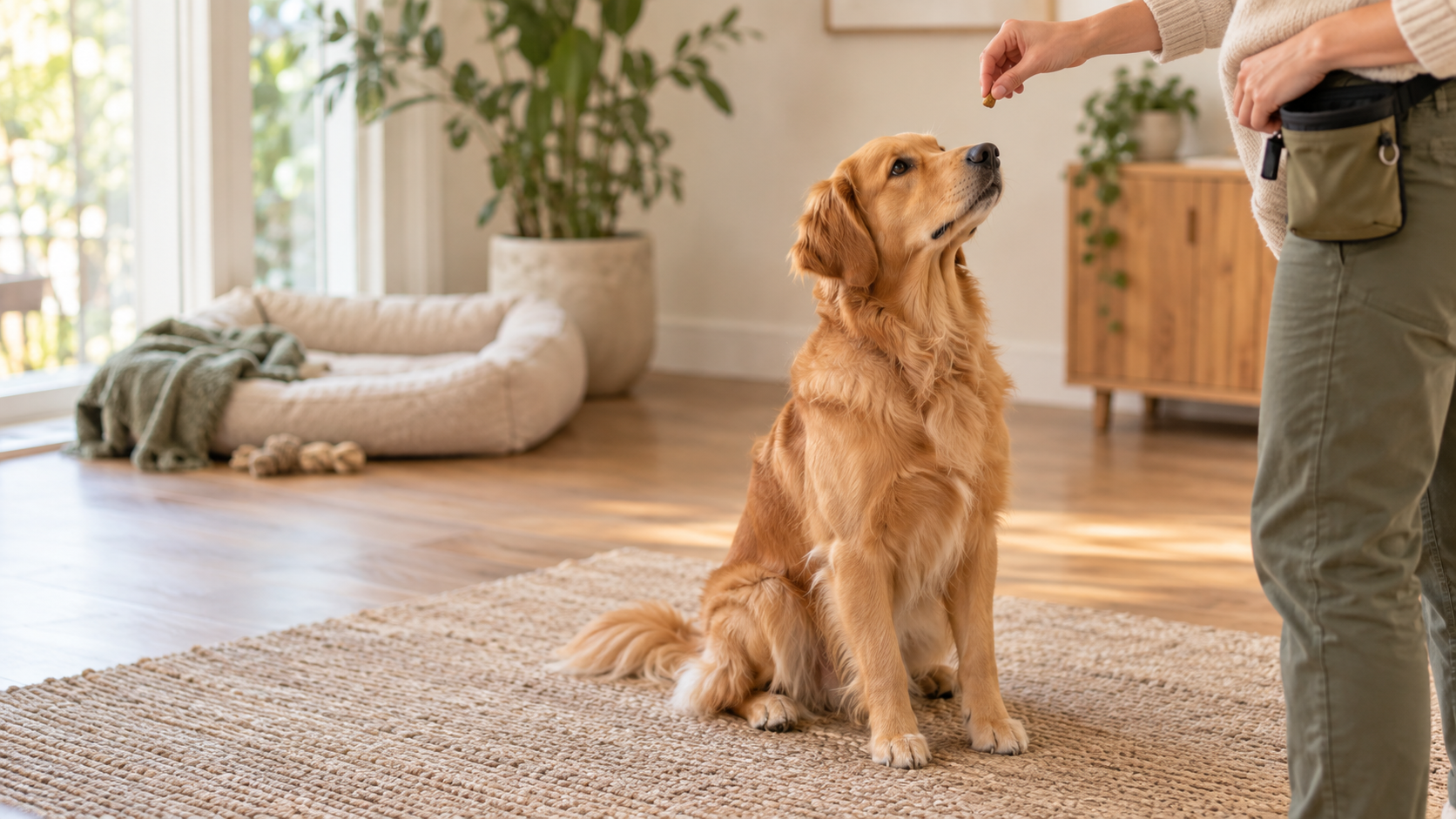
Keep training treats tiny, soft, and tasty, and keep all treats under about 10 percent of your dogs daily calories. Small pieces let you reward often, and matching treat value to how hard the task is makes training work. Save your best treats for your toughest asks.
This guide is general information, not veterinary advice. Every dog is different. Check with your veterinarian before adding new treats or foods, especially if your dog is overweight, is a puppy, or has a health condition or food sensitivity.
What Makes a Great Training Treat
Four qualities that separate a training treat from an ordinary snack
Small
A training treat should be pea-sized or smaller. You will hand out a lot of them, so tiny pieces keep the calories down and let your dog swallow quickly and refocus. Break bigger treats into several small rewards.
Soft
Soft treats can be eaten in a second, which keeps a session moving. Hard, crunchy treats take time to chew and break your dogs concentration right when you want to reward and repeat.
Tasty and smelly
The stronger the smell, the more motivating the treat. A treat your dog is excited about will hold attention and make it worth working through distractions, which is the whole point of a reward.
Low in calories
Because you use so many, a training treat should be light on calories. Low-calorie treats let you be generous with rewards during learning without pushing your dog over its daily budget.
Match the Treat to the Task
Using a range of treat values, and saving your best for the hardest jobs, makes rewards go further.
| Treat value | Examples | When to use it |
|---|---|---|
| Low value (everyday) | Your dogs own kibble, plain low-calorie dog treats | Easy cues your dog already knows well, in a calm, low-distraction setting like your living room. |
| Medium value | Soft commercial training treats, small pieces of plain cooked chicken | Learning new cues, practicing in the yard, or short sessions with mild distractions. |
| High value (jackpot) | Small bits of cooked meat, cheese for dogs that tolerate it, freeze-dried liver | Hard behaviors, recall, working around big distractions, or rewarding a real breakthrough. |
The 10 Percent Rule, and How to Train Without Overfeeding
Treats are the quiet cause of a lot of canine weight gain, so the standard advice is to keep all treats to no more than about 10 percent of your dogs daily calories. That sounds restrictive for training, but a few simple tactics make it easy to stay within budget:
- Go small. Break treats into pea-sized or smaller pieces. Your dog cares more about getting a reward than how big it is.
- Train from the meal. Measure out part of your dogs daily food and use the kibble as rewards, so training calories are not extra calories.
- Balance the bowl. On a big training day, trim the next meal slightly to account for the extra treats.
- Mix in praise and play. A happy voice, a quick game, or a favorite toy can reward good behavior without any calories at all.
To put a real number on that 10 percent, you need your dogs daily calorie target. Our dog feeding calculator estimates how much your dog should eat, and if you want to keep an eye on whether the treats are adding up, the dog BMI calculator helps you check your dogs body condition.
Store-Bought and Homemade Options
You do not need anything fancy to train well. Good options come from both the pet aisle and your kitchen:
- Commercial training treats. Look for small, soft treats with a low calorie count per piece and a short, recognizable ingredient list.
- Plain cooked meat. Small pieces of cooked chicken or turkey with no seasoning, oil, onion, or garlic make an excellent high-value reward.
- Your dogs own kibble. Free, perfectly balanced, and ideal for easy cues in low-distraction settings.
- Low-calorie veg and fruit. Small pieces of carrot or green bean, or apple with the core and seeds removed, suit weight-conscious dogs. Avoid grapes and raisins.
- Freeze-dried single-ingredient treats. Strong-smelling and easy to break up, these work well as a jackpot reward.
Whatever you choose, introduce new foods gradually and watch for any digestive upset, and steer clear of anything on the toxic list. If you want to sanity-check a commercial treat or food, our paw score calculator rates the quality of a product from its label, and you can browse more feeding advice in our dog nutrition guides.
Frequently Asked Questions About Dog Training Treats
Common questions about choosing treats and training without overfeeding
What makes a good dog training treat?
The best training treats are tiny, soft, smelly, and low in calories. Small and soft means your dog can eat it in a second and get straight back to the task, without stopping to chew. Smelly and tasty makes it worth working for. Low in calories lets you reward often without overfeeding. A treat the size of a pea, or smaller for little dogs, is usually ideal, and you can break larger treats down to that size.
How many treats can I give during training?
Aim to keep all treats, including training rewards, under about 10 percent of your dogs daily calories. The trick to training a lot without overfeeding is to use very small pieces, so a single treat might be broken into several rewards. On heavy training days you can also set aside part of your dogs normal meal to use as rewards, or slightly reduce the next meal to balance the extra treats.
What are high-value treats for dogs?
High-value treats are the ones your dog finds especially exciting, usually strong-smelling and meaty, such as small pieces of cooked chicken or other meat, freeze-dried liver, or, for dogs that tolerate dairy, a little cheese. You save these for the hardest situations: teaching a difficult new behavior, practicing recall, or working around big distractions. Using your best rewards for your toughest asks is one of the simplest ways to make training more effective.
Can I use fruit or vegetables as training treats?
Yes, some dogs love low-calorie fresh options like small pieces of carrot, green beans, or apple with the seeds and core removed, and these make great everyday rewards for weight-conscious dogs. Avoid grapes and raisins, which are toxic, and anything seasoned. Introduce a new food in small amounts, and if your dog has a sensitive stomach, stick to what you know agrees with them.
Are training treats OK for puppies?
Yes, and treats are a great tool for puppy training, but choose small, soft, low-calorie treats suited to a puppy and count them toward the 10 percent guideline. Puppies have small stomachs and are growing fast, so too many treats can upset digestion or unbalance a carefully formulated puppy diet. Tiny pieces given frequently work well for a puppys short attention span, and plenty of praise and play can reward good behavior too.
What treats should I avoid for training?
Skip large, hard, or crunchy treats that take too long to eat, since they interrupt the flow of a session, and avoid high-calorie treats that blow your dogs budget in a few rewards. Never use foods that are toxic to dogs, such as chocolate, grapes and raisins, onions or garlic, or anything containing xylitol. Very rich or fatty human foods can also upset the stomach, so keep rewards simple and dog appropriate.
Explore More Dog Nutrition Guides
Feed and reward your dog well, without the guesswork.
Free dog printables
Keep these dog care guides handy
A rotating selection of practical dog guides chosen from our free printable library.Raw Feeding Reference Card
A printable BARF and 80/10/10 portion guide.
Dog Body Condition Chart
A printable 1–9 body condition reference.
Dog Budget Checklist
Plan monthly, annual, and one-time dog costs.