
Last updated: October 3, 2026
Dog Weight Guides
Hypoallergenic Dogs
Looking for a dog that is gentler on allergies? Here is what hypoallergenic really means, why no dog is completely allergen-free, and a rundown of popular low-shedding breeds with their typical adult weight ranges and size classes, plus grooming and care tips to keep symptoms low.
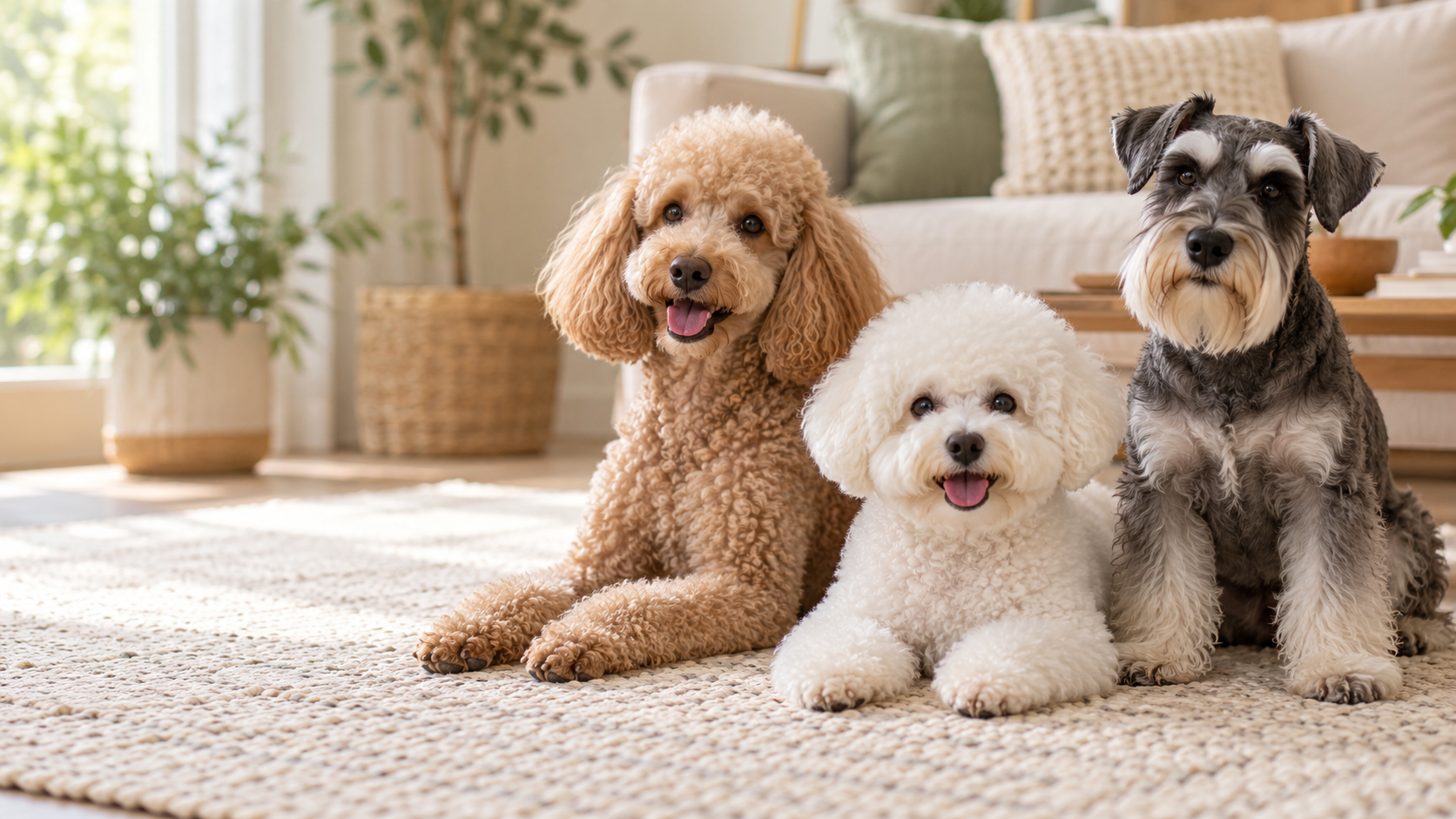
What Hypoallergenic Really Means
The label is useful shorthand, but it is easy to misunderstand
No dog is 100% allergen-free
Hypoallergenic means less likely to cause an allergic reaction, not incapable of causing one. Every dog produces the allergens that trigger sensitive people, so the term describes a lower risk, not a guarantee. Marketing sometimes suggests otherwise, but there is no truly allergen-free dog.
The allergen is a protein, not hair
People often blame dog hair, but the real trigger is a protein found mainly in a dogs dander (dead skin flakes), saliva, and urine. Hair matters only because it carries dander through the home. That is why a low-shedding coat can help even though the dog still makes the protein.
Low-shed breeds spread less dander
So-called hypoallergenic breeds tend to shed less and hold loose hair and dander in the coat rather than releasing it onto floors, furniture, and the air. Less dander floating around the home can mean fewer symptoms for some allergy sufferers, which is the practical benefit behind the label.
Individual reactions vary
Allergies are personal. One person may live comfortably with a Poodle while another still reacts to it. Sensitivity levels differ, and so do individual dogs, even within the same breed. The only reliable test is time spent with the specific dog you are considering, which we cover further down.
Popular Hypoallergenic Dog Breeds and Their Weights
Typical adult weight ranges and size classes for the low-shedding breeds people ask about most. Ranges are general guides, and individual dogs vary.
| Breed | Typical adult weight | Size class | Note |
|---|---|---|---|
| Toy Poodle | 4 to 6 lb (1.8 to 2.7 kg) | Toy | Curly, low-shedding coat. Needs regular clipping to stay comfortable. |
| Miniature Poodle | 10 to 15 lb (4.5 to 6.8 kg) | Small | Same coat type as the other Poodle sizes, just a middle build. |
| Standard Poodle | 40 to 70 lb (18 to 32 kg) | Large | A large dog with the same tightly curled, low-shed coat. |
| Bichon Frise | 12 to 18 lb (5.4 to 8.2 kg) | Small | Soft, curly coat that sheds very little but mats without regular grooming. |
| Maltese | 4 to 7 lb (1.8 to 3.2 kg) | Toy | Silky, single coat with minimal shedding. Frequent brushing keeps it tangle-free. |
| Shih Tzu | 9 to 16 lb (4 to 7.3 kg) | Small | Long, hair-like coat that sheds little. Often kept in a short clip for easier care. |
| Yorkshire Terrier | 4 to 7 lb (1.8 to 3.2 kg) | Toy | Fine, hair-like coat with low shedding. Needs consistent brushing or a short trim. |
| Miniature Schnauzer | 11 to 20 lb (5 to 9.1 kg) | Small | Wiry coat that sheds minimally. Regular hand-stripping or clipping keeps it neat. |
| Havanese | 7 to 13 lb (3.2 to 5.9 kg) | Small | Soft, long coat with low shedding. Prone to matting without routine grooming. |
| Portuguese Water Dog | 35 to 60 lb (16 to 27 kg) | Medium to Large | Curly or wavy coat that sheds little. Active dog that needs plenty of exercise. |
| Soft Coated Wheaten Terrier | 30 to 40 lb (14 to 18 kg) | Medium | Soft, wavy single coat with low shedding. Regular grooming prevents mats. |
| Basenji | 22 to 24 lb (10 to 11 kg) | Small to Medium | Short, fine coat and fastidious self-grooming habits mean low dander spread. |
| Lagotto Romagnolo | 24 to 35 lb (11 to 16 kg) | Medium | Dense, woolly, curly coat that sheds little. Needs regular trimming. |
| Coton de Tulear | 8 to 15 lb (3.6 to 6.8 kg) | Small | Soft, cotton-like coat with minimal shedding. Frequent brushing is a must. |
| Chinese Crested | 8 to 12 lb (3.6 to 5.4 kg) | Toy | Hairless variety spreads little dander. The powderpuff variety needs regular grooming. |
| Afghan Hound | 50 to 60 lb (23 to 27 kg) | Large | Long, silky coat that sheds little but demands serious, frequent grooming. |
| Labradoodle (Poodle mix) | 15 to 65 lb (7 to 29 kg) | Varies by type | Coat and shedding vary widely. Not guaranteed hypoallergenic, since traits are unpredictable. |
| Goldendoodle (Poodle mix) | 15 to 90 lb (7 to 41 kg) | Varies by type | Ranges from mini to standard. Low-shedding is likely but never guaranteed in a mix. |
Poodle mixes such as the Labradoodle and Goldendoodle are hugely popular, but a mix is never guaranteed to be hypoallergenic. Coat type and shedding depend on which parent a puppy takes after, so treat the label as a possibility rather than a promise. Want to check a healthy target weight for your own dog? Try our dog weight calculator or browse all breed weight calculators.
Care Considerations for Low-Shedding Breeds
The single most important thing to understand is that low-shedding does not mean low-maintenance. In fact, many hypoallergenic breeds are among the most grooming-intensive dogs you can own. The very coat traits that reduce shedding, curls, wiry texture, and long hair-like strands, also trap loose hair and tangle easily, so the work simply moves from vacuuming to grooming.
- Regular grooming and coat maintenance. Frequent brushing removes trapped hair and dander before it builds up, and it prevents the mats that form quickly in curly and long coats. This is central to keeping allergens down.
- Professional clipping. Breeds like the Poodle, Bichon Frise, and Shih Tzu usually need clipping every few weeks. The low-shed coat keeps growing rather than falling out, so it has to be trimmed to stay comfortable.
- Bathing. Periodic baths wash away dander and saliva residue from the coat. Do not overdo it, since too-frequent bathing can dry the skin, but a sensible routine helps reduce allergens.
- HEPA filters and cleaning. A HEPA air filter, regular vacuuming, and washing bedding cut the dander that does escape into the home, supporting whatever benefit the low-shedding coat provides.
Keeping a dog at a healthy weight and condition also makes daily care easier and supports overall skin and coat health. Our guide to the dog body condition score walks through how to check whether your dog is at an ideal weight.
Tips for Allergy Sufferers
If you or someone in your home has allergies, choosing a low-shedding breed is only part of the picture. Because individual reactions vary so much, a bit of preparation makes a big difference:
- Spend time with the breed first. Before you commit, visit and handle the specific dog, or at least the breed, over several sessions. This is the only real way to see how you react, since the label alone cannot predict it.
- Manage the home environment. Keep the dog out of bedrooms, use HEPA filters, vacuum often, and wash bedding and soft furnishings regularly to keep dander levels down.
- Groom consistently. Frequent brushing and bathing, ideally done by someone without the allergy, removes dander at the source before it spreads through the home.
- Wash your hands after handling. Simple hygiene after petting or grooming reduces how much allergen you carry to your face and eyes.
- Talk to a medical professional. An allergist can confirm what you are reacting to and suggest management options, which is worth doing before bringing a dog home.
Go in with realistic expectations. A hypoallergenic breed can make life with a dog far more comfortable for many allergy sufferers, but it lowers the odds of symptoms rather than removing them. Matching the breeds size, energy, and grooming needs to your lifestyle matters just as much as the coat type.
Frequently Asked Questions About Hypoallergenic Dogs
Common questions about what hypoallergenic means, the best breeds, and grooming
Are hypoallergenic dogs truly allergen-free?
No. No dog is completely allergen-free. The main allergen is a protein found in a dogs dander, saliva, and urine, not the hair itself. So-called hypoallergenic breeds tend to shed less and spread less dander around the home, which can mean fewer symptoms for some people, but every dog still produces the protein. Individual reactions vary a lot, so a breed that suits one allergy sufferer may still trigger another.
What makes a dog breed hypoallergenic?
It comes down to how much allergen a dog spreads, not whether it produces any. Breeds labeled hypoallergenic usually have low-shedding coats, often curly, wiry, or hair-like, that trap loose hair and dander instead of releasing it into the air and onto furniture. Some, like the Basenji, are also meticulous self-groomers. Less shedding means less dander scattered around the home, which can reduce reactions for sensitive people.
Do hypoallergenic dogs still need a lot of grooming?
Yes, often more than a heavy-shedding breed. Low-shed does not mean low-maintenance. Coats that hold onto loose hair also hold onto tangles, so breeds like the Poodle, Bichon Frise, and Afghan Hound need frequent brushing and regular professional clipping to avoid matting. Routine grooming and bathing also help remove dander, which supports the goal of fewer allergy symptoms.
Which hypoallergenic breeds are best for small living spaces?
If space is tight, the smaller low-shedding breeds are worth a look, such as the Maltese, Toy or Miniature Poodle, Bichon Frise, Havanese, Yorkshire Terrier, Shih Tzu, and Coton de Tulear. These toy and small breeds adapt well to apartments as long as they get daily exercise and mental stimulation. Larger low-shedding dogs like the Standard Poodle or Portuguese Water Dog can live in smaller homes too, but they need considerably more activity.
Are Labradoodles and Goldendoodles hypoallergenic?
Not guaranteed. Poodle mixes like the Labradoodle and Goldendoodle are popular partly because a Poodle parent can pass on a low-shedding coat, but genetics in a mix are unpredictable. Some individuals inherit a curly, low-shed coat, while littermates may inherit a coat that sheds more like the other parent. If you have allergies, spend time with the specific dog before committing, rather than relying on the crossbreed label.
Find the Right Weight for Your Dog
Check healthy weight ranges and explore more dog weight guides.
Free dog printables
Keep these dog care guides handy
A rotating selection of practical dog guides chosen from our free printable library.Dog Feeding Guide
Portion guidance by weight, age, and life stage.
Raw Feeding Reference Card
A printable BARF and 80/10/10 portion guide.
Dog Pregnancy Timeline
A week-by-week whelping calendar and checklist.