
Last updated: October 3, 2026
Dog Care
Separation Anxiety in Dogs
Separation anxiety is one of the most common behavior problems in dogs, and it can be distressing for you and your dog alike. Here is how to recognize the signs, understand what causes it, and work through humane, proven ways to help your dog feel safe when left alone.
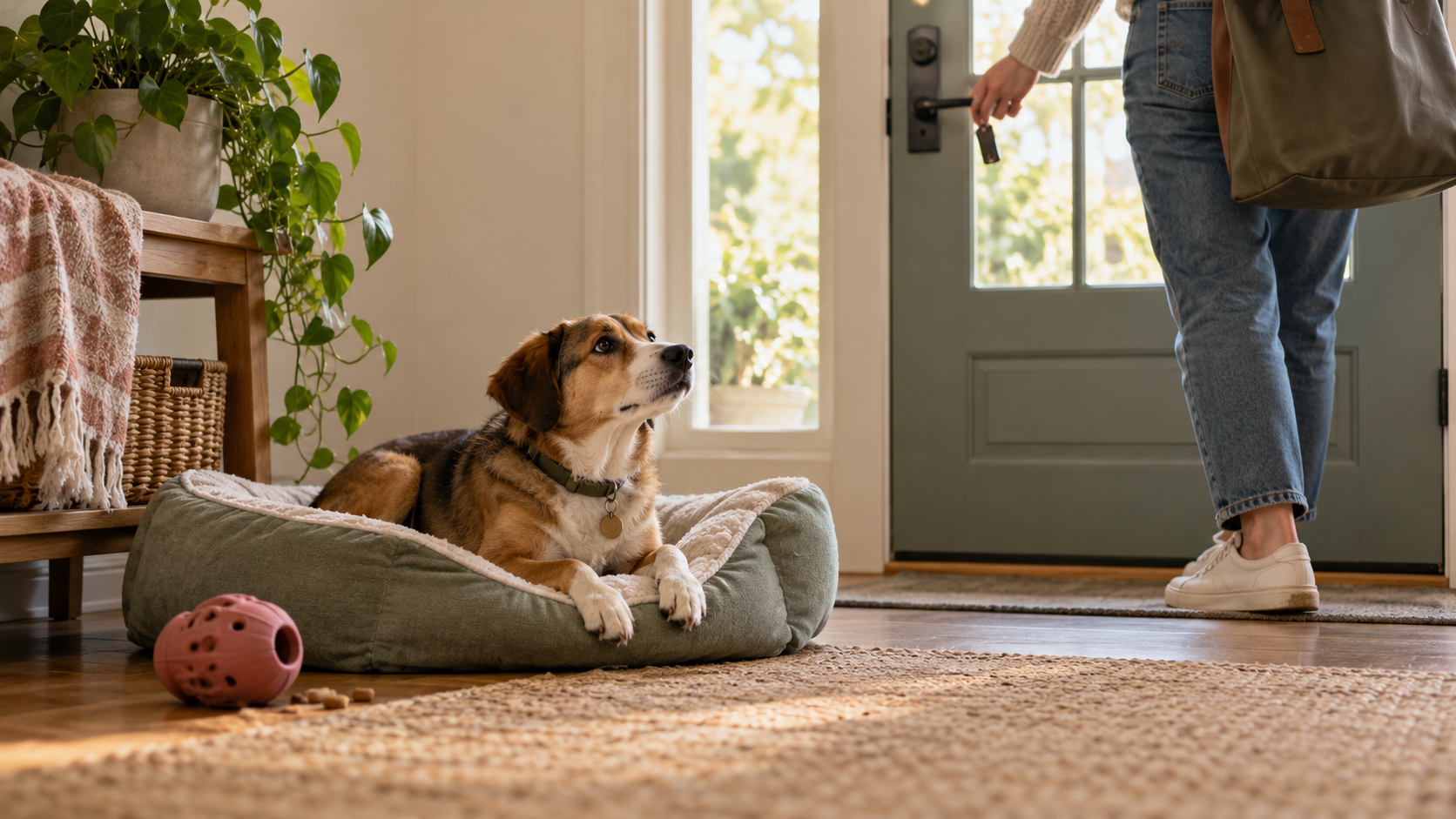
This guide is general information, not a substitute for a vet or certified behaviorist. Every dog is different. If your dog develops separation-related distress suddenly, it is worth having your vet rule out a medical cause first, since pain or illness can change behavior. For severe or stubborn cases, a vet or a certified behaviorist can build a plan tailored to your dog.
Signs of Separation Anxiety in Dogs
The behaviors that tend to appear specifically when a dog is left alone
Destructive behavior when alone
Chewing, digging, or scratching at doors, windows, and furniture, often focused around exits. This usually happens only when the dog is left alone, which sets it apart from ordinary chewing or teething.
Excessive barking or howling
Persistent barking, howling, or whining that starts soon after you leave and continues while you are gone. Neighbors noticing noise while the house is empty is a common first clue.
Pacing, drooling, and restlessness
Some dogs pace a fixed path, tremble, pant, or drool heavily when left alone. These are signs of genuine stress rather than misbehavior, and they can appear even before you have left the house.
House soiling despite training
A fully house-trained dog that toilets indoors only when left alone may be showing anxiety, not a lapse in training. Escape attempts, following you from room to room, and visible distress at departure cues such as picking up keys often go along with it.
How to Recognize the Signs
The hallmark of separation anxiety is that the behavior is tied to being alone or about to be left, rather than happening at random. Many owners only discover it through a neighbors comment, a pet camera, or damage found on returning home. Signs to watch for include:
- Destructive behavior when alone, especially around doors and windows
- Excessive barking, howling, or whining after you leave
- Pacing, often along a set route or in a circle
- Drooling, panting, or trembling from stress
- House soiling despite being reliably toilet trained
- Escape attempts that can lead to injured paws, nails, or teeth
- Following you from room to room and staying close whenever you are home
- Distress at departure cues such as picking up keys, putting on shoes, or grabbing a coat
If several of these show up together and are clearly linked to your absence, separation anxiety is a strong possibility. A pet camera can be a simple way to confirm what your dog does once the door closes.
What Causes Separation Anxiety?
Separation anxiety rarely has a single cause. It usually develops from a mix of a dogs temperament and their experiences. The most common triggers are:
- Changes in routine or household. A new work schedule, a house move, or a family member leaving can unsettle a dog that was previously fine on their own.
- Being rehomed. Dogs adopted from shelters or moved between homes may be more prone to anxiety, having already experienced the loss of a familiar person or place.
- Being left alone too long. Regularly leaving a dog alone for longer than they can comfortably cope with can build up stress over time.
- Lack of gradual conditioning. Dogs that were never taught to be alone in small, positive steps, including many pandemic-era puppies raised with constant company, can struggle when alone-time suddenly increases.
- An underlying medical cause. Occasionally a sudden change in behavior stems from pain, illness, or age-related changes, which is why a vet check is worthwhile when signs appear out of nowhere.
Understanding the likely trigger helps you shape a plan. A dog that never learned to be alone needs patient conditioning, while a dog reacting to a routine change may simply need help adjusting at a manageable pace.
Treatment Techniques, How They Help, and How to Start
Most dogs do best with a combination of these, worked at a pace that keeps them calm.
| Technique | How it helps | How to start |
|---|---|---|
| Gradual desensitization | Teaches your dog that being alone is safe by building up alone-time in small, manageable steps rather than all at once | Begin with departures of just a few seconds, then slowly extend the time only when your dog stays relaxed. Keep sessions short and positive, and never rush the pace. |
| Counter-conditioning | Changes your dogs emotional response to your leaving from dread to something closer to neutral or even positive | Pair your departure cues and short absences with something your dog loves, such as a stuffed food toy given only when you leave, so alone-time predicts good things. |
| Enrichment and puzzle toys | Gives your dog a calm, absorbing activity to focus on, which lowers boredom and helps pass the time while you are gone | Offer a food-dispensing or puzzle toy right as you leave. Reward-based games and treats can make the toy something your dog looks forward to. |
| Exercise before alone-time | A well-exercised dog is more likely to settle and rest, so physical activity before you leave takes the edge off nervous energy | Fit in a walk, a play session, or some training before longer absences so your dog is more relaxed and ready to nap. |
| A safe space done right | A comfortable, familiar spot gives an anxious dog somewhere secure to settle rather than pacing or trying to escape | Set up a cozy room or an open crate your dog already likes. Never force a distressed dog into a closed crate, as confinement can make panic worse. |
| Professional help | A vet or certified behaviorist can build a tailored plan, rule out medical causes, and support severe cases that are not improving | Book a vet check first, then ask for a referral to a certified behaviorist if the anxiety is severe or progress stalls despite consistent training. |
How to Help a Dog With Separation Anxiety
There is no overnight fix, but a steady, humane plan works for most dogs. The goal is to teach your dog, in small steps, that being alone is safe and nothing to fear. A practical approach looks like this:
- Rule out medical causes first. If the anxiety appeared suddenly, have your vet check that pain or illness is not behind the change.
- Take the charge out of departure cues. Pick up your keys or put on your shoes at random times without leaving, so those actions stop predicting your absence.
- Practice very short departures. Step out for a few seconds, then return calmly before your dog becomes anxious. Build up the time only when your dog stays relaxed.
- Pair leaving with something good. Offer a stuffed food toy or a puzzle feeder as you go, so alone-time comes to predict a treat. Reward-based training and treats are your best tools here.
- Exercise before you leave. A walk or play session helps your dog settle and rest while you are gone.
- Set up a comfortable safe space. A cozy room or an open crate your dog already likes gives them somewhere secure to relax.
- Keep arrivals and departures low-key. Calm, matter-of-fact comings and goings help your dog see them as no big deal.
Consistency matters more than speed. If your dog panics, you have moved too fast, so step back to a duration they handled comfortably and build up more slowly. Our guide to dog training treats can help you choose rewards that keep counter-conditioning and enrichment motivating.
What NOT to Do
Some well-meaning responses make separation anxiety worse. Keep these in mind:
- Do not punish. Scolding a dog for mess or damage done while alone does not teach them anything useful and adds fear to an already anxious situation. The behavior is distress, not defiance.
- Do not flood your dog. Leaving an anxious dog alone for hours to force them to cope usually deepens the panic rather than resolving it.
- Do not force crating. A closed crate can help some dogs but can cause real harm to a panicked dog that tries to escape it. Never shut a distressed dog in a crate as a solution.
- Do not rush the process. Pushing past the point where your dog stays calm sets progress back. Slow and steady wins here.
Preventing Separation Anxiety
Prevention is far easier than treatment, and it is worth building good habits early, especially with a new puppy or a newly adopted dog:
- Start independence training early. Teach your dog to settle alone in another room for short spells while you are still home, then gradually extend it.
- Practice gradual alone-time. Build up the time your dog spends by themselves in small, positive steps rather than jumping straight to long absences.
- Keep a consistent routine. Predictable feeding, walks, and rest help a dog feel secure and better able to handle time on their own.
- Provide daily exercise and enrichment. A dog whose physical and mental needs are met settles more easily and is less likely to fixate on your absence.
- Make alone-time normal, not a big event. Calm departures and arrivals from the start teach your dog that being left is an ordinary part of the day.
Meeting your dogs everyday needs supports all of this. Keeping your dog at a healthy weight and well exercised helps their overall wellbeing, and our dog body condition score guide is a useful way to check you have the balance of food and activity right.
When to Get Professional Help
Mild separation anxiety often responds well to patient home training. But some cases need more support, and there is no shame in asking for it. Consider professional help if:
- Your dog hurts themselves trying to escape, or damages property to a dangerous degree
- The distress is severe, with intense panic, heavy drooling, or nonstop vocalizing
- You have worked consistently for weeks with little or no improvement
- The behavior appeared suddenly, which warrants ruling out a medical cause
Start with your veterinarian, who can check for underlying health issues and refer you to a certified behaviorist for a structured plan. In severe cases, a vet may discuss anti-anxiety medication used alongside training, not as a replacement for it, to help a dog stay calm enough to learn. With the right combination of patience, humane training, and professional guidance, most dogs can learn to feel far more comfortable on their own.
Frequently Asked Questions About Separation Anxiety in Dogs
Common questions about the signs, causes, and treatment of separation anxiety
What are the signs of separation anxiety in dogs?
Common signs include destructive behavior when left alone, excessive barking or howling, pacing, drooling, house soiling despite being fully toilet trained, and attempts to escape. Many dogs also follow their owner from room to room and become distressed at departure cues such as picking up keys or putting on shoes. A key clue is that these behaviors happen specifically when the dog is alone or about to be left, rather than at other times.
What causes separation anxiety in dogs?
There is rarely a single cause. Common triggers include a sudden change in routine or household, being rehomed or spending time in a shelter, being left alone for longer than the dog can cope with, and a lack of gradual conditioning to being on their own. Some dogs are simply more prone to it. Occasionally a sudden change in behavior has a medical cause, so it is worth having your vet rule that out.
How do you treat separation anxiety in dogs?
The core approach is gradual desensitization to departures paired with counter-conditioning, so your dog slowly learns that being alone is safe and even rewarding. This is supported by independence training, enrichment and puzzle toys, exercise before alone-time, and a comfortable safe space. Punishment does not help and usually makes things worse. Severe cases benefit from a vet or certified behaviorist, and a vet may discuss anti-anxiety medication as part of a plan.
Can separation anxiety in dogs be cured?
Many dogs improve a great deal with consistent, patient training, and some overcome it entirely. The key is to work at your dogs pace, avoid pushing past the point where they panic, and stay consistent. Progress can be slow and is rarely a straight line, so celebrate small wins. For stubborn or severe cases, a certified behaviorist and, where appropriate, medication prescribed by a vet can make a real difference.
Should I get another dog to help with separation anxiety?
Getting a second dog is not a reliable fix. Separation anxiety in dogs is often about the bond with their person rather than simply being alone, so many dogs remain anxious even with another dog in the house. Adding a dog is a big commitment in its own right and can sometimes make a household more stressful. It is better to address the anxiety directly with training and, if needed, professional support.
Is it separation anxiety or just boredom?
They can look similar, but there are clues. Separation anxiety tends to start quickly after you leave, is tied to departure cues, and often comes with signs of genuine distress such as drooling, panic, or trying to escape. Boredom-related behavior usually builds more slowly and eases when the dog has enough exercise and enrichment. If simple changes like more activity and puzzle toys resolve it, boredom was likely the driver. If distress persists, treat it as anxiety and consider professional help.
Explore More Dog Care Guides
Support your dog's behavior, training, and wellbeing at every stage.
Free dog printables
Keep these dog care guides handy
A rotating selection of practical dog guides chosen from our free printable library.Dog Body Condition Chart
A printable 1–9 body condition reference.
Dog Feeding Guide
Portion guidance by weight, age, and life stage.
Dog Budget Checklist
Plan monthly, annual, and one-time dog costs.