
Last updated: October 3, 2026
Coping & Understanding Grief
Pet Loss and Depression
Grief and depression can look alike, and sometimes grief deepens into depression. Knowing the difference, and the signs to watch for, can help you find the right support at the right time. You do not have to carry this alone.

Grief and depression are not the same
Grief is a natural response to loss. It tends to come in waves and still leaves room for comfort, connection, and small moments of relief. Depression is more constant and all-encompassing, often bringing persistent hopelessness or a loss of interest in nearly everything. The two can overlap, and intense grief can sometimes tip into depression, which is nothing to be ashamed of.
Warning signs to watch for
It may be time to reach out for professional support if you notice:
- • A low mood that is constant and does not ease at all over a long period
- • Ongoing inability to function in daily life
- • Persistent feelings of hopelessness or worthlessness
- • Withdrawing completely from people and activities
- • Sleeping or eating far too little or too much for a sustained time
- • Any thoughts of harming yourself
Reaching out is a strength
Asking for help is never a weakness or an overreaction. If the signs above sound familiar, please talk with your doctor, a mental health professional, or a pet loss counselor. Our guide to pet loss counseling and pet loss hotlines can point you toward support that takes your grief seriously.
If you are in crisis
If you are having thoughts of harming yourself, please reach out right now to a local crisis line or emergency services, or go to your nearest emergency department. You matter, and immediate help is available. In the meantime, even small steps like gentle self-care and staying connected to one trusted person can help you through the next hour.
This is a sensitive topic. This article offers general support and is not a substitute for professional medical or mental health advice. If you are struggling, please reach out to a qualified professional or a crisis line.
Pet Loss and Depression: Common Questions
Knowing when grief needs extra support.
Can losing a pet cause depression?
Grief and depression are different, but intense grief can sometimes develop into depression, particularly after a deeply felt loss. If your low mood is constant, does not ease at all, and affects your ability to function, it is worth speaking with a professional.
What is the difference between grief and depression?
Grief usually comes in waves and still allows moments of connection, comfort, and even brief lightness. Depression tends to be more constant and pervasive, often with persistent hopelessness, worthlessness, or a loss of interest in nearly everything. When in doubt, a doctor or counselor can help you tell the difference.
What warning signs should I watch for?
Be alert to persistent hopelessness, ongoing inability to function, withdrawing from everyone, sleeping or eating far too little or too much for a long time, or any thoughts of harming yourself. These signs mean it is time to reach out for professional support.
Where can I get help?
Start with your doctor, a mental health professional, or a pet loss counselor. Pet loss hotlines and support groups can also help. If you are in crisis or thinking about harming yourself, please contact a local crisis line or emergency services right away.
You deserve support too
If grief feels too heavy to carry alone, help is available and you are worth it.
Free printable support
Choose the resource that helps today
Each book is a free, 10-page A4 PDF designed to print and complete by hand.Pet Grief Journal
Ten gentle pages for memories, grief waves, letters, support, and carrying the bond forward.
Complete Pet Loss Guide
Compassionate guidance for grief reactions, children, surviving pets, aftercare, and support.
What to Do After a Pet Dies
A calm checklist for the first hours, provider questions, aftercare, records, and memorial choices.
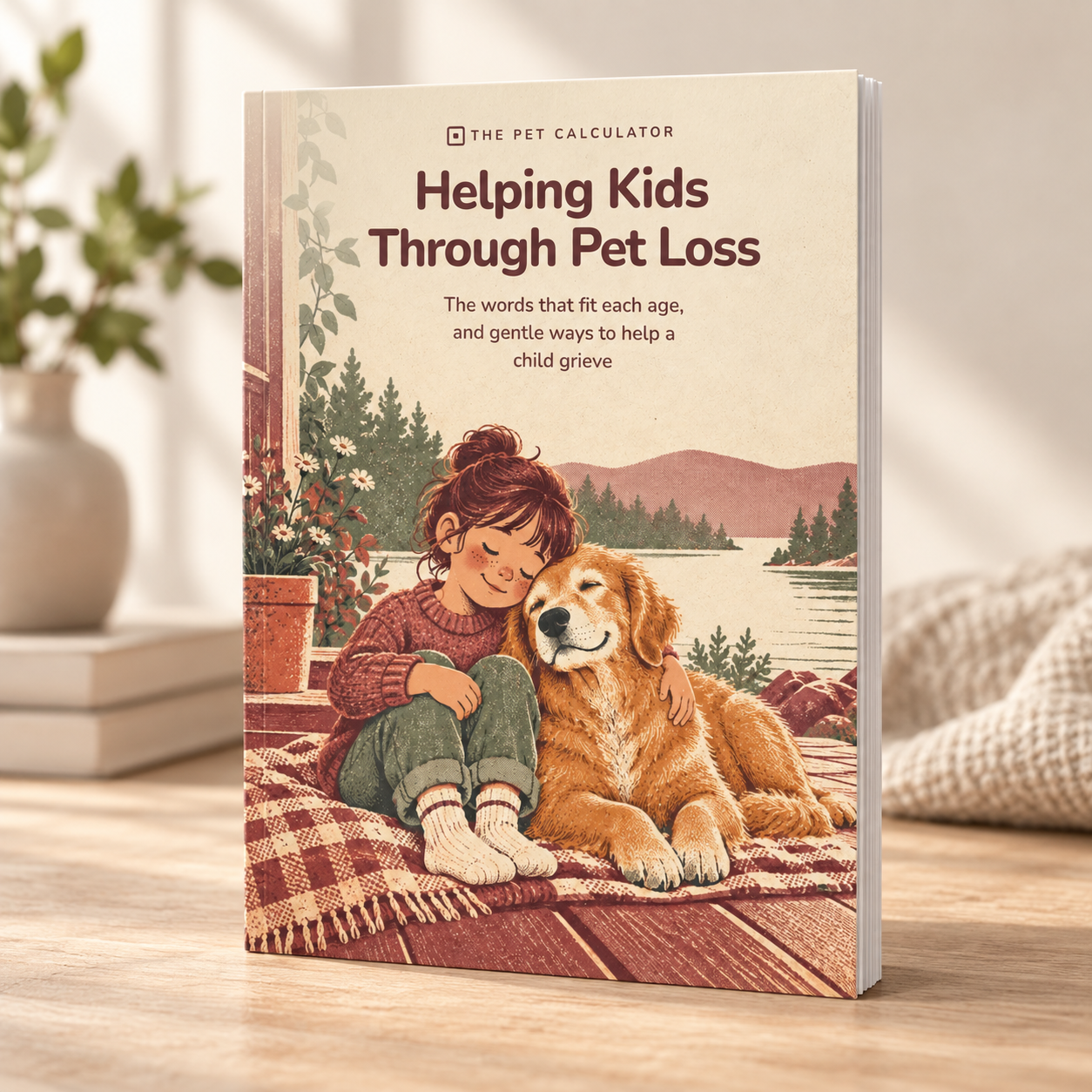
Printable companion · Printable PDF
Helping Kids Through Pet Loss
A gentle memory book for children and families.
A draw-and-write keepsake that helps children remember a beloved pet, express difficult feelings, and move through grief at their own pace.