
Last updated: October 3, 2026
Workplace & Social Grief
One of the hardest parts of losing a pet is grieving in a world that does not always understand. Your sadness is real, even when others treat it as small. These guides help you name that experience, cope when people minimize your loss, talk to your employer, and understand your options for time off, so you can grieve with the dignity your bond deserves.

Your Grief Is Valid, Even When Unseen
Support for the social side of losing a pet
The bond was real, so is the loss
Research consistently shows that grief for a pet can be as intense as grief for a person. If others do not understand, that reflects their experience, not the truth of your loss.
You are allowed to need support
Wanting time, understanding, or space to grieve is not an overreaction. You can ask for what you need at work and in your relationships without apology.
Naming it helps
Understanding disenfranchised grief, and finding people who get it, can lift the extra weight of feeling that your sadness does not count.
Guides for Grieving Among Others
From invisible grief to the workplace, find gentle, practical answers
Disenfranchised Grief and Pet Loss
When a loss is not openly acknowledged by society, the grief can feel invisible. What disenfranchised grief is, why pet loss so often fits it, and how to validate your own pain.
Read Guide →When People Don't Understand Pet Loss
How to cope when friends, family, or coworkers minimize your grief, what to say to hurtful comments, and how to find the support you deserve.
Read Guide →How to Tell Your Boss Your Pet Died
Practical, professional ways to let your employer know, whether to ask for time off, and sample wording for a message that feels honest without oversharing.
Read Guide →Pet Bereavement Leave: What to Know
What pet bereavement leave is, why it is not usually required by law, which employers offer it, and how to ask for the time you need.
Read Guide →Sample Pet Bereavement Leave Policy
A free, adaptable template for employers who want to offer pet bereavement leave, covering eligibility, length, and how to word a compassionate policy.
Read Guide →What These Guides Cover
Compassionate help for grief that others may not see
Understanding invisible grief
What disenfranchised grief is, why pet loss so often goes unacknowledged, and how to give your own pain the recognition it deserves.
Handling hurtful reactions
What to say, and what not to take to heart, when people minimize your loss, plus how to find those who truly understand.
Talking to your employer
How to tell your boss, whether to request time off, and sample wording that is honest and professional without oversharing.
Bereavement leave and policy
What pet bereavement leave is, how to ask for it, and a free template employers can use to offer it with compassion.
Frequently Asked Questions About Social & Workplace Grief
Gentle, practical answers to the questions that come up most
Why do so few people understand pet grief?
Society often treats pets as less significant than human family members, so pet loss can go unacknowledged, a pattern known as disenfranchised grief. Many people simply have not experienced the depth of the human animal bond, so they underestimate it. This lack of understanding does not make your grief any less real or valid. The bond you shared was genuine, and so is your loss.
What is disenfranchised grief?
Disenfranchised grief is grief that is not fully recognized or supported by the people or culture around you. Because pet loss is often seen as minor, mourners may feel they have to hide their sadness or get over it quickly. Naming this experience can be a relief, and it points you toward the validation and support your grief deserves.
Can I take time off work when my pet dies?
It depends on your employer. A growing number of workplaces offer formal or informal pet bereavement leave, but it is not generally required by law. Many people use a personal or vacation day, or speak honestly with a manager about needing a little time. It is reasonable to ask, and how you frame the request can help.
Should I tell my coworkers or boss that my pet died?
That is a personal choice. Sharing can help others understand why you may be less yourself for a while, and many managers respond with kindness. You can decide how much to say. A brief, honest note is enough, and you are not obligated to justify the depth of your grief to anyone.
How do I respond when someone says it was just a pet?
Comments like this usually come from a lack of understanding rather than cruelty, though they still hurt. You might gently say that your pet was family to you and that the loss is real, or simply choose not to engage and turn to people who do understand. Protecting your grief from those who minimize it is a healthy, reasonable thing to do.
You Deserve to Be Understood
Start with whichever part of grieving among others is weighing on you most.
Free printable support
Choose the resource that helps today
Each book is a free, 10-page A4 PDF designed to print and complete by hand.Pet Grief Journal
Ten gentle pages for memories, grief waves, letters, support, and carrying the bond forward.
Complete Pet Loss Guide
Compassionate guidance for grief reactions, children, surviving pets, aftercare, and support.
What to Do After a Pet Dies
A calm checklist for the first hours, provider questions, aftercare, records, and memorial choices.
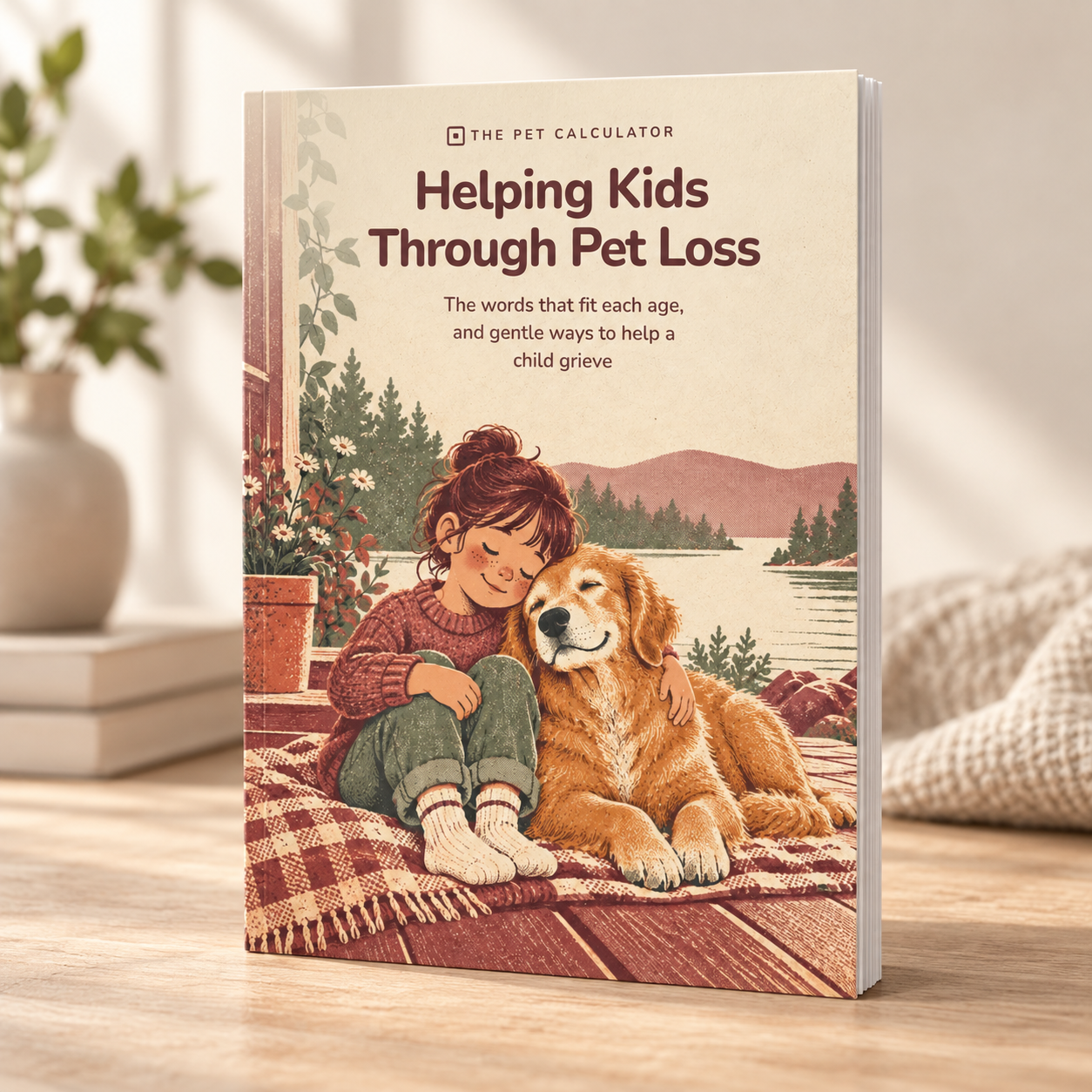
Printable companion · Printable PDF
Helping Kids Through Pet Loss
A gentle memory book for children and families.
A draw-and-write keepsake that helps children remember a beloved pet, express difficult feelings, and move through grief at their own pace.