Last updated: October 3, 2026
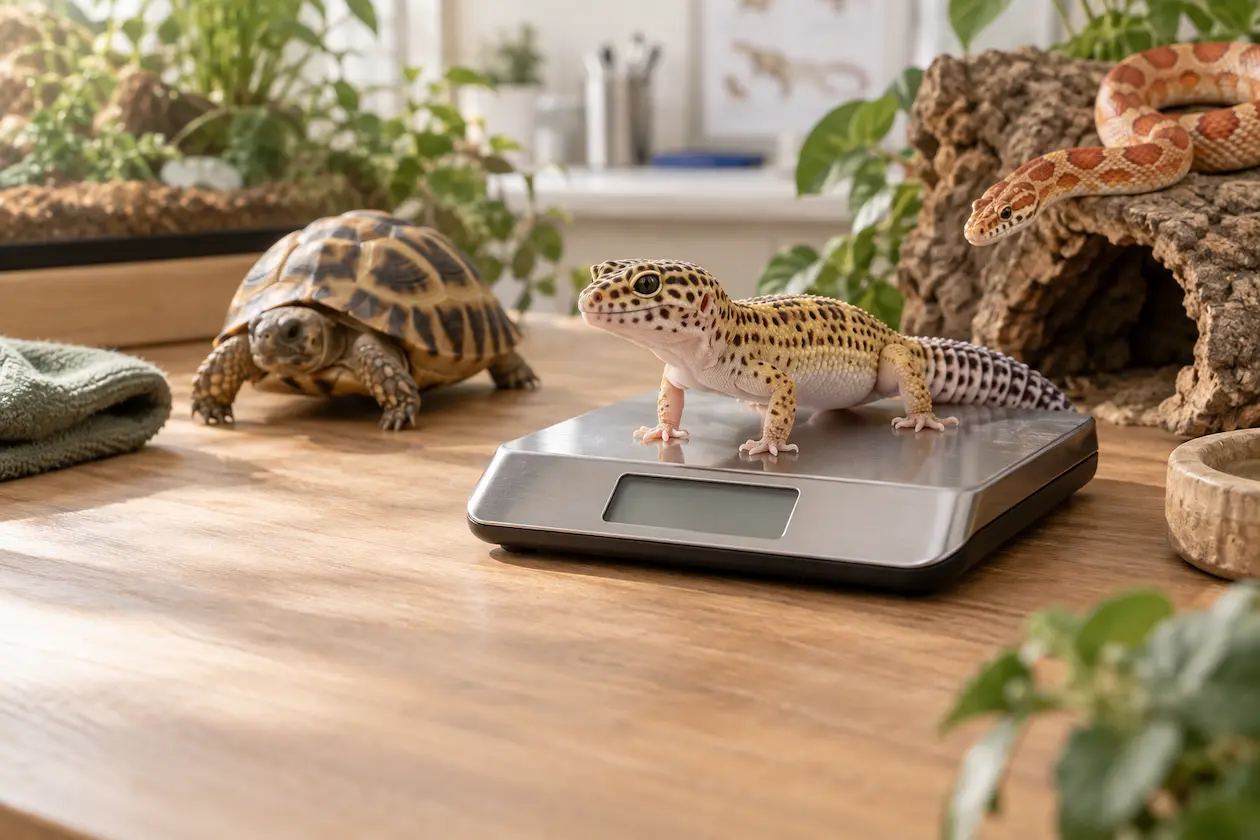
How To Use
This tool helps determine if your reptile is at an ideal weight based on species standards. Enter your reptile's current weight and select their species to see how they compare to the ideal weight range for their species.
Quick Steps
- 1 Enter your Reptile's Current Weight in pounds.
- 2 Select your Reptile's Species from the dropdown.
- 3 Click the Calculate button to see the weight assessment.
Reptile Weight Calculator
Fill Out The Fields Below
Why Reptile Weight Matters
Weight is one of the clearest early indicators of a reptile's health. Unlike cats and dogs, reptiles rarely show obvious behavioral signs when something is wrong, so a slow drift up or down on the scale is often the first clue that husbandry, diet, or hydration needs attention. Because reptiles are ectotherms with slow metabolisms, small changes accumulate over weeks and months rather than days, which makes consistent weight tracking far more informative than a single reading.
Our reptile weight calculator compares your animal's current weight to species-typical ranges so you can see at a glance whether it falls within, below, or above the expected band. Since healthy weight varies enormously across species, from a 15 gram gecko to a multi-kilogram tortoise, the calculator uses species-specific standards rather than a single universal figure.
Typical Weight Ranges by Reptile Species
The table below lists healthy adult weight ranges for common pet reptiles. These are general references for well-established adults; hatchlings, juveniles, and specific morphs will differ, and body length and structure matter as much as the number on the scale. Use these figures alongside your calculator result rather than as strict targets.
| Species | Typical Adult Weight | Notes |
|---|---|---|
| Leopard gecko | 45–90 g | Healthy adults store fat in a plump tail |
| Crested gecko | 35–55 g | Reach adult size around 15–18 months |
| Bearded dragon | 300–600 g | Males typically heavier than females |
| Ball python | 1,200–2,000 g | Females noticeably larger than males |
| Corn snake | 700–900 g | Slender build compared to pythons |
| Russian tortoise | 400–1,500 g | Weight scales with shell length |
| Green iguana | 3,000–7,000 g | Large adults; weight varies with length |
How to Weigh Your Reptile Accurately
Accurate weighing is the foundation of useful tracking. A digital kitchen scale that reads in grams is ideal for most reptiles because it is precise enough to catch small changes; larger species such as tortoises and adult iguanas may need a scale with a higher capacity. Follow these steps for consistent, comparable readings:
- Use a container: Place a bowl, deli cup, or tub on the scale, tare it to zero, then add your reptile so it stays contained and calm.
- Weigh at the same time: Aim for the same time of day and, ideally, before feeding so meals and defecation do not skew the reading.
- Weigh in grams: Grams offer the resolution needed to notice trends, especially for small geckos where a few grams is significant.
- Log every reading: Keep a simple weight log with dates so you can spot gradual trends rather than reacting to one-off numbers.
Signs of an Underweight or Overweight Reptile
The scale tells you the number, but visual and physical body condition tells you what it means. In many lizards, the tail and hip area store fat, so a thin tail base, visible hip bones, or sunken eyes often signal an underweight animal, while a bloated appearance, fat pads bulging around the limbs, or a body that looks wider than it is long can point to obesity.
In snakes, prominent spine and rib ridges suggest the animal is underweight, whereas visible skin stretching between scales and a rounded, tubular body may indicate excess weight. Tortoises should feel appropriately heavy for their shell size; a shell that feels light for its length can indicate poor condition. If your calculator result falls outside the healthy range, or body condition looks off even when the weight seems normal, consult a reptile-experienced (exotic) veterinarian.
Factors That Affect Reptile Weight
Reptile weight is tightly linked to husbandry, and understanding the drivers helps you interpret changes rather than just record them:
- Temperature and basking: Reptiles rely on external heat to digest food. Enclosures that are too cool slow metabolism and appetite, which can lead to weight loss.
- Diet and feeding frequency: The right prey size, plant balance, and feeding schedule for the species and life stage strongly influence weight; juveniles eat far more often than adults.
- Hydration and humidity: Chronic dehydration or incorrect humidity affects both weight and shedding, particularly in humidity-dependent species.
- Season and brumation: Many species reduce feeding and lose a little weight during brumation, which can be normal if body condition stays sound.
- Age and sex: Growing juveniles gain steadily, and in many species females are larger or gain weight while gravid.
- Health conditions: Parasites, impaction, and metabolic disease can all shift weight; unexplained changes warrant a vet visit.
Example: Assessing a Bearded Dragon's Weight
Suppose you have a healthy adult male bearded dragon weighing 450 grams. Entering that weight and selecting bearded dragon in the calculator places him comfortably within the typical 300–600 gram adult range, so no immediate concern is flagged. You confirm this visually: his tail base is full, his hip bones are not prominent, and his body is rounded without looking bloated.
Now imagine that over three months of weekly weigh-ins he drops from 450 to 380 grams. He is still technically inside the healthy range, but the downward trend is the real signal. Because the calculator and your log caught the change early, you can review basking temperatures, feeding schedule, and possible parasites with your exotic vet long before the loss becomes severe. This is exactly why tracking trends beats relying on a single reading.
Reptile Weight vs. Body Condition Score
A number on the scale is only half the picture. Two reptiles of the same species can share an identical weight yet have very different body conditions if one is longer or more muscular than the other. That is why keepers and veterinarians pair weight with a body condition assessment, judging fat stores, muscle tone, and overall proportions by sight and gentle handling.
Use the calculator's weight-range result as your quick screening tool, then confirm with body condition. If the weight sits in range but the animal looks thin or bloated, trust the physical assessment and investigate husbandry. For a broader picture of health across other pets, explore our full library of pet weight calculators and pet health calculators.
FAQs
Frequently Asked Questions
What is an ideal weight range for reptiles?
Ideal weight ranges vary significantly by species. Each species has natural size variations, so ideal weight is expressed as a range rather than a single number. Our calculator uses species-specific standards to provide accurate weight ranges.
How do I know if my reptile is at a healthy weight?
Compare your reptile's current weight to the ideal weight range for their species using our calculator. Regular weighing and monitoring are important for reptile health, as weight changes can indicate health issues.
What should I do if my reptile is underweight?
If your reptile is underweight, consult your veterinarian (preferably an exotic animal specialist) immediately. Underweight reptiles may have underlying health issues, improper diet, or environmental problems that need to be addressed.
What should I do if my reptile is overweight?
If your reptile is overweight, consult your veterinarian (preferably an exotic animal specialist) for a weight management plan. They may recommend dietary adjustments and environmental changes to encourage natural activity.
How often should I weigh my reptile?
Regular weighing (weekly or monthly) helps monitor your reptile's health. Sudden weight changes can indicate health issues. Keep a weight log and consult your veterinarian if you notice significant changes.
What factors affect reptile weight?
Reptile weight can be affected by diet, temperature, humidity, activity level, age, and health conditions. Ensure proper husbandry conditions and consult your veterinarian if you have concerns about your reptile's weight.
Other Calculators for Reptiles
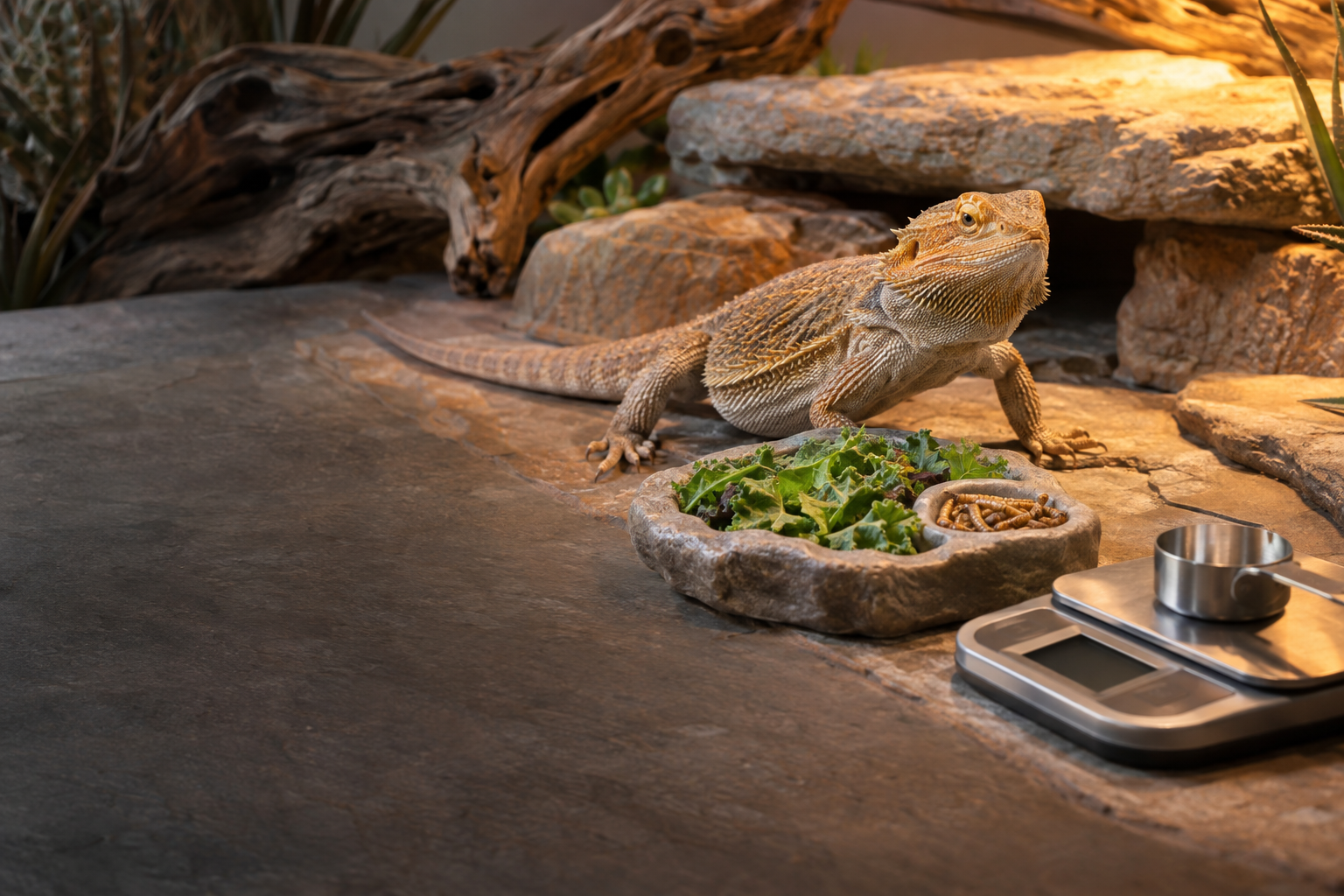
Reptile Nutrition Calculator - Free Feeding Guide for Reptiles
Free reptile nutrition calculator. Get daily calorie and feeding amounts for bearded dragons, geckos, snakes, and more by species, weight, age, and temperature. Instant, science-based reptile feeding guide.
Other Pet Weight Calculators

Australian Shepherd Weight Calculator | Is Your Aussie a Healthy Weight? | The Pet Calculator
Check your Australian Shepherd\

Beagle Weight Calculator | Healthy Weight for 13-Inch & 15-Inch Beagles
Free Beagle weight calculator — check your Beagle\
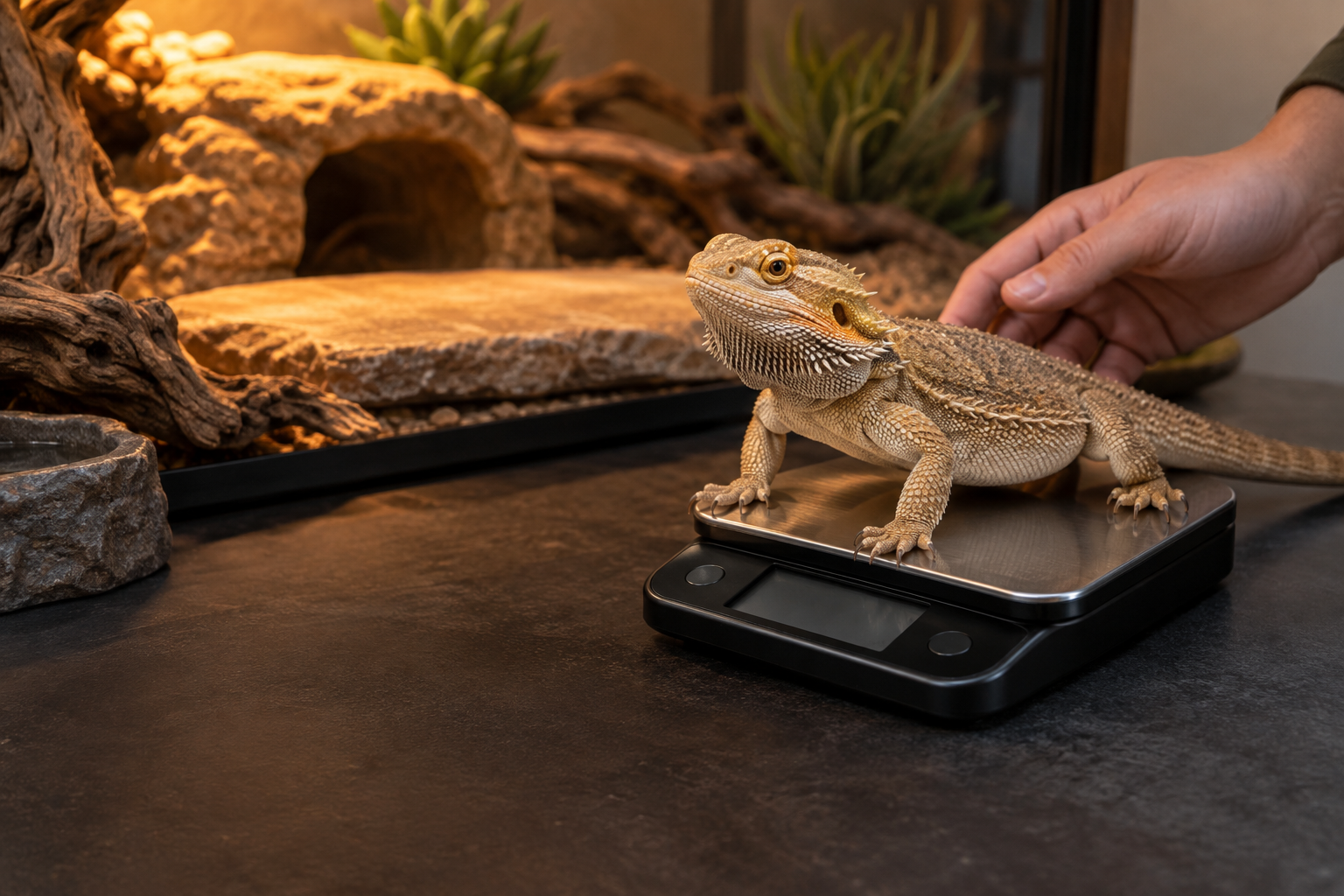
Bearded Dragon Weight Chart by Age | Free Weight Calculator
Free bearded dragon weight calculator plus a bearded dragon weight chart by age. Check if your bearded dragon is a healthy weight, from hatchling to adult, with growth milestones and care tips.