
Last updated: October 3, 2026
Cat Behavior
Why Do Cats Purr?
Purring is one of the most familiar and most misunderstood cat sounds. It usually means a cat is content, but not always. Here is how purring works, the many reasons cats do it, and how to read the context.
How Does a Cat Purr?
Purring starts in the brain. A rhythmic signal travels to the muscles of the voice box (the larynx), causing them to twitch rapidly, roughly 25 to 150 times per second. As the cat breathes in and out, air passes over the vibrating vocal cords and produces the steady rumble you hear on both the inhale and the exhale. That continuous, two-way sound is what sets a purr apart from most other cat vocalizations.
Kittens can purr within the first few days of life, and mothers purr back, so purring is woven into the bond between cats from the very start. That early association with safety and nursing helps explain why so many adult cats purr when they feel secure and cared for.
The Reasons Cats Purr
Purring means different things in different moments. Read it alongside the rest of your cat's body language.
| Reason | Typical context | What it means |
|---|---|---|
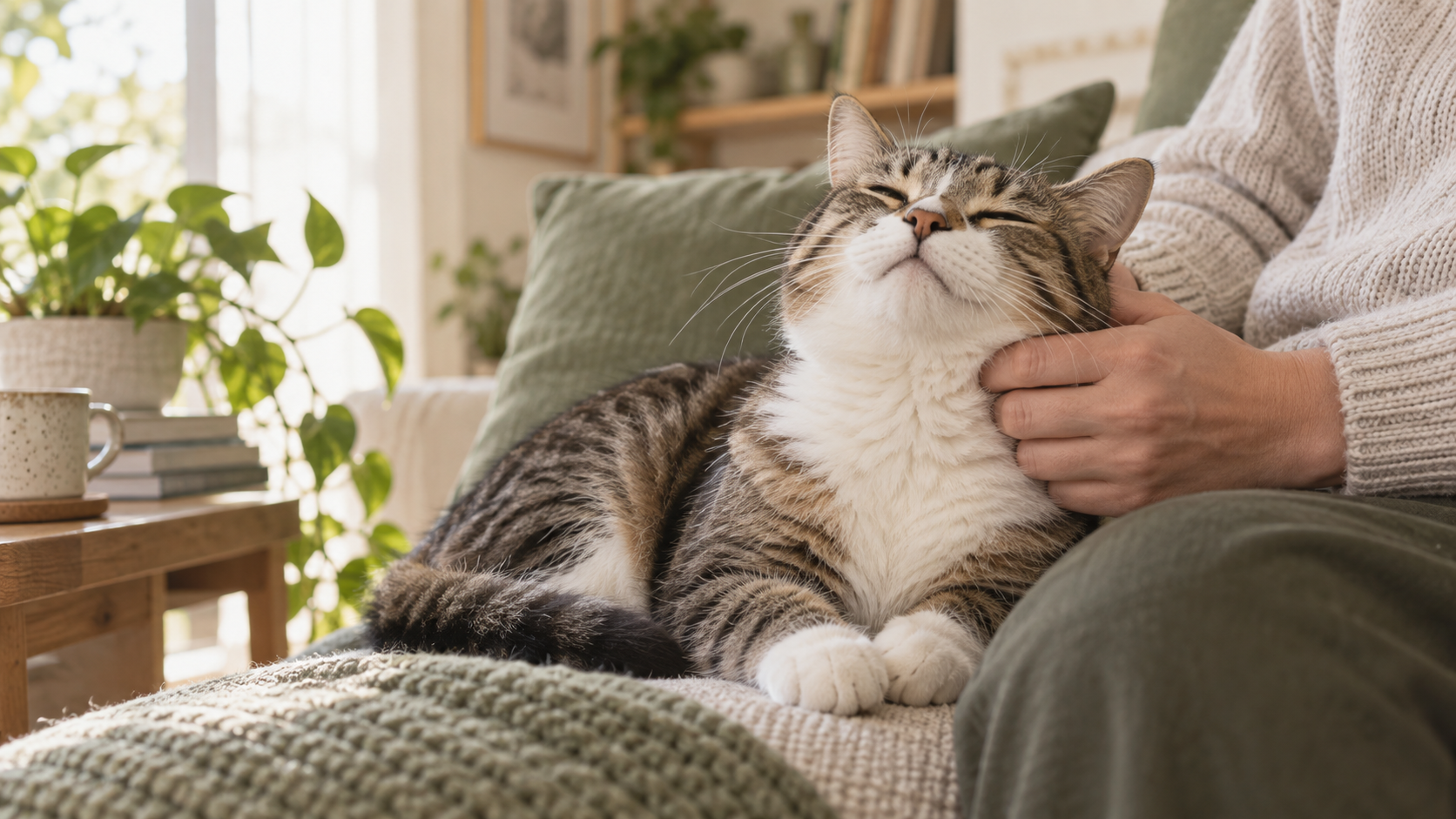
| Contentment | Relaxed body, half-closed eyes, kneading, settled on your lap | The classic happy purr. Your cat feels safe and comfortable. |
| Bonding and greeting | Purring while rubbing against you or another cat, tail up | A social signal that strengthens the bond between cat and owner, and between cats. |
| Asking for something | A more urgent, higher-pitched purr, often around mealtimes | The so-called solicitation purr, used to get your attention or food. |
| Self-soothing | Purring when nervous, at the vet, or during stress | Purring can be a way for a cat to calm itself, not only a sign of happiness. |
| Healing and comfort | Purring while resting or recovering | The low-frequency vibrations are thought to be soothing and may support tissue and bone health. |
| Pain or distress | Purring alongside hiding, not eating, or other signs something is wrong | Occasionally a sick or hurting cat purrs. Look at the whole picture, not the purr alone. |
When Purring Is Not About Happiness
Because cats also purr to comfort themselves, a purr on its own does not guarantee your cat feels well. A cat at the vet, in a carrier, or recovering from illness may purr to self-soothe. The key is context: a relaxed body, soft eyes, and kneading point to a happy purr, while purring paired with hiding, a hunched posture, not eating, or lethargy is a reason to look closer.
If your cat is purring but you also notice signs that something is off, review the signs of a sick cat and contact your veterinarian. When in doubt, trust the whole picture over the purr.
Purring often comes paired with another comforting behavior, kneading, which also traces back to kittenhood. Explore more feline behavior in our Cat Behavior guides.
Frequently Asked Questions About Cat Purring
Common questions about why cats purr and what it means
Why do cats purr when you pet them?
Petting a relaxed, contented cat usually triggers a happy purr. It is a social, bonding response: your cat associates your touch with safety and affection, much like the contentment they felt nursing as a kitten. If the body is loose and the eyes are soft, the purr means they are enjoying it.
Do cats purr when they are happy?
Yes, contentment is the most common reason cats purr. A relaxed cat kneading on your lap with half-closed eyes is a classic happy purr. But purring is not only about happiness, cats also purr to soothe themselves, to ask for food, and occasionally when stressed or unwell, so read the rest of their body language too.
Can cats purr when in pain?
Yes. Cats sometimes purr when they are frightened, stressed, or in pain, likely as a self-soothing mechanism. This is why the purr alone is not a reliable sign of health. If your cat is purring but also hiding, not eating, or acting unwell, look at the bigger picture and contact your vet.
How do cats purr?
Purring is produced by rapid, rhythmic signals from the brain to the muscles of the voice box (larynx), which cause the vocal cords to vibrate as the cat breathes in and out. This creates the continuous rumble you hear on both the inhale and the exhale, at a frequency of roughly 25 to 150 hertz.
Why does my cat purr and then bite me?
A cat that purrs while being petted and then suddenly nips is often showing petting-induced overstimulation. The purr was genuine, but the cat reached its limit for handling. Watch for early warning signs like a twitching tail, flattened ears, or skin rippling, and stop petting before the bite.
Understand Your Cat Better
Explore more about how cats communicate and behave.
Free cat printables
Keep these cat care guides handy
A rotating selection of practical cat guides chosen from our free printable library.Cat Quality of Life Checklist
Track the HHHHHMM quality-of-life measures.
Cat Body Condition Chart
A printable body condition reference for cats.
Kitten Calorie Guide
Calorie targets by kitten age and weight.