
Last updated: October 3, 2026
Cat Health
Sick Cat Symptoms: Signs Your Cat Is Ill
Cats are experts at hiding illness, so the signs are often quiet: eating a little less, drinking a little more, sleeping in a new spot. This is your overview of the signs a cat is unwell, how to tell if your cat is sick, and when a symptom is an emergency. Each sign links to a detailed guide.
This guide is general information, not veterinary advice. Every cat is different. If your cat is unwell or you are worried, contact your veterinarian, who can examine your cat and give advice for their specific situation.
Call your vet or an emergency clinic now if your cat has any of these
- Breathing with an open mouth, or fast or labored breathing while resting
- Blue, grey, or very pale gums or tongue
- Collapse, extreme weakness, or unresponsiveness
- A male cat straining in the litter box and producing little or no urine
- Repeated vomiting, or an inability to keep any water down
- Seizures, or a cat that has not eaten anything for more than a day
These signs can mean a serious, fast-moving problem and cannot wait for a routine appointment.
Why Any Change From Normal Matters
Cats instinctively hide illness. In the wild, an animal that looks weak becomes a target, so a sick cat often just withdraws, sleeps more, or eats a little less rather than showing obvious distress. By the time symptoms are clearly visible, a problem may already be advanced. That is why the single most useful thing you can track is change from your cat’s normal: how much they eat and drink, their weight, their energy, their litter box habits, and their grooming.
Symptoms also rarely appear alone. Increased thirst with weight loss points somewhere different than vomiting with diarrhea. When you notice one sign, look for others, note when it started, and use the guides below to understand the picture. None of this replaces a veterinary exam, but it helps you decide how urgent things are and what to tell your vet.
Signs to Watch, and When It Is an Emergency
Use this as a starting point, not a diagnosis. Your vet can confirm what is going on.
| Sign | What to watch for | When it is an emergency |
|---|---|---|
| Eating less or refusing food | Appetite change is one of the earliest signs something is wrong, and a cat that eats nothing can become seriously ill fast. | No food for more than 24 hours, or a large cat losing appetite suddenly, needs urgent veterinary care. |
| Drinking and urinating more | Increased thirst can be an early sign of kidney disease, diabetes, or an overactive thyroid. | A male cat straining in the litter box with little or nothing produced is a life-threatening emergency. |
| Weight loss | Losing weight while eating normally, or gradual thinning over weeks, is a common early warning sign. | Rapid weight loss with lethargy, vomiting, or not eating warrants a prompt vet visit. |
| Vomiting or diarrhea | Occasional upset can be minor, but repeated episodes cause dehydration quickly. | Repeated vomiting, inability to keep water down, or blood in vomit or stool means call your vet now. |
| Coughing, sneezing, or breathing changes | Respiratory signs can point to infection, asthma, or something more serious. | Open-mouth breathing, fast or labored breathing at rest, or blue or grey gums is an emergency. |
| Low energy, hiding, or weakness | Cats hide when they feel unwell. A cat that hides more, moves less, or seems withdrawn is telling you something. | Collapse, extreme weakness, unresponsiveness, or lethargy combined with not eating cannot wait. |
| Changes in grooming or coat | A greasy, matted, or unkempt coat, or a cat that stops grooming, often signals pain or illness. Over-grooming a spot can mean pain or stress. | Sudden grooming changes with other symptoms below deserve a vet check. |
| Limping, stiffness, or reluctance to move | Pain from injury or arthritis can show as limping, hesitation to jump, or hiding. | A limb that cannot bear weight, obvious swelling, or signs of severe pain should be seen promptly. |
Appetite, Thirst, and Weight
Changes in how much a cat eats, drinks, and weighs are among the earliest and most important signals. A cat that stops eating is more urgent than many owners realize, because cats that go without food can develop serious liver problems within a couple of days. See our guide to a cat that is not eating for why this becomes urgent quickly.
Drinking more than usual is easy to miss but meaningful. Increased thirst can be an early sign of several conditions, so read why a cat is drinking a lot of water. And because cats hide weight change under their coats, unexplained weight loss is one of the top early warning signs in cats and should always be investigated.
Digestive Signs
Upset stomachs are common, but repeated episodes cause dehydration fast and can point to something more serious. Learn what different patterns mean in our guides to a cat throwing up, cat diarrhea, and cat constipation.
Coughing or retching that ends in a hairball is usually mild when occasional, but frequent hairballs, or retching that produces nothing, deserve a closer look. Persistent bad breath is worth attention too, since cat bad breath most often points to dental disease and sometimes to other illness.
Respiratory Signs
Any change in breathing deserves attention, and open-mouth or labored breathing at rest is always an emergency. For the everyday causes and the red flags, see why a cat is coughing and cat sneezing and upper respiratory issues. Coughing and sneezing together often point to a respiratory infection.
Whole-Body Signs: Energy, Fever, Pain, and Hydration
Low energy is one of the clearest ways a cat shows it feels unwell, and lethargy combined with not eating is urgent. Read why a cat is lethargic or weak. A raised temperature often comes with low energy, so our guide to cat fever covers normal cat temperature and the important warning about human medications, which can be deadly to cats.
Pain often shows as limping or a reluctance to jump or move, so see cat limping. Illness that causes vomiting, diarrhea, or reduced drinking can lead to dehydration, which makes a sick cat feel worse and needs to be addressed.
Grooming is a useful barometer too. A cat that stops grooming and develops a greasy or matted coat is often in pain or unwell, while a cat that suddenly over-grooms one area may be reacting to pain, itching, or stress. There is no dedicated guide for grooming changes yet, but treat any clear shift as a reason to look for the other signs on this page and to mention it to your vet.
The Conditions These Signs Often Point To
Several of these symptoms cluster around a few common illnesses, especially in older cats. Increased thirst, weight loss, and reduced appetite are hallmark signs of chronic kidney disease. Weight loss despite a big appetite, sometimes with restlessness or vomiting, is the classic picture of hyperthyroidism. And increased thirst and urination with weight change can signal feline diabetes.
You cannot diagnose these at home, but knowing which signs tend to travel together helps you describe what you are seeing and gives your vet a head start. Only a veterinary exam and testing can confirm the cause.
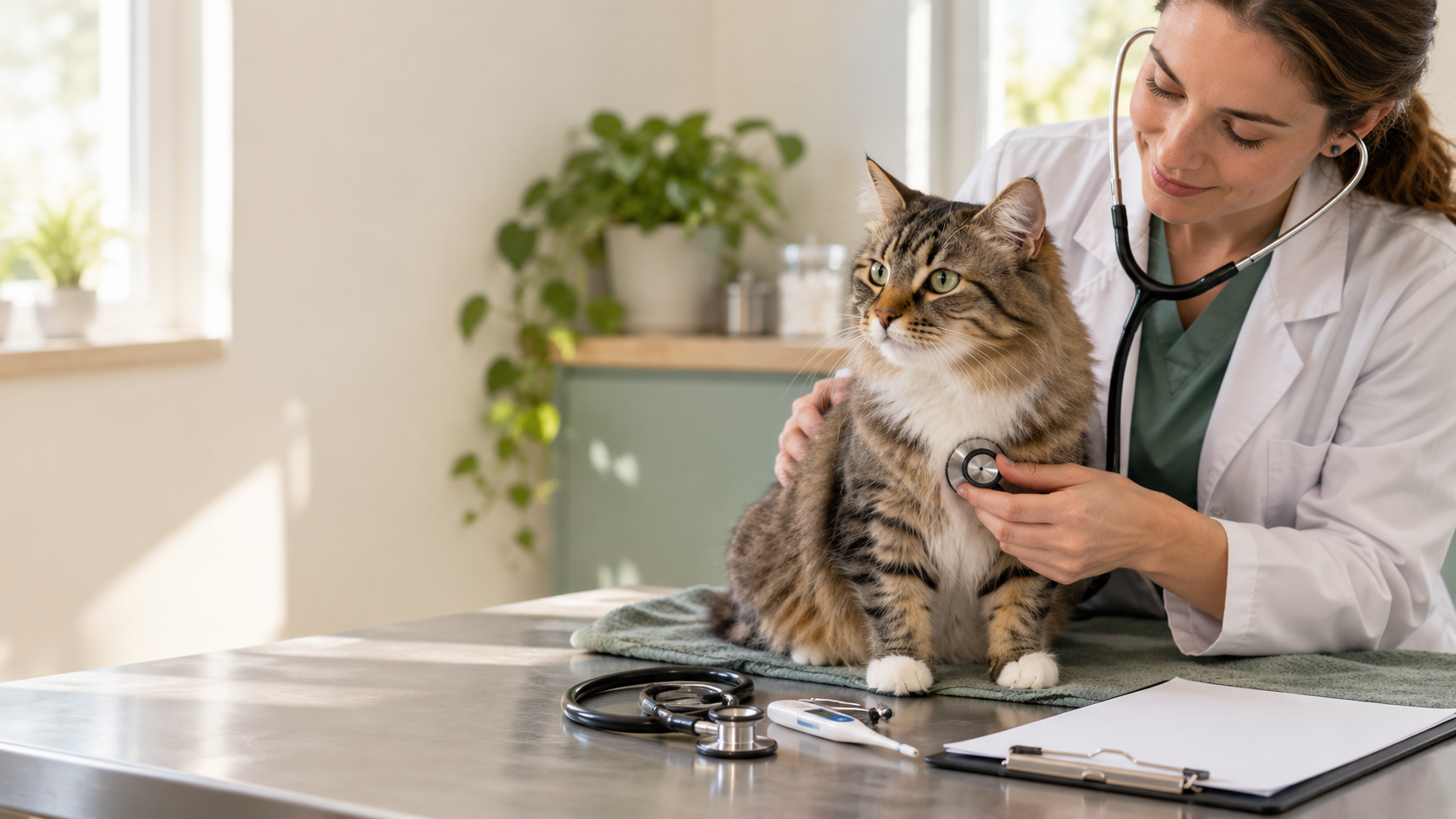
How to Read Your Cat's Symptoms
A calm, non-diagnostic way to decide what to do next
Track the change
The most useful signal is a change from your cat's normal. A cat that suddenly eats less, drinks more, hides, or loses weight is telling you something. Note when it started and what else shifted.
Look for clusters
Symptoms rarely appear alone. Increased thirst with weight loss points somewhere different than vomiting with diarrhea. Following the linked guides helps you see the bigger picture.
Know the red flags
Breathing trouble, collapse, repeated vomiting, and a male cat straining in the litter box with nothing produced are always emergencies. Do not wait for a routine appointment.
Then call your vet
These pages help you judge how urgent something is and what to tell your vet. They do not replace an exam. When in doubt, a phone call to your clinic is the safest next step.
Frequently Asked Questions About Sick Cat Symptoms
Common questions about telling if your cat is ill
How do I know if my cat is sick?
Watch for any change from your cat’s normal routine. Common signs of a sick cat are eating or drinking more or less than usual, weight loss, vomiting or diarrhea, coughing or sneezing, low energy, hiding, changes in grooming, and changes in litter box habits. Because cats instinctively mask illness, even a subtle or lasting change is worth a call to your vet. Note when it started and what else changed, and contact your veterinarian if you are unsure.
What are the signs of a sick cat?
The most common signs of illness in cats include appetite loss, increased thirst, weight loss, vomiting, diarrhea, constipation, coughing, sneezing, lethargy, fever, limping, bad breath, dehydration, and hiding or changes in grooming. Symptoms often cluster together, and the pattern matters. Increased thirst with weight loss points somewhere different than vomiting with diarrhea. Any sudden or persistent change should be discussed with your vet.
When is a sick cat an emergency?
Seek emergency veterinary care right away for open-mouth or labored breathing, blue, grey, or very pale gums, collapse or extreme weakness, repeated vomiting with inability to keep water down, a male cat straining to urinate with nothing produced, seizures, or a cat that has not eaten for more than a day. These signs cannot wait for a routine appointment.
Why do cats hide when they are sick?
Cats are both predators and prey, and in the wild showing weakness makes them a target, so they instinctively mask pain and illness. That is why a sick cat may simply hide, sleep more, or withdraw rather than show obvious distress. It also means symptoms are often advanced by the time they are visible, so any change from your cat’s normal behavior is worth taking seriously and mentioning to your vet.
Explore More Cat Health Guides
Understand your cat's symptoms and know when to call the vet.
Free cat printables
Keep these cat care guides handy
A rotating selection of practical cat guides chosen from our free printable library.Cat Body Condition Chart
A printable body condition reference for cats.
Kitten Calorie Guide
Calorie targets by kitten age and weight.
Cat Feeding Guide
Portions by weight, age, and life stage.