
Last updated: October 3, 2026
Cat Health
Cat Diabetes: Symptoms and Management
Feline diabetes is common and very manageable when it is caught early. Here is what the symptoms look like, how vets diagnose it, and how insulin, diet, and weight control work together to keep a diabetic cat healthy.
This guide is general information, not veterinary advice. Every cat is different. If your cat is unwell or you are worried, contact your veterinarian, who can examine your cat and give advice for their specific situation.
Call your vet or an emergency clinic now if your cat has any of these
- Has stopped eating, or is vomiting repeatedly
- Is very weak, wobbly, or collapsing
- Seems disoriented, unusually sleepy, or unresponsive
- Is breathing fast or has a sweet or acetone smell on the breath
These can signal diabetic ketoacidosis or dangerously low blood sugar, which are life-threatening and cannot wait for a routine appointment.
What Feline Diabetes Is
Diabetes mellitus in cats is a problem with how the body handles blood sugar. Normally the hormone insulin lets the body move sugar (glucose) out of the blood and into cells for energy. In a diabetic cat, the body either does not make enough insulin or cannot use it properly, so glucose builds up in the blood instead of feeding the cells. The most common form in cats is closest to human type 2 diabetes, where the body has become resistant to insulin.
Because the cells are effectively starved while blood sugar runs high, a diabetic cat often eats well yet still loses weight, and the excess sugar spilling into the urine pulls water with it, which drives the extra thirst and urination owners notice first. The good news is that with early diagnosis and a vet-directed plan, many cats live well for years, and some even go into remission.
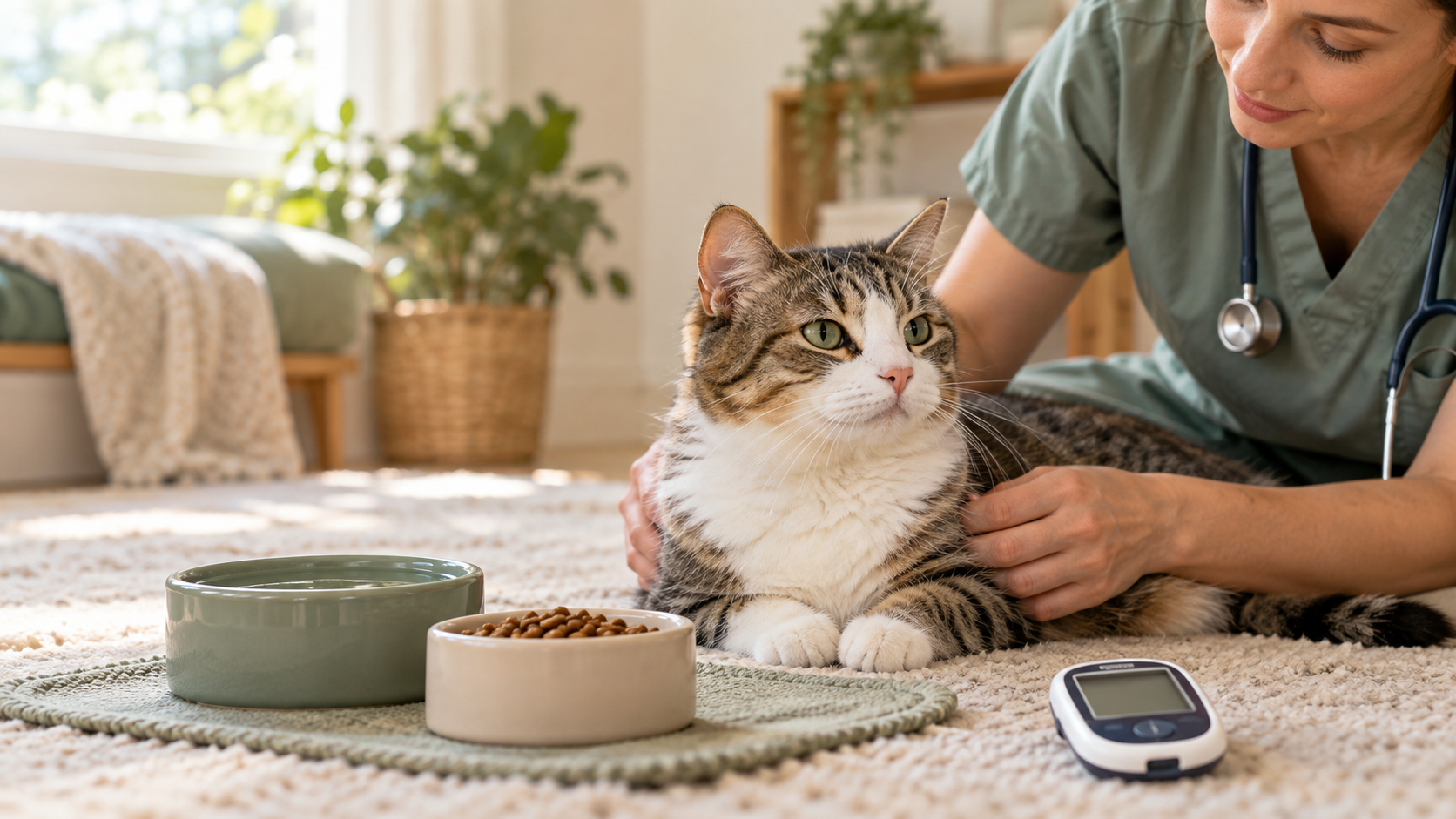
Symptoms of Diabetes in Cats
The early signs are easy to miss because they come on slowly
Increased thirst and urination
Drinking noticeably more water and producing larger or more frequent clumps in the litter box is often the first thing owners spot. It happens because excess blood sugar spills into the urine and draws water with it.
Weight loss despite a good appetite
A classic sign is a cat that eats normally, or even more than usual, but keeps losing weight. The body cannot use the sugar in the blood for energy, so it breaks down fat and muscle instead.
Lethargy and a dull coat
Many diabetic cats become less active, sleep more, and groom less, leaving the coat looking unkempt or greasy. These signs are easy to put down to age, so they are worth mentioning to your vet.
Weak, flat-footed hind legs
In some cats, longer-standing diabetes damages the nerves and the cat starts walking flat on its hocks, called a plantigrade stance, or seems weak and wobbly in the back legs. This warrants a prompt veterinary check.
Why Weight Matters Most
Being overweight or obese is the single biggest risk factor for feline diabetes, because extra body fat makes the body more resistant to insulin. That makes keeping your cat at a healthy weight the most important thing you can do to lower the risk, and weight control is also a central part of managing diabetes once it develops. If you are not sure where your cat stands, our guide on whether your cat is overweight walks through body condition scoring.
To put numbers on it, you can check your cat with the cat BMI calculator, and if your cat needs to slim down, the cat weight loss calculator can help you plan a target. Weight loss in cats must be slow and vet-supervised, because losing weight too fast can cause a serious liver problem, so use these tools as a starting point and confirm the plan with your veterinarian.
Sign, What It Looks Like, and What to Do
Use this as a starting point, not a diagnosis. Only your vet can confirm diabetes.
| Sign to watch for | What it often looks like | What to do |
|---|---|---|
| Increased thirst and urination | Drinking much more than usual and larger or more frequent clumps in the litter box | A common early sign. Book a veterinary exam so your vet can test blood and urine glucose. |
| Weight loss with a big appetite | Eating well, or even more than usual, yet steadily losing weight | Have your vet check for diabetes and other causes. Do not wait for it to correct itself. |
| Lethargy and a dull coat | Sleeping more, less playful, sometimes an unkempt or greasy coat | See your vet. These signs are non-specific but common in poorly controlled diabetes. |
| Weak, flat-footed hind legs | Walking on the hocks (plantigrade stance) or wobbly, weak back legs | Ask your vet promptly. This can reflect a nerve complication of longer-standing diabetes. |
| Not eating, vomiting, or collapse | Refusing food, repeated vomiting, weakness, disorientation, or collapse | Seek emergency veterinary care now. This can signal diabetic ketoacidosis. |
How Vets Diagnose Diabetes
Diagnosis is based on the signs you describe plus tests for high glucose in the blood and the urine. Because a stressful car ride and vet visit can temporarily raise a cat’s blood sugar on their own, your vet may also run a blood test called fructosamine, which reflects the average blood sugar over the previous weeks and helps separate true diabetes from stress. Your vet will often check for other conditions at the same time, since diabetes can occur alongside or be mistaken for other illnesses that cause similar drinking and urination.
Extra thirst and urination are not unique to diabetes, so if that is the main change you have noticed, our guide on a cat drinking a lot of water covers the other possible causes and why they all deserve a vet visit.
Managing a Diabetic Cat
Diabetes in cats is managed, not cured, and the plan is always directed by your veterinarian. It usually combines four things: insulin, given by a small injection under the skin on a schedule your vet sets; a low-carbohydrate, higher-protein diet to help keep blood sugar steadier; weight control for cats that are overweight; and regular monitoring of glucose, weight, appetite, and thirst. Newer non-insulin medications are available for some cats, and your vet will advise whether one is suitable.
Consistency matters. Feeding, insulin timing, and dosing all interact, so never change the insulin dose, switch foods, or skip doses without talking to your vet first. Giving insulin when a cat has not eaten, or giving too much, can cause dangerously low blood sugar. With early treatment and steady weight loss, some cats go into remission and no longer need insulin, though they still need ongoing monitoring because diabetes can come back.
Frequently Asked Questions About Cat Diabetes
Common questions about feline diabetes symptoms, diet, and treatment
What are the symptoms of diabetes in cats?
The classic early symptoms are drinking a lot more water, urinating more, and losing weight even though the appetite is normal or increased. Some cats also become lethargic, and a smaller number develop a weak, flat-footed (plantigrade) hind-leg stance where they walk on their hocks. These signs come on gradually, so they are easy to miss. Any of them is a reason to book a veterinary exam, because your vet can confirm diabetes with simple blood and urine tests.
Can cat diabetes be reversed?
Some cats can go into remission, meaning their blood sugar stays normal without insulin, but this is not guaranteed and it is not something to attempt on your own. Remission is most likely when diabetes is caught early and treated promptly with a vet-directed plan of insulin, a low-carbohydrate diet, and weight loss in overweight cats. Even a cat in remission needs ongoing monitoring, because diabetes can return. Work with your veterinarian rather than stopping or changing treatment yourself.
What is the best diet for a diabetic cat?
Many diabetic cats do best on a low-carbohydrate, higher-protein diet, often a therapeutic food your vet recommends, because it helps keep blood sugar steadier. Diet is only one part of the plan and works alongside insulin, weight control, and monitoring. Because feeding, insulin timing, and any other health conditions all interact, the specific food and feeding schedule should be set by your veterinarian for your individual cat, not chosen on your own.
How can I lower my cat’s risk of diabetes?
The single biggest risk factor for feline diabetes is being overweight or obese, so keeping your cat at a healthy weight is the main thing you can do to lower the risk. Feed measured portions rather than free-feeding all day, encourage activity and play, and check your cat’s body condition regularly. If your cat is already carrying extra weight, ask your vet about a safe, gradual weight-loss plan, since crash dieting can be dangerous for cats.
Explore More Cat Health Guides
Understand your cat's symptoms and know when to call the vet.
Free cat printables
Keep these cat care guides handy
A rotating selection of practical cat guides chosen from our free printable library.Cat Body Condition Chart
A printable body condition reference for cats.
Cat Feeding Guide
Portions by weight, age, and life stage.
Cat Pregnancy Timeline
A week-by-week kittening calendar and checklist.