
Last updated: October 3, 2026
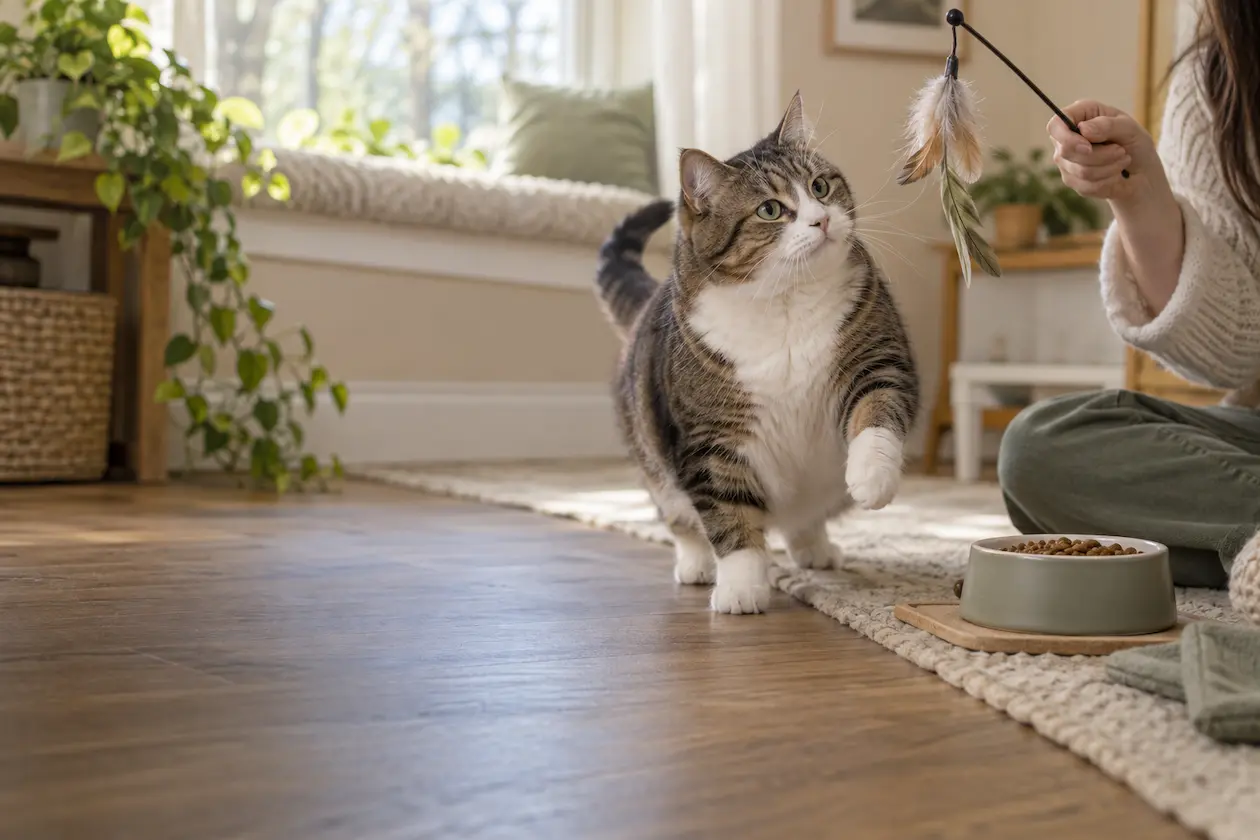
How To Use
This tool helps you create a safe weight loss plan for your cat. It calculates the appropriate calorie deficit, feeding schedule, and expected timeline based on your cat's current weight, target weight, and other factors.
Important: Always consult with your veterinarian before starting a weight loss program for your pet.
Quick Steps
- 1 Enter your Cat's Current Weight in pounds.
- 2 Enter your Target Weight in pounds (must be less than current weight).
- 3 Select the Activity Level of your cat.
- 4 Select the Life Stage of your cat.
- 5 Select the Neutered/Spayed Status of your cat.
- 6 Select your Cat's Breed Type (optional).
- 7 Select the Feeding Frequency (how many meals per day).
- 8 Select the Current Diet Type of your cat.
- 9 Select the Weight Loss Rate (Conservative, Moderate, or Aggressive).
- 10 Click the Calculate button to see the weight loss plan.
Cat Weight Loss Calculator
Fill Out The Fields Below
Weight Loss Rates
| Rate | Description | Weekly Loss |
|---|---|---|
| Conservative (1% per week) | Slow and steady weight loss, safest approach | 1% of body weight per week |
| Moderate (1.5% per week) | Balanced approach, recommended for most cats | 1.5% of body weight per week |
| Aggressive (2% per week) | Maximum safe rate, only for healthy cats under vet supervision | 2% of body weight per week (maximum safe) |
Safety Guidelines
| Guideline | Description |
|---|---|
| Minimum Calories | Never reduce calories below 80% of Resting Energy Requirement (RER) |
| Maximum Weekly Loss | Do not exceed 2% of body weight loss per week |
| Veterinary Consultation | Always consult your veterinarian before starting a weight loss program, especially if your cat needs to lose more than 20% of their current weight |
| Gradual Transition | Gradually reduce food over 1-2 weeks to avoid digestive upset and hepatic lipidosis risk |
| Monitor Progress | Weigh your cat weekly and adjust the plan as needed |
Need to calculate your cat's maintenance calories? Use our Cat Nutrition Calculator to determine daily calorie requirements for weight maintenance.
How to Use the Cat Weight Loss Calculator
The cat weight loss calculator turns your cat's details into a safe, personalized plan in a few seconds. Here is how to use it step by step:
- Enter current and target weight. Add your cat's weight now and the healthy weight you are aiming for, both in pounds. Not sure of the target? Our Cat Weight Calculator gives ideal ranges by breed.
- Set activity level and life stage. Choose low, moderate, or high activity and select the life stage from kitten to senior, since both change calorie needs.
- Add neuter status, diet, and feeding frequency. Indicate whether your cat is spayed or neutered, the current food type, and how many meals per day you feed.
- Pick a weight loss rate. Conservative (1% per week) is safest for cats. Moderate and aggressive rates go faster but need closer monitoring.
- Read your plan. The calculator returns a daily calorie target, per-meal portions, and an estimated timeline to reach the goal weight.
Common cat weight loss goals range from a modest 1 lb reduction to 4 or more pounds for very overweight cats. Whatever the goal, aim for a loss of 1-2% of body weight per week and expect the process to take several months. Slow, steady loss is far safer for cats than rapid dieting.
How Safe Cat Weight Loss Works
Cat weight loss requires a careful approach. Unlike dogs, cats are at serious risk of hepatic lipidosis (fatty liver disease) if they lose weight too quickly or stop eating entirely. The key is a gradual, consistent calorie deficit.
Body weight per week
Maximum safe rate. For a 15 lb cat, that's 0.15–0.30 lbs/week.
Calorie reduction
Below maintenance. Never exceed 25% without vet supervision.
Weigh-in schedule
Same time, same scale. Track progress and adjust portions accordingly.
Cat Weight Loss Timeline
How long will it take for your cat to reach their target weight? Here's a realistic timeline based on safe weight loss rates:
| Weight to Lose | Conservative (1%/week) | Moderate (1.5%/week) | Aggressive (2%/week) |
|---|---|---|---|
| 1 lb | ~6–8 weeks | ~4–6 weeks | ~3–4 weeks |
| 2 lbs | ~12–16 weeks | ~8–10 weeks | ~6–8 weeks |
| 3 lbs | ~16–22 weeks | ~12–15 weeks | ~8–11 weeks |
| 5+ lbs | ~6–10 months | ~4–7 months | ~3–5 months |
Timelines assume a 12–15 lb cat. Use the calculator above for your cat's specific timeline. Conservative rates are safest for cats with no vet supervision.
Cat Weight Loss Chart
Use this cat weight loss chart as a quick reference for how a starting weight maps to a healthy target and roughly how long a safe reduction takes. A healthy rate of loss for cats is about 0.5% to 2% of body weight per week, with roughly 1% per week being the typical, safest target. The example targets below are general guides. Your cat's true ideal weight depends on breed and frame, so confirm the goal with your veterinarian and use the calculator above for a personalized plan.
| Starting Weight | Example Ideal Target | Weight to Lose | Approx. Safe Timeline (~1%/week) |
|---|---|---|---|
| 12 lb | 10 lb | 2 lb | ~12–16 weeks (about 3–4 months) |
| 14 lb | 11 lb | 3 lb | ~16–22 weeks (about 4–5 months) |
| 16 lb | 12 lb | 4 lb | ~5–7 months |
| 18 lb | 13 lb | 5 lb | ~6–8 months |
| 20 lb | 14 lb | 6 lb | ~7–10 months |
Timelines use a conservative 1% per week and will vary with life stage, activity, and diet. Not sure whether your cat needs to lose weight at all? Our Is My Cat Overweight guide walks through body condition scoring, and the Cat Feeding Calculator helps set daily portions for the target weight.
Warning: Hepatic Lipidosis (Fatty Liver Disease)
Cats that lose weight too quickly or stop eating are at risk for hepatic lipidosis, a potentially fatal liver condition. This is the most common reason vets emphasize slow, steady weight loss in cats.
Prevention: Never cut calories by more than 25%. Ensure your cat eats every day, even a few days of not eating can trigger the condition in overweight cats. If your cat stops eating for more than 24 hours, contact your veterinarian immediately.
To check if your cat is overweight, use our Cat BMI Calculator. For ideal weight ranges by breed, try our Cat Weight Calculator. For calorie needs at their target weight, use the Cat Calorie Calculator. For normal weight by age and life stage, see our Cat Weight Chart by Age & Growth Guide.
Why Cats Gain Weight
Feline obesity is one of the most common preventable health problems in pet cats, and studies estimate that roughly 60% of indoor cats carry excess weight. Understanding the cause helps you build a weight loss plan that actually sticks. Most weight gain comes down to a small number of everyday factors:
- Free-feeding dry food. Leaving a bowl of kibble out all day lets cats graze well past their calorie needs. Dry food is also calorie-dense and easy to overeat.
- Neutering and spaying. Sterilized cats need roughly 20-30% fewer calories, yet most owners keep feeding the same portions, so weight creeps up in the year after surgery.
- Low activity. Indoor cats without daily play or vertical space burn far fewer calories than active hunters. Boredom often turns into extra snacking.
- Too many treats. Treats, table scraps, and lickable snacks add up fast. Even a few extra treats a day can equal 20-30 kcal, a meaningful share of a cat's daily budget.
- Age. Middle-aged cats (5-10 years) slow down and lose muscle, which lowers their calorie needs while their appetite stays the same.
The good news: because cats are small, even modest portion changes produce steady results. Measuring meals with a kitchen scale instead of a scoop is often the single most effective change an owner can make.
Worked Example: Weight Loss Plan for a 16 lb Cat
To show how the calculator builds a plan, here is a step-by-step example for a neutered, low-activity adult cat that weighs 16 lbs with a target weight of 12 lbs.
- Estimate maintenance calories at target weight. A 12 lb (5.4 kg) neutered indoor cat needs roughly 210 kcal per day to maintain that ideal weight.
- Apply a safe deficit. Feeding for the target weight already creates the deficit. A 15-20% reduction from the current 16 lb maintenance level lands in a similar range, about 180-210 kcal per day.
- Set the weekly loss target. At a conservative 1% per week, a 16 lb cat should lose about 0.16 lbs (roughly 2.5 oz) each week.
- Estimate the timeline. Losing 4 lbs at 1-1.5% per week takes about 5-7 months. Slow and steady is the goal with cats.
- Split into meals. Divide 200 kcal into three or four measured meals of 50-66 kcal to keep the cat satisfied and prevent begging.
Enter your own cat's numbers in the calculator above for a plan tailored to their life stage, activity, and diet. Recheck the weight every 2-4 weeks and adjust portions if progress stalls or moves too fast.
Wet Food vs Dry Food for Cat Weight Loss
Diet type matters for weight loss because it changes how full your cat feels per calorie. Here is how the two compare for an overweight cat:
| Factor | Wet Food | Dry Food |
|---|---|---|
| Calorie density | Lower (more water, larger portion) | Higher (easy to overfeed) |
| Satiety | Higher, cats feel fuller | Lower, encourages grazing |
| Hydration | High (70-80% water) | Low, needs a water source |
| Portion control | Easy with single-serve cans | Needs a scale or measuring cup |
| Free-feeding risk | Low, cannot be left out | High, tends to be left out |
Many vets favor wet or high-protein canned food for weight loss because the higher water and protein content keeps cats feeling full on fewer calories. A combination diet also works well. Whichever you choose, count every calorie including treats, and transition to a new food gradually over 7-10 days to avoid stomach upset.
Weight Loss by Life Stage: Adult vs Senior Cats
A cat's life stage changes both the calorie target and how carefully you should approach weight loss:
- Young adult (1-3 years). These cats have higher energy needs and respond well to increased play plus measured meals. A moderate 1.5% per week rate is usually well tolerated.
- Adult (3-7 years). Prime years for prevention. Most overweight cats fall in this group. Aim for a steady 1-1.5% per week with a 15-20% calorie reduction.
- Mature adult (7-10 years). Metabolism slows and muscle loss begins. Keep protein high so weight loss targets fat rather than muscle, and stick to conservative rates.
- Senior (11+ years). Weight loss must be handled with extra care. Senior cats are more likely to have kidney disease, hyperthyroidism, or diabetes that affect diet. Never start a program without a vet exam, because unexplained weight loss in seniors can signal illness rather than success.
For senior cats specifically, sudden weight loss you did not plan for is a red flag and warrants a vet visit. See our Cat Weight Chart by Age Guide to compare your cat's weight against healthy ranges for their stage.
Signs Your Cat Is Losing Weight Too Fast
Because rapid weight loss can trigger hepatic lipidosis, watch for warning signs that your plan is too aggressive. Contact your veterinarian promptly if you notice any of the following:
- Losing more than 2% of body weight per week
- Refusing food or eating noticeably less for more than 24 hours
- Lethargy, hiding, or a sudden drop in activity
- Vomiting, drooling, or signs of nausea
- Yellowing of the gums, eyes, or ears (jaundice)
- Weakness or muscle wasting rather than fat loss
If any of these appear, pause the diet and call your vet. Healthy weight loss should be gradual and leave your cat active, alert, and eating normally.
Tips to Help Your Cat Lose Weight Safely
Beyond hitting the calorie target from the calculator, these practical habits make weight loss easier on both you and your cat:
- Measure every meal. Use a kitchen scale or a proper measuring cup, not a coffee mug or a guess. Eyeballing portions is the most common reason diets fail.
- Feed several small meals. Splitting the daily calories into three or four meals reduces begging and keeps energy steady.
- Count treats in the budget. Keep treats under 10% of daily calories and subtract them from meal portions. Use pieces of kibble from the daily ration as treats.
- Add play and enrichment. Two 10-15 minute play sessions a day, food puzzles, and vertical climbing space all burn calories and reduce boredom eating.
- Feed cats separately. In multi-cat homes, feed the dieting cat apart so it cannot raid another bowl, and place food where a slimmer cat can reach but the dieter cannot free-feed.
- Weigh weekly and be patient. Use the same scale at the same time. Slow, steady loss is the safest path for cats, so resist the urge to cut faster.
Combine these habits with the personalized target from the calculator above, keep your vet in the loop, and most overweight cats reach a healthy weight safely over several months.
FAQs
Frequently Asked Questions
How much should I feed my cat to lose weight?
The amount depends on your cat's current weight, target weight, activity level, and chosen weight loss rate. Our calculator provides a personalized calorie target with a safe 20-30% reduction from maintenance calories.
How long will it take for my cat to reach their target weight?
The timeline depends on how much weight needs to be lost and the chosen weight loss rate. A safe rate is 1-2% of body weight per week. Our calculator estimates the timeline based on these factors.
Is it safe to reduce my cat's calories by 30%?
A 30% calorie reduction is the maximum safe deficit and should only be used under veterinary supervision. Most cats do well with a 20-25% reduction. Always consult your veterinarian before starting a weight loss program.
What is hepatic lipidosis and how can I prevent it?
Hepatic lipidosis is a serious liver condition that can occur in cats who lose weight too quickly or stop eating. Gradual weight loss (1-2% per week) and ensuring your cat continues to eat regularly helps prevent this condition.
What if my cat needs to lose more than 20% of their weight?
Weight loss exceeding 20-30% of current body weight should be done under close veterinary supervision. Your veterinarian can help create a safe, monitored weight loss plan and check for underlying health issues.
How often should I feed my cat during weight loss?
Multiple small meals (2-4 times per day) can help manage hunger and maintain energy levels. Our calculator provides a feeding schedule based on your chosen frequency.
How much weight can a cat safely lose per week?
Cats should lose no more than 1-2% of their body weight per week. For a 15 lb cat, that's about 0.15-0.30 lbs per week, or roughly 1-2 lbs per month. Faster weight loss significantly increases the risk of hepatic lipidosis (fatty liver disease), which can be fatal.
What is a safe calorie deficit for a cat?
A safe calorie deficit for cats is 15-20% below maintenance calories. For example, if your cat's maintenance requirement is 250 kcal/day, aim for 200-213 kcal/day. Never go below 60% of maintenance (150 kcal in this example) without veterinary supervision.
How long will it take my cat to lose 3 pounds?
At a safe rate of 1-2% body weight per week, a 15 lb cat losing 3 lbs would take roughly 10-20 weeks (2.5-5 months). Slower is safer with cats. Consistency with measured portions matters more than speed.
Should I use weight loss cat food or just feed less?
Weight management formulas are often better than simply reducing regular food, because they maintain adequate protein and nutrients at lower calorie levels. Simply feeding less of calorie-dense food can leave your cat deficient in protein, vitamins, or minerals. Consult your vet for food recommendations.
Is this cat weight loss calculator free?
Yes. Our cat weight loss calculator is completely free with no sign-up. Enter your cat's current and target weight, activity level, life stage, and diet to get a personalized calorie target, feeding schedule, and weight loss timeline.
How many calories should I feed my cat to lose weight?
Most cats lose weight safely on a 15-20% reduction from their maintenance calories, which usually lands between 180 and 220 kcal per day for an average indoor cat. The exact target depends on your cat's ideal weight, so enter their numbers in the calculator above for a personalized figure.
Can I use the calculator in kilograms?
The calculator uses pounds for weight entry, but you can convert easily: 1 kg equals about 2.2 lbs. Enter your cat's current and target weight in pounds and the results, including calorie targets in kcal, apply the same regardless of your measurement preference.
How do I set a realistic weight loss goal for my cat?
A realistic goal is your cat's ideal weight based on breed and frame, typically a loss of 1 to 4 lbs for most overweight cats. Because a safe rate is 1-2% of body weight per week, plan for the loss to take several months. The calculator estimates a timeline so you can set an achievable target date.
How fast can a cat safely lose weight?
A cat can safely lose about 0.5% to 2% of its body weight per week, with roughly 1% per week being the typical, safest target. For a 15 lb cat, 1% is about 0.15 lbs (2.4 oz) per week, so losing 3 lbs to reach a 12 lb goal takes several months. Losing weight faster than this raises the risk of hepatic lipidosis (fatty liver disease), which can be fatal, so slow and steady is best. Always confirm the rate with your veterinarian.
How much should my overweight cat weigh?
Most domestic cats have an ideal weight of roughly 8 to 12 lbs, though the right target depends on breed and frame. Larger breeds like Maine Coons can be healthy at 15 lbs or more, while petite cats may be ideal at 7 to 8 lbs. A practical target is the weight at which you can feel your cat's ribs without pressing and see a visible waist from above. Use the Cat Weight Calculator and Cat BMI Calculator to estimate a goal, and ask your veterinarian to confirm your cat's ideal weight.
Other Calculators for Cats
Cat Food Carb Calculator | Free Carbohydrate Calculator for Cat Food
Free cat food carb calculator. Calculate carbohydrate content in wet and dry cat food from the guaranteed analysis label. Compare carbs on a dry matter basis. Essential for low-carb and diabetic cat diets.
Cat Calorie Calculator - Daily Calories & Feeding Amounts for Cats
Free cat calorie calculator. Enter your cat
Kitten Calorie Calculator - Free Daily Calorie Needs Tool
Free kitten calorie calculator. Enter your kitten
Other Pet Weight Loss Calculators

Free cat printables
Keep these cat care guides handy
A rotating selection of practical cat guides chosen from our free printable library.Kitten Calorie Guide
Calorie targets by kitten age and weight.
Cat Pregnancy Timeline
A week-by-week kittening calendar and checklist.
Cat Feeding Guide
Portions by weight, age, and life stage.