
Last updated: October 3, 2026
Cat Health
Cat Fleas
Fleas are one of the most common problems cat owners face, and the itching you see is only part of the story. Here is how to tell if your cat has fleas, why they are so stubborn, the health risks that matter, and how to clear them from both your cat and your home.
This guide is general information, not veterinary advice. Every cat is different. If your cat is unwell or you are worried, contact your veterinarian, who can examine your cat and recommend the right flea treatment for their specific situation.
Never use dog flea treatment on a cat
Many dog flea products contain permethrin, which is highly toxic to cats. Even a small amount of a dog spot-on can cause tremors, seizures, and death in a cat. This is one of the most common serious poisonings vets see.
- Only ever use a product labeled for cats and dosed for your cat's weight.
- Never split a dog dose or apply a dog product to a cat, whatever the size.
- Keep a treated dog separated from your cat until the product has fully dried.
If your cat is exposed to a dog flea product, or shows tremors or twitching after any treatment, contact your vet or an emergency clinic immediately.
How to Tell If Your Cat Has Fleas
The signs to look for, from obvious to easy to miss
Live fleas in the coat
Fleas are small, fast-moving brown insects, usually easiest to spot on the belly, groin, and around the neck. They move quickly and hide in dense fur, so not seeing one does not rule fleas out. Seeing even a single flea usually means many more are living in your home.
Scratching, grooming, scabs, and hair loss
Frequent scratching, licking, or biting at the skin, especially around the tail base and hind legs, is a common early clue. Over time you may see small crusty scabs, thinning fur, or bald patches. Cats are meticulous groomers, so some simply overgroom and swallow the evidence.
The flea-dirt test
Flea dirt is flea droppings, made of digested blood. Comb out the tiny black specks near the base of the tail and place them on a damp white paper towel. If the specks smear red-brown, that is blood, which confirms fleas even when you never catch a live one. This is the most reliable at-home check.
Sign, What It Looks Like, and What to Do
Use this as a starting point, not a diagnosis. Your vet can confirm the cause and recommend treatment.
| Sign | What it often looks like | What to do |
|---|---|---|
| Flea dirt | Tiny black specks in the fur, often near the base of the tail, that turn red-brown when placed on a wet paper towel | A positive flea-dirt test means fleas, even if you never see a live one. Start a cat-labeled treatment and treat the home. |
| Live fleas | Small, fast-moving brown insects in the coat, easiest to spot on the belly, groin, and around the neck | Seeing even one usually means many more in the environment. Treat all pets and the home. |
| Excessive scratching or grooming | Frequent scratching, licking, biting at the skin, or sudden overgrooming, often around the tail base and hind legs | A common early clue. Check for flea dirt and start treatment. See your vet if the skin is raw or infected. |
| Scabs and hair loss | Small crusty scabs (often called miliary dermatitis), thinning fur, or bald patches from scratching | Can signal flea allergy dermatitis. A vet can treat the skin and confirm the cause. |
| Pale gums or weakness | Pale gums, low energy, or weakness, most concerning in kittens and small or older cats | Heavy infestations can cause anemia. Treat as urgent and contact your vet. |
The Flea Life Cycle and Why Fleas Are Hard to Get Rid Of
The single most important thing to understand about fleas is that the ones you see on your cat are only a small fraction of the population. Most experts estimate that adult fleas on the animal represent only about 5 percent of the total, while the other 95 percent lives in your home as eggs, larvae, and pupae.
An adult flea lays eggs in the coat that fall off wherever your cat goes: carpet, bedding, sofas, and floor cracks. Those eggs hatch into larvae that burrow away from light, then spin cocoons and become pupae. Pupae are the tough stage. They can stay dormant for weeks and are shielded from many sprays and treatments, then emerge as new adults when they sense a host nearby.
This is why fleas seem to come back after you thought they were gone, and why a single treatment is never enough. Clearing an infestation means treating every pet and the environment consistently over several weeks so that newly emerging fleas are killed before they can breed again.
Health Risks of Fleas
Fleas are more than an itch. Flea allergy dermatitis is one of the most common skin conditions in cats. It is an allergic reaction to proteins in flea saliva, and in a sensitive cat even a single bite can trigger intense itching, scabbing, and hair loss that far outlasts the bite itself.
Because cats swallow fleas while grooming, fleas are also the main way cats pick up tapeworm. If you see small rice-like segments near your cat's rear or in their bedding, treating both the fleas and the worms matters. Our guide to worms in cats covers what to look for.
In a heavy infestation, the blood that fleas take can add up, and in kittens, small cats, or older cats this can cause anemia. Pale gums, weakness, and low energy are warning signs and can become life threatening, so treat them as urgent and contact your vet. Fleas can also point to other issues worth reading about in our sick cat symptoms guide.
How to Get Rid of Fleas on Your Cat
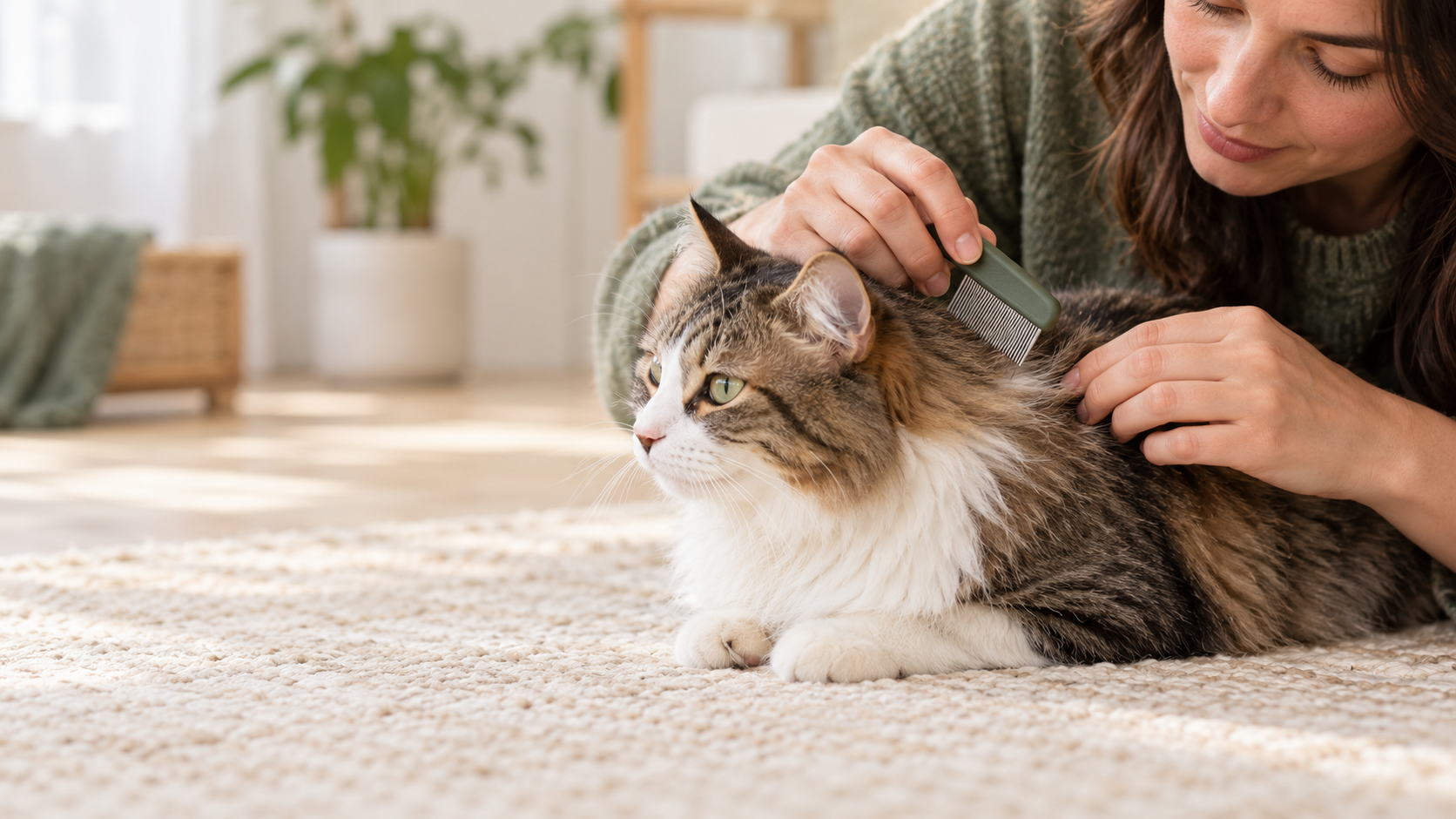
Start with a modern, cat-labeled, vet-recommended flea treatment dosed for your cat's weight. These products are far more effective than older sprays, powders, or flea collars, and they break the life cycle when used correctly. A flea comb is a useful companion for checking progress and physically removing fleas and flea dirt, especially in kittens too young for some products. Combing over a bowl of soapy water lets you drown the fleas you catch.
Do not rely on home remedies such as essential oils, garlic, or vinegar. They are not reliable, they do nothing about the eggs and pupae in your home, and some, including certain essential oils, are actually toxic to cats. For how to choose a product and dose it correctly by weight, see our detailed guide on flea treatment for cats by weight. If you are not sure of your cat's weight, our cat weight calculator can help.
How to Get Rid of Fleas in Your Home
Because most of the flea population lives in your home rather than on your cat, treating your cat alone will not clear an infestation. Tackle the environment at the same time:
- Treat every pet in the household, not just the one that is scratching. Cats and dogs share the same fleas, and one untreated pet keeps the cycle going.
- Wash bedding hot. Launder your cat's bedding, blankets, and any washable soft furnishings on the hottest setting the fabric allows, and repeat regularly during treatment.
- Vacuum thoroughly and often. Vacuum carpets, rugs, upholstery, and along skirting boards and floor cracks. Vacuuming removes eggs and larvae and helps coax dormant pupae to emerge. Empty or seal the vacuum contents and dispose of them outside.
- Treat the environment if the infestation is established, using a household flea product suited to your home and safe around pets, following the label carefully.
- Be patient. Because of the life cycle, it can take several weeks to a couple of months to fully clear an infestation. Keep every pet on treatment throughout, and keep cleaning, even after you stop seeing fleas.
Preventing Fleas
Prevention is far easier than clearing an infestation. The most effective approach is consistent, year-round flea treatment for every pet in the household, using a cat-labeled product for your cats. Fleas can survive indoors through winter, so a break in treatment during the colder months is a common reason infestations return.
Treat all household pets on the same schedule so there is no untreated animal keeping the cycle alive, and combine it with routine vacuuming and washing of bedding. Even indoor cats can get fleas carried in on clothing or by other pets, so prevention is worth keeping up regardless of whether your cat goes outside.
Frequently Asked Questions About Cat Fleas
Common questions about spotting, treating, and preventing fleas
How can I tell if my cat has fleas?
Look for live fleas (small fast-moving brown insects), excessive scratching or grooming, small scabs, and hair loss around the tail base and hind legs. The most reliable check is the flea-dirt test: comb out the black specks near the base of the tail and place them on a damp paper towel. If they smear red-brown, that is digested blood, which confirms fleas even when you never see a live one.
Why are fleas so hard to get rid of?
The fleas you see on your cat are only a small fraction of the problem. Most of a flea population lives in your home as eggs, larvae, and pupae in carpet, bedding, and floor cracks. Pupae can stay dormant for weeks and are shielded from many treatments, so new adults keep emerging. Clearing an infestation takes consistent treatment of every pet plus the environment over several weeks.
Are fleas dangerous to cats?
Yes, beyond the itching. Fleas can trigger flea allergy dermatitis, a strong allergic reaction to flea saliva that makes cats intensely itchy. Cats can swallow fleas while grooming and pick up tapeworm. In kittens, small cats, or heavy infestations, the blood fleas take can cause anemia, which can be life threatening. See your vet if your cat has pale gums, weakness, or persistent skin problems.
Can I use dog flea treatment on my cat?
No. Never use a dog flea product on a cat. Many dog spot-on treatments contain permethrin, which is highly toxic to cats and can cause tremors, seizures, and death. Always use a product labeled for cats and dosed for your cat’s weight, and keep treated dogs away from cats until the product has dried. If your cat is exposed to a dog product, contact your vet or an emergency clinic immediately.
Do home remedies get rid of cat fleas?
Home remedies such as dish soap baths, essential oils, garlic, or vinegar are not reliable and some, including certain essential oils, are toxic to cats. They do not address the eggs, larvae, and pupae in the home, so the infestation returns. The dependable approach is a cat-labeled, vet-recommended treatment for every pet in the household plus thorough cleaning of the environment.
Explore More Cat Health Guides
Understand your cat's symptoms and know when to call the vet.
Free cat printables
Keep these cat care guides handy
A rotating selection of practical cat guides chosen from our free printable library.Kitten Calorie Guide
Calorie targets by kitten age and weight.
Cat Body Condition Chart
A printable body condition reference for cats.
Cat Feeding Guide
Portions by weight, age, and life stage.