Last updated: October 3, 2026
Cat Health
Cat Hyperthyroidism
Hyperthyroidism is one of the most common hormone disorders in older cats. It happens when an overactive thyroid gland makes too much thyroid hormone, which speeds up the whole body. Here is how to recognize the symptoms, how vets diagnose it, the treatment options to discuss, and what life expectancy tends to look like.
This guide is general information, not veterinary advice. Every cat is different. If your cat is unwell or you are worried, contact your veterinarian, who can examine your cat and give advice for their specific situation.
Call your vet or an emergency clinic now if your cat has any of these
- Sudden severe weakness, collapse, or an inability to stand or walk
- Difficulty breathing, fast or labored breathing, or open-mouth breathing at rest
- A cat that suddenly stops eating altogether or will not drink
- Racing heartbeat with obvious distress, or blue, grey, or very pale gums
Untreated thyroid disease can strain the heart, so these signs need urgent attention and cannot wait for a routine appointment.
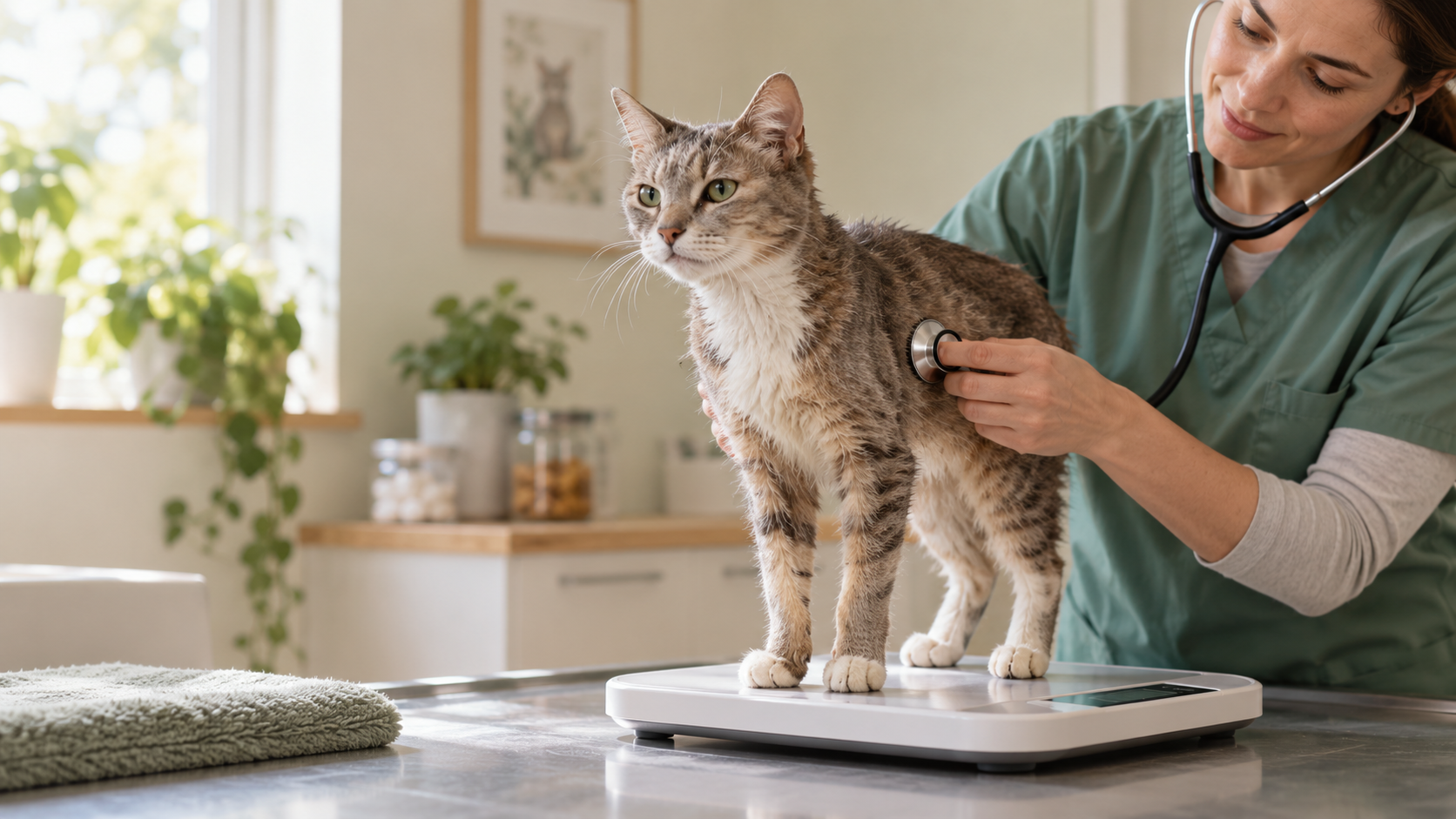
Classic Signs of Hyperthyroidism in Cats
What an overactive thyroid tends to look like day to day
Weight loss with a good appetite
This is the hallmark of hyperthyroidism. The overactive thyroid speeds up metabolism, so a cat can lose weight steadily even while eating a normal or increased amount of food. A cat that is clearly hungry but getting thinner is a classic picture and a common reason owners first notice something is wrong.
Restlessness and increased thirst
Many affected cats become more active, restless, or even agitated, and may seem unusually vocal or unable to settle. Increased thirst and more frequent urination are also common as the body works faster. These changes can be subtle at first and are easy to mistake for normal aging.
Vomiting and a poor coat
Digestive upset such as vomiting or occasional diarrhea can occur. The coat may look unkempt, greasy, or matted because a cat that feels unwell often grooms less thoroughly. None of these signs is unique to hyperthyroidism, which is why a veterinary exam matters.
A fast heart rate
Excess thyroid hormone can raise the heart rate and, over time, put strain on the heart. This is something your vet may pick up during an exam. It is one reason hyperthyroidism should be diagnosed and managed rather than left to progress.
What Hyperthyroidism Is and How Vets Diagnose It
Hyperthyroidism means the thyroid gland, located in the neck, is producing too much thyroid hormone. That hormone controls metabolism, so an excess makes the whole body run faster. It is mainly a disease of middle-aged and older cats, and in the large majority of cases it is caused by a benign (non-cancerous) change in the thyroid tissue rather than anything sinister.
Because the early signs overlap with other conditions common in senior cats, diagnosis is not something to guess at home. Your vet will start with a physical examination, often feeling for an enlarged thyroid gland and checking the heart rate, and then confirm the diagnosis with a blood test that measures thyroid hormone (T4). Your vet may run additional tests to check the kidneys, heart, and overall health before recommending a treatment plan.
Hyperthyroid Cat Treatment Options
These are the main approaches to discuss with your vet, not a recommendation. The right choice depends on your individual cat.
| Treatment option | How it works | Things to know |
|---|---|---|
| Anti-thyroid medication (methimazole) | Daily tablets or a gel that reduce how much thyroid hormone is produced | Controls the condition rather than curing it, so it is usually lifelong. Needs periodic blood tests. Discuss dosing and monitoring with your vet. |
| Prescription iodine-restricted diet | A special food that limits the iodine the thyroid needs to make hormone | Only works if the cat eats nothing else, which can be hard in multi-cat homes. Suitability is a decision for your vet. |
| Radioactive iodine (I-131) | A single injection that targets and destroys the overactive thyroid tissue | Often curative and considered a gold-standard option. Involves a short hospital stay. Your vet can advise if your cat is a candidate. |
| Surgery (thyroidectomy) | Surgical removal of the affected thyroid tissue under anesthesia | Can be curative but carries anesthetic and surgical considerations. Your vet will weigh this against the other options. |
Never start, stop, or change any medication or diet on your own. All treatment decisions should be made with your veterinarian, who will tailor the plan to your cat and monitor progress with follow-up blood tests.
Hyperthyroid Cat Life Expectancy and Prognosis
The encouraging news is that hyperthyroidism is one of the more treatable conditions in older cats, and the prognosis is generally good once it is being managed. Many cats go on to live comfortably for years after diagnosis, and curative options such as radioactive iodine can restore a normal life span for suitable candidates.
Life expectancy varies from cat to cat and depends on how early the disease is caught, the treatment chosen, and whether other conditions are present. Kidney and heart disease are common in the same age group and can affect the picture, which is why your vet monitors more than just the thyroid. The key is not to leave it untreated, because an overactive thyroid places ongoing strain on the heart and other organs.
When to See a Vet
Book a veterinary appointment if your older cat is losing weight, seems hungrier or thirstier than usual, is more restless or vocal, or is vomiting or looking unkempt. These changes are easy to write off as normal aging, but they are exactly the signs worth checking, and a simple blood test can confirm or rule out hyperthyroidism. For the emergency signs listed at the top of this page, do not wait for an appointment.
Hyperthyroidism often shows up alongside symptoms covered in our other guides. If your cat is losing weight or drinking a lot of water, those pages explain what else can be behind those changes. Because this condition mostly affects older cats, our senior cat weight guide is a useful companion, and you can track changes over time with the cat BMI calculator.
Frequently Asked Questions About Cat Hyperthyroidism
Common questions about symptoms, treatment, and life expectancy
What are the symptoms of hyperthyroidism in cats?
The classic sign is weight loss despite a normal or even increased appetite, so a cat that is eating well but getting thinner is a common picture. Other symptoms include restlessness or hyperactivity, increased thirst and urination, vomiting, a poor or unkempt coat, and sometimes a fast heart rate. Because these signs overlap with other conditions common in older cats, the only way to confirm hyperthyroidism is a veterinary exam and a blood test.
How long can a cat live with hyperthyroidism?
With treatment, the outlook is generally good, and many cats live comfortably for years after diagnosis. Hyperthyroid cat life expectancy depends on the cat’s age, how early it is caught, the treatment chosen, and whether other conditions like kidney or heart disease are present. Curative options such as radioactive iodine can restore a normal life span for many cats. Your vet can give a realistic picture for your individual cat.
Is hyperthyroidism in cats curable?
It can be. Radioactive iodine (I-131) and surgery to remove the affected thyroid tissue are potentially curative. Anti-thyroid medication and a prescription iodine-restricted diet control the condition and manage symptoms rather than cure it, which usually means lifelong treatment. Which route is right depends on your cat’s overall health and is a decision to make with your vet.
How much does hyperthyroid cat treatment cost?
Costs vary widely by region, by clinic, and by which option you choose. Daily medication and prescription diets tend to have lower upfront costs but add up over a cat’s lifetime and include ongoing blood tests. Radioactive iodine and surgery have a higher one-time cost but can be curative. Your vet can outline the likely costs of each option so you can plan.
What causes hyperthyroidism in cats?
Hyperthyroidism is caused by an overactive thyroid gland producing too much thyroid hormone, which speeds up the body’s metabolism. In the large majority of cats this is due to a benign (non-cancerous) enlargement of the thyroid tissue. It is most common in middle-aged and older cats. The exact reasons are not fully understood, so diagnosis and management should be guided by your vet.
Explore More Cat Health Guides
Understand your cat's symptoms and know when to call the vet.
Free cat printables
Keep these cat care guides handy
A rotating selection of practical cat guides chosen from our free printable library.Kitten Growth Chart
Week-by-week weight and development milestones.
Cat Pregnancy Timeline
A week-by-week kittening calendar and checklist.
Kitten Calorie Guide
Calorie targets by kitten age and weight.