
Last updated: October 3, 2026
Cat Health
Why Is My Cat Not Eating?
A cat that stops eating is more urgent than many owners realize. Here is why a missed day of food matters, the common reasons behind it, simple things to try at home, and the point at which you should call your vet.
This guide is general information, not veterinary advice. Every cat is different. If your cat is unwell or you are worried, contact your veterinarian, who can examine your cat and give advice for their specific situation.
Why a cat not eating is more urgent than it seems
Unlike some animals, a cat cannot safely go without food for long. A cat that eats little or nothing for more than about 24 to 48 hours can develop hepatic lipidosis, also called fatty liver disease, where the liver becomes overwhelmed as the body breaks down fat for energy. It is serious, it can be life threatening, and overweight cats are especially at risk. This is why a refusal to eat should be taken seriously early rather than watched for several days.
Call your vet or an emergency clinic now if your cat has any of these
- Has not eaten for more than about 24 to 48 hours, or is an overweight cat that has stopped eating
- Is not eating together with lethargy, vomiting, or hiding away
- Shows yellowing of the gums, eyes, or skin, which can signal liver trouble
- Is weak, collapsed, struggling to breathe, or clearly in pain
Kittens, older cats, and cats with known health problems need veterinary attention even sooner. When in doubt, call.
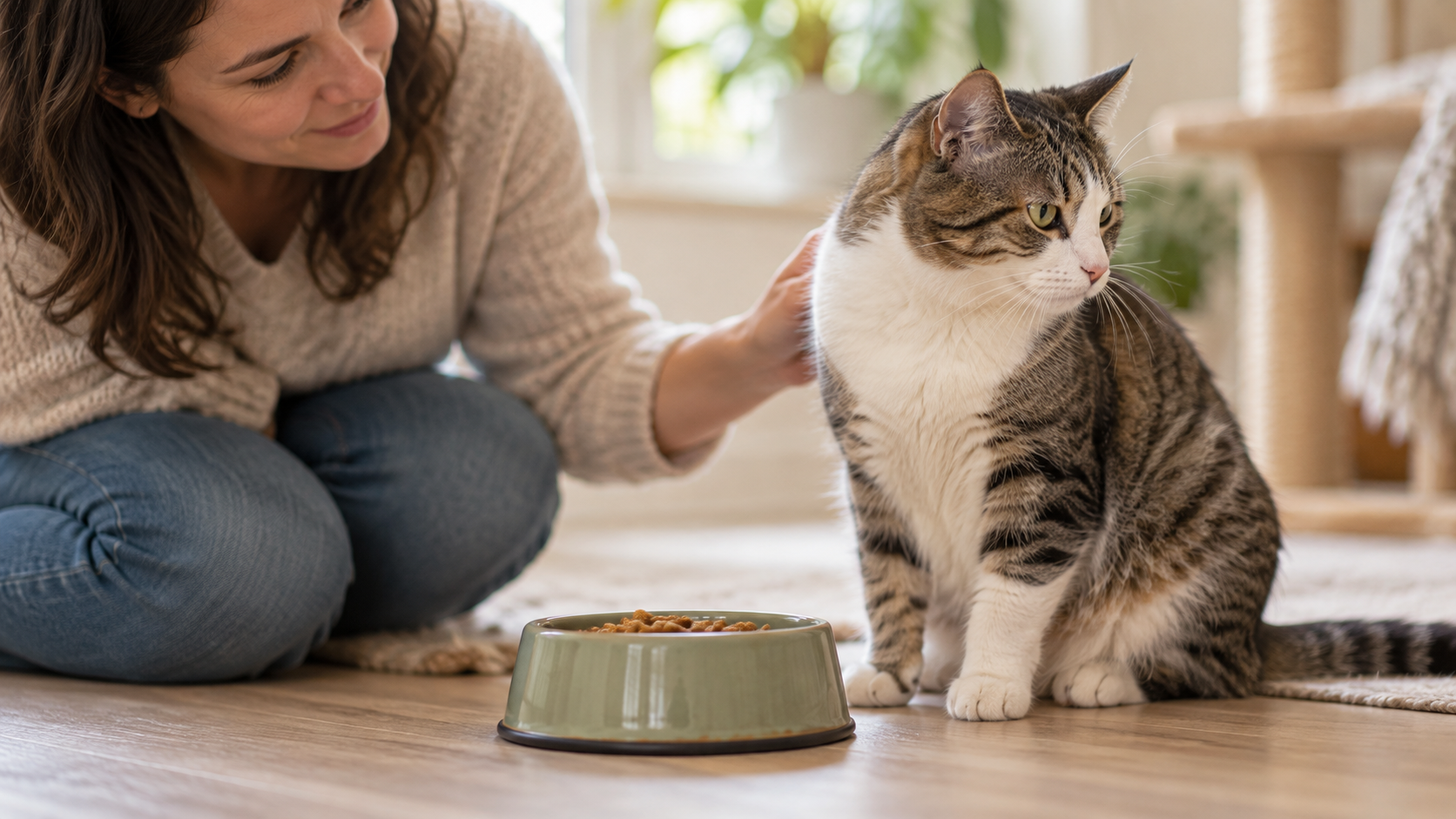
Common Causes of a Cat Not Eating
What tends to be behind a lost appetite, from simple to serious
Illness
Many medical problems suppress appetite, including dental or mouth pain, nausea, kidney disease, infections, and a long list of others. A cat that feels sick often simply stops eating. Because illness is so common a cause and cats hide it well, a cat that will not eat and has any other symptom should be seen by a vet.
Stress or changes in the home
Cats are sensitive to change. A move, a new pet or person, building work, a schedule change, or travel can all put a cat off its food for a short time. Restoring routine and offering a calm, quiet place to eat often helps, but a stressed cat that still will not eat after about a day needs a vet check.
A new food or a dirty bowl
A recent food change, a stale or smelly bowl, or a feeding spot too close to the litter box can all make a cat refuse a meal. Offer the previous food, wash the bowl, and if you are switching foods, do it gradually over several days so your cat can adjust.
Pain
Pain anywhere in the body, not only in the mouth, can take away a cat’s appetite. A sore tooth, an injury, arthritis, or internal pain may all show up first as a cat that stops eating. Pain needs veterinary diagnosis and treatment, so do not try to manage it at home.
Cause, What It Looks Like, and What to Do
Use this as a starting point, not a diagnosis. Your vet can confirm the cause.
| Possible cause | What it often looks like | What to do |
|---|---|---|
| Illness | Loss of appetite with vomiting, weight loss, drinking more or less, bad breath, or hiding | See your vet. Dental pain, nausea, kidney disease, and infection are common medical causes that need diagnosis. |
| Dental or mouth pain | Dropping food, pawing at the mouth, drooling, or eating on one side | Book a veterinary dental exam. A painful tooth or mouth can stop a cat eating even when it is hungry. |
| Stress or change at home | Appetite dips after a move, a new pet or person, a schedule change, or travel | Restore routine and a calm feeding spot. If your cat still will not eat after about a day, call your vet. |
| New food or a dirty bowl | Refusing a recently switched food, or turning away from a stale or smelly bowl | Offer the previous food, clean the bowl, and switch foods gradually over several days. |
| Pain elsewhere | Not eating with limping, reluctance to move, or being touchy in one area | Pain anywhere can suppress appetite. Have your vet find and treat the source. |
What to Do at Home First
If your cat has only just gone off its food and otherwise seems well, it is reasonable to rule out simple causes before anything else. Check whether you have recently changed foods, make sure the bowl is clean and not near the litter box, and think about any change at home that might have stressed your cat. Restoring the usual routine and a calm feeding spot often does the trick.
To tempt your cat, try warming the food slightly to bring out its smell, or offer a strong-smelling favorite such as a plain meaty food. Feeding little and often in a quiet place can help too. Do not force-feed your cat, and never give human medications, as many are toxic to cats. Getting the amount right matters as your cat recovers, and our cat nutrition calculator can help you check how much your cat should be eating each day.
The key point is not to let this drag on. If these simple steps do not get your cat eating within about a day, or if there are any other symptoms, move on to a vet visit rather than waiting longer.
When to See a Vet
See your vet promptly if your cat refuses food for more than about a day, and sooner if there are other symptoms. Because of the risk of hepatic lipidosis, a missed day of food in a cat is not something to watch for a week. Do not wait if your cat is overweight, is a kitten or senior, or has a known health condition, as these cats can become unwell faster. For the emergency signs listed near the top of this page, do not wait for a routine appointment.
A lost appetite often travels with other symptoms. If your cat is also flat and low on energy, our guide to why your cat is lethargic may help. If your cat is being sick, see why your cat is throwing up, and if you have noticed a change in mouth odor that could point to dental pain, our cat bad breath guide is a good next read.
Frequently Asked Questions About a Cat Not Eating
Common questions about loss of appetite in cats and when it is serious
Why is my cat not eating?
A cat can stop eating for many reasons, from illness (such as dental or mouth pain, nausea, kidney disease, or infection) to stress or changes in the home, a new food or a dirty bowl, or pain somewhere in the body. Because a cat that refuses food can become seriously ill faster than many owners expect, a healthy adult cat that will not eat for more than about a day, or any cat that stops eating along with other symptoms, should be seen by a vet.
How long can a cat go without eating?
Do not wait long. A cat that goes without food for more than about 24 to 48 hours can develop hepatic lipidosis, also called fatty liver disease, which is serious and is a particular risk in overweight cats. As a general guide, contact your vet if a cat refuses food for more than about a day, and sooner if there are other symptoms such as vomiting, lethargy, or hiding. Kittens and cats with health conditions need attention even faster.
Cat not eating but drinking water, what does it mean?
A cat that is drinking but not eating is still refusing food, so it still carries the risk of hepatic lipidosis if it continues. Drinking water does not remove the urgency. It can also point to specific problems, such as nausea, dental pain, or kidney disease, where a cat may still take water but turn away from food. If your cat will not eat for more than about a day, or is drinking much more than usual, see your vet.
My cat will not eat but seems otherwise fine. Should I still worry?
Cats hide illness well, so seeming normal is not a guarantee that nothing is wrong. It is reasonable to rule out simple causes first, such as a dirty bowl, a recently changed food, or a stressful event, and to try tempting your cat with a warmed, strong-smelling favorite. But if your cat still refuses food after about 24 hours, book a veterinary visit rather than waiting to see if it passes.
How can I get my cat to eat again?
Try gentle, safe tempting first: warm the food slightly to release its smell, offer a strong-smelling favorite such as a plain meaty food, make sure the bowl is clean and away from the litter box, and give your cat a quiet, calm place to eat. Do not force-feed and do not give human medications. If these simple steps do not work within a day, or your cat has other symptoms, your vet needs to examine your cat and may treat the underlying cause.
Explore More Cat Health Guides
Understand your cat's symptoms and know when to call the vet.
Free cat printables
Keep these cat care guides handy
A rotating selection of practical cat guides chosen from our free printable library.Cat Feeding Guide
Portions by weight, age, and life stage.
Kitten Calorie Guide
Calorie targets by kitten age and weight.
Cat Quality of Life Checklist
Track the HHHHHMM quality-of-life measures.