
Last updated: October 3, 2026
Cat Health
Cat Bad Breath: Causes and How to Fix It
Bad breath, or halitosis, is one of the first signs of dental disease in cats, and sometimes a clue to a health problem elsewhere in the body. Here is what causes it, how to prevent it, and when a change in your cat's breath means it is time to call the vet.
This guide is general information, not veterinary advice. Every cat is different. If your cat is unwell or you are worried, contact your veterinarian, who can examine your cat and give advice for their specific situation.
Call your vet promptly if bad breath comes with any of these
- Your cat has stopped eating, or is clearly in pain when trying to eat
- Heavy drooling, blood in the saliva, or constant pawing at the mouth
- A strong ammonia-like smell, or a sweet or acetone-like smell on the breath
- Bad breath alongside increased thirst, weight loss, vomiting, or lethargy
A cat that stops eating because of mouth pain needs prompt veterinary care. Cats can become seriously unwell quickly when they go without food.
Common Causes of Bad Breath in Cats
What tends to be behind halitosis, from the mouth to the rest of the body
Dental and periodontal disease
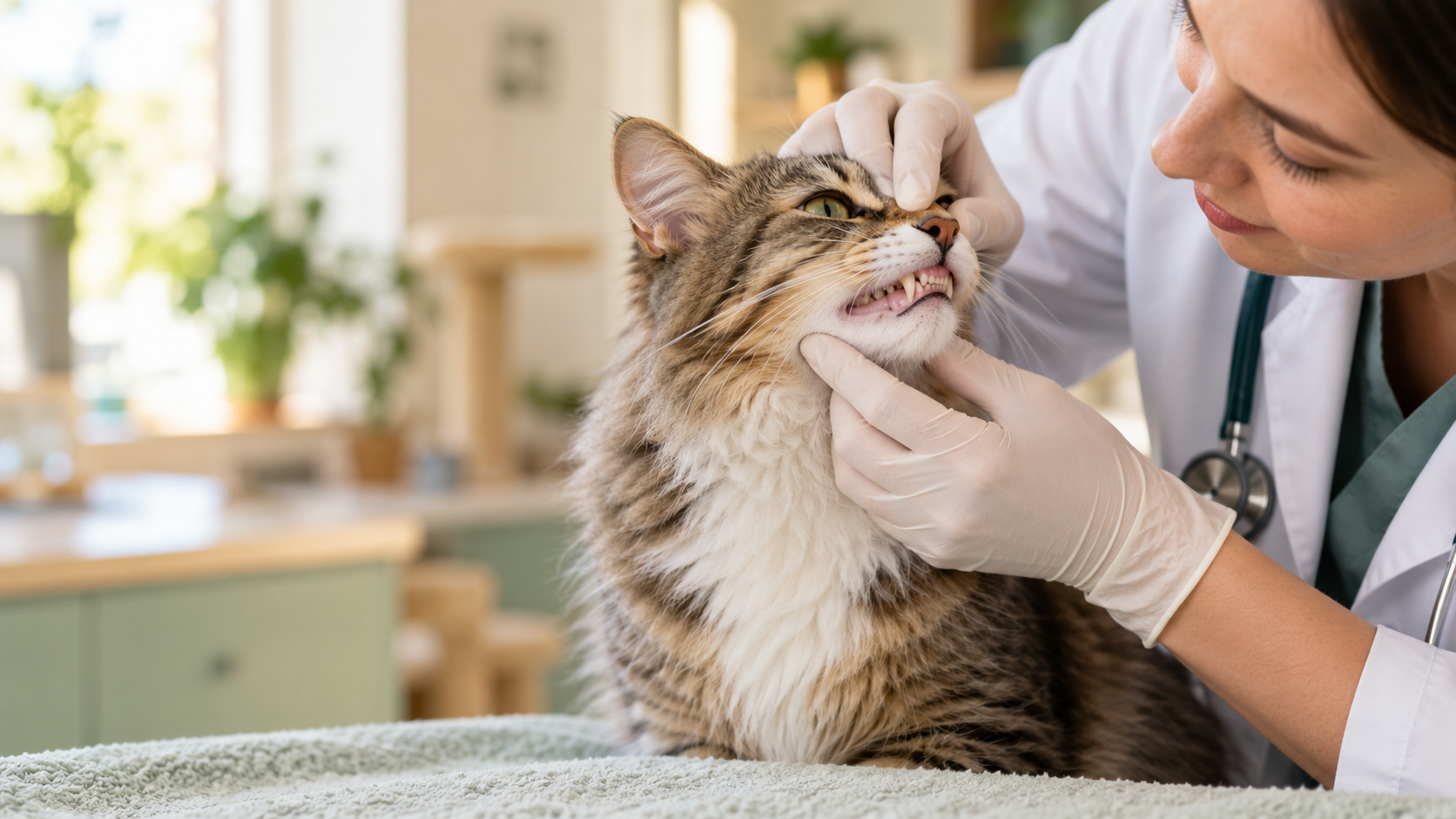
This is by far the most common cause. Plaque builds up on the teeth and hardens into tartar, the gums become inflamed (gingivitis), and the bacteria involved give off a persistent foul odor. Left untreated it progresses to periodontal disease, which damages the tissue and bone that hold the teeth. Regular dental care and professional cleanings are the answer.
Tooth resorption and damaged teeth
Tooth resorption, where the structure of a tooth breaks down, is common in cats and can be painful. Broken or abscessed teeth cause bad breath too, often with a cat that drops food, chews on one side, or paws at the mouth. These need a veterinary exam, and affected teeth frequently have to be treated or removed.
Kidney disease
When the kidneys are not clearing waste properly, some cats develop a breath that smells like ammonia. This is more likely in older cats and often comes with increased drinking, weight loss, and a reduced appetite. Kidney disease needs veterinary testing and ongoing management, so an ammonia-like odor is a reason to see your vet.
Diabetes
Uncontrolled diabetes can give the breath a sweet or acetone-like (nail-polish) smell. It is often accompanied by increased thirst and urination and changes in weight or appetite. This is a sign to have your cat tested by a vet, because diabetes needs diagnosis and treatment and can become an emergency if it is not managed.
Cause, What It Looks Like, and What to Do
Use this as a starting point, not a diagnosis. Your vet can confirm the cause.
| Possible cause | What it often looks like | What to do |
|---|---|---|
| Dental and periodontal disease | Persistent foul or rotten smell, red or swollen gums, visible tartar, sometimes drooling | The most common cause. Book a veterinary dental exam. A professional cleaning is often needed. |
| Tooth resorption or a broken tooth | Bad breath with mouth pain, dropping food, chewing on one side, or pawing at the mouth | Needs a veterinary exam. Painful teeth often have to be treated or removed. |
| Kidney disease | A breath that smells like ammonia, often with increased drinking, weight loss, or poor appetite | See your vet promptly. Kidney disease needs testing and ongoing management. |
| Diabetes | A sweet or acetone-like smell, sometimes with increased thirst, urination, and weight change | Requires veterinary testing. Uncontrolled diabetes can become an emergency. |
| Something stuck in the mouth | Sudden bad breath with drooling, pawing at the mouth, or difficulty eating | Have your vet check for lodged food, string, or a foreign object. Do not force anything out. |
How to Prevent Bad Breath in Cats
Because most feline bad breath starts with plaque and gum disease, prevention is mostly about keeping the teeth clean. The single most effective step is regular tooth brushing with a cat-safe toothpaste and a soft brush made for cats. Aim for daily if your cat will tolerate it, and never use human toothpaste, which is not safe for cats. Introduce brushing slowly, letting your cat taste the toothpaste first and building up over days or weeks.
Brushing works best when it is backed up by other dental care. Dental diets and dental treats are formulated to reduce plaque as your cat chews, and some owners use vet-recommended water additives as an extra layer. These help between brushings but do not fully replace it. Ask your vet which products suit your cat, and look for options accepted by a recognized veterinary dental body.
Finally, keep up with routine veterinary checkups so early gum disease is caught before it becomes painful, and follow your vet's advice on professional dental cleanings. A cleaning under anesthesia removes tartar from below the gumline that home care simply cannot reach, and it lets your vet find hidden problems like tooth resorption.
When Bad Breath Signals Something Serious
Everyday cat breath is not exactly fresh, but a lasting change is worth paying attention to. See your vet if you notice a sudden change in the smell, drooling, pawing at the mouth, difficulty eating, or a cat that starts chewing on one side. An ammonia-like odor can point toward kidney trouble, and a sweet or acetone-like odor can point toward diabetes, so those smells in particular deserve a veterinary exam rather than a wait-and-see approach.
A cat that stops eating because its mouth hurts needs prompt care, since going without food is risky for cats. Bad breath often appears alongside other symptoms, so it helps to look at the whole picture. If the smell is ammonia-like, our guide to cat kidney disease explains what to watch for, and if your cat has gone off its food, see why your cat is not eating.
Frequently Asked Questions About Cat Bad Breath
Common questions about feline halitosis and when it is serious
Why does my cat have bad breath?
The most common reason a cat has bad breath is dental and periodontal disease. Plaque hardens into tartar, the gums become inflamed (gingivitis), and bacteria produce a persistent foul odor. Tooth resorption and broken teeth can do the same. Less often, bad breath signals a body-wide problem: a breath that smells like ammonia can point to kidney disease, and a sweet or acetone-like smell can point to diabetes. Because the cause ranges from mild to serious, a lasting change in your cat’s breath is worth a veterinary exam.
How do I get rid of my cat’s bad breath?
Start with a veterinary dental exam, since the fix depends on the cause. If plaque and tartar have built up, your vet may recommend a professional cleaning under anesthesia, which addresses what brushing alone cannot reach. At home, the most effective prevention is regular tooth brushing with a cat-safe toothpaste and a soft brush, backed up by dental diets and dental treats, and in some cases water additives. Never use human toothpaste. If the smell comes back quickly or is ammonia-like or sweet, see your vet, because that can mean the problem is not just the teeth.
Can bad breath in cats be a sign of something serious?
Yes. While most feline bad breath comes from dental disease, the smell itself can be a clue to something more serious. A breath that smells strongly of ammonia can be associated with kidney disease, and a sweet or nail-polish (acetone) smell can be associated with diabetes. Bad breath alongside drooling, difficulty eating, weight loss, increased thirst, or a cat that stops eating should be checked by a vet without delay.
How can I prevent my cat from getting bad breath?
The best prevention is consistent dental care. Brushing your cat’s teeth with a cat-safe toothpaste, ideally daily, removes plaque before it hardens into tartar. Dental diets and dental treats designed to reduce plaque can help between brushings, and some owners use vet-recommended water additives. Regular veterinary checkups let your vet spot early gum disease, and professional dental cleanings remove tartar that home care cannot. Introduce brushing slowly and gently so your cat learns to tolerate it.
Explore More Cat Health Guides
Understand your cat's symptoms and know when to call the vet.
Free cat printables
Keep these cat care guides handy
A rotating selection of practical cat guides chosen from our free printable library.Cat Pregnancy Timeline
A week-by-week kittening calendar and checklist.
Cat Quality of Life Checklist
Track the HHHHHMM quality-of-life measures.
Kitten Growth Chart
Week-by-week weight and development milestones.