
Last updated: October 3, 2026
Cat Health
Flea Comb for Cats
A flea comb is one of the simplest and cheapest tools in a cat owner's kit, and it earns its place. Because cats groom so thoroughly, they hide fleas well, and a fine-toothed comb is often the best way to find them. Here is how a flea comb works, how to use one on your cat, what to look for when you choose a comb, and where combing fits into a full flea plan.
A flea comb is a tool, not a cure. Combing is great for finding and removing fleas, but it will not clear an infestation on its own. If your cat has more than the odd flea, or is itchy, sore, or unwell, contact your veterinarian. Never use a dog flea product on a cat, since some are highly toxic to cats.
How a Flea Comb Works
A simple mechanical tool that finds what a grooming cat hides
Fine teeth that trap fleas
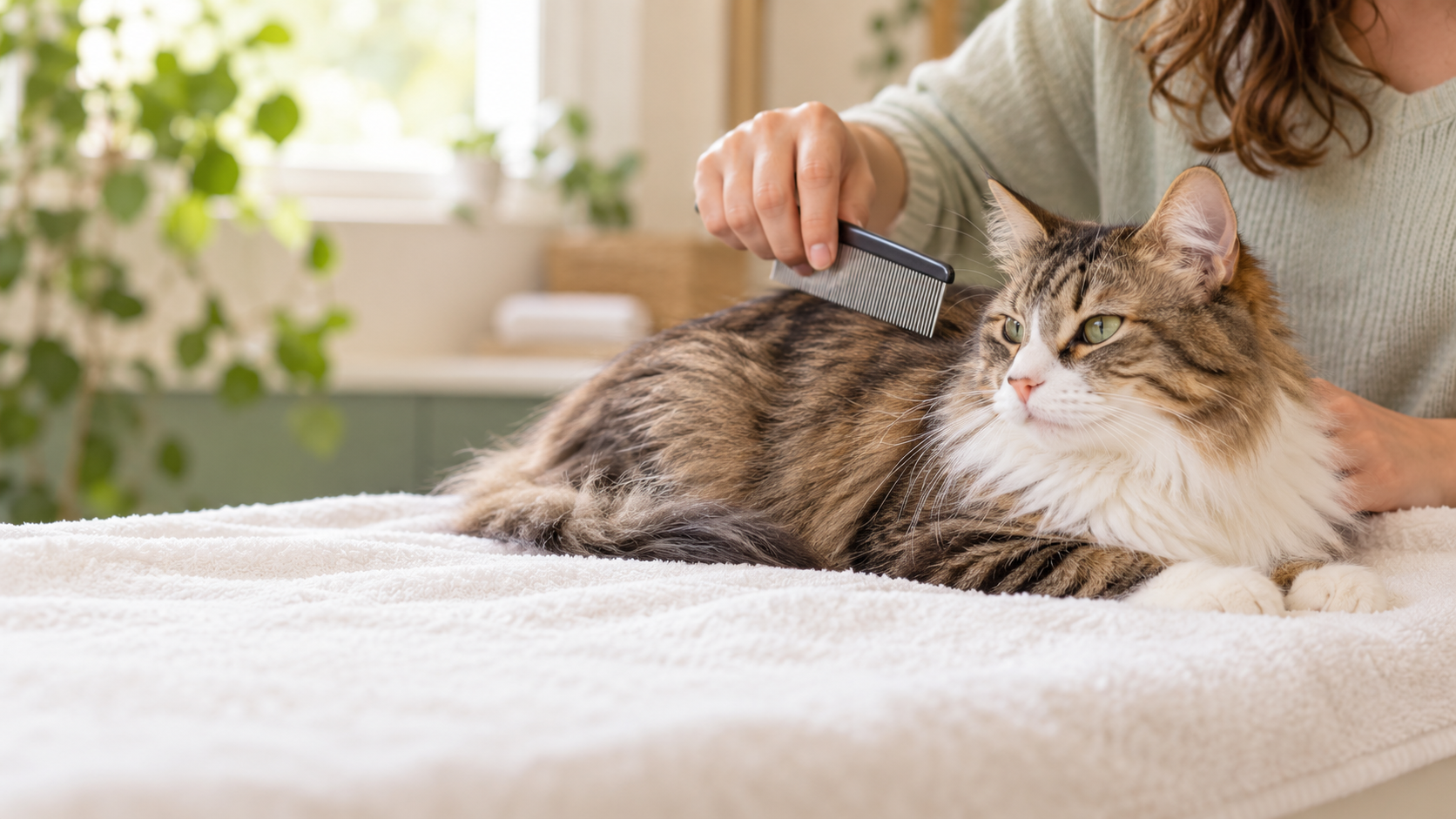
A flea comb has very fine, closely spaced teeth set much narrower than an ordinary grooming comb. Adult fleas are flat and slip easily through fur, but the tight gaps between the teeth are too narrow for them to pass. As you draw the comb through the coat close to the skin, live fleas get caught between the teeth and lifted out of the fur where you can deal with them.
Pulling out flea dirt
The same fine teeth rake out flea dirt, the dark pepper-like specks of digested blood that fleas leave behind. Because cats groom away many of the live fleas, flea dirt is often the clearest evidence you will find. Combing over a light surface, then testing the specks on damp paper, tells you whether fleas are present even when you never catch a live one.
How to Use a Flea Comb on Your Cat
Cats do best with short, calm sessions, so a simple routine and a bit of patience go a long way. Work through the coat in the same order each time so you do not miss a spot.
- Set up over a light towel. Sit your cat on or over a pale towel so any fleas and flea dirt that drop off show up clearly. Have a bowl of warm, soapy water within reach before you start.
- Comb in the direction of hair growth. Draw the comb slowly through the coat the way the fur lies, keeping the teeth right against the skin. Gentle, steady strokes work better than fast, shallow ones, since the teeth need to reach the skin to catch fleas.
- Focus on the flea hotspots. Fleas gather at the neck and under the chin, along the base of the tail, and on the belly and inner thighs. Spend the most time in these areas, working gently around sensitive spots.
- Dip the comb between strokes. After each pass, dip the comb in the warm soapy water to drown any fleas and rinse off flea dirt. Fleas can jump off a dry comb, so the water traps them. Wipe or swish the teeth clean before the next stroke.
- Check what comes off. Watch the towel and the water for live fleas and dark specks. To confirm flea dirt, tap the specks onto a damp white paper towel: if they smear rusty red-brown, that is digested blood and confirms fleas.
- Keep it short and reward your cat. Stop before your cat gets restless, even if you have to finish later, and offer a treat or a fuss so combing stays a positive experience.
Combing is also a good moment to run a hand over your cat and notice their overall condition. If you want to keep an eye on your cat's weight while you are at it, our cat weight calculator is a useful companion.
What to Look For in a Flea Comb
There is no single best comb, only the one that suits your cat's coat and your hand. These are the features that actually make a difference.
| Feature | Why it matters |
|---|---|
| Tooth spacing | The teeth need to sit close enough together to trap adult fleas and flea dirt as you pull the comb through. Very fine spacing catches more, which suits most cats, though it can snag in long or matted coats, so a longhaired cat may need gentle detangling first. |
| Metal versus plastic teeth | Metal teeth hold their shape, resist bending, and keep an even gap over time, so they tend to catch fleas more reliably. Plastic teeth are gentler and cheaper but can flex apart, letting fleas slip through. For regular use on a cat, sturdy metal teeth are usually the better choice. |
| Handle and grip | Cats often have limited patience, so a comfortable, non-slip handle lets you work quickly and confidently in short sessions. A handle that does not slip when your hands are damp helps you keep steady, gentle pressure against the skin. |
| Comb size | Cats are small, so a compact comb is easier to control around the neck, chin, and belly. A comb that is too large is awkward on a cat and harder to maneuver into the spots where fleas gather. |
| Single versus double row of teeth | A double-row comb has two closely spaced rows that can trap more in a single pass, which some owners find catches fleas the first row misses. A single-row comb is lighter and easier to clean between strokes. Either works on a cat, so pick the one that suits your hand and your cat. |
What a Flea Comb Can and Cannot Do
A flea comb is genuinely useful, but it helps to be clear about its limits so you do not rely on it for a job it cannot do. Here is what it is good at:
- Detection. Combing is one of the most reliable ways to confirm fleas on a cat, since grooming hides live fleas but the comb still catches them and their dirt.
- Monitoring. A quick comb during and after treatment tells you whether numbers are going up or down, so you can see if a flea plan is working.
- Kittens and sensitive cats. For kittens too young for chemical products, or cats that cannot use certain treatments, a comb removes fleas gently with no product at all.
- Comfort and relief. Removing the fleas that are on your cat right now eases some of the itching and is a soothing bit of hands-on care.
What a comb cannot do is clear an infestation. It only removes the fleas on your cat at that moment, and those are a small fraction of the total. Most of the population lives in your home as eggs, larvae, and pupae, and a comb does nothing about those. It also gives no lasting protection, so fresh fleas can hop straight back on. To actually get rid of fleas you still need a vet-appropriate, cat-specific flea treatment and treatment of the home. Our full guide to cat fleas covers the treatment options and how to clear an infestation properly.
Fitting It Into a Full Flea Plan
Think of the flea comb as the eyes and hands of your flea plan, not the muscle. It tells you whether fleas are present and how bad things are, removes what is on the cat today, and lets you keep score as treatment takes effect. The muscle comes from a proper cat-specific preventive and from treating the environment.
A sensible plan usually looks like this: comb to detect and monitor, then treat your cat with a vet-recommended, cat-labeled product, treat every pet in the household at the same time, and tackle the home with hot washing of bedding and thorough vacuuming. Crucially, never use a dog flea product on a cat, since some ingredients that are safe for dogs are highly toxic to cats. Keep combing through and after treatment to confirm numbers are dropping.
Combing is also a natural checkpoint for related problems. Fleas are how many cats pick up tapeworm, so if you see small rice-like segments near your cat's rear while combing, read our guide to worms in cats. For everything else on parasites and prevention, the cat health hub pulls the guides together.
Frequently Asked Questions About Flea Combs for Cats
Common questions about how a flea comb works, how to use one, and what it can and cannot do
What is a flea comb and how does it work on cats?
A flea comb is a small comb with very fine, closely spaced teeth. As you draw it through your cat's coat close to the skin, the narrow gaps between the teeth physically trap adult fleas and flea dirt, the dark specks of digested blood fleas leave behind, and pull them out of the fur. It works mechanically rather than chemically, so it removes what is on the cat at that moment and gives you a clear way to check for fleas without any product. That makes it especially handy for cats, who groom constantly and can hide fleas well.
How do I use a flea comb on my cat?
Pick a calm moment and sit your cat on a light towel so you can see what comes off. Comb slowly in the direction the fur grows, keeping the teeth against the skin, and focus on the neck and chin, the base of the tail, and the belly where fleas gather. After each stroke, dip the comb in a bowl of warm soapy water to drown any fleas and rinse off flea dirt, then continue. Keep sessions short and gentle, since cats tolerate combing best in small doses, and reward your cat afterward.
Will a flea comb get rid of fleas on my cat on its own?
No. A flea comb is excellent for finding, monitoring, and removing the fleas currently on your cat, but it cannot clear an infestation by itself. Most of a flea population lives in your home as eggs, larvae, and pupae, and the comb does nothing about those. To actually get rid of fleas you still need a vet-appropriate, cat-specific flea treatment plus treatment of the home environment. Never use a dog flea product on a cat, as some are highly toxic to cats. The comb is a helpful part of the plan, not the whole plan.
How do I know if the specks in the comb are flea dirt?
Use the wet-paper-towel test. Tap the dark specks from the comb onto a damp piece of white paper towel and wait a moment. If they smear a rusty red-brown, that is digested blood, which confirms flea dirt and therefore fleas, even if you never caught a live one. If the specks stay dry and black, they are more likely ordinary dirt. This simple check turns the comb into a reliable detection tool, which is valuable because cats groom away much of the evidence.
Can I use a flea comb on a kitten?
Yes, and it is one of the safest options for very young kittens. Many chemical flea products have a minimum age or weight, so for a kitten too young for those, a flea comb lets you remove fleas gently without any product. Comb carefully with light pressure, drown what you catch in soapy water, and keep the kitten warm afterward. Because heavy flea burdens can make kittens anemic, speak with your vet promptly if a young kitten has lots of fleas, and ask when it is old enough for a proper preventive.
Explore More Cat Health Guides
A comb finds the fleas. Here is how to clear them for good.
Free cat printables
Keep these cat care guides handy
A rotating selection of practical cat guides chosen from our free printable library.Cat Quality of Life Checklist
Track the HHHHHMM quality-of-life measures.
Kitten Calorie Guide
Calorie targets by kitten age and weight.
Kitten Growth Chart
Week-by-week weight and development milestones.