
Last updated: October 3, 2026
Cat Health
Gabapentin for Cats
Gabapentin is a prescription medication that veterinarians use in cats to take the edge off stressful events like vet visits and car travel, and to help with chronic or nerve-related pain such as arthritis. Here is a plain-language look at what it is, how it works, its common feline uses, general dosage reference ideas, and the side effects and cautions to understand, all of it meant to inform the conversation you have with your own vet.
Read this first: gabapentin is prescription-only
- Gabapentin is a prescription medication. It should only be given to a cat when a veterinarian has prescribed it for that specific cat.
- This page is general education, not a dosing instruction, a prescription, or veterinary advice.
- Never give your cat any medication, or change a dose, without direct veterinary direction.
- Never use a human gabapentin product your vet has not approved. Some human liquid formulations contain xylitol, which is toxic to dogs, and human capsule strengths are often wrong for a cat.
This guide is general information, not veterinary advice. Every cat is different, and medication decisions depend on the diagnosis, the other drugs your cat takes, and their overall health. If gabapentin has been prescribed for your cat, follow your veterinarian's instructions. If you have questions or your cat is unwell, contact your vet.
What Gabapentin Is and How It Works
Gabapentin is a medication that was originally developed for people and is now used commonly in veterinary medicine. In cats, it is prescribed mainly to reduce fear and stress in specific situations, such as a trip to the vet or a car journey, and to help manage certain kinds of pain, particularly the chronic discomfort of arthritis in older cats.
In brief, gabapentin is thought to work by calming overactive nerve signaling. It acts on channels in the nervous system that influence how nerve cells release certain signaling chemicals, which can dial down the transmission of pain signals and quiet excitable nerve activity. That same settling effect is part of why a single dose given before a stressful event can leave a cat noticeably calmer and easier to handle. The precise way it works is still being studied, but this calming of nerve activity is the general idea.
Because it targets nerve signaling rather than inflammation, gabapentin is often used together with other treatments rather than on its own. Your vet decides whether it fits your cat's situation and how it should be combined with anything else.
What Gabapentin Is Used For in Cats
The most common reasons a vet may reach for it, always as part of a wider plan
Vet-visit and travel stress
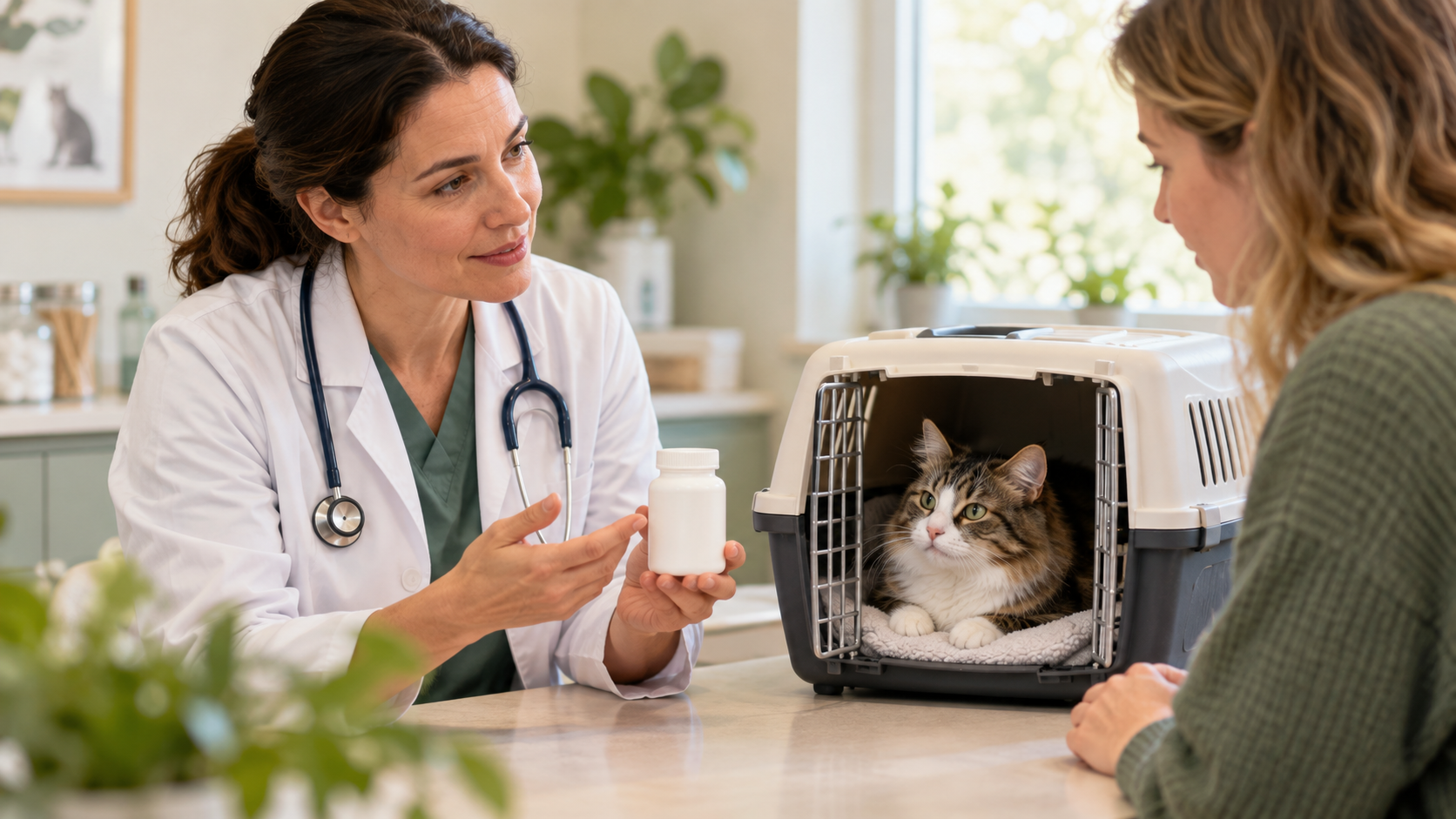
This is one of the most common uses in cats. A single dose given a few hours before a vet appointment or car trip can reduce fear and anxiety, which makes the cat easier and safer to handle and the whole experience less stressful. Your vet decides the amount and the timing.
Chronic and arthritis pain
Gabapentin is often prescribed for longer-term or nerve-related pain, especially the arthritis and osteoarthritis that are common in senior cats. Used this way it is usually given on an ongoing schedule and as one part of a wider pain-control plan your vet designs, not on its own.
Sedation for exams and procedures
Because it has a calming, settling effect, gabapentin is sometimes used to help sedate anxious cats enough for a physical exam, grooming, or a minor procedure. This lets the vet do what is needed with less struggle and stress for the cat.
Add-on pain control
Vets frequently pair gabapentin with other medications so that pain is tackled through more than one pathway at once. This can give better comfort, sometimes at more moderate doses of each drug. The combination and the balance between them are decisions only your veterinarian should make.
Dosage Guidance
The table below shows broad, illustrative reference points only, organized by why gabapentin is being used. These are general ideas to help you understand the topic, not dosing instructions for your cat.
Do not use this table to dose your cat. Gabapentin dosing varies widely by reason for use, and the amount used for situational stress, for chronic pain, and for sedation can differ a great deal even for the same cat. The correct dose is always determined by a veterinarian for your individual cat. The points here are intentionally broad and non-specific for that reason.
| Situation or use | Illustrative general approach (vet-determined) | Note |
|---|---|---|
| Before a vet visit or car travel | A single dose is commonly given roughly 1.5 to 3 hours before the event so it has time to take effect. The exact amount is chosen by your vet. | Timing matters as much as the amount. Give it early enough that your cat is calmer before you leave, exactly as your vet directs. |
| For chronic or arthritis pain | Usually given on an ongoing schedule rather than as a one-off, often starting at a low amount and adjusted over time based on how your cat responds. | Pain dosing and situational-stress dosing are not the same, even for the same cat. Your vet sets the schedule. |
| For small or senior cats | Amounts are individualized. Body size, age, and especially kidney function all influence what a vet chooses. | Kidney disease is common in older cats and changes how the drug is handled, so senior cats are often dosed more conservatively. |
| General note on any dose | Never scale, repeat, or double a dose yourself, and never carry a dose over from another pet or an old prescription. | If a dose does not seem to work, or wears off, call your vet rather than giving more. |
Notice how deliberately vague those points are. That is not an oversight. Gabapentin is not a medication you can safely reduce to a simple milligrams-per-pound chart, because the same cat may need very different amounts depending on why it is being used, how their body clears the drug, and what else they are taking. Vets also commonly start at a lower dose and adjust based on how a cat responds, which is something only ongoing veterinary oversight can manage.
The guidance summarized here is based on general veterinary references and reflects how the medication is described in that literature. It is provided to help you follow the conversation with your vet, not to replace it. If you want to double-check your cat's weight before an appointment, our cat weight calculator can help, and your veterinarian will use that alongside the full clinical picture to decide anything about medication.
Never self-dose your cat, guess an amount, or give human gabapentin products without your vet's direction. Human capsule strengths are frequently wrong for a cat, and some human liquid formulations contain xylitol, which is toxic to dogs, so nothing meant for a person should reach your cat without a vet clearing it. When in doubt, the answer is always to ask your veterinarian.
Side Effects and Safety
Gabapentin is generally considered to have a wide safety margin when used as prescribed, but like any medication it can cause side effects. The most common ones are:
- Sedation and sleepiness. Drowsiness is the effect owners notice most. When gabapentin is used to calm a cat before a vet visit this is expected, and it usually passes as the dose wears off over several hours.
- Wobbliness or unsteadiness (ataxia). Some cats seem a little uncoordinated or wobbly on their feet for a while. Keep them somewhere safe, off high perches and stairs, until they are steady again.
- Occasional drooling. A few cats drool a little, more often with the liquid form, which some cats dislike the taste of.
These effects are usually temporary and tend to fade as the medication clears. If your cat is extremely sedated, cannot stand or walk normally, seems distressed, or you are worried for any reason, contact your veterinarian.
One safety point deserves emphasis: if gabapentin is being used long term for pain, do not stop it abruptly. Any plan to reduce or discontinue it should be done gradually under your vet's guidance. A single dose given before a vet visit does not need tapering, but an ongoing course does, so always check before making a change.
Cautions and Interactions
A few situations call for extra care, and all of them are reasons to make sure your vet has the full picture before your cat takes gabapentin:
- Kidney disease or reduced kidney function. This one is especially relevant in cats, because kidney disease is common and gabapentin is cleared largely by the kidneys. Cats with kidney concerns often need a lower dose or a different approach, so always tell your vet. You can read more in our guide to cat kidney disease.
- Other sedating medications. Combining gabapentin with other drugs that cause drowsiness, such as certain pain medications or sedatives, can increase sedation. Your vet needs to know everything your cat takes.
- Other medications and supplements. Share a full list, including anything over the counter, so your vet can check for interactions and timing issues.
- Human products with xylitol. Never give a human liquid gabapentin, or any product, that may contain xylitol, and do not assume a human formulation is fine. Only use what your vet prescribes or approves.
- Pregnancy, nursing, or other health conditions. These can all affect whether and how gabapentin is used, so they should be part of the conversation with your vet.
None of this means gabapentin is a dangerous drug. It is widely and safely used in cats every day, and for many anxious or arthritic cats it makes a real difference. It simply means the decisions around it belong with your veterinarian, who can weigh your cat's whole situation.
When to Talk to Your Vet
Reach out to your veterinarian in any of these situations:
- Before starting gabapentin, or if you are wondering whether it might help your cat's stress around vet visits or their arthritis pain. This is a diagnosis-and-prescription decision.
- If your cat seems overly sedated, cannot walk normally, or is not acting like themselves longer than you expected after a dose.
- If your cat vomits the dose, spits it out, or you are unsure whether it was swallowed, especially before a planned appointment.
- Before making any change to an ongoing course, including stopping it, since long-term use should not be discontinued abruptly.
- If your cat has kidney disease or other conditions, or takes other medications or supplements.
- Any time you suspect your cat swallowed a human gabapentin product or anything containing xylitol. Treat that as urgent.
Supporting your cat's overall health helps them cope with whatever they are being treated for. If arthritis or mobility is part of the picture, keeping your cat at a healthy weight eases the load on their joints. Our cat BMI calculator can help you check that, and you can browse all of our cat health guides for more. The same medication is used in dogs too, and if you have both, our guide to gabapentin for dogs covers the canine side.
Frequently Asked Questions About Gabapentin for Cats
Common questions about uses, dosing, side effects, and safety, all pointing back to your vet
What is gabapentin used for in cats?
Vets prescribe gabapentin in cats most often to ease fear and stress around predictable events, such as a vet visit or car travel, where a single dose is given a few hours beforehand. It is also widely used for chronic or nerve-related pain, especially arthritis in senior cats, and sometimes to help with sedation for exams or procedures. The right use, amount, and timing are always decided by your veterinarian for your individual cat.
How much gabapentin can I give my cat?
There is no safe do-it-yourself answer. The amount depends on why it is being used, your cat’s weight and age, kidney function, and any other medications, and it is always set by a veterinarian. The guidance on this page is general education, not a dose for your cat. Never self-dose your cat, repeat a dose, or adjust a prescribed amount without talking to your vet first.
Can I give my cat gabapentin before a vet visit?
Only if your vet has prescribed it for that purpose. Giving a single dose of gabapentin a few hours before a vet visit or car trip is one of its most common uses in cats, because it can lower fear and make handling safer and less stressful for everyone. Your vet will tell you the exact amount and how long before the appointment to give it. Do not use a leftover prescription or another pet’s medication.
What are the side effects of gabapentin in cats?
The most common effects are sleepiness or sedation and some wobbliness or unsteadiness on the feet, which is expected when it is used to calm a cat and usually passes as the dose wears off. Some cats drool a little, especially with the liquid form. These effects are generally temporary. If your cat is extremely sedated, cannot walk normally, or seems unwell, contact your vet, and if the medication is used long term, do not stop it abruptly.
Is gabapentin safe for cats with kidney disease?
Gabapentin is cleared by the kidneys, and kidney disease is common in cats, so cats with reduced kidney function often need a lower amount or a different plan. This is exactly the kind of decision only a veterinarian should make. Always tell your vet about any kidney issues, other medications, or supplements your cat takes. The dosing decision belongs with your vet, who can weigh your cat’s whole situation.
Explore More Cat Health Guides
Understand your cat's health, and always work with your vet on medication.
Free cat printables
Keep these cat care guides handy
A rotating selection of practical cat guides chosen from our free printable library.Kitten Growth Chart
Week-by-week weight and development milestones.
Cat Quality of Life Checklist
Track the HHHHHMM quality-of-life measures.
Kitten Calorie Guide
Calorie targets by kitten age and weight.