
Last updated: October 3, 2026
Cat Health
Cat Kidney Disease: Signs, Stages, and Care
Chronic kidney disease is one of the most common conditions in older cats. It usually develops slowly, so the early signs are easy to miss. Here is a gentle overview of what it is, the signs to watch for, how vets stage it, and how care changes as the disease advances.
This guide is general information, not veterinary advice. Every cat is different. If your cat is unwell or you are worried, contact your veterinarian, who can examine your cat and give advice for their specific situation.
Call your vet or an emergency clinic now if your cat has any of these
- Has stopped eating or drinking completely, or cannot keep water down
- Is collapsed, extremely weak, or unresponsive
- Shows signs of severe dehydration, such as sunken eyes and marked lethargy
- Is vomiting repeatedly, or has had a sudden and dramatic decline over hours
A cat with kidney disease that suddenly crashes needs urgent care and cannot wait for a routine appointment.
What Is Chronic Kidney Disease in Cats?
Chronic kidney disease, often shortened to CKD, is the gradual loss of the kidneys’ ability to do their job. Healthy kidneys filter waste out of the blood, balance fluids and minerals, and help control blood pressure. In CKD this function is slowly lost over months or years, which is why it is so common in senior and geriatric cats and often goes unnoticed at first.
Because cats hide illness well and the change is gradual, many are only diagnosed once a good deal of kidney function is already gone. CKD is different from a sudden kidney injury, which comes on quickly. CKD generally cannot be reversed, but for many cats it can be managed for a long time, keeping them comfortable and feeling like themselves.
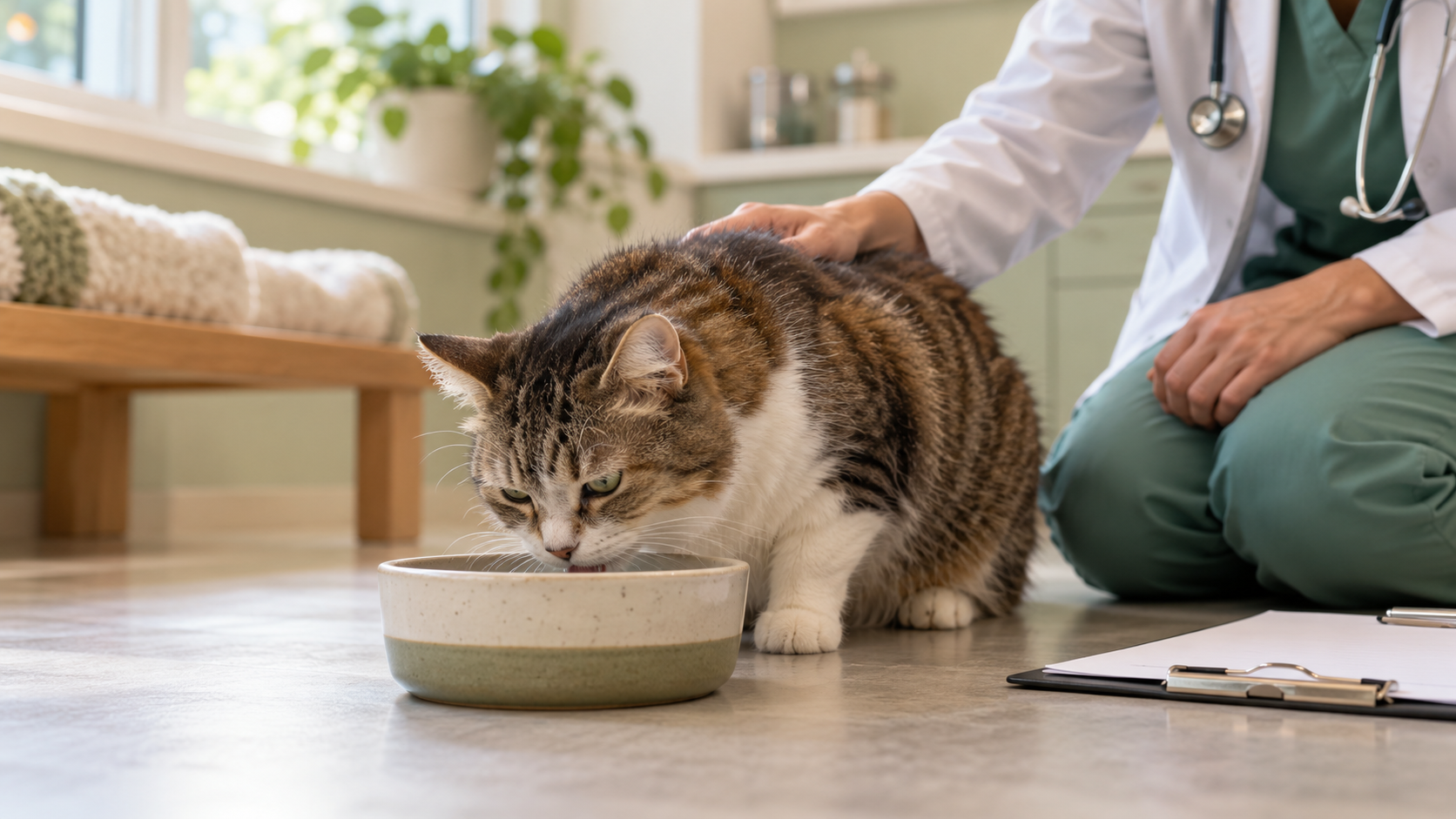
Early and Late Signs to Watch For
How the picture changes as kidney disease progresses
Increased thirst and urination
Often the first thing owners notice. The kidneys lose the ability to concentrate urine, so cats produce more of it and drink more to keep up. You might refill the water bowl more often or find heavier litter clumps. This can appear early, sometimes before a cat looks unwell in any other way.
Weight loss and reduced appetite
Gradual weight loss is common and easy to miss under a fluffy coat. As the disease advances, waste products build up in the blood and can cause nausea, a picky or fading appetite, and sometimes vomiting. Bad breath with an unusual smell can also develop.
Coat, energy, and general condition
Cats with progressing kidney disease often develop a dull, unkempt coat because they groom less, along with lower energy and more sleeping. In later stages you may see dehydration, muscle loss, weakness, and a clear drop in their usual activity and interest.
Why testing matters
These signs overlap with several other conditions common in older cats, so they are not proof of kidney disease on their own. Blood tests and a urine sample let your vet confirm what is happening, rule out other causes, and work out how far it has progressed.
The Stages of Kidney Disease in Cats
Vets commonly use the IRIS staging system, a widely recognised framework, to describe how far kidney disease has progressed. This is a high level overview a vet uses to guide care, not a way to stage your cat at home.
| Stage | What it means | What it often looks like |
|---|---|---|
| Stage 1 (early) | Kidney damage is present but blood values are still within or near the normal range. | Often no obvious signs. Sometimes increased thirst or slightly dilute urine picked up on routine testing. |
| Stage 2 (mild) | Mild loss of kidney function, with blood markers starting to rise above normal. | May still look well. Some cats drink and urinate more, and early weight loss can begin. |
| Stage 3 (moderate) | Moderate loss of function, with blood markers clearly elevated. | Increased thirst and urination, reduced appetite, weight loss, occasional vomiting, and lower energy become more common. |
| Stage 4 (advanced) | Advanced disease, with the kidneys able to do only a small fraction of their normal work. | Poor appetite, ongoing weight loss, nausea, bad breath, dehydration, and marked tiredness. This is where comfort and quality of life become the focus. |
Your vet sets the stage using blood markers of kidney function together with urine protein and blood pressure. The stage guides monitoring and treatment, and it can shift over time.
How Kidney Disease Is Managed
There is no cure for chronic kidney disease, so care focuses on slowing its progress and keeping your cat comfortable and eating well. The details are always set by your veterinarian and tailored to your cat’s stage. The following is general information, not a treatment plan.
- Renal or kidney-support diet. A therapeutic diet adjusted in protein and phosphorus is one of the most established ways to support cats with CKD. Your vet chooses and monitors it based on your cat’s stage and appetite.
- Hydration. Keeping cats well hydrated matters. This can mean encouraging water intake, offering wet food, and in some cases fluids given under veterinary guidance.
- Phosphate control. Managing phosphorus levels, through diet and sometimes phosphate binders, is a common part of care that your vet may recommend.
- Medications your vet may prescribe. Depending on the individual cat, a vet may treat high blood pressure, protein loss in the urine, nausea, or other complications. These are prescribed and adjusted by the veterinary team.
Regular rechecks with blood and urine tests let your vet track how the disease is moving and adjust care. Cats that are monitored and managed early often do better than those diagnosed late. You can learn more in our related guides on a cat drinking a lot of water, a cat losing weight, and healthy senior cat weight.
Advanced Disease and Quality of Life
As kidney disease reaches its later stages, the goal of care gently shifts toward comfort. Cats in advanced or end-stage kidney failure may eat very little, lose weight steadily, feel nauseous, become dehydrated, and spend much of the day resting. This is a hard time for any owner, and there is no single right way through it.
What helps most is honest, ongoing conversation with your veterinary team about what your cat is experiencing and what comfort care is available. Small things, like keeping food appealing, managing nausea, and reducing stress at home, can make a real difference to how your cat feels day to day.
When you are trying to weigh good days against hard ones, it can help to look at the whole picture rather than any single moment. Our cat quality of life calculator offers a gentle, structured way to reflect on your cat’s comfort. If you are facing the hardest decision, our guide on knowing when it is time for your cat may offer some support. Whatever you are feeling, you are not alone, and your vet can help you think it through with kindness.
When to See a Vet
Book a veterinary appointment if you notice your cat drinking or urinating more than usual, losing weight, eating less, vomiting, or seeming quieter or less well groomed than normal, especially if your cat is middle-aged or older. Catching kidney disease earlier gives the most options for slowing it down. Routine senior wellness checks with blood and urine testing can find it before signs appear at home.
For the emergency signs listed at the top of this page, such as not eating at all, collapse, severe dehydration, or a sudden crash, do not wait for a routine appointment. Only your vet can diagnose kidney disease, stage it, and build a care plan that fits your individual cat.
Frequently Asked Questions About Cat Kidney Disease
Common questions about the signs, stages, and care of kidney disease in cats
What are the symptoms of kidney disease in cats?
Chronic kidney disease often starts quietly. Early on the most common signs are drinking more water and urinating more than usual. As it progresses you may notice gradual weight loss, a reduced or picky appetite, occasional vomiting, bad breath, a dull or unkempt coat, and lower energy. Because these signs come on slowly and overlap with other conditions, blood and urine testing at your vet is the only way to confirm what is going on.
What are the stages of kidney disease in cats?
Vets commonly describe chronic kidney disease using the IRIS staging system, which sorts it into four stages from early (stage 1) through advanced (stage 4). The stage is based on blood markers of kidney function, along with urine protein and blood pressure. Staging is a tool your veterinarian uses to guide treatment and monitoring, not something to self-diagnose at home. It helps set realistic expectations and tailor care to where your cat is now.
How long do cats live with kidney disease?
There is no single answer, because it depends heavily on the stage at diagnosis, how the cat responds to treatment, and other health issues. Many cats found in the earlier stages live comfortably for a long time with diet changes and monitoring, while advanced disease carries a shorter outlook. Chronic kidney disease is generally progressive and cannot be cured, but good management often slows it and keeps cats feeling well. Your vet can give a more personal picture based on your cat’s test results.
What is the best diet for a cat with kidney disease?
Vets often recommend a therapeutic renal or kidney-support diet, which is adjusted in protein, phosphorus, and other nutrients to reduce the workload on the kidneys. These diets are prescribed and monitored by your veterinarian rather than chosen at home, because the right choice depends on your cat’s stage and appetite. Keeping fresh water available and encouraging hydration also matters. Never make a drastic diet change without veterinary guidance.
Is kidney disease in cats painful?
Chronic kidney disease itself is not usually described as painful in the way an injury is, but it can make cats feel unwell through nausea, dehydration, and low energy, especially in the later stages. Much of veterinary management is aimed at keeping cats comfortable and eating. If your cat seems nauseous, is hiding, or has stopped enjoying normal activities, talk with your vet about comfort care and how to assess quality of life.
Explore More Cat Health Guides
Understand your cat's symptoms and know when to call the vet.
Free cat printables
Keep these cat care guides handy
A rotating selection of practical cat guides chosen from our free printable library.Cat Pregnancy Timeline
A week-by-week kittening calendar and checklist.
Kitten Growth Chart
Week-by-week weight and development milestones.
Cat Feeding Guide
Portions by weight, age, and life stage.