
Last updated: October 3, 2026
Cat Nutrition
Can Cats Eat Eggs?
Eggs are packed with the animal protein cats are built to thrive on, so a bit of cooked egg makes a good occasional treat. The important details are cooking it fully and keeping it plain. Here is how much egg is safe, the best way to serve it, and which forms to avoid.
The short answer
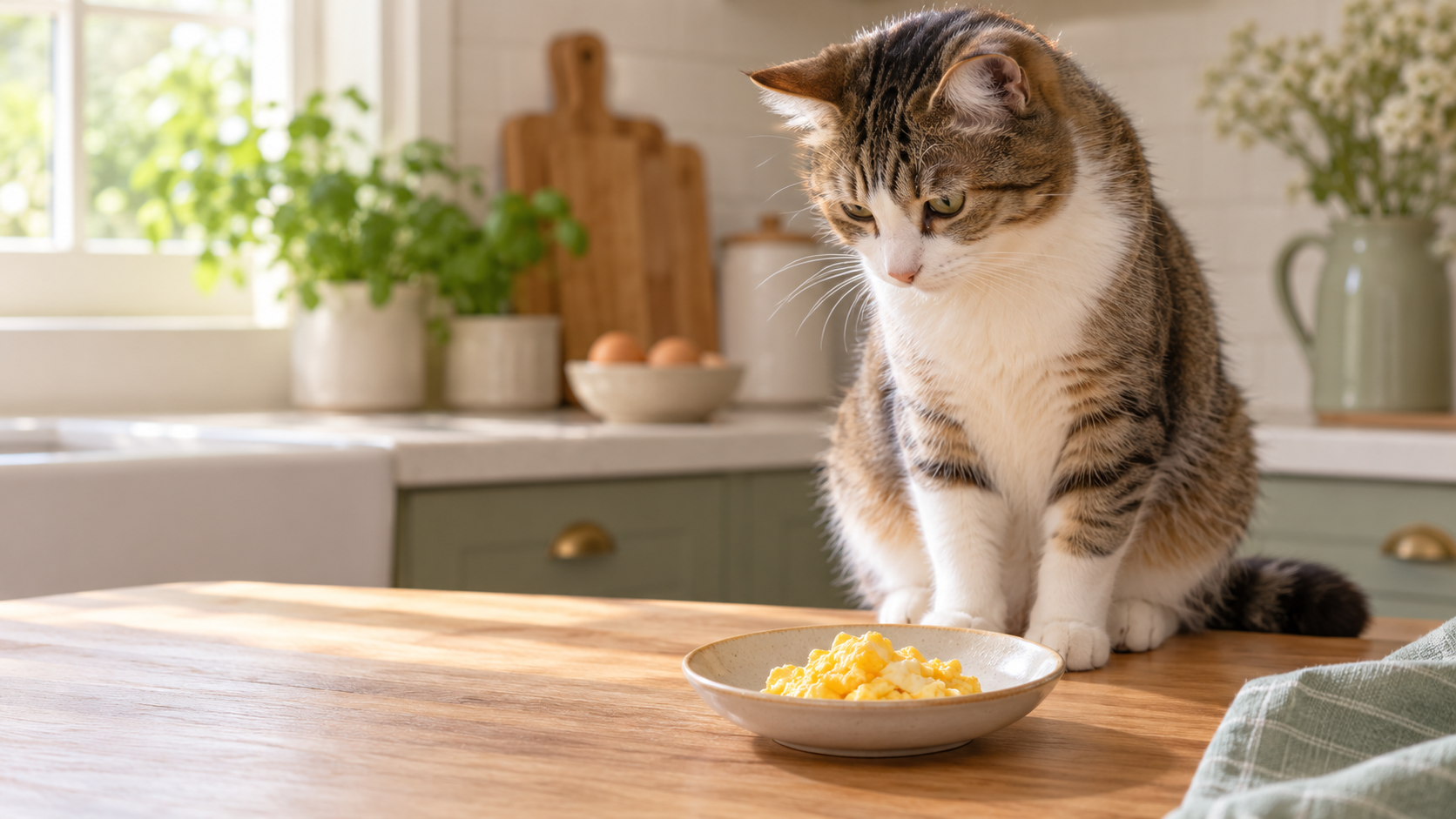
Yes, cats can eat eggs when they are fully cooked and plain. A small spoonful of boiled or scrambled egg, with no butter, oil, salt, or seasoning, is a protein-rich occasional treat. Avoid raw eggs, which carry a salmonella risk and can affect biotin, and keep egg to a treat, not a meal.
This guide is general information, not veterinary advice. Every cat is different. Check with your veterinarian before adding any new food, especially if your cat is a kitten, is overweight, or has a health condition, and call your vet if your cat reacts badly to something it has eaten.
Why Egg Suits Cats, With Limits
A protein-rich treat that still cannot replace a balanced diet
High-quality animal protein
Cats are obligate carnivores, and eggs deliver complete animal protein with all the essential amino acids they need. That is why a little cooked egg is a genuinely wholesome treat rather than just empty calories.
Must be cooked
Raw egg carries a salmonella risk, and raw white contains avidin, which binds the B vitamin biotin. Cooking the egg kills bacteria and deactivates the avidin, so always cook it and let it cool before offering.
Keep it plain
Butter, oil, salt, and especially onion or garlic are unhealthy or outright toxic to cats. Plain boiled or scrambled egg with nothing added is the only version that belongs in a cat's bowl.
A treat, not a meal
Eggs are not complete nutrition and cannot replace balanced cat food. Keep egg to a small, occasional portion so it does not crowd out the diet that meets all of your cat's needs.
Which Forms of Egg Are Safe
Cooked and plain is the rule. The more raw, fatty, or seasoned an egg is, the less suitable it is for a cat.
| Form | Verdict | Notes |
|---|---|---|
| Cooked plain egg (boiled or scrambled) | Safe in small amounts | Fully cooked with no butter, oil, salt, or seasoning. The safest way to share egg with a cat. |
| Raw egg white | Avoid | Contains avidin, which binds biotin, and carries a salmonella risk. Skip raw whites entirely. |
| Raw egg yolk | Avoid | Salmonella and other bacteria risk. Cooking removes the concern, so always cook the egg first. |
| Eggshell (ground) | Only if your vet advises | Sometimes used as a calcium source, but a balanced cat food already supplies calcium. Ask your vet first. |
| Egg with butter, oil, or seasoning | Avoid | Added fat, salt, onion, or garlic are unhealthy or toxic to cats. Keep it plain and unseasoned. |
How to Serve Egg to a Cat
If you want to share a little egg, a few simple steps keep it safe:
- Cook the egg fully, boiled or scrambled, with no butter, oil, salt, or seasoning.
- Let it cool to room temperature before offering it.
- Start with a small taste, about a teaspoon, the first time to check your cat tolerates it.
- Offer a tablespoon or so at most, and only occasionally, never as a daily meal.
- Watch for any vomiting or loose stool over the next day, and stop if you see it.
Egg is fairly rich, and treats add up quickly in a small animal, so a cat that fills up on extras may eat less of its proper food or slowly gain weight. To see how much room your cat has for treats, our cat nutrition calculator makes it clear, and you can sense-check your cat's weight with the cat BMI calculator. For more foods, see whether cats can eat cheese or blueberries.
Frequently Asked Questions About Cats and Eggs
Common questions about safety, raw versus cooked, and amounts
Can cats eat eggs safely?
Yes, cats can safely eat eggs as long as they are fully cooked and plain. Eggs are a high-quality source of animal protein and amino acids, which suits cats as obligate carnivores, and most cats enjoy them. The key rules are simple: cook the egg thoroughly, serve it with no butter, oil, salt, or seasoning, and keep it to a small amount as an occasional treat rather than a meal. A complete cat food should still provide the bulk of your cat's nutrition, with egg as a bonus.
Can cats eat raw eggs?
No, raw eggs are not recommended for cats. Raw egg carries a risk of salmonella and other harmful bacteria, which can make your cat, and you, sick. On top of that, raw egg white contains a protein called avidin that binds biotin, a B vitamin, and over time can interfere with its absorption. Cooking the egg solves both problems at once by killing bacteria and deactivating the avidin. So if you want to share egg with your cat, always cook it plainly and let it cool first.
How much egg can a cat eat?
Keep it small. A tablespoon or so of cooked egg, offered occasionally, is plenty for most cats. Treats and extras should make up no more than about 10 percent of your cat's daily calories, and eggs are fairly rich, so a whole egg is far too much for a small animal. Introduce egg in a tiny amount the first time to check your cat tolerates it, watch for any digestive upset, and do not make it a daily habit. For a cat with a health condition, check with your vet before offering egg at all.
Are eggs good for cats?
Eggs offer genuinely useful nutrition for cats, since they are rich in high-quality protein, essential amino acids, and some vitamins and healthy fats. That makes a little plain cooked egg a wholesome occasional treat. That said, eggs are not a complete food and cannot replace a balanced cat diet, which is carefully formulated to meet all of a cat's needs. Think of egg as a nutritious extra rather than a supplement your cat needs. Cats that are overweight or have kidney or other conditions may need to skip the extra calories, so ask your vet.
Can kittens eat eggs?
A little plain cooked egg is not dangerous for a kitten, but it is best to keep kittens on a complete kitten food that is formulated for their rapid growth. Kittens have small stomachs and precise nutritional needs, so their calories are better spent on balanced food than on treats. If you do offer a tiny taste of cooked egg, make sure it is fully cooked and unseasoned, keep the amount tiny, and watch for any upset. When in doubt, ask your vet what treats are appropriate for your kitten's age.
Explore More Cat Nutrition Guides
Know what is safe before you share from your plate.
Free cat printables
Keep these cat care guides handy
A rotating selection of practical cat guides chosen from our free printable library.Kitten Growth Chart
Week-by-week weight and development milestones.
Kitten Calorie Guide
Calorie targets by kitten age and weight.
Cat Body Condition Chart
A printable body condition reference for cats.