
Last updated: October 3, 2026
Cat Nutrition
Can Cats Eat Cheese?
Cats often beg for cheese, and a tiny piece will not poison them, but that does not make it a good treat. Most cats are lactose intolerant, and cheese is fatty and salty. Here is when a nibble is fine, which cheeses to avoid, and why the bowl of milk is a myth.
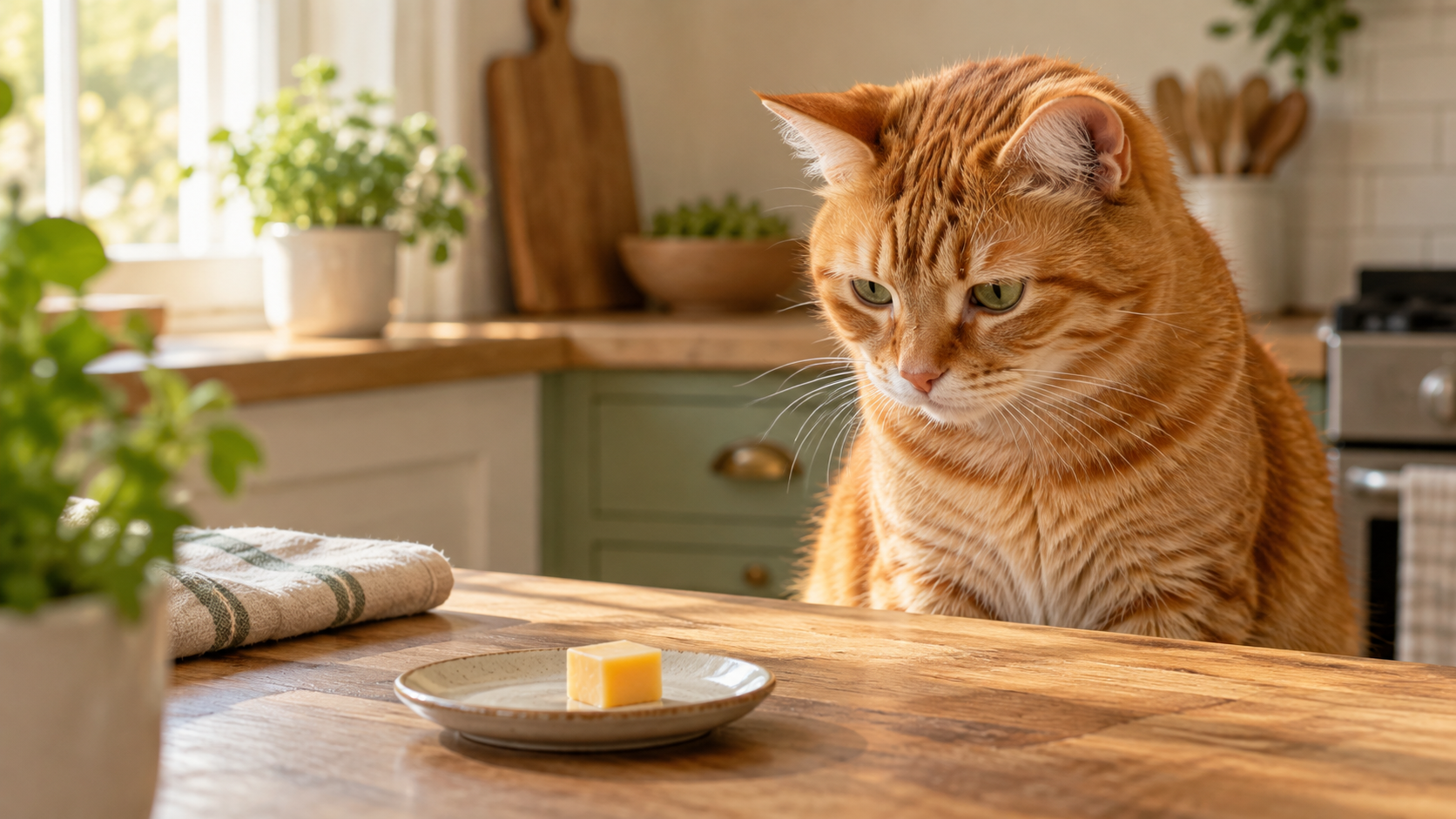
The short answer
Cheese is not toxic, so a pea-sized nibble of plain hard cheese is unlikely to harm a healthy adult cat. But most cats are lactose intolerant, and cheese is high in fat and salt, so it is best kept to a rare treat rather than a regular one. Avoid blue cheese and any cheese flavored with onion or garlic.
This guide is general information, not veterinary advice. Every cat is different. Check with your veterinarian before adding any new food, especially if your cat is a kitten or has a health condition, and call your vet if your cat reacts badly to something it has eaten.
Why Cheese Is Not a Natural Fit for Cats
Cats are built for meat, not dairy
Most cats are lactose intolerant
After weaning, cats stop making much of the enzyme that digests lactose, the sugar in milk and cheese. Undigested lactose ferments in the gut, which is why dairy so often causes gas, bloating, and diarrhea in cats. Hard aged cheeses have less lactose than soft ones, but few cats digest any of it well.
It is fatty and salty
Cheese is calorie dense and high in fat and sodium. For an animal as small as a cat, even a modest piece is a lot of calories and salt, which over time can contribute to weight gain and is a poor fit for cats with heart or kidney concerns.
It offers nothing cats need
As obligate carnivores, cats get their protein and key nutrients from meat, not dairy. Cheese does not supply anything a complete cat food does not already provide better, so there is no nutritional reason to offer it.
It can hide real dangers
Flavored, spreadable, and vegan cheeses often contain onion or garlic, which are toxic to cats, and blue cheeses are made with molds that can be harmful. Plain is the only version worth considering, and even then only in tiny amounts.
Which Cheeses Are Safest, and Which to Avoid
All of these are extras at best. Use this as a guide to what is least likely to cause a problem, not as an invitation to feed cheese regularly.
| Cheese | Verdict | Notes |
|---|---|---|
| Hard cheese (cheddar, Swiss, parmesan) | Occasional tiny nibble | Lower in lactose than soft cheese and firm enough to use as a pill pocket. Still salty and fatty, so keep it to a pea-sized piece. |
| Cottage cheese | Small amount, plain only | Lower in lactose and often better tolerated, but choose plain, unsalted, and skip if your cat gets loose stool. |
| Cream cheese | Not recommended | High in fat and lactose with little to offer. A smear may be used to hide a pill, but there are better options. |
| String cheese and processed slices | Best avoided | Very salty and heavily processed. A lick will not harm a healthy cat, but it is not a treat to offer. |
| Blue cheese (Stilton, Roquefort, Gorgonzola) | Avoid | Made with molds that can produce substances harmful to pets. Keep blue cheeses away from cats entirely. |
| Vegan or plant-based cheese | Avoid | Often contains onion or garlic flavoring, which is toxic to cats, plus oils and additives cats do not need. |
How Much Cheese Is Safe?
If you choose to offer cheese, treat it like the smallest of treats. A single piece no larger than a pea, given occasionally rather than daily, is the sensible ceiling for most healthy adult cats. Cheese counts toward the roughly 10 percent of daily calories that should come from treats, and because it is so calorie dense, even a small cube uses a surprising share of that allowance.
The first time you offer cheese, give a tiny amount and wait a day to see whether your cat gets gas or loose stool. Many cats do, and if yours is one of them, skip cheese for good. Never offer cheese as a way to boost the appetite of a cat that is off its food, since a cat that is not eating needs a vet, not a snack. If you are weighing up whether treats are pushing your cat over its calorie needs, our cat nutrition calculator can show you how little room there really is.
Using Cheese to Give a Pill
One reason owners reach for cheese is to hide a tablet, and a small piece of firm cheese can work for a cat that tolerates dairy. Before you do, check with your vet, because some medications should not be taken with dairy or food at all, and dairy can upset a sensitive stomach. A purpose-made pill pocket or a dab of a cat-safe meat paste is often a cleaner option that avoids the lactose problem entirely.
If your cat has an ongoing prescription and dosing is a daily battle, ask your clinic about liquid or flavored formulations. For medications dosed by body weight, having an accurate figure helps, and you can estimate one with our pet medication calculator, though the dose itself should always come from your vet.
Frequently Asked Questions About Cats and Cheese
Common questions about lactose, kittens, and safe amounts
Is cheese bad for cats?
Cheese is not toxic to cats, but it is not good for them either. Most adult cats are lactose intolerant, so the milk sugar in cheese can cause an upset stomach, gas, and diarrhea. Cheese is also high in fat and salt, which adds unnecessary calories and is a poor fit for a small carnivore. A tiny nibble now and then will not harm a healthy cat, but cheese should never be a regular part of the diet.
Why are cats lactose intolerant?
Kittens produce an enzyme called lactase that lets them digest the lactose in their mothers milk. As cats grow up and are weaned, lactase production drops, so most adult cats can no longer break lactose down properly. The undigested sugar ferments in the gut and draws in water, which leads to the gas, bloating, and diarrhea many cats get from dairy. This is why the classic image of a cat lapping a bowl of milk is actually a recipe for a stomach upset.
How much cheese can I give my cat?
If you give cheese at all, keep it to a piece no bigger than a pea, and only occasionally, not daily. Treats and extras of any kind should stay under about 10 percent of your cats daily calories, and for a small cat cheese uses that budget up fast because it is so calorie dense. Offer it once and watch for any digestive upset over the next day before considering it again.
Can kittens eat cheese?
It is best to skip cheese for kittens. Although kittens digest milk sugars better than adults, they have small stomachs and precise nutritional needs, and their calories should come from a complete kitten food that supports rapid growth. Cheese offers nothing they need and can cause diarrhea, which is more risky in a small kitten because they can dehydrate quickly. Save treats for a balanced kitten diet instead.
Can I use cheese to give my cat a pill?
A small piece of hard cheese can work as a pill pocket for a cat that tolerates dairy, since it is firm and many cats find it tempting. That said, some medications should not be given with dairy, and cheese can cause stomach upset, so a purpose-made pill pocket or a dab of a cat-safe paste is usually a better choice. Ask your vet whether the specific medicine can be given with food before you hide it in cheese.
My cat ate a lot of cheese. Should I worry?
A one-off larger helping of plain cheese is unlikely to be dangerous, but your cat may get an upset stomach, gas, or diarrhea over the next day or so. Make sure fresh water is available and watch for repeated vomiting, ongoing diarrhea, or signs of discomfort. Contact your vet if the upset is severe or lasts, if the cheese was a moldy or blue cheese, or if it contained onion or garlic, which are toxic to cats.
Explore More Cat Nutrition Guides
Know what is safe before you share from your plate.
Free cat printables
Keep these cat care guides handy
A rotating selection of practical cat guides chosen from our free printable library.Cat Pregnancy Timeline
A week-by-week kittening calendar and checklist.
Cat Quality of Life Checklist
Track the HHHHHMM quality-of-life measures.
Kitten Growth Chart
Week-by-week weight and development milestones.