Last updated: October 3, 2026
Abyssinian Cat Weight Chart by Age
Ideal weight ranges for male and female Abyssinian cats from birth to adulthood. The Abyssinian is a small to medium, lean and athletic breed, so use this chart to track healthy growth and spot potential issues early.
Abyssinian Cat Weight by Age
Typical weight ranges for male and female Abyssinian cats at each life stage
| Age | Male Weight | Female Weight | Notes |
|---|---|---|---|
| Birth | 3–4 oz (85–115g) | 3–4 oz (85–115g) | Newborn, eyes closed |
| 1 month | 8–12 oz (225–340g) | 7–10 oz (200–285g) | Weaning begins |
| 2 months | 1.4–2.2 lbs (0.6–1.0 kg) | 1.2–1.9 lbs (0.5–0.9 kg) | Ready for adoption |
| 3 months | 2.2–3.2 lbs (1.0–1.5 kg) | 1.9–2.8 lbs (0.9–1.3 kg) | Rapid growth phase |
| 4 months | 3.2–4.2 lbs (1.5–1.9 kg) | 2.8–3.6 lbs (1.3–1.6 kg) | Active, playful |
| 6 months | 4.5–6.0 lbs (2.0–2.7 kg) | 3.8–5.0 lbs (1.7–2.3 kg) | Adolescent, lanky build |
| 9 months | 6.0–8.0 lbs (2.7–3.6 kg) | 4.8–6.5 lbs (2.2–2.9 kg) | Growth slowing |
| 12 months | 7.0–10.0 lbs (3.2–4.5 kg) | 5.5–8.0 lbs (2.5–3.6 kg) | Near adult size |
| 18 months | 8.0–11.0 lbs (3.6–5.0 kg) | 6.0–8.5 lbs (2.7–3.9 kg) | Fully grown |
| 2+ years (adult) | 8.0–12.0 lbs (3.6–5.4 kg) | 6.0–9.0 lbs (2.7–4.1 kg) | Maintenance weight |
Want personalized calorie recommendations for your Abyssinian?
Every cat is different. Get exact calorie needs based on your Abyssinian's weight, activity level, and life stage.
Try the Cat Calorie Calculator →Abyssinian Cat Body Condition Guide
Abyssinians are lean and fine-boned by nature, with a long, muscular body built for jumping and climbing. What looks slim on an Abyssinian is usually normal, so learning to read body condition (what you can see and feel) is more reliable than any single target number on the scale.
Underweight
- Ribs, spine, hip bones visible
- No fat covering over ribs
- Severe waist tuck
- Muscle wasting visible
- Dull coat, low energy
Ideal Weight
- Ribs easily felt with light pressure
- Thin fat covering over ribs
- Visible waist from above
- Abdominal tuck from side
- Lean, athletic silhouette
Overweight
- Ribs hard to feel under fat
- No visible waist
- Belly hangs or is rounded
- Fat deposits near base of tail
- Lost the lean Abyssinian shape
Run a quick check at home: with your cat standing, feel along the ribs, where you should feel each one under a thin layer of fat, like the back of your hand. Look down from above for a gentle waist behind the ribs, and from the side for a slight tummy tuck. Because Abyssinians carry so little spare fat, even a small gain shows up quickly, which makes them easy to keep in shape once you know what to look for.
Check whether your cat sits in a healthy range with our Cat BMI Calculator, or compare against other breeds in our average cat weight by breed guide.
Why Abyssinians Look and Weigh Light
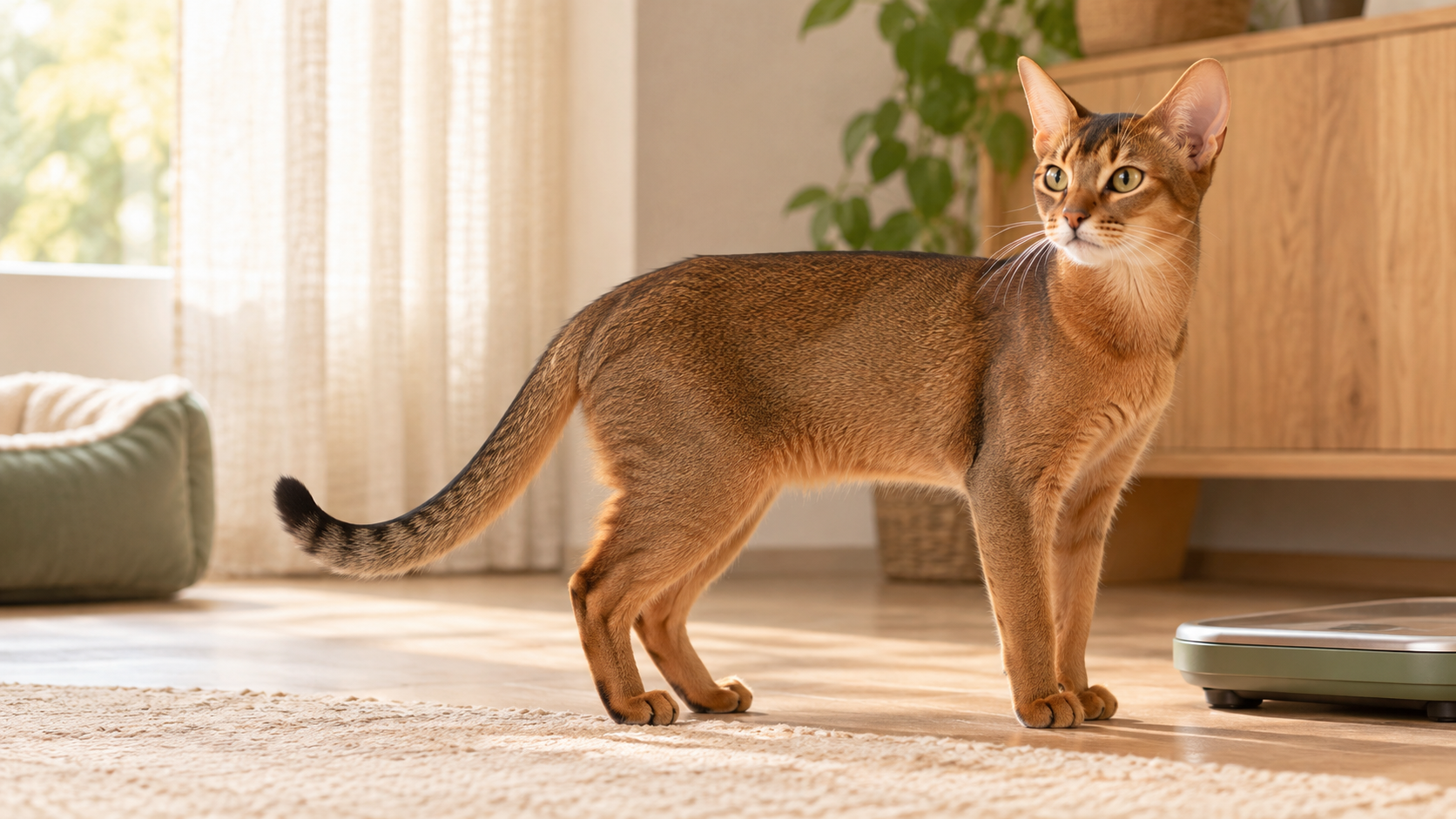
The Abyssinian is one of the most active cat breeds there is. Nicknamed the "clown of the cat world," an Aby rarely sits still, spending its day climbing, leaping, exploring, and following its people from room to room. That constant motion, combined with a naturally lean and fine-boned frame, is why healthy Abyssinians sit at the lighter end of the medium range and rarely become overweight.
Their body is long, slim, and athletic, sometimes called a "modified wedge" build, set on slender legs with small oval paws. This gives them an upright, elegant stance that can make them look taller and larger than the scale suggests. A fit Abyssinian should feel firm and muscular under a sleek, close-lying coat, not soft or padded. If your Aby feels light and slender, that is almost always the breed showing through rather than a problem.
Male Abyssinian
Slightly larger and more muscular, with a broader head and heavier bone. Males sit at the top of the breed range.
Adult: 8–12 lbs (3.6–5.4 kg)
Female Abyssinian
Finer-boned and daintier, with the same lean, athletic outline. Females typically weigh a couple of pounds less than males.
Adult: 6–9 lbs (2.7–4.1 kg)
Because Abyssinians are so active, their calorie needs can be higher than a sedentary cat of the same weight. For an amount tailored to your individual cat, run the numbers through our Cat Weight Calculator. These figures are general guidance: your vet can set the right target for your specific cat's frame and health.
Abyssinian vs Other Cat Breeds: Weight Comparison
Abyssinians sit at the small to medium end of the size scale, and their weight can look low next to stockier breeds simply because their body is long, lean, and lightly built. Seeing where they fall against other popular breeds helps put a healthy Abyssinian weight in context.
| Breed | Adult Male | Adult Female | Build |
|---|---|---|---|
| Abyssinian | 8–12 lbs | 6–9 lbs | Small–medium, lean, athletic |
| Siamese | 8–12 lbs | 6–10 lbs | Long, lean, athletic |
| Domestic Shorthair | 10–12 lbs | 8–10 lbs | Medium, variable |
| Ragdoll | 15–20 lbs | 10–15 lbs | Large, muscular |
| Maine Coon | 15–25 lbs | 10–15 lbs | Very large, heavy-boned |
An 8-pound Abyssinian and an 8-pound Ragdoll are in very different places on the healthy scale: for the Abyssinian that is a solid adult weight, while for the Ragdoll it would be underweight. This is why breed-specific charts matter more than a single ideal number for all cats. Explore more breeds in our Cat Weight Guides.
Weight-Related Health Notes for Abyssinian Cats
Because the Abyssinian is such a lean, active breed, weight is a useful early-warning signal. A cat that is normally in constant motion becoming quiet, or losing weight without a diet change, is worth a vet visit rather than a wait-and-see approach.
- Unexplained weight loss: Because Abyssinians carry so little spare weight, any steady drop is easy to notice and should be checked. It can be an early sign of dental disease, kidney issues, or other conditions.
- Reduced appetite or activity: An Aby that suddenly slows down or eats less has changed from its normal baseline, which is a meaningful signal in such an energetic breed.
- Indoor weight gain: A sedentary, overfed indoor Abyssinian can still put on weight, which raises the risk of diabetes and joint strain. Plenty of vertical space, play, and measured meals keep them lean.
- Meeting their energy needs: Very active Abyssinians may need to eat toward the higher end of the calorie range to hold their weight, so match portions to their activity rather than underfeeding a busy cat.
Weigh your cat on the same scale every few weeks and track the trend rather than a single reading. Tracking your Abyssinian's weight against the chart above turns a vague worry into concrete data you can share with your vet. This guide is general guidance and not a substitute for veterinary advice: your vet can confirm the right target weight for your individual cat.
Frequently Asked Questions About Abyssinian Cat Weight
Common questions about Abyssinian cat growth and healthy weight
How much should an Abyssinian cat weigh?
Adult male Abyssinian cats typically weigh 8–12 lbs (3.6–5.4 kg) and females weigh 6–9 lbs (2.7–4.1 kg). Abyssinians are a small to medium, lean and fine-boned breed, so they should look slender and athletic with firm muscle, not stocky. Judge a healthy weight by body condition rather than the scale alone, and confirm with your vet.
How big do Abyssinian cats get?
Abyssinians are a small to medium breed. Adults usually stand about 8–10 inches tall at the shoulder with a long, slim, athletic body. Males reach roughly 8–12 lbs and females 6–9 lbs. They look larger than they weigh because of their long legs and lean, upright posture, but they are genuinely a lightweight breed compared with cats like the Maine Coon or Ragdoll.
Are Abyssinian cats small?
Yes, on the small to medium end. A typical Abyssinian weighs less than an average domestic shorthair and far less than large breeds. Their fine bones and lean muscle mean a healthy Abyssinian can feel light and slender, which is normal for the breed. What looks thin on an Abyssinian is often just the natural build, so do not overfeed to make them look bigger.
When do Abyssinian cats stop growing?
Most Abyssinian cats reach their full adult size around 12 months, then finish filling out in muscle and frame by roughly 18 months (about 1.5 years). Males may add a little more weight toward 2 years. They mature at a fairly typical pace for a medium breed, faster than giant breeds like the Maine Coon that can grow until 3–4 years.
Do Abyssinian cats get overweight easily?
Abyssinians are one of the least likely breeds to become overweight. They are famously energetic, curious, and almost always in motion, so they burn a lot of calories through play and climbing. That said, an indoor Abyssinian that is overfed or under-exercised can still gain weight, so monitor body condition and adjust portions if the lean waistline starts to disappear.
Check Your Cat's Weight & Health
Use our free calculators for personalized recommendations.
Free cat printables
Keep these cat care guides handy
A rotating selection of practical cat guides chosen from our free printable library.Kitten Calorie Guide
Calorie targets by kitten age and weight.
Cat Feeding Guide
Portions by weight, age, and life stage.
Cat Pregnancy Timeline
A week-by-week kittening calendar and checklist.