
Last updated: October 3, 2026
Best Cat Food for Weight Loss
How to choose the best food for an overweight cat and feed it safely. Weight loss in cats is more about the right calories and portions than any single brand, so this guide covers what makes a good weight-loss cat food, how to feed for gradual loss, and how the main food categories compare. It is general guidance, not medical advice: always consult your vet before starting a weight-loss diet, and never crash-diet a cat (risk of hepatic lipidosis).
What Makes a Good Weight-Loss Cat Food
Diet cat food is not just regular food with less in the bowl. A food built for weight loss lets your cat eat a satisfying meal while taking in fewer calories and still getting the protein and nutrients it needs. When you compare labels, these are the qualities that matter most.
- High protein to preserve muscle: Cats are obligate carnivores. A weight-loss diet should stay high in protein so your cat burns fat rather than muscle while losing weight. Losing lean muscle makes a cat weaker and slows metabolism.
- Controlled, reduced calories: The core of any diet food is a lower calorie density, so a normal-looking portion carries fewer calories. This is what actually drives weight loss.
- Often lower in fat: Fat is the most calorie-dense nutrient, so many weight-management foods trim fat to bring calories down while keeping protein up.
- Higher moisture (wet food): Wet or canned food is mostly water, so a filling portion has fewer calories and adds hydration. Higher moisture also supports satiety, helping a hungry cat feel fuller.
- Sometimes higher fiber: Some diets add fiber to bulk up meals and improve fullness between feedings, which can help cats that beg for food.
No single formula is right for every cat. The best choice balances these qualities with what your cat will reliably eat, since a diet food your cat refuses will not help. Plan the numbers with our Cat Nutrition Calculator, and confirm the target with your vet.
How to Feed for Weight Loss
Choosing the food is only half the job. How you feed it decides whether your cat loses weight safely. The goal is a modest, steady calorie deficit that melts fat slowly, never a crash diet.
- Set a target weight and a modest deficit: Decide on a realistic goal weight with your vet, then feed slightly below the calories needed to maintain the current weight. A gentle deficit is safer and more sustainable than a steep cut.
- Feed to the target weight, not the current weight: Calculate daily calories for the weight you want your cat to reach, not the weight it is now. This naturally creates the right deficit as your cat slims down.
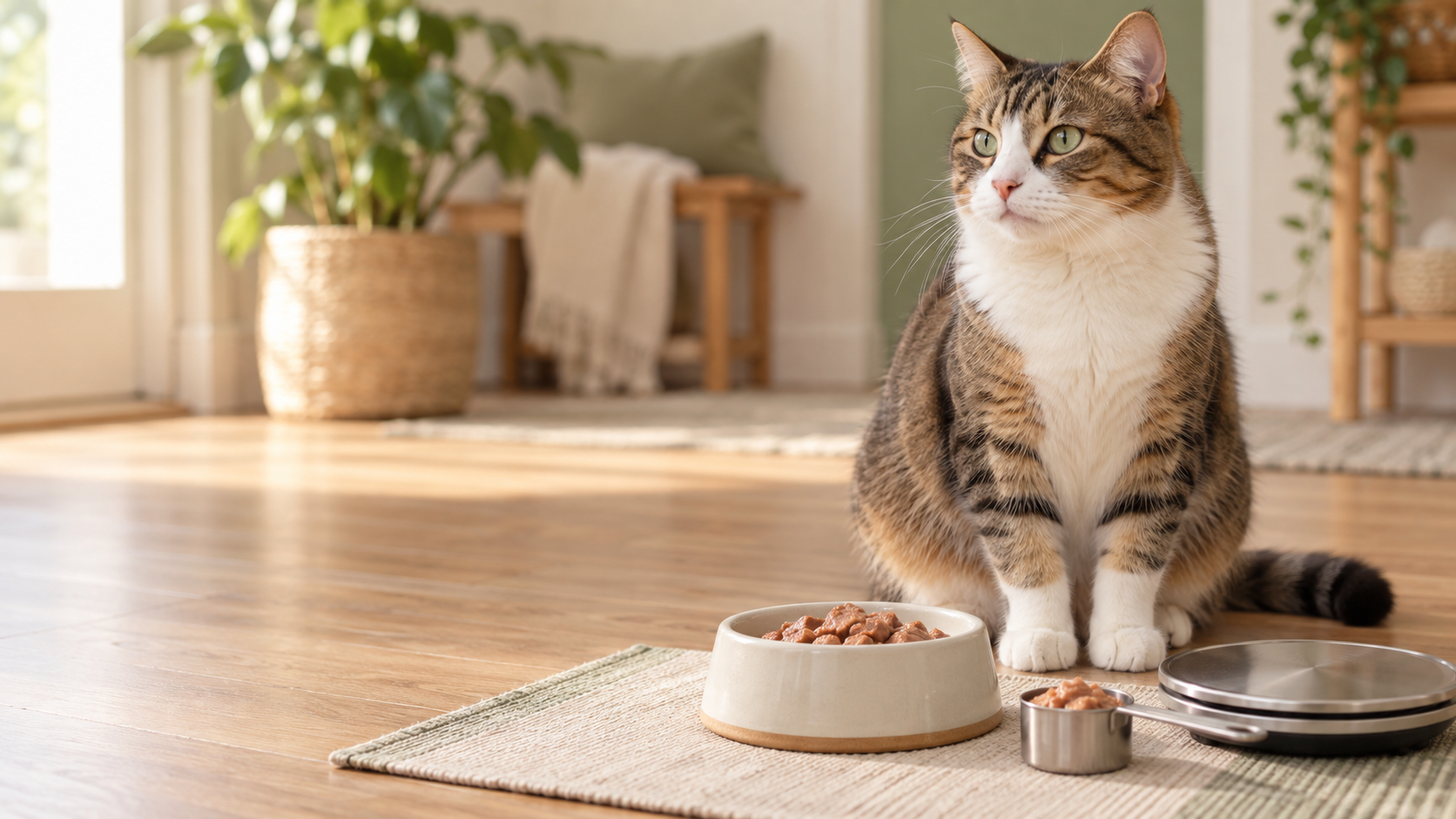
- Measure every portion: Use a kitchen scale or a proper measuring cup for every meal, and split the daily amount into two or more feedings. Eyeballing scoops is the most common reason diets stall.
- Aim for slow loss: Target roughly 0.5 to 2 percent of body weight per week. Weigh your cat every couple of weeks and adjust portions gradually based on the trend.
- Never crash-diet a cat: Cutting calories too hard, or a cat suddenly refusing to eat, can trigger hepatic lipidosis (fatty liver disease), which is serious and can be fatal. If your cat stops eating for more than a day, contact your vet right away.
Important: Always consult your vet before starting a weight-loss diet, and never crash-diet a cat (risk of hepatic lipidosis). Rapid weight loss and skipped meals are dangerous for cats. This guide is general information, not veterinary advice.
To turn the target into daily numbers, use our Cat Weight Loss Calculator and our Cat Feeding Calculator to plan measured meals.
Weight-Loss Cat Food Categories Compared
The main types of weight-management options and where each one fits. These are categories, not specific products.
| Food Category | Calories | Protein | Best For | Notes |
|---|---|---|---|---|
| Veterinary prescription (metabolic / weight management) | Lowest, tightly controlled | High, muscle-sparing | Cats with a lot to lose, or health conditions | Prescribed and monitored by your vet |
| Over-the-counter weight management | Reduced vs standard adult food | Moderate to high | Mildly overweight cats, general maintenance | Widely available, no prescription needed |
| High-protein wet / canned food | Low per can (high moisture) | High, promotes satiety | Cats that overeat dry food or need hydration | Watch total daily cans, measure portions |
Veterinary prescription diets
Metabolic and weight-management diets from your vet are the most tightly controlled option. They keep protein high while cutting calories and are prescribed and monitored, which suits cats with a lot to lose or with health conditions. They cost more and require a vet.
Over-the-counter weight management
Store-bought weight-management or "healthy weight" foods have fewer calories than standard adult food and need no prescription. They work well for mildly overweight cats when fed in measured portions, though calorie control is less strict than a prescription diet.
High-protein wet foods
High-protein canned or wet foods are naturally lower in calories per portion thanks to their moisture, and they promote fullness and hydration. They help cats that overeat dry food, but you still need to measure total daily cans to keep calories in check.
Whichever category you pick, the food is only a tool. The calorie total, the measured portions, and a slow pace are what actually take the weight off. Your vet can help you choose the right category and transition foods gradually.
Frequently Asked Questions About Cat Weight-Loss Food
Common questions about choosing and feeding a weight-loss diet for cats
What is the best food to help my cat lose weight?
The best weight-loss cat food is one that keeps protein high to preserve muscle while controlling calories, and that your cat will actually eat consistently. For many cats a veterinary weight-management or metabolic diet is the most reliable choice because portions and calories are formulated and monitored, but a good over-the-counter weight-management food or a measured high-protein wet food can also work. There is no single best product for every cat, so match the food to how much your cat needs to lose, its health, and its preferences, and confirm the plan with your vet.
Wet or dry food for cat weight loss?
Wet food is often easier for weight loss because it is mostly water, so a satisfying portion carries fewer calories and adds hydration, which many cats need. Dry food is more calorie-dense and easy to overfeed, especially when left out for free-feeding. That said, a good weight-management dry food fed in measured meals can still work, and some cats do best on a mix. Whichever you choose, the calorie total and portion control matter more than the form.
How fast should a cat lose weight?
Slowly. Aim for roughly 0.5 to 2 percent of body weight per week. Faster loss is dangerous for cats: rapid calorie restriction can trigger hepatic lipidosis (fatty liver disease), a serious and potentially fatal condition. Never crash-diet a cat or withhold food to speed things up. If your cat stops eating for more than a day on a new diet, contact your vet.
How do I know how much to feed for weight loss?
Feed to your cat's target weight, not its current weight, with a modest calorie deficit rather than a drastic cut. Calculate the calories needed to maintain the goal weight, measure every portion with a scale or proper measuring cup, and split it into meals. Recheck weight every couple of weeks and adjust slowly. Your vet can set the target and the daily calorie amount for your specific cat, and a calorie calculator can help you plan the portions.
Can I just feed my cat less of its normal food?
Cutting a normal adult food too far can leave your cat short on protein and nutrients while still hungry, which makes the diet hard to sustain. Purpose-made weight-management foods lower calories while keeping protein and nutrients high, so your cat feels fuller on fewer calories. If you do reduce a regular food, do it modestly and gradually, keep protein high, and talk to your vet before starting a weight-loss diet.
Plan Your Cat's Weight Loss
Use our free calculators to set a target and portion meals correctly.
Not sure your cat needs to lose weight? Start with Is My Cat Overweight?
Free cat printables
Keep these cat care guides handy
A rotating selection of practical cat guides chosen from our free printable library.Kitten Growth Chart
Week-by-week weight and development milestones.
Cat Quality of Life Checklist
Track the HHHHHMM quality-of-life measures.
Cat Pregnancy Timeline
A week-by-week kittening calendar and checklist.