
Last updated: October 3, 2026
British Shorthair Cat Weight Chart by Age
Ideal weight ranges for male and female British Shorthairs from birth to adulthood. This is a stocky, dense, slow-maturing breed that keeps growing until around 3 years, so use this chart to track healthy growth and tell a solid, cobby build apart from excess weight.
British Shorthair Weight by Age
Typical weight ranges for male and female British Shorthairs at each life stage
| Age | Male Weight | Female Weight | Notes |
|---|---|---|---|
| Birth | 3–4 oz (85–115g) | 3–4 oz (85–115g) | Newborn, eyes closed |
| 1 month | 10–14 oz (285–400g) | 9–12 oz (255–340g) | Weaning begins |
| 2 months | 2.0–3.0 lbs (0.9–1.4 kg) | 1.8–2.5 lbs (0.8–1.1 kg) | Ready for adoption |
| 3 months | 3.0–4.5 lbs (1.4–2.0 kg) | 2.5–3.5 lbs (1.1–1.6 kg) | Rapid growth phase |
| 4 months | 4.5–6.0 lbs (2.0–2.7 kg) | 3.5–5.0 lbs (1.6–2.3 kg) | Cobby build starting to show |
| 6 months | 6.0–8.5 lbs (2.7–3.9 kg) | 5.0–7.0 lbs (2.3–3.2 kg) | Adolescent, filling out slowly |
| 9 months | 8.0–11.0 lbs (3.6–5.0 kg) | 6.0–9.0 lbs (2.7–4.1 kg) | Broadening chest and cheeks |
| 12 months | 9.5–13.0 lbs (4.3–5.9 kg) | 7.0–10.5 lbs (3.2–4.8 kg) | Still well short of full size |
| 18 months | 11.0–15.0 lbs (5.0–6.8 kg) | 7.5–12.0 lbs (3.4–5.4 kg) | Muscle and bone still developing |
| 2 years | 11.5–16.5 lbs (5.2–7.5 kg) | 8.0–13.0 lbs (3.6–5.9 kg) | Approaching adult mass |
| 3 years (adult) | 12.0–18.0 lbs (5.4–8.2 kg) | 8.0–14.0 lbs (3.6–6.4 kg) | Fully mature, maintenance weight |
Want personalized calorie recommendations for your British Shorthair?
Every cat is different. Get exact calorie needs based on your British Shorthair's weight, activity level, and life stage.
Try the Cat Calorie Calculator →British Shorthair Body Condition Guide
The British Shorthair is naturally cobby: a broad chest, short sturdy legs, rounded head, and heavy bone give it a dense, solid feel that reads as "chunky" even at a healthy weight. Because that plush coat and thick-set frame hide extra pounds so well, body condition (what you can feel under the fur) matters far more than a glance in the mirror.
Underweight
- Ribs, spine, hip bones easily seen
- No fat covering over ribs
- Obvious waist tuck
- Muscle wasting over the back
- Dull coat, low energy
Ideal Weight
- Ribs felt with light pressure
- Thin fat covering over ribs
- Slight waist from above
- Firm, dense, well-muscled body
- Solid and rounded, not soft
Overweight
- Ribs hard to feel under fat
- No waist, body looks oval
- Belly hangs and sways when walking
- Fat deposits near base of tail
- Soft, doughy feel rather than firm
The key test for this breed is the rib check. Run your hand along the side of the chest: on a healthy British Shorthair you should feel each rib under a thin layer of fat, like the back of your hand. If the ribs are buried and everything feels soft and doughy, your cat is carrying real excess weight, not just breed-standard bulk. A dense, firm body is normal; a soft, swaying one is not.
Check whether your cat sits in a healthy range with our Cat BMI Calculator, or compare against other breeds in our average cat weight by breed guide.
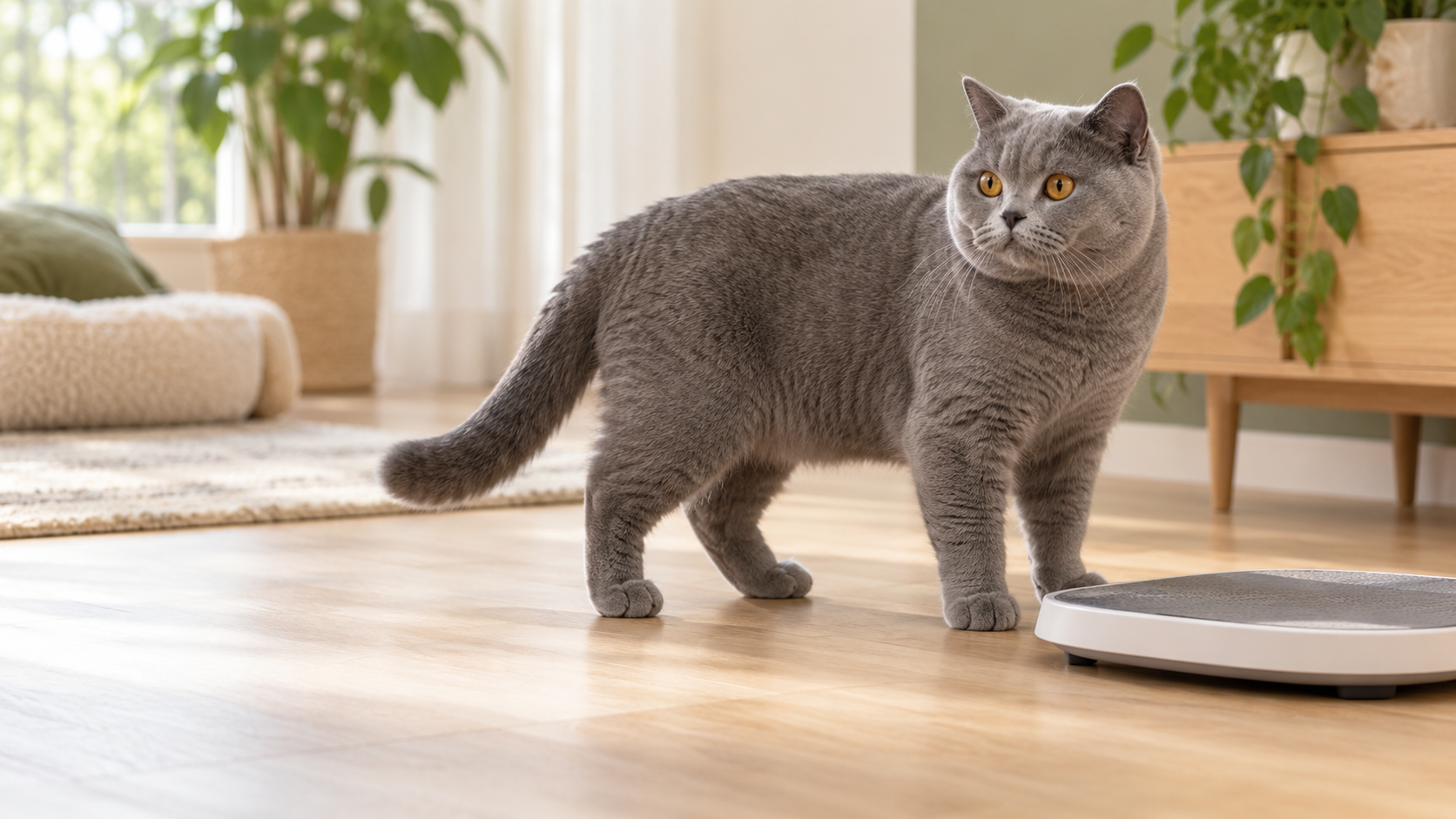
Dense Build vs Fat: Reading a Chunky Breed
British Shorthairs are one of the easiest breeds to misjudge. Their cobby shape, heavy bone, and thick coat are supposed to look substantial, so owners often either panic that a lean cat is too skinny or fail to notice a genuinely overweight one. A few factors explain why healthy adults land across such a wide range, and why your cat's ideal weight may differ from another's.
- Naturally heavy bone: The breed carries dense, thick bone and broad joints. That structural weight is real and healthy, and it is why a British Shorthair can outweigh a longer cat that looks bigger.
- Slow maturation: Because they fill out until around 3 years, a 15-month-old is still adding frame and muscle. Do not compare a young cat to full adult anchors and assume it must gain weight fast.
- Sex: Males are markedly heavier than females, often by 3–4 lbs, with broader heads and heavier bone. This is the most predictable size difference in the breed.
- Low activity and big appetite: British Shorthairs are calm, undemanding cats that would rather lounge than sprint. Paired with a hearty appetite, that makes them prone to obesity if free-fed, so measured meals matter more than for busier breeds.
- Plush coat: The dense double coat visually adds bulk and hides body outline, so the hands-on rib and waist check is more reliable than the eye for this breed.
For an amount tailored to your individual cat, run the numbers through our Cat Weight Calculator. These figures are general guidance: your vet can set the right target for your specific cat's frame and health.
British Shorthair vs Other Cat Breeds: Weight Comparison
British Shorthairs sit in the medium to large range, and their weight can look high next to leaner cats simply because their body is dense and heavy-boned rather than long. Seeing where they fall against other popular breeds helps put a healthy British Shorthair weight in context.
| Breed | Adult Male | Adult Female | Build |
|---|---|---|---|
| British Shorthair | 12–18 lbs | 8–14 lbs | Cobby, dense, heavy-boned |
| Domestic Shorthair | 11–15 lbs | 8–12 lbs | Medium, variable |
| Siamese | 8–12 lbs | 6–10 lbs | Long, lean, athletic |
| Ragdoll | 15–20 lbs | 10–15 lbs | Large, muscular |
| Maine Coon | 15–25 lbs | 10–15 lbs | Very large, heavy-boned |
A 14-pound British Shorthair and a 14-pound Siamese are in very different places on the healthy scale: for a large male British Shorthair that is a solid adult weight, while for a lean Siamese it would be clearly overweight. This is why breed-specific charts matter more than a single ideal number for all cats. Explore more breeds in our Cat Weight Guides.
Weight-Related Health Concerns in British Shorthairs
Because the British Shorthair is a heavy, low-energy breed, weight is a useful early-warning signal, and obesity is the most common concern. Sudden changes in either direction deserve a vet visit rather than a wait-and-see approach.
- Obesity: The breed's calm nature, hearty appetite, and bulk-hiding coat make excess weight easy to miss, which raises the risk of diabetes, arthritis, and heart strain. Measured meals and regular weighing are the best defense.
- Heart disease: British Shorthairs have a known predisposition to hypertrophic cardiomyopathy (HCM). Carrying extra weight adds strain to an already at-risk heart, so keeping a lean, healthy weight matters more in this breed than most.
- Joint stress: A heavy, cobby frame puts more load on the joints, and extra pounds compound it. Keeping your cat lean protects mobility as they age.
- Unexplained weight loss: Any steady drop, especially in an older cat, warrants blood work, as weight loss despite a normal appetite can be an early sign of hyperthyroidism, kidney disease, or dental problems.
Tracking your British Shorthair's weight against the chart above turns a vague worry into concrete data you can share with your vet. When in doubt, a body condition check plus a recorded weight trend is the fastest way to know whether your cat is truly healthy or drifting off course. This guide is general information, not veterinary advice, so always confirm your cat's ideal weight and feeding plan with your vet.
Frequently Asked Questions About British Shorthair Weight
Common questions about British Shorthair growth and healthy weight
How much should a British Shorthair weigh?
Adult male British Shorthairs typically weigh 12–18 lbs (5.4–8.2 kg) and females weigh 8–14 lbs (3.6–6.4 kg). This is a naturally stocky, heavy-boned breed, so a healthy British Shorthair is denser and heavier than a lean cat of the same length. Judge weight by body condition (you should still feel the ribs) rather than the number alone, and confirm the right target with your vet.
When do British Shorthairs stop growing?
British Shorthairs are slow-maturing cats that do not reach their full size until around 3 years of age. They hit roughly adult height and length near 12 months, then keep broadening in muscle, bone, and the famous chunky cheeks and chest well into their third year. Because of this long maturation, do not be alarmed if your cat keeps gaining frame and mass past their first birthday.
Are British Shorthairs big cats?
Yes, British Shorthairs are a medium to large breed and one of the heavier common cats. Their cobby, thick-set body, dense bone, and plush coat make them look and feel bigger than lean breeds of similar length. Males in particular can rival some larger breeds by weight, though they are shorter and rounder than a long-bodied Maine Coon.
Why does my British Shorthair look chunky but is not fat?
British Shorthairs are built to be cobby: broad chest, short thick legs, rounded head, and heavy bone. That solid, rounded shape is the breed standard, not extra fat. The difference is what you feel: on a healthy British Shorthair you can still feel the ribs with light pressure and see a slight waist from above. If the ribs are buried and the belly hangs and sways, that is genuine excess weight, not just breed type.
Are British Shorthairs prone to obesity?
Yes. British Shorthairs are calm, laid-back cats that are less active than many breeds, and their naturally heavy build makes early weight gain easy to miss. Combined with a hearty appetite, this makes the breed prone to obesity if free-fed. Use measured meals, include wet food, and weigh your cat regularly so extra pounds do not creep on under the dense coat and cobby frame.
Check Your Cat's Weight & Health
Use our free calculators for personalized recommendations.
Free cat printables
Keep these cat care guides handy
A rotating selection of practical cat guides chosen from our free printable library.Cat Pregnancy Timeline
A week-by-week kittening calendar and checklist.
Cat Feeding Guide
Portions by weight, age, and life stage.
Kitten Growth Chart
Week-by-week weight and development milestones.