
Last updated: October 3, 2026
Kitten Food: How to Choose the Best
Picking the right kitten food comes down to a few things you can read straight off the label, plus a simple decision between wet, dry, or a mix of both. This guide covers what to look for, how the food types compare, a quick overview of how much and how often to feed, and when to move up to adult food. For personalized amounts, use the calculators linked below, and for the full age-by-age schedule see our kitten feeding guide. If you plan to feed mostly wet food, see our wet kitten food guide. This is general guidance, not veterinary advice.
What to Look For in Kitten Food
Kittens are not just small cats. They are growing fast, building muscle, bone, and brain, and their food has to be built for that. When you compare products, most of the important information is on the label. Here is what actually matters.
- An AAFCO growth statement: Look for a line saying the food is complete and balanced for growth, or for all life stages, according to AAFCO. This is the single most important thing on the package. A food labeled for adult maintenance only is not designed for kittens.
- Higher protein and calories: Kitten formulas are richer than adult food because growing kittens need more protein and more energy per pound. A dedicated kitten or all-life-stages formula covers this for you.
- A named animal protein first: The first ingredient should be a specific animal protein such as chicken, turkey, salmon, or a named meat meal, rather than a vague term or a filler grain. Cats are obligate carnivores, so animal protein does the heavy lifting.
- Added DHA: DHA is an omega-3 fatty acid that supports brain and eye development. Many quality kitten formulas add it, and it is a good marker that the food was designed with growth in mind.
- The right texture for the age: Very young kittens transitioning off milk do best with soft food or softened kibble. As they grow, they can handle a wider range of textures.
In practice this points you to a category rather than a single product: a kitten-formula wet food, a high-protein kitten kibble, or an all-life-stages food that meets the growth standard. Within that category, pick something in your budget that your kitten eats readily and does well on. If your kitten has a health condition or is not thriving, ask your vet for a specific recommendation.
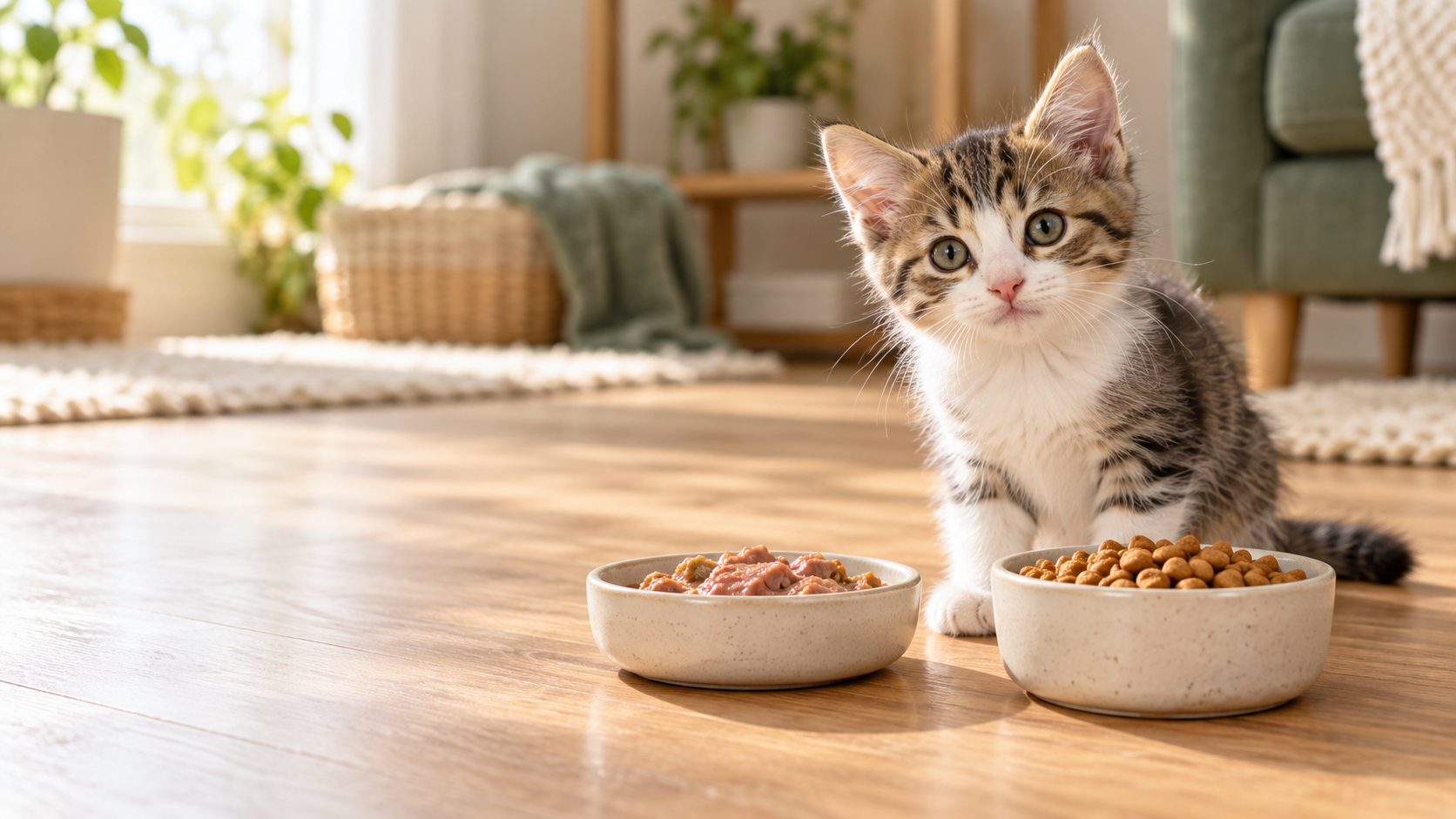
Wet vs Dry Food for Kittens
Both wet and dry kitten foods can be complete and balanced, so the choice is mostly about texture, hydration, and convenience. Neither is automatically better, and plenty of owners offer both.
Wet Kitten Food
- High moisture aids hydration and urinary health
- Soft and easy for small mouths to eat
- Often very palatable, helpful for fussy or tiny kittens
- Portioned by can or pouch, easy to serve at meals
- Should not be left out for long once opened
Dry Kitten Food
- Convenient, easy to store and measure
- Can be left out longer for grazing
- Calorie-dense, so measure portions to avoid overfeeding
- Can be softened with warm water for young kittens
- Provides less moisture, so keep fresh water available
A common approach is to feed wet food at set meals and offer a small measured amount of kitten kibble alongside, which gives you the hydration and palatability of wet food with the convenience of dry. Whatever you choose, make sure each food is formulated for growth, and always keep fresh water available.
How Much and How Often to Feed a Kitten
Kittens need roughly two to three times the calories per pound of an adult cat, because they are growing so quickly. The exact amount depends on your kitten's age and weight and on whether you feed wet, dry, or both, so the package feeding guide for your kitten's weight is the right starting point. From there, adjust so your kitten stays lean and well-proportioned rather than following the chart to the gram.
Because their stomachs are small, kittens do best with several small meals a day: around three to four meals up to about 6 months, then two to three meals from roughly 6 to 12 months. Keep fresh water available at all times.
Get a personalized amount
Enter your kitten's weight and age for a tailored portion and calorie estimate.
Want the full schedule?
Our feeding guide breaks meals and portions down by age from newborn through the first year.
Kitten Feeding Guide →This is only a quick overview so you can choose food with confidence. For the complete age-by-age schedule, portion sizes, and transition tips, head to the kitten feeding guide. You can also see typical weights at the 6-month mark in our 6-month-old cat guide.
When to Switch to Adult Cat Food
Most kittens are ready to move to adult cat food around 12 months of age. By then growth has slowed and their calorie needs drop, so a calorie-dense kitten formula can start to add unwanted weight. Large, slow-maturing cats are the exception: they keep growing for longer and often do better staying on kitten or all-life-stages food until 18 months to 2 years.
Make the change gradually over about a week. Mix a small amount of the new adult food into the kitten food, then increase the adult portion and decrease the kitten portion each day until the switch is complete. A slow transition helps avoid stomach upset and gives your cat time to adjust to the new taste and texture. If you are unsure about the right timing for your individual cat, especially a large breed or one with a health condition, check with your vet. When you are ready to compare adult options, see our best cat food guide.
Frequently Asked Questions About Kitten Food
Common questions about choosing and feeding kitten food
What is the best kitten food?
The best kitten food is one labeled complete and balanced for growth (or for all life stages) by AAFCO, made with a named animal protein as the first ingredient, and higher in protein and calories than adult food. Look for added DHA to support brain and eye development. Beyond that, the best choice is the quality food your kitten eats readily and does well on, so there is no single winning brand. Wet, dry, or a mix of both can all work. If your kitten has a medical condition, is very small, or is not gaining weight, ask your vet for a specific recommendation.
How much should I feed my kitten?
Kittens need roughly two to three times the calories per pound that an adult cat needs, because they are growing fast, but the exact amount depends on age, current weight, and whether you feed wet, dry, or both. Start with the feeding guide on the package for your kitten's weight and age, split into several small meals a day, then adjust so your kitten stays lean and well-proportioned. For a personalized number, use our kitten food calculator and kitten calorie calculator, and see our kitten feeding guide for a full age-by-age schedule.
When can kittens eat adult food?
Most kittens can switch to adult cat food around 12 months of age, when growth slows and their calorie needs drop. Large slow-maturing cats may benefit from staying on kitten food until 18 months to 2 years, since they keep growing longer. Switch gradually over about a week by mixing increasing amounts of the new adult food into the old kitten food to avoid stomach upset. When in doubt about timing for your individual cat, check with your vet.
Is wet or dry food better for kittens?
Both can be complete and balanced for kittens, so neither is automatically better. Wet food adds moisture that supports hydration and urinary health and is soft and easy for small mouths to eat. Dry food is convenient, easy to measure, and can be left out longer for grazing. Many owners feed a mix, using wet food for meals and a little dry for topping up, which gives the benefits of both. What matters most is that the food is formulated for growth.
How often should kittens be fed?
Young kittens have small stomachs and high energy needs, so they do best with frequent small meals. Under 6 months, aim for around three to four meals a day. From about 6 to 12 months you can usually move to two or three meals a day. Keep fresh water available at all times. Our kitten feeding guide breaks the schedule down by age if you want the full timeline.
What makes a high quality kitten food?
A high quality kitten food starts with an AAFCO complete and balanced statement for growth or all life stages, so you know it meets a kitten's full nutritional needs. From there, look for a named animal protein such as chicken or salmon as the first ingredient, a higher protein and calorie level than adult food to fuel fast growth, and added DHA for brain and eye development. Be wary of foods that lead with vague meat by-products or lots of fillers. Quality also means the food agrees with your kitten, who should eat it readily, keep firm stools, and grow steadily. Wet, dry, or a mix can all be high quality as long as the label and ingredients check out.
Feed Your Kitten Right
Use our free calculators for personalized portions and calorie needs.
Free cat printables
Keep these cat care guides handy
A rotating selection of practical cat guides chosen from our free printable library.Kitten Growth Chart
Week-by-week weight and development milestones.
Kitten Calorie Guide
Calorie targets by kitten age and weight.
Cat Body Condition Chart
A printable body condition reference for cats.