
Last updated: October 3, 2026
Best Cat Food: How to Choose the Right Food
There is no single best cat food for every cat, but there is a reliable way to pick the right one. This 2026 buying guide walks through what to look for on the label, how wet and dry foods compare, and what matters most for indoor cats, sensitive stomachs, kittens, and seniors. Use it as general guidance, and confirm any prescription or therapeutic diet with your vet.
How to Choose the Best Cat Food
Cats are obligate carnivores, which means they are built to get most of their nutrition from animal protein. That single fact drives most of what makes a cat food good or mediocre. Work through the checklist below before you compare brands or prices.
- Look for the AAFCO statement: The label should say the food is "complete and balanced" for a specific life stage (growth, adult maintenance, or all life stages). This is the baseline that tells you the food provides the nutrients your cat needs, not just calories.
- Put protein first: A named animal protein, such as chicken, turkey, salmon, or beef, should be the first ingredient. Cats need meat-based protein and the amino acid taurine, which comes from animal tissue, so protein-first recipes suit them best.
- Check the named meat, not just "meat": Favor clearly named proteins over vague terms like "meat by-products" or "animal derivatives." A named source is easier to trust and easier to track if your cat develops a sensitivity.
- Match the life stage: A kitten formula is richer for growth, an adult maintenance formula is balanced for steady weight, and all-life-stages foods work across ages. Feeding the wrong stage long term can under or over supply key nutrients.
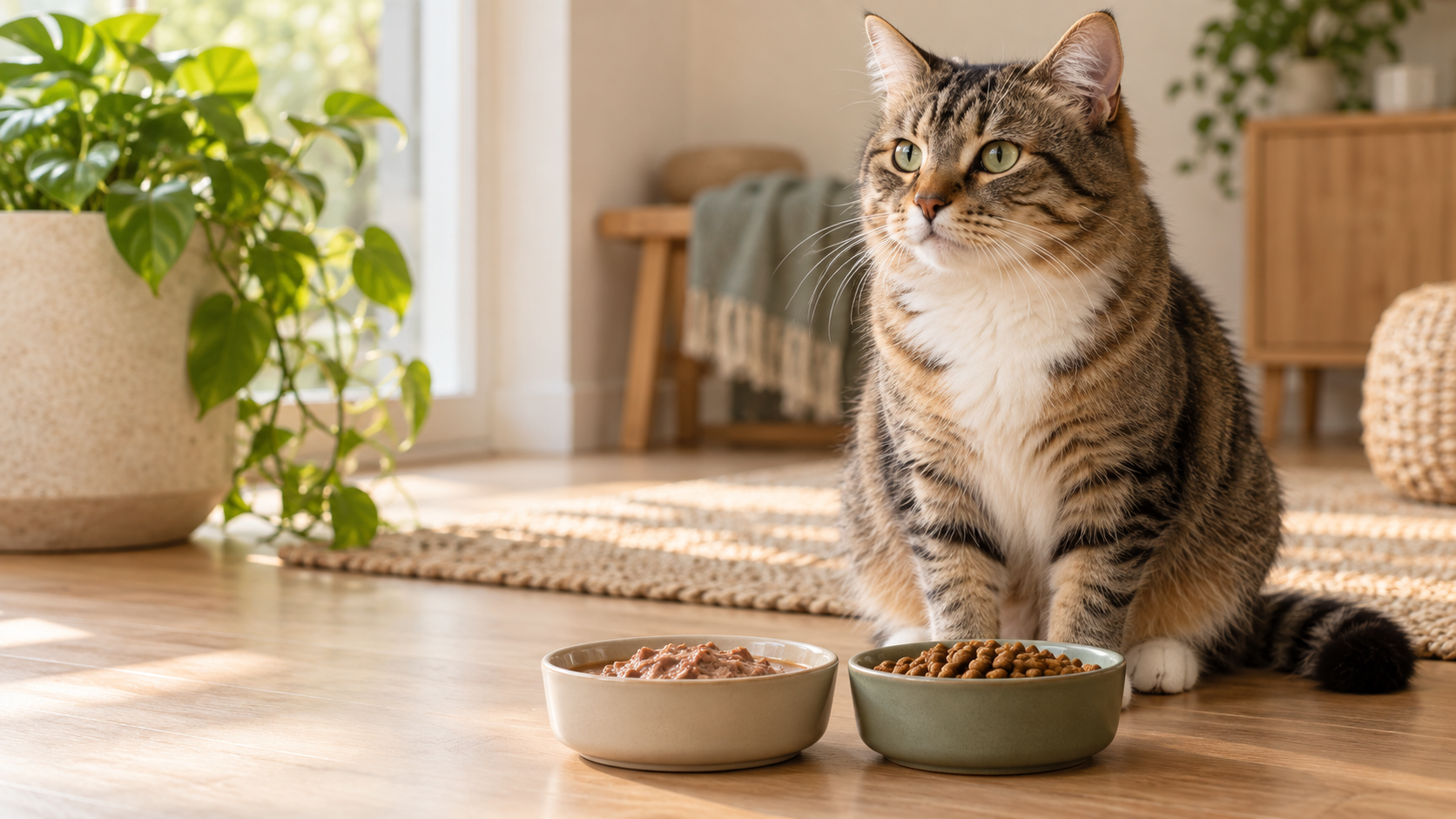
- Weigh wet vs dry: Wet food adds moisture and can help with hydration and weight control; dry food is convenient, shelf-stable, and easy to portion. Many cats do well on a mix of both.
- Favor these ingredients: Named meats, added taurine, omega fatty acids for skin and coat, and clear, recognizable components. Be cautious with foods built around unnamed by-products, excessive fillers, or long lists of artificial colors and additives.
Want to dig into a specific angle? See our guides on wet vs dry cat food and grain-free cat food, or read up on cat treats so extras do not crowd out a balanced diet.
What to Look For by Category
The best pick depends on your cat. Here is what to prioritize in each category. These are types of food, not specific products, so match them to your cat and your vet's advice.
| Category | What to Look For | Notes |
|---|---|---|
| Best overall | AAFCO complete and balanced for the life stage, a named meat as the first ingredient, and clearly stated feeding guidelines | A well-formulated all-life-stages or adult maintenance recipe that most healthy cats do well on |
| Best dry | Higher named-meat content, moderate carbohydrates, and a recipe your cat eats consistently without leaving it out all day | Convenient and shelf-stable; pair with a water fountain or some wet food to support hydration |
| Best wet | High moisture, a named meat first, minimal fillers, and a texture (pate, chunks in gravy) your cat prefers | Higher water content supports hydration and can help with satiety on a calorie budget |
| Best for indoor cats | Controlled calories, moderate fat, added fiber for hairball control, and a portion size matched to a lower activity level | Indoor cats burn fewer calories, so portioning matters as much as the label |
| Best for sensitive stomachs | A limited-ingredient or single novel-protein recipe, easily digestible ingredients, and no unnecessary additives | Introduce any new food gradually over 7 to 10 days; persistent issues are a vet conversation |
| Best kitten | AAFCO complete and balanced for growth or all life stages, higher protein and fat, and DHA to support development | Kittens need more energy per pound than adults while they grow |
| Best senior | Highly digestible protein, appropriate calories for a slower metabolism, and joint or kidney support only if your vet advises it | Senior needs vary widely; let bloodwork and your vet guide any therapeutic choice |
Not sure how much of any food to feed?
Get a portion tailored to your cat's weight, activity level, and life stage instead of guessing from the bag.
Try the Cat Feeding Calculator →Best Dry vs Best Wet: The Trade-Offs
Both formats can be complete and balanced, so the decision comes down to your cat's needs and your routine rather than one being nutritionally superior.
A good dry food
- Convenient, shelf-stable, easy to portion
- Named meat first, moderate carbohydrates
- Calorie-dense, so measure carefully
- Low moisture; pair with water or wet food
A good wet food
- High moisture supports hydration
- Helps satiety on a calorie budget
- Named meat first, minimal fillers
- Texture your cat actually enjoys
If weight is a concern, a higher-moisture, protein-first approach can help your cat feel full on fewer calories. See our guide to the best cat food for weight loss, and if you are considering a home-prepared diet, read homemade cat food first so it stays complete and balanced.
Choosing for Kittens, Adults, and Seniors
Life stage changes what "best" means. The AAFCO statement should match your cat's stage, and the emphasis shifts as your cat ages.
- Kittens need more energy, protein, and fat per pound to fuel growth, plus DHA for development. Choose a food labeled for growth or all life stages. Our kitten food guide goes deeper.
- Adults do best on an adult maintenance formula that holds a steady, lean weight. This is where portion control matters most, especially for indoor and neutered cats.
- Seniors often benefit from highly digestible protein and calories tuned to a slower metabolism. Any joint, kidney, or other therapeutic support should follow your vet's guidance and bloodwork, not a label claim.
When to Ask Your Vet
This guide covers general, over-the-counter nutrition. Talk to your vet before making a food decision if your cat has a diagnosed medical condition (kidney disease, diabetes, urinary issues, food allergies, or digestive disorders), is losing or gaining weight unexpectedly, or has been recommended a prescription or therapeutic diet.
Prescription and therapeutic diets are formulated for specific health problems and should only be fed under veterinary supervision. When in doubt, your vet can match the right food to your individual cat.
How to Choose the Best Wet Cat Food
Wet food suits many cats especially well. It is roughly 70 to 80 percent moisture, which supports hydration and urinary health, and its protein-first, lower-carbohydrate profile fits a cat's carnivore biology. The best wet cat food follows the same rules as any good food: an AAFCO complete and balanced statement for your cat's life stage, a named animal protein as the first ingredient, and added taurine.
- Check the AAFCO statement. Confirm it is complete and balanced for your cat's stage, not labeled as a treat, topper, or for supplemental feeding only.
- Lead with named meat. Chicken, turkey, salmon, or a named organ should top the ingredient list, not vague by-products or fillers.
- Look for taurine and simple recipes. Taurine is essential for cats, and clear, recognizable ingredients are easier to trust than long filler lists.
- Match texture and calories to your cat. Pate, chunks in gravy, and shreds all work, so pick what your cat eats readily and portion it to keep them lean.
Wet and dry are not an either-or choice. Many owners feed wet meals for the moisture and a measured amount of dry for convenience. To turn your choice into the right portion, use our cat feeding calculator, and sense-check your cat's weight with the cat BMI calculator.
Frequently Asked Questions About Choosing Cat Food
Common questions about picking the best cat food for your cat
What is the best cat food?
There is no single best cat food for every cat. The best food is one that is labeled AAFCO complete and balanced for your cat's life stage, lists a named meat (like chicken or salmon) as the first ingredient, and provides protein-first nutrition because cats are obligate carnivores. Beyond that, the right choice depends on your cat's age, weight, activity level, and any health conditions. A young indoor cat, a growing kitten, and a senior with kidney concerns all need different formulas, so match the food to the cat rather than chasing a universal winner.
Is wet or dry food better for cats?
Both wet and dry food can be complete and balanced, so neither is automatically better. Wet food is roughly 70 to 80 percent moisture, which supports hydration and can help cats feel full on fewer calories, making it useful for weight control and cats that do not drink much water. Dry food is convenient, shelf-stable, and easy to portion or leave out, but it is calorie-dense and low in moisture. Many owners feed a mix to get the benefits of both. Choose based on your cat's preferences, health, and your routine, and confirm any specific needs with your vet.
What should I look for in cat food?
Start with the AAFCO statement confirming the food is complete and balanced for the correct life stage (growth, adult maintenance, or all life stages). Then check that a named animal protein is the first ingredient, since cats are obligate carnivores that need meat-based protein. Favor recipes with clear, recognizable ingredients and taurine (an essential amino acid for cats), and be cautious with foods that rely heavily on vague fillers or unnamed by-products. Finally, match the calories and portion size to your cat's weight and activity level, and use the printed feeding guidelines as a starting point rather than a fixed rule.
How much of the food should I feed my cat?
Use the feeding guidelines printed on the package as a starting point, then adjust based on your cat's body condition and weight trend over a few weeks. Indoor and neutered cats often need less than the label suggests because they burn fewer calories. For a number tailored to your cat's weight, activity, and life stage, run it through a feeding or calorie calculator and monitor whether your cat is gaining, losing, or holding steady, then fine-tune from there.
Is grain-free cat food better?
Grain-free is not automatically better for most cats. Cats can digest small amounts of properly cooked grains, and grains are not a common allergen for them; when a cat reacts to food it is usually to an animal protein. Grain-free recipes also often replace grains with other carbohydrates like peas or potatoes, so the food is not necessarily lower in carbs. Grain-free can make sense for a specific diagnosed sensitivity, but for a healthy cat, focus first on a complete and balanced, protein-first recipe rather than the grain-free label alone.
What is the best wet cat food?
The best wet cat food is one that is AAFCO complete and balanced for your cat's life stage, lists a named animal protein such as chicken or salmon first, and includes taurine, rather than any single brand. Wet food's high moisture content, around 70 to 80 percent, supports hydration and urinary health, which is a real advantage for cats that do not drink much water. Favor simple recipes without vague by-products or heavy fillers, choose a texture your cat eats readily (pate, chunks in gravy, or shreds), and portion it to keep your cat lean. If your cat has a health condition, ask your vet for a specific wet-food recommendation.
Feed the Right Amount of the Right Food
Use our free calculators for personalized feeding and nutrition recommendations.
Free cat printables
Keep these cat care guides handy
A rotating selection of practical cat guides chosen from our free printable library.Kitten Calorie Guide
Calorie targets by kitten age and weight.
Kitten Growth Chart
Week-by-week weight and development milestones.
Cat Pregnancy Timeline
A week-by-week kittening calendar and checklist.