
Last updated: October 3, 2026
Persian Cat Weight Chart by Age
Ideal weight ranges for male and female Persian cats from birth to adulthood, in both pounds and kilograms. Persians are a medium-sized, cobby breed whose long coat hides the body underneath, so use this chart alongside hands-on rib checks to track healthy growth.
Persian Cat Weight by Age
Typical weight ranges for male and female Persian cats at each life stage
| Age | Male Weight | Female Weight | Notes |
|---|---|---|---|
| Birth | 3–5 oz (85–140g) | 3–4 oz (85–115g) | Newborn, eyes closed |
| 1 month | 9–13 oz (255–370g) | 8–12 oz (225–340g) | Weaning begins |
| 2 months | 1.6–2.6 lbs (0.7–1.2 kg) | 1.4–2.3 lbs (0.6–1.0 kg) | Ready for adoption |
| 3 months | 2.6–3.8 lbs (1.2–1.7 kg) | 2.3–3.3 lbs (1.0–1.5 kg) | Rapid growth phase |
| 4 months | 3.8–5.2 lbs (1.7–2.4 kg) | 3.2–4.5 lbs (1.5–2.0 kg) | Active, playful, coat filling in |
| 6 months | 5.0–7.0 lbs (2.3–3.2 kg) | 4.3–5.8 lbs (2.0–2.6 kg) | Adolescent, cobby frame forming |
| 9 months | 6.5–9.0 lbs (2.9–4.1 kg) | 5.3–7.5 lbs (2.4–3.4 kg) | Growth slowing |
| 12 months | 7.5–11.0 lbs (3.4–5.0 kg) | 6.0–9.0 lbs (2.7–4.1 kg) | Most of adult size reached |
| 18 months | 8.5–13.0 lbs (3.9–5.9 kg) | 6.5–10.0 lbs (2.9–4.5 kg) | Filling out in body and bone |
| 2+ years (adult) | 9.0–14.0 lbs (4.1–6.4 kg) | 7.0–11.0 lbs (3.2–5.0 kg) | Fully grown, maintenance weight |
Want personalized calorie recommendations for your Persian?
Every cat is different. Get exact calorie needs based on your Persian's weight, activity level, and life stage.
Try the Cat Calorie Calculator →Persian Cat Body Condition Guide
The Persian's long, dense double coat is the single biggest challenge in judging weight. A thick ruff can easily hide two or three pounds of gain, so a cat that looks well can be overweight, and a fluffy kitten can look chunkier than it is. For this breed, hands-on rib checks beat looking every time. Part the fur and feel the body underneath rather than trusting the silhouette.
Underweight
- Ribs, spine, hip bones easily felt with no fat
- Sharp, bony feel through the coat
- Severe waist tuck
- Muscle wasting on the back and legs
- Dull coat, low energy
Ideal Weight
- Ribs felt with light pressure under the coat
- Thin fat covering over ribs
- Gentle waist when hands run down the sides
- Slight abdominal tuck from the side
- Solid, cobby, well-balanced feel
Overweight
- Ribs hard to feel under fat, even parting the coat
- No waist when hands run down the sides
- Belly hangs or is rounded
- Fat deposits near base of tail
- Struggles to groom or reach the lower back
A quick home check for a Persian: with your cat standing, sink your fingers through the coat and run them along the ribcage. You should feel each rib under a thin layer of fat, like the back of your hand. Slide your hands down the flanks to feel for a gentle waist, and check the belly for a slight tuck. Because the coat masks all of this visually, doing it by feel every few weeks is the reliable way to catch weight creep early.
Run a quick check with our Cat BMI Calculator, or compare your Persian against other breeds in our average cat weight by breed guide.
Persian Cat Size & Build: Fluffy, Not Large
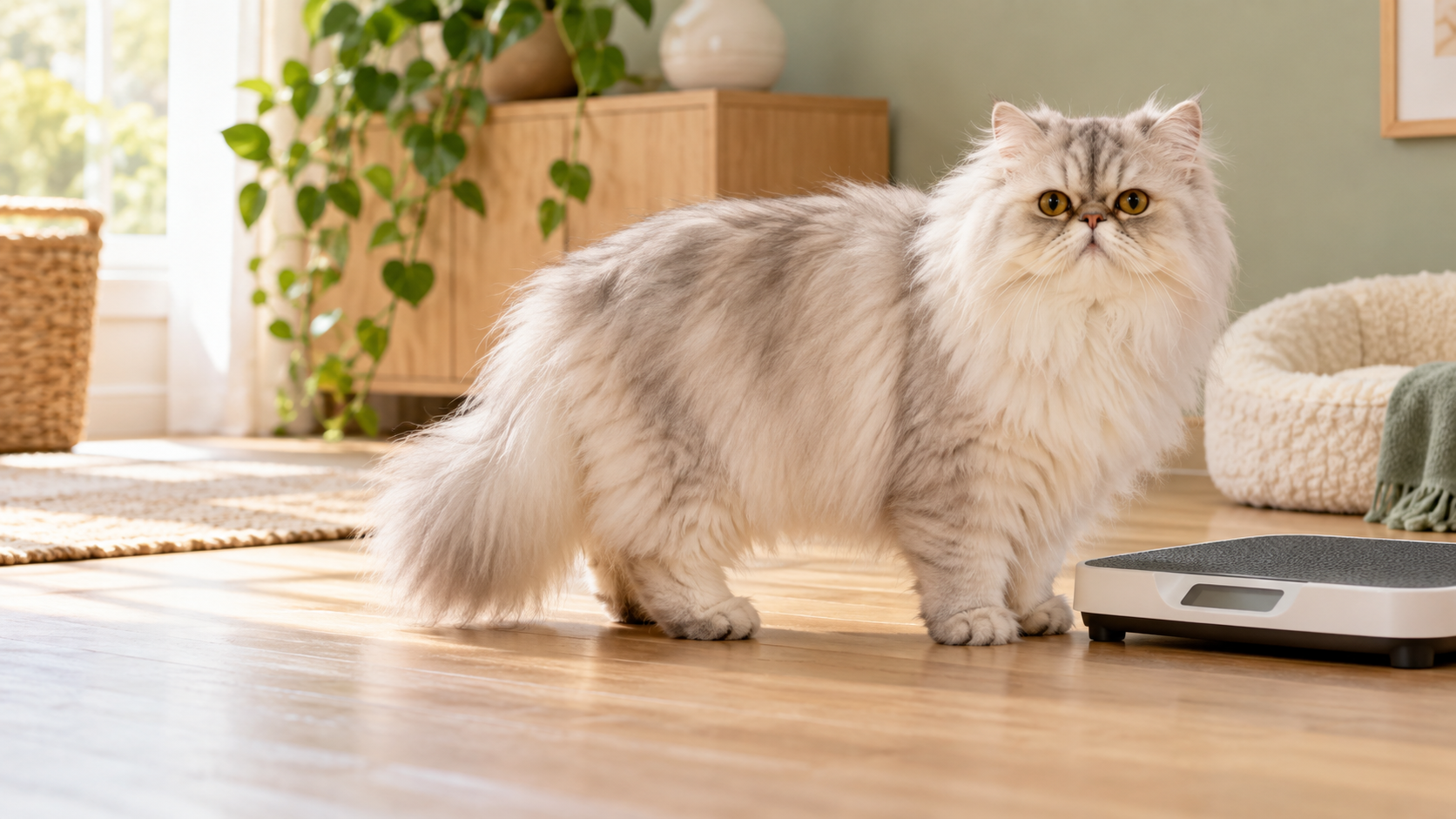
Persians are often assumed to be a big breed because of how substantial they look, but they are firmly medium-sized. The impression of size comes from three things: a long, flowing double coat, a broad and rounded head, and a short, cobby body type that sits low and looks chunky. Take the coat out of the picture and a Persian is a compact cat that usually lands between 7 and 14 lbs.
The breed is described as cobby, meaning stocky and low-slung with short, thick legs, a broad chest, and heavy bone for its length. That solid frame makes a healthy Persian feel dense and weighty in the arms even when the number on the scale is modest. It also means males, which carry more bone and muscle, typically run a couple of pounds heavier than females. Calm and sedentary by nature, Persians are less active than lean breeds, so they gain weight more easily and need portion control to stay in their healthy range.
Persians take their time maturing. A kitten looks relatively leggy and light through the first several months, reaches most of its adult length and weight by around 12 months, then fills out in bone, muscle, and coat until roughly 2 years old. Do not be surprised if your Persian keeps looking a little more substantial each month into its second year; that is normal for a cobby breed.
Persian Cat Feeding Guide by Life Stage
Persians are relaxed, low-energy cats, so their calorie needs are modest and it is easy to overfeed a breed that would rather nap than play. Feeding for the life stage, and adjusting for how little most Persians move, is the key to keeping that cobby body lean under the coat. These are general starting points; always adjust based on your cat's body condition and your vet's guidance.
| Life Stage | Daily Calories | Feeding Approach |
|---|---|---|
| Kitten (0–6 months) | 200–320 kcal | Free-feed kitten formula; frequent small meals to fuel growth and coat |
| Adolescent (6–12 months) | 200–300 kcal | Still on kitten food; move toward 2–3 measured meals a day |
| Adult (1–7 years) | 180–280 kcal | Portion-controlled adult food; low activity means the lower end for many Persians |
| Senior (7+ years) | 170–250 kcal | Adjust for lower activity; watch for weight loss that can signal illness |
Wet food helps Persians stay hydrated and feel full on fewer calories, which makes it easier to hold a lean weight under a heavy coat. For an amount tailored to your individual cat, run the numbers through our Cat Calorie Calculator.
Persian vs Other Cat Breeds: Weight Comparison
Persians sit in the medium-sized range, and their weight can look higher than it is simply because the coat and cobby frame make them appear substantial. Seeing where they fall against other popular breeds helps put a healthy Persian weight in context.
| Breed | Adult Male | Adult Female | Build |
|---|---|---|---|
| Persian | 9–14 lbs | 7–11 lbs | Medium, cobby, long coat |
| Siamese | 8–12 lbs | 6–10 lbs | Long, lean, athletic |
| Domestic Shorthair | 11–15 lbs | 8–12 lbs | Medium, variable |
| Ragdoll | 15–20 lbs | 10–15 lbs | Large, muscular |
| Maine Coon | 15–25 lbs | 10–15 lbs | Very large, heavy-boned |
A fluffy Persian and a fluffy Maine Coon can look similar from across the room, but a healthy Persian weighs far less: 9 to 14 lbs for a male, against 15 to 25 lbs for a Maine Coon. That is why a breed-specific chart matters more than a single ideal number for all cats. Explore more breeds in our Cat Weight Guides.
General Guidance for a Healthy Persian Weight
The charts and ranges on this page are general guidance, not a diagnosis. Every Persian is an individual: frame size, sex, neuter status, and activity level all shift the right target, and a small-framed female may be healthiest a little below the ranges shown while a heavy-boned male sits above them. Use body condition as your primary guide and the numbers as a reference.
- Weigh monthly and track the trend. Use the same scale, weigh before a meal, and record the numbers so you can spot gradual gain or loss that the coat would otherwise hide.
- Feel, do not just look. Part the coat for a hands-on rib check every few weeks, because the double coat conceals both weight gain and muscle loss.
- Mind the low activity level. Persians are calm and sedentary, so measured meals and gentle play matter more for this breed than for active cats.
- Watch for unexplained changes. A drop of more than 10 percent of body weight without a diet change, or steady gain despite normal feeding, is worth a vet visit.
Always confirm your Persian's ideal weight with your veterinarian, who can account for your cat's specific frame, age, and health history. For a personalized starting point, try our Cat Weight Calculator, and check whether your cat sits in a healthy range with the Cat BMI Calculator.
Frequently Asked Questions About Persian Cat Weight
Common questions about Persian cat growth and healthy weight
How much should a Persian cat weigh?
Adult male Persian cats typically weigh 9–14 lbs (4.1–6.4 kg) and females weigh 7–11 lbs (3.2–5.0 kg). Persians are a medium-sized breed with a cobby, stocky build, so they feel solid for their size. Because their long, dense coat hides the body underneath, judge a healthy weight by feeling the ribs with your hands rather than by how full they look.
Are Persian cats big?
No, Persian cats are a medium-sized breed, not a large one. Their long, thick coat and broad, rounded face make them look bigger and heavier than they actually are. Under all that fur is a compact, cobby body. A healthy adult Persian usually weighs 7–14 lbs, well below large breeds like the Maine Coon or Ragdoll, which can reach 15–25 lbs.
When do Persian cats stop growing?
Persian cats reach most of their adult size by around 12 months, then keep filling out in body and bone until roughly 2 years of age. This is a little slower than lean breeds like the Siamese, which mature by 12–18 months, but faster than giant breeds like the Maine Coon that grow until 3–4 years. Expect your Persian to look leggier as a kitten and grow into their cobby, rounded adult shape by their second birthday.
Why does my Persian look bigger than the scale says?
A Persian's long, dense double coat adds a lot of visual bulk without adding much weight, so a cat that looks large can be a perfectly normal 8 or 9 lbs. This is exactly why hands-on rib checks matter more than a glance for the breed. Part the coat and feel along the ribcage: you should feel each rib under a thin layer of fat. If the ribs are hard to find, your Persian may be carrying extra weight that the coat is hiding.
How do I know if my Persian cat is overweight?
Because the coat conceals body shape, you cannot rely on sight alone. Feel for the ribs with light pressure: if they are buried under fat and hard to locate, and there is no waist behind the ribs when you run your hands down the sides, your Persian is likely overweight. A rounded, hanging belly and fat pads near the base of the tail are other signs. Weigh your cat monthly and track the trend, and confirm a healthy target with your vet.
Check Your Cat's Weight & Health
Use our free calculators for personalized recommendations.
Free cat printables
Keep these cat care guides handy
A rotating selection of practical cat guides chosen from our free printable library.Kitten Growth Chart
Week-by-week weight and development milestones.
Cat Feeding Guide
Portions by weight, age, and life stage.
Cat Body Condition Chart
A printable body condition reference for cats.