
Last updated: October 3, 2026
Wet vs Dry Cat Food
Is wet or dry food better for your cat? This guide compares the two side by side across hydration, calories, dental care, cost, and convenience, then explains who each suits and how to combine them. Use it as general guidance and confirm the right diet for your cat with your vet.
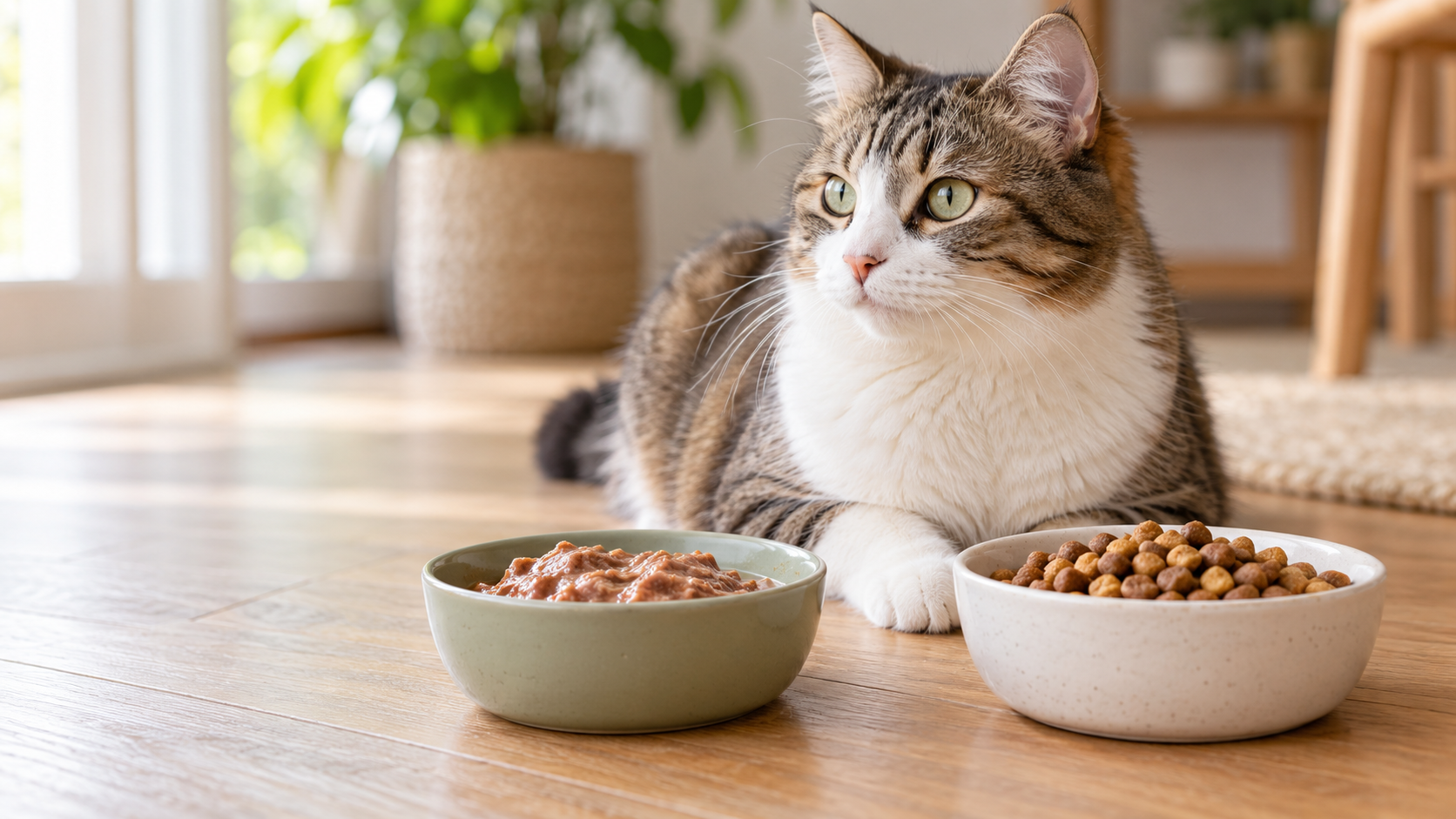
Wet vs Dry Cat Food: Side-by-Side Comparison
How wet and dry cat food compare across the factors that matter most for a healthy cat
| Factor | Wet Food | Dry Food |
|---|---|---|
| Hydration | High moisture (about 70–80% water), so it adds meaningful water to the diet. Helpful for cats that drink little on their own. | Low moisture (around 10%). The cat must make up the difference by drinking, which many cats do not do well. |
| Calorie density & satiety | Lower calories per gram and higher volume, so a filling meal often has fewer calories. Can support weight control through satiety. | Calorie-dense and easy to over-serve. A small measured scoop carries a lot of energy, so portions must be watched carefully. |
| Dental considerations | Does not scrape teeth, but on its own is not the cause of dental disease either. Dental care still comes from brushing and vet cleanings. | Often assumed to clean teeth, but most kibble shatters and does little for the gumline. It is not a substitute for real dental care. |
| Cost | More expensive per calorie and per day, especially for larger cats or multi-cat homes. | More economical per calorie and easy to buy in bulk, which is a real advantage on a budget. |
| Convenience & shelf life | Opened cans or pouches spoil quickly and cannot be left out for long. Storage takes fridge space. | Very convenient. Long shelf life, easy to measure, and safe to leave out for longer, which is why it suits free-feeding (for better or worse). |
| Picky-eater appeal | Strong aroma and soft texture tend to appeal to fussy cats, seniors, and cats with fewer teeth. | Crunchy texture some cats prefer, and useful in puzzle feeders and slow-feed toys for enrichment. |
Not sure how much wet, dry, or mixed food to feed?
Get a daily portion based on your cat's weight, activity, and life stage. The calculator supports wet, dry, and mixed modes.
Try the Cat Feeding Calculator →Why Wet Food Helps With Hydration and Weight
Cats evolved from desert animals and have a naturally low thirst drive, so many do not drink enough water on their own. Wet food is roughly 70 to 80 percent water, which quietly adds moisture to the diet through every meal. That extra water supports the urinary tract and kidneys, and it is one reason vets often suggest more wet food for cats prone to urinary issues or in the early stages of kidney concerns. It is general support, not a treatment, so any specific health condition should be managed with your vet.
Wet food can also help with weight control. Because it holds more water and fewer calories per gram, a satisfying, good-sized portion often carries less energy than the same volume of kibble. A cat can feel full while taking in fewer calories, which makes it easier to avoid the slow creep of weight gain. To check where your cat sits and get a target amount, use our Cat Nutrition Calculator.
Why Dry Food Is Convenient (and Easy to Overfeed)
Dry food earns its popularity honestly. It is cheaper per calorie, stores for months, is quick to measure, and can sit out longer than wet food without spoiling. It also works well in puzzle feeders and slow-feed toys that give indoor cats useful mental exercise. For many households, it is simply the practical backbone of the diet.
The trade-off is calorie density. A small scoop of kibble packs a lot of energy, so it is very easy to over-serve, and free-feeding a full bowl all day is one of the most common causes of gradual weight gain in cats. If you feed dry food, measure it with a proper cup or scale rather than eyeballing it, and count treats toward the daily total. The convenience is real, but it works best paired with portion discipline.
The Dental Myth: Dry Food Is Not a Substitute for Dental Care
A widely repeated belief is that dry food cleans a cat's teeth. In reality, most kibble shatters when the cat bites down and makes little contact with the gumline, which is exactly where dental disease begins. Ordinary dry food does not meaningfully scrub teeth, and choosing kibble for dental reasons alone is not well supported.
A few prescription dental diets are engineered with larger, fibrous pieces to reduce plaque, but those are specific products, not kibble in general. Real dental care means tooth brushing where your cat tolerates it, dental treats or diets designed for the purpose, and regular professional cleanings. Whether you feed wet, dry, or a mix, keep dental care as its own routine and ask your vet what fits your cat.
Who Wet and Dry Food Suit Best
There is no single right answer, and the best choice depends on your individual cat. These general patterns can help you lean one way or the other.
Wet Food Tends to Suit
- Cats that drink very little water
- Cats prone to urinary issues (with vet guidance)
- Overweight cats needing satiety on fewer calories
- Seniors or cats with few teeth
- Picky eaters drawn to strong aroma and soft texture
Dry Food Tends to Suit
- Owners on a tighter food budget
- Busy households needing convenience
- Multi-cat homes feeding larger volumes
- Cats that enjoy puzzle feeders and slow-feed toys
- Cats already at a healthy weight with measured portions
Still comparing products? Our best cat food guide looks at what to check on the label for both wet and dry options.
How to Combine Wet and Dry Food (Mixed Feeding)
For many cats, mixed feeding gives you the best of both: the hydration and satiety of wet food, plus the convenience and lower cost of dry. The single most important rule is to count calories from both formats together, rather than serving a full portion of each, which is an easy way to double a cat's intake without noticing.
- Start with the daily total: Work out how many calories your cat needs per day, then divide that total between wet and dry rather than treating each as a separate meal on top of the other.
- Pick a simple split: A common routine is measured dry food in the morning and a wet meal in the evening, adjusted so the combined amount matches the daily target.
- Measure both: Use a scale or measuring cup for the dry portion and a known can or pouch size for the wet, so you always know the real total.
- Count treats: Treats and food toppers add up, so include them in the daily total and reduce meals slightly if needed.
- Transition slowly: Introduce any new food over a week or so to let your cat's stomach adjust and to keep a fussy eater on board.
Our Cat Feeding Calculator supports wet, dry, and mixed modes, so it can do this split for you based on your cat's weight and life stage. Treat the result as a starting point and let your vet fine-tune it for your cat's health and body condition.
Frequently Asked Questions About Wet vs Dry Cat Food
Common questions about choosing and combining wet and dry cat food
Is wet or dry food better for cats?
Neither is universally better, and both can be part of a healthy diet. Wet food has the edge on hydration and can help with weight control because it is filling for fewer calories, which matters for urinary and kidney health. Dry food is more convenient and economical but is calorie-dense and easy to overfeed. Many cats do best on a combination, and your vet can help you weigh your cat's age, weight, and any health conditions.
Can I mix wet and dry cat food?
Yes. Mixed feeding is common and lets you combine the hydration of wet food with the convenience and lower cost of dry. The key is to count the calories from both together so the daily total stays right, rather than offering a full portion of each. A simple approach is measured dry food in the morning and a wet meal in the evening, adjusted so the combined amount matches your cat's daily needs.
Does dry food clean a cat's teeth?
Mostly no. This is a common myth. Most kibble shatters when bitten and does little for the area near the gumline where dental disease starts. A few prescription dental diets are designed to reduce plaque, but ordinary dry food is not a substitute for brushing, dental treats designed for the purpose, and professional cleanings. Talk to your vet about a dental care routine.
Is wet food better for overweight cats?
It can help. Because wet food is higher in water and lower in calories per gram, a satisfying portion often carries fewer calories, so cats can feel full while eating less energy. That said, portion control matters more than the format itself. Any weight-loss plan for a cat should be gradual and guided by your vet, since cats can develop serious problems if they lose weight too fast.
How much wet and dry food should I feed?
It depends on your cat's weight, age, activity level, and whether they are spayed or neutered, not on a one-size-fits-all scoop. The safest approach is to work out the total daily calories and then split them between wet and dry. Our feeding calculator supports wet, dry, and mixed modes and does that math for you, and your vet can confirm the target for your individual cat.
Feed the Right Amount, Wet or Dry
Use our free calculators for personalized feeding and nutrition recommendations.
Free cat printables
Keep these cat care guides handy
A rotating selection of practical cat guides chosen from our free printable library.Kitten Growth Chart
Week-by-week weight and development milestones.
Cat Body Condition Chart
A printable body condition reference for cats.
Cat Feeding Guide
Portions by weight, age, and life stage.