
Last updated: October 3, 2026
Dog Health
Flea Dirt on Dogs
Those tiny black specks in your dogs coat are often the first sign of fleas, sometimes before you ever see a live flea. Here is what flea dirt actually is, where to look for it, the simple wet paper towel test that confirms it, and what to do once you find it.
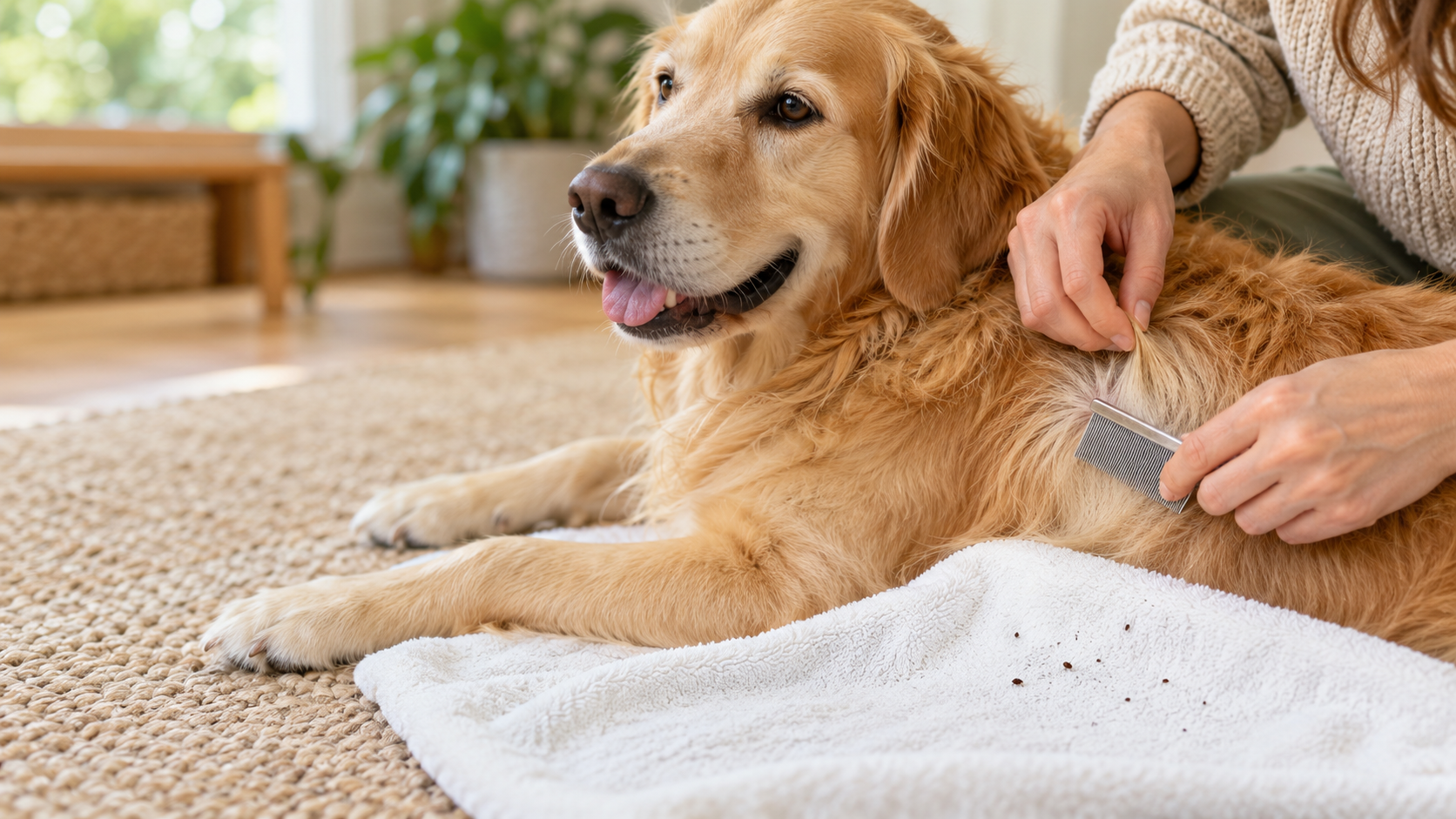
This guide is general information, not veterinary advice. Every dog is different. If your dog is unwell or you are worried, contact your veterinarian, who can examine your dog and recommend the right flea treatment for their specific weight, age, and health.
How to Identify Flea Dirt
What it looks like, and the spots where it collects
What flea dirt is and what it looks like
Flea dirt is flea feces, and it is made largely of your dogs digested blood. It shows up as tiny black or dark reddish-brown specks in the coat, a bit like flecks of ground pepper, coffee grounds, or crumbled soil sprinkled on the skin. Unlike live fleas, which move fast and are hard to catch, flea dirt sits still, so it is often the easier thing to spot.
Where to look on your dog
Fleas gather in warm, sheltered areas, so flea dirt collects there too. Check the base of the tail and the lower back first, as these are the most reliable spots, then the belly, the inner thighs, and around the neck. Part the fur down to the skin under good light, or run a fine flea comb through these areas and look at what it brings out. Thick or dark coats hide flea dirt well, which is where the paper towel test earns its keep.
The Wet Paper Towel Test
The specks in your dogs coat could be flea dirt or they could be ordinary dirt, dust, or dried mud, and they can look identical to the eye. There is a quick, reliable way to tell them apart at home, and it costs nothing.
- Collect a few specks. Comb or brush through the tail base, lower back, or belly and tap what you gather onto a plain white paper towel or tissue.
- Dampen it. Add a little water so the paper towel is wet, or place the specks on an already damp towel, and wait a few seconds.
- Read the result. If the specks smear rusty red or reddish-brown, that is flea dirt. The red is the digested blood dissolving out. If they stay black or grey and do not change color, it is just regular dirt.
A red or reddish-brown smear is a positive result. It confirms fleas are present even if you never catch a live one, which happens often because fleas are fast and dogs groom many of them away. Ordinary dirt has no blood in it, so it simply cannot produce that rusty smear.
What You See, What It Means, and What to Do
Use this as a starting point for reading the specks in your dogs coat, not as a diagnosis.
| What you see | What it means | What to do |
|---|---|---|
| Tiny black or dark reddish-brown specks around the tail base, lower back, belly, or neck | Classic flea dirt, which is flea feces made of your dogs digested blood. Fleas are feeding on your dog even if you have not seen a live one. | Confirm with the wet paper towel test and a flea comb, then start a vet-appropriate flea treatment on your dog and every pet in the home. |
| Specks that smear rusty red or reddish-brown on a damp white paper towel | Confirmed flea dirt. The red color is the digested blood dissolving out, which ordinary dirt cannot do. | Treat for fleas. This is a positive result even if you never catch a live flea, since flea dirt only appears where fleas are present. |
| Black or grey specks that stay dark and do not change color when wet | Ordinary dirt, dust, or dried mud rather than flea dirt. No digested blood is present. | No flea action needed from this alone, but keep checking if your dog is scratching, as light infestations leave little dirt. |
| White or pale specks or grains in the coat or bedding | Not flea dirt. These may be flea eggs, dandruff, or dry skin flakes rather than flea feces. | Flea eggs still point to fleas, so comb through the coat and check for dirt and live fleas, then treat if you find them. |
| Rice-like segments near the rear or in bedding | Not flea dirt but a possible sign of tapeworm, which dogs often catch by swallowing fleas. | See your vet about deworming, and treat the fleas too, since the two problems usually travel together. |
What Flea Dirt Means for Your Dog's Health
Flea dirt is a signal, not just a mess. Because it is flea feces, finding it means fleas are actively feeding on your dog, and that carries a few health risks worth knowing about.
Flea allergy dermatitis is the most common consequence. Many dogs are allergic to proteins in flea saliva, and in a sensitive dog even a few bites can trigger intense itching, scabbing, hair loss, and raw, inflamed skin that far outlasts the bite itself. Flea dirt in the coat of an itchy dog is a strong clue that fleas are behind the irritation.
Tapeworm is the next concern. Dogs swallow fleas while grooming or nibbling at an itch, and fleas can carry tapeworm larvae. If you see small rice-like segments near your dogs rear or in the bedding alongside flea dirt, treating both problems matters. Our guide to dog tapeworm explains what to look for and how deworming works.
In a heavy infestation, the blood fleas take can add up, and in puppies and small dogs this can cause anemia, which can become life threatening. Pale gums, weakness, and low energy are warning signs that need a vet promptly. A dog in good condition copes better with parasites, and our dog body condition score guide can help you judge whether your dog is at a healthy weight. For the full picture on spotting, treating, and preventing fleas, see our main guide to fleas on dogs.
What to Do About Flea Dirt
Flea dirt disappears once the fleas are gone, so the goal is to treat the fleas rather than simply wipe away the specks. Wiping or bathing removes what is there now, but it comes straight back if the fleas are left alone. Here is the order that actually works:
- Confirm with a flea comb. Work a fine flea comb for dogs through the tail base, back, and belly, then tap the debris onto a damp white paper towel to check for that telltale red smear.
- Treat your dog. Start a modern, dog-labeled, vet-appropriate flea product dosed for your dogs weight. Never use a dog flea product on a cat, as many are toxic to cats.
- Treat every pet in the home. Cats and dogs share the same fleas, so one untreated animal keeps the cycle going and the flea dirt returning.
- Treat the home and environment. Wash bedding on the hottest setting the fabric allows, vacuum carpets, rugs, and upholstery thoroughly, and dispose of the contents outside. Most of a flea population lives in the home, not on the dog.
Because of the flea life cycle, expect it to take several weeks to fully clear an infestation, and keep every pet on treatment throughout. Our complete walkthrough of products, home treatment, and prevention is in the fleas on dogs guide.
Preventing Fleas and Flea Dirt
The surest way to never see flea dirt again is to keep fleas off your dog in the first place. Prevention is far easier and cheaper than clearing an infestation, and most of it is routine:
- Stay on a year-round schedule. Fleas survive indoors through winter, so keep every pet on a dog-appropriate preventive all year and give doses on time.
- Treat all pets together. Keep every dog and cat in the household on prevention on the same schedule so no untreated animal keeps the cycle alive.
- Comb and check regularly. A quick flea-comb pass after walks in tall grass or contact with other animals catches flea dirt early, before an infestation builds.
- Keep up routine cleaning. Regular vacuuming and washing of bedding stops eggs and larvae building up in the home.
Good overall care helps your dog shrug off parasites, and feeding an appropriate amount is part of that. Our dog feeding calculator can help you keep your dog in healthy condition, and the dog health hub has more guides to help you decide when to call the vet.
Frequently Asked Questions About Flea Dirt on Dogs
Common questions about spotting flea dirt and confirming fleas
What does flea dirt look like on a dog?
Flea dirt looks like tiny black or dark reddish-brown specks scattered through the coat, a bit like ground pepper or coffee grounds sprinkled on the skin. It is actually flea feces made of your dogs digested blood. You are most likely to find it around the base of the tail, along the lower back, on the belly, and around the neck, where fleas tend to gather. It does not move, which helps tell it apart from the fast-moving live fleas themselves.
How do I know if it is flea dirt or just regular dirt?
Use the wet paper towel test. Comb or brush a few of the specks onto a damp white paper towel and wait a moment. Flea dirt smears rusty red or reddish-brown because it is made of digested blood, while ordinary dirt, dust, and dried mud stay black or grey and do not change color. If you see any red or reddish-brown smearing, that is flea dirt, and it means fleas are present even if you have not spotted a live one.
Does flea dirt mean my dog definitely has fleas?
Yes. Flea dirt is flea feces, so it only appears where fleas are feeding. Finding it confirms an active flea problem even when you cannot catch a live flea, which is common because fleas are fast and dogs often groom or scratch many of them off. Adult fleas are only a small part of the population, with most of it living in your home as eggs, larvae, and pupae, so flea dirt is often the clearest sign you will get that treatment is needed.
Where should I look for flea dirt on my dog?
Check the spots where fleas concentrate and where the coat is easier to part. The base of the tail and the lower back are the most reliable places, followed by the belly, the inner thighs, and around the neck. Part the fur down to the skin and look closely, or run a fine flea comb through these areas and tap what it collects onto a damp white paper towel. Dogs with thick or dark coats can hide flea dirt well, so a comb and good light help a lot.
How do I get rid of flea dirt on my dog?
Flea dirt clears once the fleas are gone, so the fix is to treat the fleas, not just wipe away the specks. Start a vet-appropriate flea product dosed for your dogs weight, treat every pet in the home at the same time, and treat the environment by washing bedding hot and vacuuming thoroughly. A bath and a flea comb remove the existing dirt and some fleas, but without ongoing treatment the dirt returns. Expect it to take a few weeks to fully clear because of the flea life cycle.
Explore More Dog Health Guides
Confirm the fleas, then treat and prevent them for good.
Free dog printables
Keep these dog care guides handy
A rotating selection of practical dog guides chosen from our free printable library.Dog Quality of Life Checklist
Track the HHHHHMM quality-of-life measures.
Dog Body Condition Chart
A printable 1–9 body condition reference.
Dog Budget Checklist
Plan monthly, annual, and one-time dog costs.