
Last updated: October 3, 2026
Dog Health
Hip Issues in Dogs
Hip issues in dogs, from inherited hip dysplasia to age-related arthritis, are a leading cause of stiffness, limping, and trouble getting up. This guide covers the warning signs, what causes them, and the practical steps, especially weight control and gentle exercise, that keep an affected dog comfortable and moving.
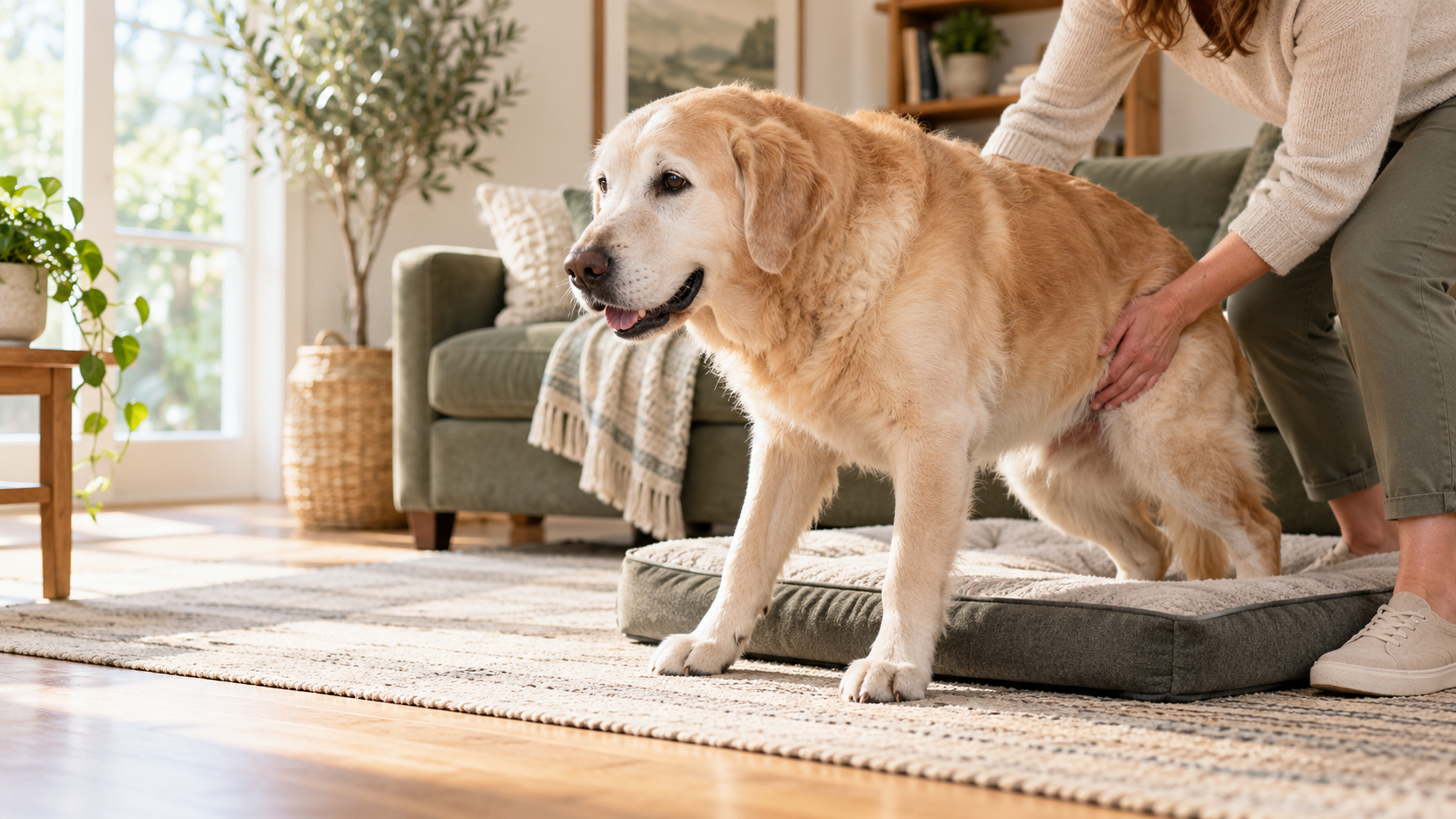
This guide is general information, not veterinary advice. Limping, stiffness, and trouble rising have many causes and need a proper diagnosis. If your dog shows any of these signs, book a veterinary exam, and never give human painkillers, since many are toxic to dogs.
Signs of Hip Problems in Dogs
Dogs hide pain well, so the earliest clues are often subtle changes in how they move
Stiffness and trouble rising
A dog with sore hips is often slow and stiff getting up, especially after sleeping or resting, and may loosen up a little once moving. Difficulty standing on slippery floors is a common early sign that is easy to overlook.
Reluctance to jump or climb
Hesitating at stairs, no longer jumping onto the sofa or into the car, or needing a run-up where they used to leap freely all point to discomfort in the back end. Many owners first notice their dog simply slowing down.
Swaying gait or bunny-hopping
A wobbly, swaying back end or a bunny-hop run, where both hind legs push off together, is a classic sign of hip trouble. You may also hear a click from the joint as the dog walks.
Muscle loss and limping
Over time, painful hips lead to less use of the hind legs, so muscle over the hindquarters shrinks while the shoulders may bulk up from compensating. Intermittent or persistent limping often accompanies this.
Common Causes of Hip Issues
Hip problems have several overlapping causes. Only a vet exam and imaging can pin down which is at play in your dog.
| Cause | What it means |
|---|---|
| Hip dysplasia | An inherited malformation where the hip joint does not fit together smoothly, leading to looseness, wear, and arthritis over time. Most common in larger breeds, but any dog can be affected. |
| Osteoarthritis | Gradual wear of the joint cartilage that causes stiffness and pain, often developing on top of dysplasia or after an injury. It tends to worsen slowly with age. |
| Injury or trauma | A fall, a road accident, or a sudden twist can damage the hip joint or surrounding muscles and ligaments, causing lameness that may need imaging to diagnose. |
| Excess body weight | Extra pounds load the hip joints with every step and speed up cartilage wear. Weight is one of the few hip risk factors owners can directly control. |
| Age and breed | Senior dogs and large or giant breeds such as German Shepherds, Labradors, and Rottweilers are more prone to hip problems, though small dogs get them too. |
How Hip Problems Are Diagnosed
Because so many conditions cause similar signs, diagnosis starts with a thorough veterinary exam. Your vet will watch your dog walk, feel and flex the hips to check the range of motion and look for pain or looseness, and ask about the history of the signs you have seen. This hands-on assessment often points strongly toward the hips.
X-rays are the key next step, since they show the shape of the joint, the fit of the ball and socket, and any arthritis that has developed. Sedation is sometimes used to get clear images and to position the joint properly. In some cases your vet may suggest referral for advanced imaging or an orthopedic opinion, particularly in young dogs where early findings can change the long-term plan.
Helping a Dog With Hip Issues
Most dogs with hip problems are managed conservatively, meaning without surgery, through a combination of steps that work together to reduce pain and protect the joint. Surgery is reserved for cases that do not respond or that are severe, and your vet will advise if it is worth considering.
- Keep your dog lean. This is the single most powerful thing you can control. Every extra pound loads the hips, so a lean body condition eases pain and slows joint wear. Our dog weight loss calculator helps you set a safe target.
- Exercise gently and consistently. Regular low-impact activity such as leash walks and swimming keeps the muscles that support the hip strong, while sudden hard play or long weekend hikes can flare things up. Little and often is the goal.
- Support the joints. Your vet may recommend joint supplements with glucosamine and omega-3s, and prescription pain relief when needed. Follow the dose and timing your vet sets and report how your dog responds.
- Adapt the home. Add ramps, use rugs for traction on slippery floors, provide a firm supportive bed, and discourage jumping on and off furniture to spare the joints.
- Consider physical therapy. Hydrotherapy and guided rehab exercises can build strength and mobility, especially after a flare or surgery.
Because weight matters so much, it is worth checking where your dog stands. Our dog body condition score guide shows how to assess whether your dog is carrying extra weight, and the dog BMI calculator gives you a quick reading. For more on keeping your dog well, browse the dog health hub.
Frequently Asked Questions About Hip Issues in Dogs
Common questions about the signs, causes, and management of canine hip problems
What are the signs of hip problems in dogs?
Common signs include stiffness and difficulty rising after rest, reluctance to jump, climb stairs, or get in the car, a swaying or wobbly gait in the back end, and a bunny-hopping run where both hind legs move together. You may also notice reduced activity, limping, audible clicking from the joint, or loss of muscle over the hindquarters. Many dogs hide pain well, so subtle changes such as slowing down on walks or being slow to stand are often the first clue. If you notice any of these, a veterinary exam is the right next step.
What is hip dysplasia in dogs?
Hip dysplasia is a common, largely inherited condition where the ball and socket of the hip joint do not develop to fit together smoothly. The resulting looseness lets the joint move abnormally, which wears the cartilage and leads to pain and arthritis over time. It is most common in large and giant breeds but can affect any dog. Signs can appear in young, growing dogs or later in life as arthritis sets in. It is diagnosed with a physical exam and X-rays, and managed with a mix of weight control, exercise, medication, and sometimes surgery.
Can a dog with hip problems live a normal life?
Yes, many dogs with hip issues live full, happy lives when the problem is managed well. The cornerstones are keeping the dog at a lean, healthy weight to reduce load on the joints, maintaining gentle regular exercise to preserve muscle, and working with your vet on pain relief and joint support. Some dogs need medication long term, and a subset benefit from surgery, but a great many do well with conservative management alone. The earlier you start supporting the joints, the better the long-term comfort and mobility tend to be.
How can I help my dog with hip pain at home?
Work with your vet first, then support them at home. Keep your dog lean, since excess weight is one of the biggest drivers of hip pain, and provide a firm, supportive bed away from drafts. Offer gentle, consistent low-impact exercise such as leash walks and swimming rather than sudden hard play, use ramps instead of stairs or jumping into the car, and add traction like rugs on slippery floors. Your vet may also recommend joint supplements and prescribed pain relief. Never give human painkillers, as many are toxic to dogs.
At what age do hip problems start in dogs?
It depends on the cause. Hip dysplasia can show up in young, growing dogs, sometimes as early as a few months old, though many dysplastic dogs do not show clear signs until arthritis develops in middle or older age. Wear-and-tear osteoarthritis is more typical in senior dogs. Large and giant breeds tend to show problems earlier than small breeds. Because onset varies so widely, any change in how your dog moves, at any age, is worth mentioning to your vet rather than writing off as simply getting older.
Explore More Dog Health Guides
A healthy weight is one of the best things you can do for your dog's joints.
Free dog printables
Keep these dog care guides handy
A rotating selection of practical dog guides chosen from our free printable library.Dog Body Condition Chart
A printable 1–9 body condition reference.
Dog Quality of Life Checklist
Track the HHHHHMM quality-of-life measures.
Dog Budget Checklist
Plan monthly, annual, and one-time dog costs.