
Last updated: October 3, 2026
How To Use
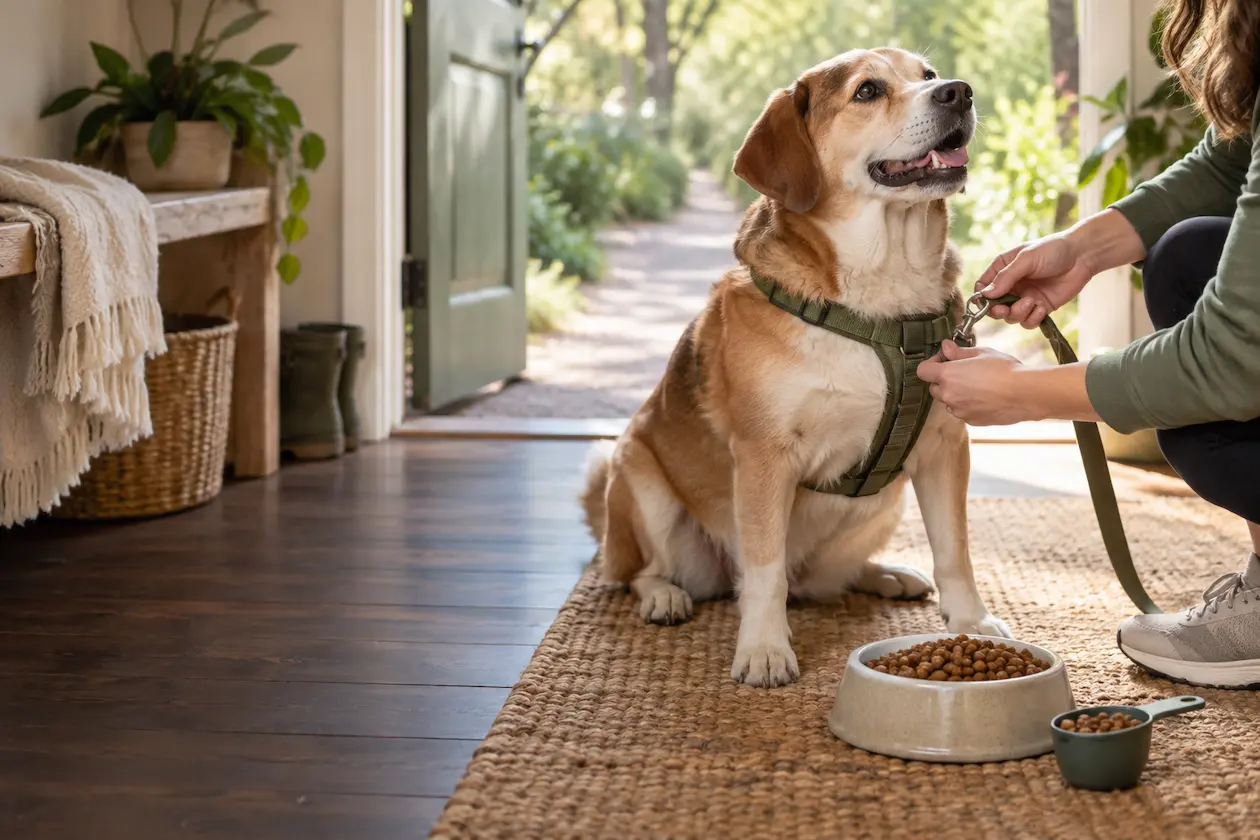
This tool helps you create a safe weight loss plan for your dog. It calculates the appropriate calorie deficit, feeding schedule, and expected timeline based on your dog's current weight, target weight, and other factors.
Important: Always consult with your veterinarian before starting a weight loss program for your pet.
Quick Steps
- 1 Enter your Dog's Current Weight in pounds.
- 2 Enter your Target Weight in pounds (must be less than current weight).
- 3 Select the Activity Level of your dog.
- 4 Select the Life Stage of your dog.
- 5 Select the Body Condition of your dog.
- 6 Select the Weight Loss Rate (Conservative, Moderate, or Aggressive).
- 7 Select the Feeding Frequency (how many meals per day).
- 8 Click the Calculate button to see the weight loss plan.
Dog Weight Loss Calculator
Fill Out The Fields Below
Weight Loss Rates
| Rate | Description | Weekly Loss |
|---|---|---|
| Conservative (1% per week) | Slow and steady weight loss, safest approach | 1% of body weight per week |
| Moderate (1.5% per week) | Balanced approach, recommended for most dogs | 1.5% of body weight per week |
| Aggressive (2% per week) | Maximum safe rate, only for healthy dogs under vet supervision | 2% of body weight per week (maximum safe) |
Safety Guidelines
| Guideline | Description |
|---|---|
| Minimum Calories | Never reduce calories below 80% of Resting Energy Requirement (RER) |
| Maximum Weekly Loss | Do not exceed 2% of body weight loss per week |
| Veterinary Consultation | Always consult your veterinarian before starting a weight loss program, especially if your dog needs to lose more than 20% of their current weight |
| Gradual Transition | Gradually reduce food over 1-2 weeks to avoid digestive upset |
| Monitor Progress | Weigh your dog weekly and adjust the plan as needed |
Need to calculate your dog's maintenance calories? Use our Dog Nutrition Calculator to determine daily calorie requirements for weight maintenance.
How Safe Dog Weight Loss Works
A safe dog weight loss plan reduces calories by 20–30% below maintenance while ensuring your dog still gets adequate nutrition. Here's the approach veterinarians recommend:
1. Target 1–2% body weight loss per week
For a 60 lb dog, that's about 0.6–1.2 lbs per week. Faster weight loss can cause muscle wasting and nutritional deficiencies. Our calculator sets a safe rate based on your dog's starting weight.
2. Calculate the calorie deficit
Start with your dog's maintenance calories (use our Dog Calorie Calculator), then reduce by 20–30%. A 20% reduction is a good starting point; increase to 25–30% only if progress stalls after 2–4 weeks.
3. Weigh weekly and adjust
Weigh your dog at the same time each week. If weight loss is too fast (over 2% per week), increase calories slightly. If there's no progress after 2 weeks, reduce by another 5%. Use our Dog BMI Calculator to track body condition alongside weight.
Always consult your veterinarian before starting a weight loss program, especially if your dog needs to lose more than 15–20% of their body weight. Underlying conditions like hypothyroidism can affect weight loss and should be ruled out first.
How to Tell If Your Dog Is Overweight
Studies estimate that more than half of dogs in the United States are overweight or obese, yet many owners do not recognize it because the change happens slowly. Before setting a weight loss target, use these quick at-home checks that veterinarians rely on:
The rib test
Run your hands along your dog's sides. You should feel the ribs easily with only a thin layer of fat over them, much like feeling the back of your hand. If you have to press firmly to find the ribs, your dog is likely carrying excess weight.
The waist check (top view)
Look down at your dog from above. A healthy dog has a visible waist that tucks in behind the ribs. A straight or bulging outline from ribs to hips is a sign of excess fat.
The tuck check (side view)
From the side, the belly should slope up from the bottom of the ribcage toward the hind legs. A belly that hangs low or is level with the chest suggests your dog needs to lose weight.
Behavioral clues
Reluctance to exercise, tiring quickly on walks, heavy panting, and difficulty grooming hard-to-reach areas can all point to excess weight. Combine these signs with a body condition score for the clearest picture.
For a numeric score, check our Dog BMI Calculator, which translates these observations into a body condition score you can track over time.
Common Causes of Weight Gain in Dogs
Understanding why your dog gained weight helps you build a plan that lasts. Most canine weight gain comes down to a handful of preventable factors:
- Overfeeding and free feeding. Leaving food out all day or eyeballing portions is the leading cause. Feeding-guide amounts on bags are often generous and assume an active, unspayed dog.
- Treats and table scraps. Treats should make up no more than 10% of daily calories. A few biscuits and bites of human food can quietly double a small dog's intake.
- Too little exercise. Short potty breaks are not enough. Most dogs need 30–60 minutes of activity per day, adjusted for breed and age.
- Spaying or neutering. These procedures lower a dog's calorie needs by roughly 20–30%, so portions often need to drop afterward.
- Age and metabolism. Senior dogs burn fewer calories and lose muscle, making them prone to gradual weight creep.
- Medical conditions. Hypothyroidism, Cushing's disease, and certain medications can drive weight gain. Rule these out with your vet if your dog gains weight without eating more.
Pinpointing the cause tells you where to focus, whether that is tightening portions, cutting treats, or adding a daily walk.
Sample Dog Weight Loss Plans by Size
These examples show how a safe plan scales with body size. They assume a moderate weight loss rate of about 1.5% of body weight per week and a 20% calorie reduction from maintenance. Use your own numbers in the calculator above for a personalized plan.
| Dog | Current → Target | Safe weekly loss | Estimated timeline |
|---|---|---|---|
| Small breed (e.g. Beagle) | 25 lb → 20 lb | 0.3–0.4 lb | 12–16 weeks |
| Medium breed (e.g. Border Collie) | 50 lb → 42 lb | 0.6–0.8 lb | 12–16 weeks |
| Large breed (e.g. Labrador) | 90 lb → 75 lb | 1.1–1.4 lb | 14–18 weeks |
| Giant breed (e.g. Great Dane) | 160 lb → 140 lb | 2.0–2.4 lb | 12–16 weeks |
Notice that the weekly loss target is always a percentage of body weight, not a fixed number. A large dog can safely lose more pounds per week than a small dog, but the timeline to reach a healthy weight is broadly similar.
Feeding and Diet Tips for Weight Loss
Cutting calories does not have to mean a hungry, unhappy dog. These strategies help your dog feel full while eating less:
- Measure every meal. Use a standard measuring cup or a kitchen scale rather than estimating. Weighing food is the single most accurate way to control calories.
- Feed smaller, more frequent meals. Splitting the daily ration into three or four meals helps manage hunger and keeps energy steady throughout the day.
- Add low-calorie bulk. Plain green beans, cooked carrots, or a spoonful of canned pumpkin can add volume and fiber to a meal without many calories. Introduce new foods slowly.
- Swap treats for healthier options. Replace commercial biscuits with small pieces of vegetables or a portion of the daily kibble set aside for training.
- Consider a therapeutic diet. Veterinary weight-management foods are formulated to be lower in calories but complete in protein and nutrients, which protects muscle during weight loss.
- Keep water available. Fresh water aids digestion and helps a dog feel satisfied between meals.
To set your starting calorie number, run the numbers through our Dog Nutrition Calculator and then apply the deficit from the plan above.
What to Expect During the Weight Loss Journey
Safe weight loss is a marathon, not a sprint. Knowing the typical milestones keeps you motivated and helps you spot when adjustments are needed:
Weeks 1–2: Adjustment
Your dog adapts to smaller portions and may seem hungrier at first. Weigh at the start to set a baseline. It is normal to see little change on the scale this early.
Weeks 3–8: Steady progress
Expect consistent loss of 1–2% of body weight per week. Energy and mobility often improve first, even before big changes in the number. Weigh weekly and record the results.
Plateaus
If weight stalls for two or more weeks, reduce calories by another 5% or add a little more activity. Plateaus are normal as the metabolism adjusts to a lighter body.
Reaching the goal
Once your dog hits the target weight, gradually raise calories to a maintenance level and keep weighing monthly to hold the new weight.
Most dogs reach a healthy weight in three to six months. Slow and steady protects muscle and makes the results far easier to maintain.
Weight Loss Rates Compared
The calculator lets you choose a conservative, moderate, or aggressive rate. Here is how they compare so you can pick the option that fits your dog and your schedule:
| Rate | Weekly loss | Best for |
|---|---|---|
| Conservative | ~1% of body weight | Senior dogs, dogs with health conditions, or those needing to lose only a small amount |
| Moderate | ~1.5% of body weight | Most healthy adult dogs; a balanced default for steady results |
| Aggressive | ~2% of body weight (max safe) | Significantly overweight dogs under veterinary supervision only |
Losing more than 2% of body weight per week is not recommended. Rapid loss risks muscle wasting, nutritional shortfalls, and, in cats and some dogs, serious liver problems. When in doubt, choose the slower rate.
FAQs
Frequently Asked Questions
How much should I feed my dog to lose weight?
The amount depends on your dog's current weight, target weight, activity level, and chosen weight loss rate. Our calculator provides a personalized calorie target with a safe 20-30% reduction from maintenance calories.
How long will it take for my dog to reach their target weight?
The timeline depends on how much weight needs to be lost and the chosen weight loss rate. A safe rate is 1-2% of body weight per week. Our calculator estimates the timeline based on these factors.
Is it safe to reduce my dog's calories by 30%?
A 30% calorie reduction is the maximum safe deficit and should only be used under veterinary supervision. Most dogs do well with a 20-25% reduction. Always consult your veterinarian before starting a weight loss program.
What if my dog needs to lose more than 20% of their weight?
Weight loss exceeding 20-30% of current body weight should be done under close veterinary supervision. Your veterinarian can help create a safe, monitored weight loss plan and check for underlying health issues.
How often should I feed my dog during weight loss?
Multiple small meals (2-4 times per day) can help manage hunger and maintain energy levels. Our calculator provides a feeding schedule based on your chosen frequency.
Should I increase exercise during weight loss?
Moderate exercise is beneficial, but avoid sudden increases in activity. Gradually increase exercise along with dietary changes. Consult your veterinarian for exercise recommendations based on your dog's health.
Other Calculators for Dogs
Dog Calorie Calculator by Breed — Free Daily Calorie & Feeding Tool
Free dog calorie calculator by breed. Find out exactly how many calories your dog needs per day by weight, breed, age, and activity level. Get instant kcal and feeding portions for Labradors, German Shepherds, Chihuahuas, and every breed in between. Try it now.

Puppy Calorie Calculator | Puppy Nutrition Calculator by Breed - Free Tool
Free puppy calorie calculator and nutrition tool. Calculate your puppy
Senior Dog Calorie Calculator - Free Daily Calorie Tool
Free senior dog calorie calculator. Calculate your older dog\
Other Pet Weight Loss Calculators
Cat Weight Loss Calculator: Free Safe Calorie Deficit & Feeding Plan
Free cat weight loss calculator. Calculate a safe calorie deficit, feeding schedule, and weight loss timeline for your overweight cat. Includes vet-recommended 15-20% calorie reduction plans, hepatic lipidosis prevention, and weekly weight loss targets.
Free dog printables
Keep these dog care guides handy
A rotating selection of practical dog guides chosen from our free printable library.Raw Feeding Reference Card
A printable BARF and 80/10/10 portion guide.
Dog Pregnancy Timeline
A week-by-week whelping calendar and checklist.
Puppy Calorie Guide
Calorie targets by breed size and age.