
Last updated: October 3, 2026
Dog Health
Lyme Disease in Dogs
Lyme disease in dogs is a tick-borne infection that can cause shifting lameness, fever, and swollen joints, though many dogs carry it with no signs at all. This guide explains the symptoms to watch for, how vets diagnose and treat it, and how good tick prevention keeps your dog safe.
This guide is general information, not veterinary advice. If your dog is limping, feverish, or off its food, or you have found an attached tick, contact your veterinarian. Lyme disease is diagnosed with a blood test and history, and only your vet can prescribe the right treatment for your dog.
Symptoms of Lyme Disease in Dogs
Signs often appear months after the tick bite, and many dogs show none at all
Shifting lameness and stiff joints
The most recognizable sign is lameness that can move from one leg to another, caused by inflammation in the joints. It may come and go, and affected joints can be warm, swollen, and painful to touch. A dog that is suddenly limping without an obvious injury is worth a vet visit.
Fever, tiredness, and low appetite
Many affected dogs run a fever, seem unusually flat or tired, and eat less than normal. These vague, flu-like signs are easy to miss or blame on something else, which is part of what makes Lyme disease tricky to spot early.
Swollen lymph nodes
The lymph nodes, particularly those near an affected joint, can become enlarged as the body responds to the infection. Your vet may notice this during an exam even when other signs are subtle.
Rarely, kidney involvement
In a small number of dogs, Lyme disease affects the kidneys, which is far more serious. Signs such as increased thirst and urination, vomiting, or swelling need urgent veterinary attention, since this form can be life-threatening.
Lyme Disease at a Glance
The key facts for dog owners, especially in tick-heavy regions. When in doubt, ask your vet.
| Question | Answer |
|---|---|
| What causes it? | A bacterium, Borrelia burgdorferi, passed to dogs through the bite of an infected black-legged tick, often called a deer tick. The tick usually has to stay attached for a day or more to transmit it. |
| Where is it common? | In regions where deer ticks thrive, especially the Northeast, upper Midwest, and Pacific coast of the United States, and similar climates elsewhere. Risk is highest in wooded, grassy, and brushy areas. |
| What are the main signs? | Lameness that may shift from leg to leg, fever, tiredness, loss of appetite, and swollen, painful joints or lymph nodes. Many infected dogs show no signs at all. |
| How soon do signs appear? | Often two to five months after the tick bite, which is why owners rarely connect the illness to a bite they may never have seen. |
| Can it be treated? | Yes. A course of antibiotics, usually doxycycline for about a month, resolves symptoms in most dogs, though the bacteria are not always fully cleared. |
| How is it prevented? | Year-round tick prevention, checking for and removing ticks promptly, and, where risk is high, a Lyme vaccine your vet can advise on. |
How Dogs Catch Lyme Disease
Lyme disease is caused by a spiral-shaped bacterium, Borrelia burgdorferi, that lives in certain ticks. Dogs pick it up when an infected black-legged tick, commonly called a deer tick, attaches and feeds on them. The tick generally needs to stay attached for around a day or two before the bacteria pass into the dog, which is exactly why finding and removing ticks quickly is one of the best ways to prevent infection.
These ticks live in wooded, grassy, and brushy areas and are most active in the warmer months, though in mild climates they can be a risk year-round. Dogs that walk, hike, or play in these environments have the highest exposure. Lyme disease is not contagious between animals, so your dog cannot catch it from another dog and cannot pass it to you. The shared danger is the tick itself, which can bite both dogs and people.
Because signs often take two to five months to appear, most owners never see the bite that caused it. A routine tick check after every outing, running your fingers slowly over your dog's skin and paying attention to the ears, neck, armpits, and between the toes, is a simple habit that catches ticks before they can do harm.
Diagnosis and Treatment
Because the symptoms are vague and overlap with many other problems, your vet diagnoses Lyme disease by combining a blood test with your dog's history and physical exam. A common in-clinic screening test checks for antibodies to the bacteria, and further tests can confirm the result and check whether the kidneys are affected. A positive antibody test in a dog with no symptoms does not always mean treatment is needed, so your vet weighs the whole picture.
When treatment is warranted, it is a course of antibiotics, most often doxycycline given for about four weeks. Most dogs improve remarkably quickly, with the lameness and fever easing within a couple of days of starting. Dogs that are sore may also receive pain relief. It is important to finish the full course even after your dog feels better. Antibiotics do not always clear the bacteria completely, so some dogs stay infected and can relapse, and the uncommon kidney form needs much more intensive care.
Sore, swollen joints can make a dog reluctant to move and easy to over-rest, so once your vet gives the go-ahead, gentle activity and keeping your dog at a healthy weight ease the load on the joints. If you are not sure whether your dog is carrying extra pounds, our dog body condition score guide and dog BMI calculator are a good place to start.
Preventing Lyme Disease
The good news is that Lyme disease is largely preventable, and prevention comes down to keeping ticks off your dog and removing any that attach before they can transmit the infection.
- Use year-round tick prevention. A vet-recommended tick preventive, whether a chew, spot-on, or collar, is the foundation. Dose it correctly for your dog's weight and keep it up all year, since ticks can be active whenever it is mild.
- Check for ticks after every outing. Run your hands slowly over your dog after walks in grassy or wooded areas, checking the ears, neck, armpits, groin, and between the toes where ticks like to hide.
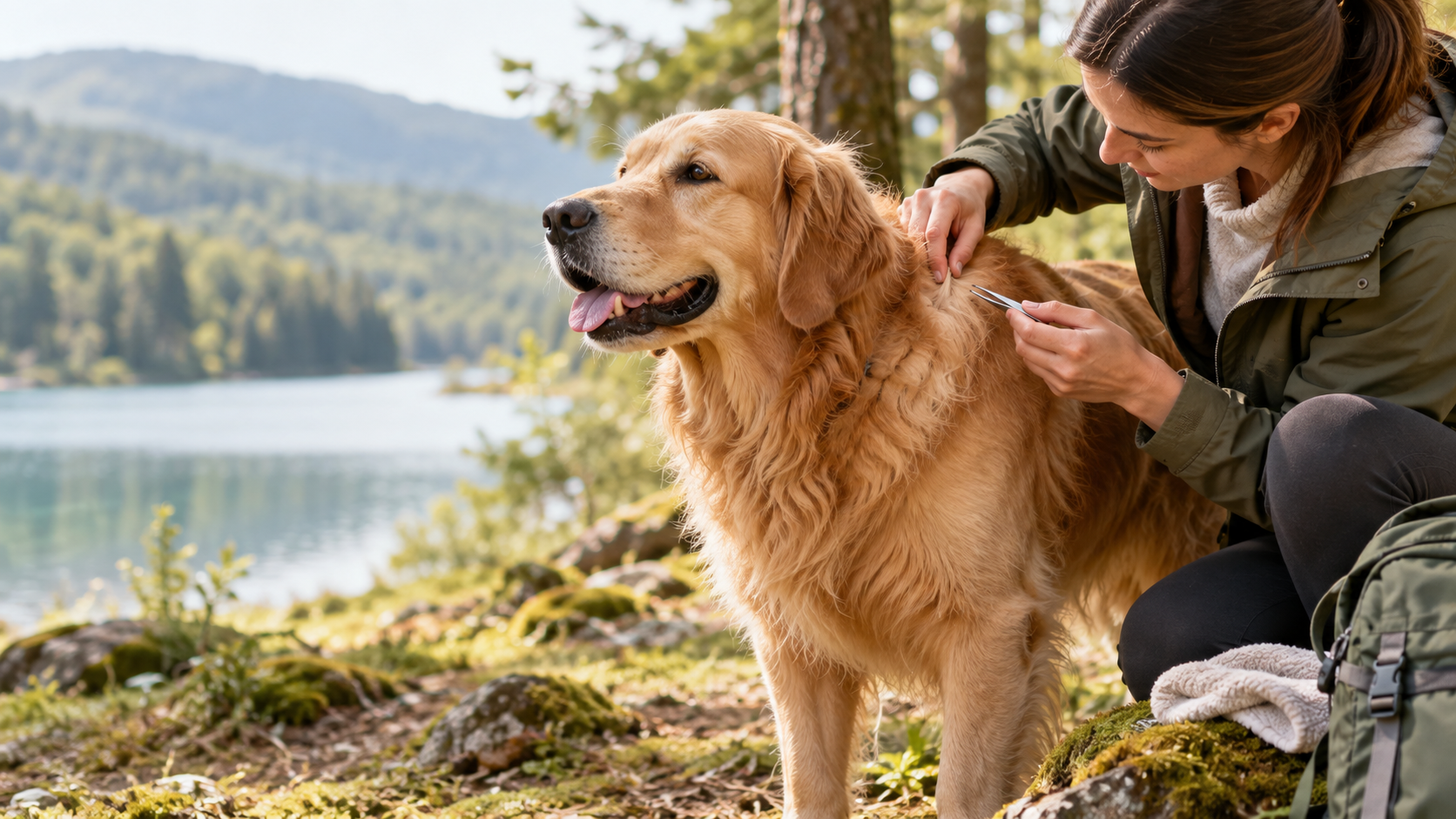
- Remove ticks promptly and properly. Use a tick-removal tool or fine-tipped tweezers to grasp the tick as close to the skin as possible and pull straight out, then clean the area. The faster a tick comes off, the lower the risk.
- Manage the environment. Keep grass short, clear leaf litter and brush, and avoid letting your dog push through tall grass in tick season to reduce exposure.
- Ask about the Lyme vaccine. In high-risk regions your vet may recommend a Lyme vaccine as an extra layer of protection alongside tick control.
Ticks are not the only parasite worth guarding against, and a good prevention routine covers several at once. For more on protecting your dog, see our guides to fleas on dogs and heartworm in dogs, or browse the full dog health hub.
Frequently Asked Questions About Lyme Disease in Dogs
Common questions about the symptoms, treatment, and prevention of canine Lyme disease
What are the symptoms of Lyme disease in dogs?
The classic signs are lameness that can shift from one leg to another, fever, low energy, reduced appetite, and swollen or painful joints and lymph nodes. The lameness comes from inflammation in the joints and may come and go. Importantly, many dogs infected with Lyme show no outward signs at all, and in a small number of cases the infection affects the kidneys, which is far more serious. Because the signs are vague and overlap with many other conditions, diagnosis relies on your vet combining a blood test with your dog's history and symptoms.
How do dogs get Lyme disease?
Dogs get Lyme disease from the bite of an infected black-legged tick, commonly called a deer tick. The tick attaches to the skin and feeds, and if it carries the Borrelia bacteria it can pass them into the dog. The tick generally needs to stay attached for around 24 to 48 hours to transmit the infection, which is why finding and removing ticks quickly matters so much. Dogs cannot catch Lyme directly from another dog or from a person, and people cannot catch it from their dog, though the same ticks can bite both.
Is Lyme disease in dogs curable?
In most cases the symptoms respond well to treatment. A course of antibiotics, usually doxycycline given for about four weeks, typically clears up the lameness and fever quickly, often within a few days of starting. However, antibiotics do not always eliminate the bacteria completely, so some dogs remain infected and can show signs again later. The uncommon kidney form of Lyme disease is much harder to treat and can be life-threatening, which is another reason to prevent infection in the first place.
How is Lyme disease in dogs treated?
Treatment is a course of antibiotics prescribed by your veterinarian, most often doxycycline for around 30 days. Dogs in pain from swollen joints may also get anti-inflammatory or pain relief while the antibiotics take effect. Most dogs improve noticeably within a couple of days of starting treatment. Your vet may recheck your dog afterward and, in cases involving the kidneys, will add more intensive care. Never give a dog leftover or human antibiotics, since the drug and dose must be chosen for your specific dog.
How can I prevent Lyme disease in my dog?
Prevention rests on keeping ticks off your dog and getting any that attach off quickly. Use a vet-recommended tick preventive all year, check your dog for ticks after walks in wooded or grassy areas, and remove any you find promptly with a tick tool or fine tweezers, grasping close to the skin. Keeping grass short and avoiding tick-heavy brush helps too. In high-risk areas your vet may also recommend a Lyme vaccine. Together, prevention plus prompt tick removal dramatically lowers the chance of infection.
Explore More Dog Health Guides
Know the signs, prevent the parasites, and keep your dog well.
Free dog printables
Keep these dog care guides handy
A rotating selection of practical dog guides chosen from our free printable library.Dog Body Condition Chart
A printable 1–9 body condition reference.
Dog Quality of Life Checklist
Track the HHHHHMM quality-of-life measures.
Dog Pregnancy Timeline
A week-by-week whelping calendar and checklist.