
Last updated: October 3, 2026
Dog Health
Parvo in Dogs
Parvo in dogs, short for canine parvovirus, is a highly contagious and life-threatening illness that mainly strikes puppies and unvaccinated dogs. It attacks the gut and can turn serious within hours. This guide explains the symptoms to watch for, how parvo is treated, and how vaccination reliably prevents it.
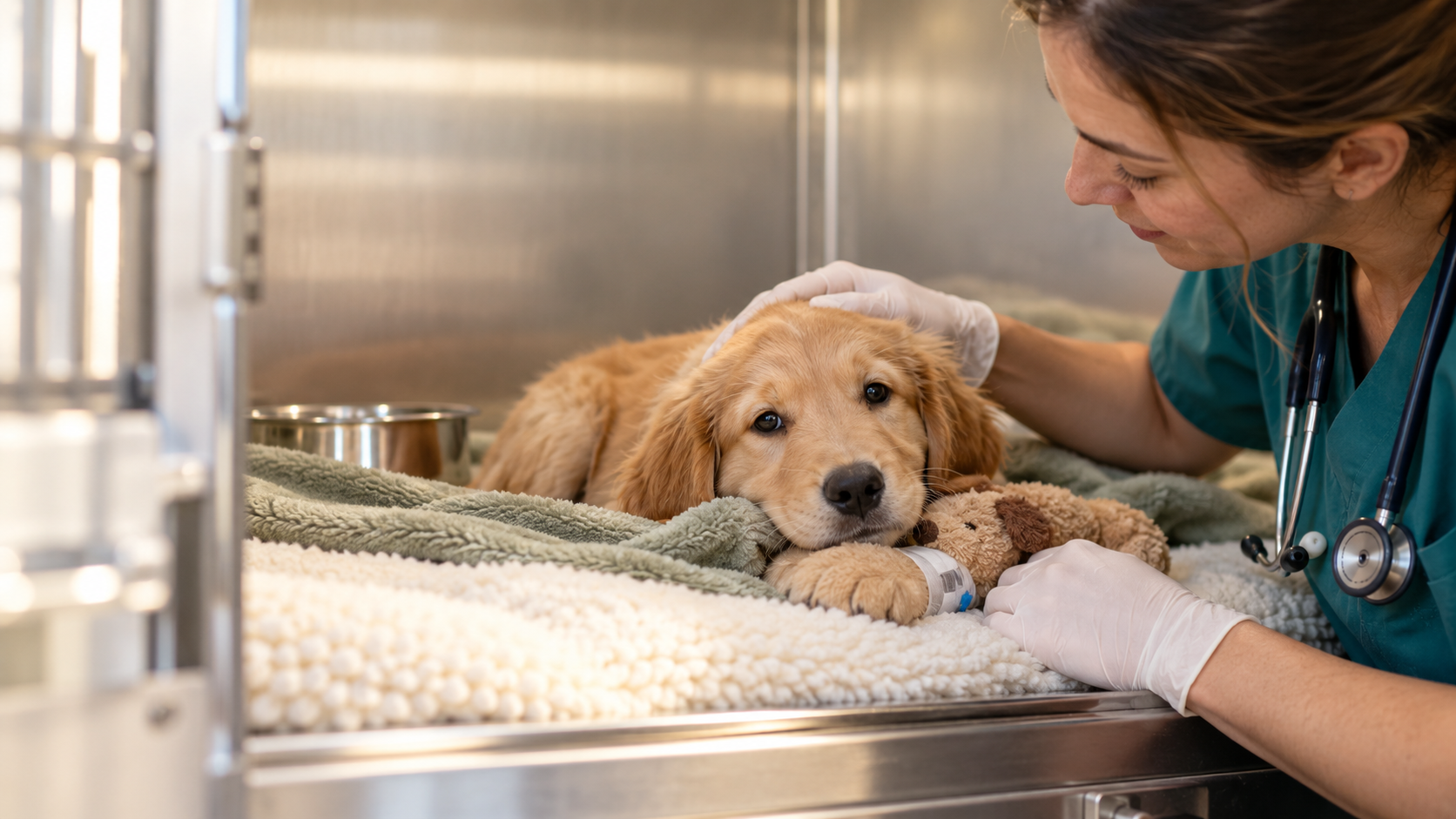
This guide is general information, not veterinary advice. Parvo is a life-threatening emergency. If you think your puppy or dog may have parvo, do not use this page to decide whether to wait. Contact your veterinarian right away, and mention your concern so they can isolate your dog on arrival.
Parvo is a medical emergency. Get to a vet now.
A puppy or unvaccinated dog with vomiting, bloody diarrhea, and lethargy needs emergency care right away. Parvo moves fast and is often fatal without treatment. Because it is extremely contagious, phone the clinic before you arrive so the team can isolate your dog and protect other patients.
- Vomiting and refusing all food or water
- Severe, often bloody and foul-smelling diarrhea
- Marked lethargy, weakness, or collapse
- An unvaccinated puppy that suddenly becomes flat and unwell
Do not wait to see if it improves. Call your nearest vet or emergency clinic, say you suspect parvo, and go straight there.
Symptoms of Parvo
These signs come on fast in puppies and unvaccinated dogs, and each one is a reason to see a vet urgently
Severe, often bloody diarrhea
One of the hallmark signs is profuse, foul-smelling diarrhea that is often streaked with blood. It can appear suddenly and worsen quickly. Bloody diarrhea in a puppy is always an emergency and needs a vet the same day.
Vomiting and refusing food
Repeated vomiting and a complete loss of appetite are common and early. A puppy that will not eat or drink, and is bringing food back up, loses fluids fast and should be seen urgently.
Lethargy, weakness, and fever
Parvo makes dogs profoundly tired and weak, and body temperature can run high with a fever or drop below normal. A flat, unresponsive puppy is a medical emergency, not a dog that simply needs rest.
Rapid dehydration and collapse
The combination of vomiting and diarrhea drives fast dehydration, which can lead to weakness, shock, and collapse. This is life-threatening and needs emergency treatment without delay.
Parvo at a Glance
The key facts every owner of a puppy or unvaccinated dog should know. When in doubt, call your vet.
| Question | Answer |
|---|---|
| Who is most at risk? | Unvaccinated puppies, roughly 6 weeks to 6 months old, are by far the most vulnerable. Some breeds, such as Rottweilers and Doberman Pinschers, appear to be more susceptible than others. |
| How does it spread? | Through contact with infected feces and contaminated surfaces, hands, shoes, bowls, and other objects. The virus is very hardy and can survive for months in the environment. |
| How soon do signs appear? | Signs usually begin about 3 to 7 days after exposure, though the exact timing can vary from dog to dog. |
| Can it be treated? | There is no drug that kills the virus. Survival depends on prompt, intensive supportive care. With treatment many dogs recover, while without it parvo is frequently fatal. |
| How is it prevented? | Vaccination is highly effective and is the cornerstone of prevention. See the prevention section below for the puppy schedule and everyday precautions. |
How Parvo Spreads
Canine parvovirus spreads by what vets call the fecal-oral route. A dog picks up the virus by sniffing, licking, or eating something contaminated with the feces of an infected dog, even in tiny amounts that are invisible to the eye.
Part of what makes parvo so dangerous is how hardy the virus is. It can survive for months, sometimes longer, on the ground, on floors, bedding, food bowls, and other surfaces, and it travels easily on hands, shoes, and clothing. That means a dog does not need direct contact with a sick dog to become infected, because contaminated soil in a yard or a park is enough.
This is why unvaccinated puppies are the most at risk. Their immune systems are still developing, and the early antibodies passed on by their mother fade before the vaccine series is complete, leaving a window of vulnerability. Until your puppy is fully vaccinated, it is safest to keep them away from unknown dogs and high-traffic dog areas such as parks, pet stores, and boarding facilities.
Treatment for Parvo
There is no antiviral drug that cures parvo. Instead, treatment is intensive supportive care that keeps the dog alive and stable while its own immune system fights off the virus. This almost always means hospitalization, often for several days.
Care usually includes intravenous fluids and electrolytes to correct the severe dehydration caused by vomiting and diarrhea, anti-nausea medication to control the vomiting, antibiotics to fight the secondary bacterial infections that can take hold when the gut lining is damaged, and nutritional support once the dog can tolerate it. Some dogs need round-the-clock monitoring.
The single biggest factor in the outcome is how quickly treatment begins. The earlier a dog is diagnosed and hospitalized, the better its chances. As your dog recovers and starts eating again, your vet will guide you on gentle, easily digested food, and our dog feeding calculator can help you plan sensible portions once you are cleared to feed normally again.
Preventing Parvo
The reassuring news is that parvo is largely preventable, and vaccination is the cornerstone. The parvovirus vaccine is one of the core vaccines that every dog should receive.
- Follow the puppy vaccine series. Puppies usually start their vaccinations around 6 to 8 weeks of age, with boosters every 3 to 4 weeks until about 16 weeks old. After that, your vet will advise on booster timing.
- Keep unvaccinated puppies away from risk. Until the series is finished, avoid unknown dogs and public dog areas such as parks, sidewalks with heavy dog traffic, pet stores, and boarding kennels.
- Clean contaminated areas properly. Parvo resists many ordinary household cleaners. A dilute bleach solution is one of the few things that reliably inactivates it on hard surfaces, so use it to clean areas a sick dog has been, following safe dilution and ventilation guidance.
- Keep up general health and hygiene. Good overall care, including routine parasite control and deworming and clean living areas, supports a puppy's resilience while the vaccine series does the heavy lifting.
If you are unsure whether your dog is fully protected, or you are bringing home a new puppy, your veterinarian can confirm the right schedule for your area and your dog's situation. You can also browse our other dog health guides for more on keeping your dog well.
Frequently Asked Questions About Parvo in Dogs
Common questions about the symptoms, treatment, and prevention of canine parvovirus
What are the first signs of parvo in dogs?
The earliest signs are usually lethargy and a loss of appetite, quickly followed by vomiting and severe, often bloody and foul-smelling diarrhea. Affected dogs may also run a fever or, in serious cases, a low body temperature. Because parvo mainly strikes unvaccinated puppies and can worsen within hours, any puppy showing these signs should be seen by a vet the same day.
Can a dog survive parvo?
Many dogs do survive parvo, but survival is never guaranteed and depends heavily on how quickly intensive veterinary treatment begins. With prompt hospitalization and supportive care, a good number of dogs recover, while without treatment the disease is frequently fatal, especially in young puppies. The sooner a dog is diagnosed and treated, the better its chances, which is why you should never wait and watch.
How is parvo treated?
There is no medicine that kills the virus itself. Treatment is intensive supportive care, usually in hospital, that keeps the dog stable while its immune system clears the infection. This typically includes intravenous fluids and electrolytes, anti-nausea medication, antibiotics to control secondary bacterial infections, and nutritional support. Starting treatment early makes a real difference to the outcome.
How do dogs catch parvo?
Dogs catch parvo through the fecal-oral route, meaning they pick up the virus from feces or from surfaces, soil, hands, shoes, bowls, and objects contaminated with it. The virus is extremely hardy and can survive for months in the environment, so a dog does not need to meet a sick dog directly to become infected. Unvaccinated puppies are the most vulnerable.
How do I prevent parvo?
Vaccination is by far the most effective prevention. Puppies should complete the core vaccine series, usually starting around 6 to 8 weeks with boosters every 3 to 4 weeks until about 16 weeks, then boosters as your vet advises. Until a puppy is fully vaccinated, keep it away from unknown dogs and public dog areas, and clean any contaminated spaces with a dilute bleach solution, since ordinary cleaners may not kill the virus.
Explore More Dog Health Guides
Understand your dog's health and know when a situation is an emergency.
Free dog printables
Keep these dog care guides handy
A rotating selection of practical dog guides chosen from our free printable library.Dog Feeding Guide
Portion guidance by weight, age, and life stage.
Dog Body Condition Chart
A printable 1–9 body condition reference.
Raw Feeding Reference Card
A printable BARF and 80/10/10 portion guide.