
Last updated: October 3, 2026
Dog Nutrition
Can Dogs Eat Raisins?
No. Raisins, and the grapes they come from, are toxic to dogs and can trigger sudden kidney failure, even in small amounts. This guide explains why raisins are so dangerous, the symptoms of poisoning, exactly what to do if your dog ate some, and safer treats to offer instead.
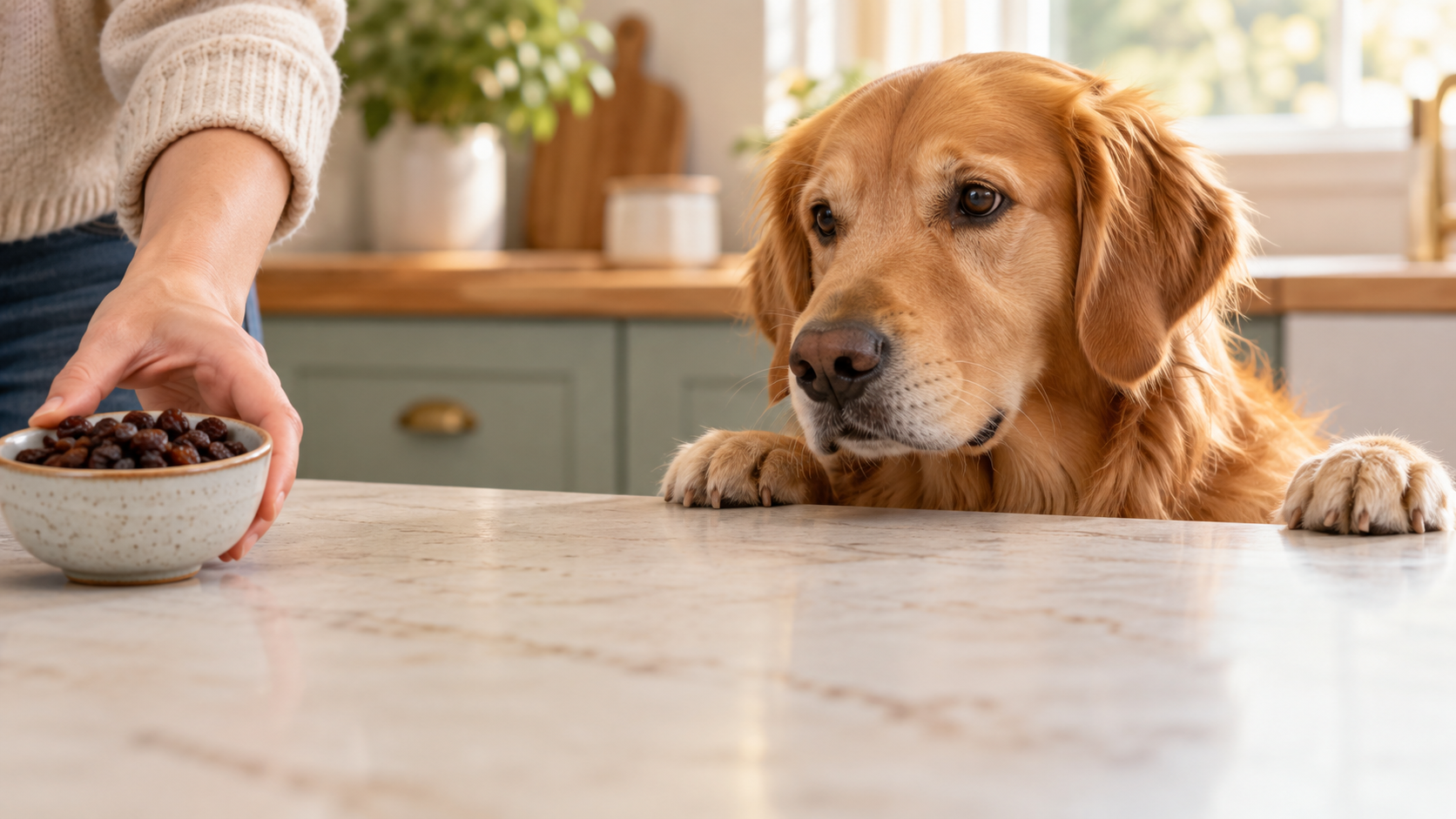
This guide is general information, not veterinary advice. Grape and raisin toxicity is a genuine emergency. If your dog has eaten raisins or grapes, do not use this page to decide whether to wait. Contact your veterinarian or an animal poison control line right away.
Did your dog eat raisins or grapes? Call your vet now.
Raisins and grapes can cause sudden kidney failure in dogs, and there is no known safe amount. Do not wait to see if your dog gets sick. Phone your veterinarian or an animal poison control service straight away, even if your dog seems completely fine, and be ready to say how much they ate and when.
- Call your vet or an animal poison control line immediately
- Tell them roughly how much was eaten and how long ago
- Do not make your dog vomit at home unless a professional tells you to
- Watch for vomiting, lethargy, or reduced urination, but do not wait for symptoms to act
Early treatment gives the best chance of protecting your dog's kidneys. When in doubt, treat any ingestion as an emergency.
Why Raisins Are Toxic to Dogs
A serious poison whose exact mechanism is still not fully understood
They can cause kidney failure
The most serious effect of grape and raisin poisoning is acute kidney injury, which can develop within a day or two of eating them. In severe cases the kidneys stop producing urine, which is life-threatening. This is what makes even a small, casual snack a genuine emergency rather than a minor upset.
No safe amount and no clear dose
Unlike many poisons, grape and raisin toxicity does not follow a predictable dose. Some dogs react badly to just a few, while others seem unaffected, and vets cannot tell in advance which dog is at risk. Because raisins are dried and concentrated, they are considered especially dangerous by weight.
The cause is still unclear
Researchers believe tartaric acid in grapes may be responsible, but the toxicity is not yet fully understood. What is certain from many clinical cases is that grapes and raisins can be deadly to dogs, so the sensible approach is to treat all of them as toxic and keep them away entirely.
It applies to all grapes and raisins
Seeded or seedless, green or red, organic or conventional, fresh grapes and dried raisins, sultanas, and currants all carry the risk. Foods that contain them, such as trail mix and raisin bread, are dangerous too. There is no safe variety.
Hidden Sources of Raisins and Grapes
Raisins hide in many everyday foods. All of the following should be kept completely out of your dog's reach.
| Source | Risk | Notes |
|---|---|---|
| Raisins | Toxic | Dried grapes are a concentrated form and a common cause of poisoning. Treat any amount as an emergency. |
| Fresh grapes | Toxic | Green, red, seedless, or with seeds, all grapes are dangerous to dogs. Never offer them as a treat. |
| Currants and sultanas | Toxic | These dried vine fruits carry the same risk as raisins. Check ingredient lists for them. |
| Trail mix and cereal with raisins | Toxic | A frequent accidental source. May also contain chocolate, nuts, or xylitol, adding further danger. |
| Baked goods (cookies, buns, cake) | Toxic | Raisin bread, oatmeal-raisin cookies, and hot cross buns all count. Keep them well out of reach. |
Symptoms of Raisin Poisoning
Signs can begin within a few hours, but the most serious effects on the kidneys may take a day or two to show, which is exactly why you should never wait for symptoms before acting. If your dog has eaten raisins, call your vet right away even if your dog looks perfectly well.
- Vomiting, often within a few hours, sometimes with raisin or grape pieces visible
- Diarrhea and loss of appetite in the hours that follow
- Lethargy, weakness, and belly tenderness as the dog begins to feel unwell
- Increased thirst and urination, then reduced or no urination as the kidneys fail
- Bad breath or a chemical smell in advanced kidney injury
The progression to reduced urination is a grave sign of kidney failure and needs emergency veterinary care without delay.
What to Do If Your Dog Ate Raisins
Speed matters, because treatment works best before the toxin is absorbed and the kidneys are affected. If you know or suspect your dog ate raisins or grapes, take these steps:
- Call for help immediately. Phone your veterinarian or an animal poison control line right away, day or night, even if your dog seems fine.
- Have the details ready. Tell them roughly how much your dog ate, what form it was in, and when it happened, plus your dog's weight if you know it.
- Follow professional guidance only. Do not try to induce vomiting at home unless a vet or poison control expert instructs you to and tells you how.
- Go in if advised. Your vet may induce vomiting, give activated charcoal to limit absorption, and start intravenous fluids to protect the kidneys, sometimes with blood tests over a couple of days.
- Keep the packaging. Bringing the wrapper or a photo of the product helps the team judge the risk.
Raisins are far from the only human food that can harm a dog. For another common kitchen hazard, see whether dogs can have mushrooms, and browse the dog health hub for more on keeping your dog safe and well.
Frequently Asked Questions About Dogs and Raisins
Common questions about toxicity, amounts, symptoms, and what to do
Can dogs eat raisins?
No. Raisins, and the grapes they are made from, are toxic to dogs and can cause sudden, life-threatening kidney failure. This is true for all dogs regardless of breed, age, or size, and it applies to every type of grape and raisin, including seedless and organic. Because raisins are concentrated, they are considered especially risky. There is no safe amount to feed on purpose, so raisins should never be given as a treat and should be kept well out of your dog's reach. If your dog eats any, treat it as an emergency and call your vet.
How many raisins are toxic to a dog?
There is no known safe amount. What makes grape and raisin toxicity so dangerous is that it is unpredictable: some dogs react severely to just a few, while others seem to tolerate more, and vets cannot reliably say in advance which dog will be badly affected. The toxic dose is not tied neatly to body weight the way many poisons are, so a small dog and a large dog can both be at serious risk. Because of this, the safe assumption is that any quantity of raisins or grapes could be harmful, and any ingestion warrants an urgent call to your vet.
What are the symptoms of raisin poisoning in dogs?
The earliest and most common sign is vomiting, often within a few hours of eating raisins, and you may see raisin or grape pieces in it. Other signs include diarrhea, loss of appetite, lethargy and weakness, belly tenderness, and increased thirst. As the kidneys are affected over the following day or two, the dog may urinate more and then less or not at all, which signals kidney failure and is a grave sign. Symptoms can take time to appear, so never wait for them. If you know or suspect your dog ate raisins, act immediately rather than watching for signs.
What should I do if my dog ate raisins?
Treat it as an emergency. Call your veterinarian or an animal poison control line right away, even if your dog seems fine, and tell them roughly how much your dog ate and when. Do not wait for symptoms, because early treatment gives the best chance of protecting the kidneys. Your vet may ask you to bring your dog in and, if the ingestion was recent, may induce vomiting and give treatments to limit absorption, followed by intravenous fluids to support the kidneys. Do not try to make your dog vomit at home unless a professional instructs you to.
What can I give my dog instead of raisins?
Plenty of fruits are safe in moderation and make better treats. Small pieces of apple without seeds, banana, blueberries, and watermelon without seeds or rind are popular choices most dogs enjoy. As with any treat, keep fruit to small amounts so it does not unbalance the diet, and introduce new foods gradually. When in doubt about whether a food is safe, check with your vet before offering it, and always keep grapes, raisins, and foods containing them completely out of reach.
Explore More Dog Nutrition Guides
Know which foods are safe and which are dangerous before you share.
Free dog printables
Keep these dog care guides handy
A rotating selection of practical dog guides chosen from our free printable library.Dog Quality of Life Checklist
Track the HHHHHMM quality-of-life measures.
Dog Pregnancy Timeline
A week-by-week whelping calendar and checklist.
Dog Body Condition Chart
A printable 1–9 body condition reference.