
Last updated: October 3, 2026
Dog Nutrition
Can Dogs Have Mushrooms?
The answer depends entirely on which mushroom. Plain store-bought mushrooms are generally safe, while wild mushrooms can be deadly. Here is how to tell the difference, why the way you cook them matters, and what to do if your dog eats a wild one.
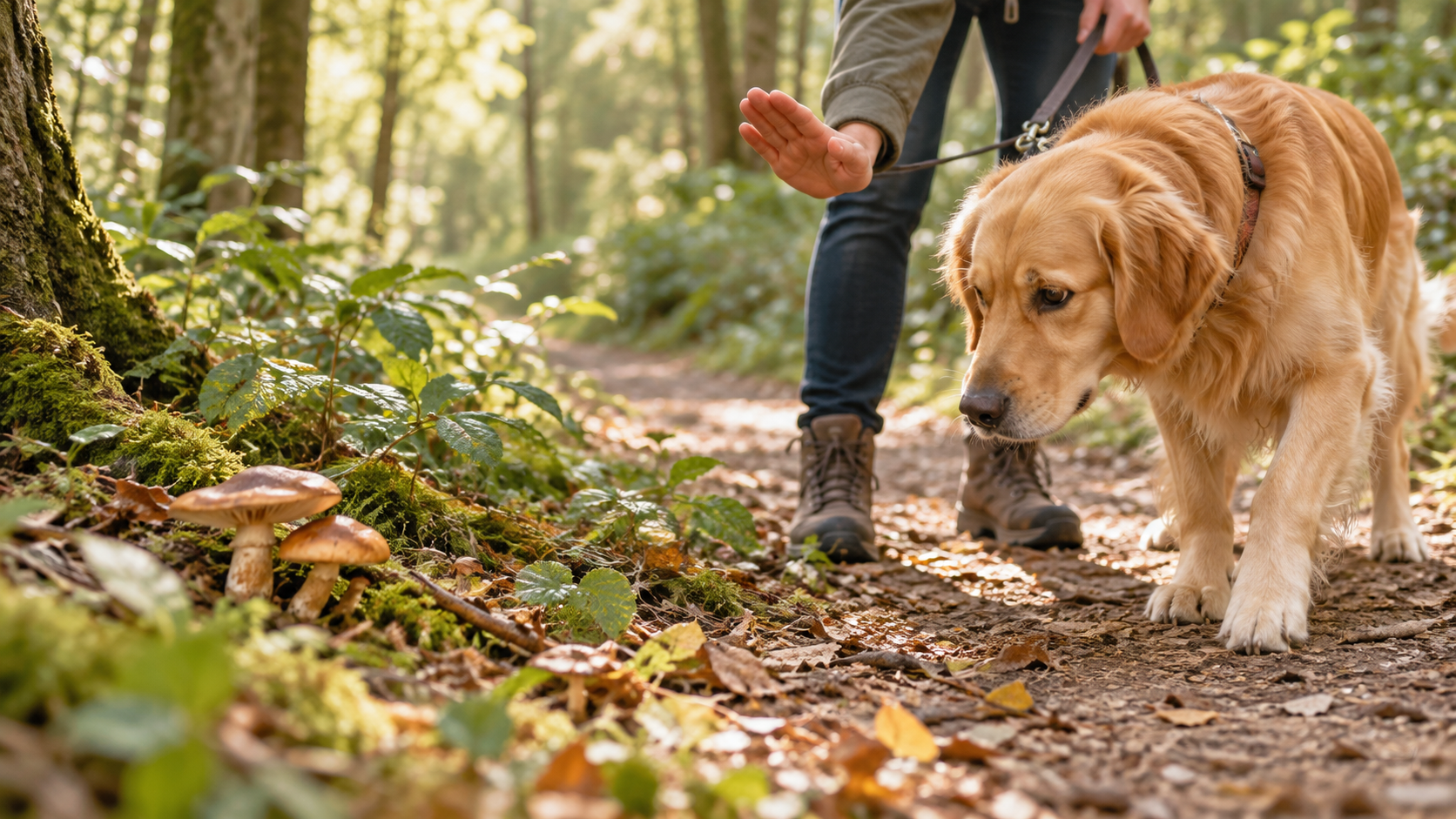
The short answer
Plain, washed, cooked store-bought mushrooms are safe for dogs in small amounts. Wild mushrooms are a different matter and can be fatal, so treat every one as dangerous. Also avoid mushrooms cooked with onion, garlic, butter, oil, or salt, since those ingredients are the real hazard.
Wild mushroom ingestion is an emergency
If your dog has eaten a wild mushroom, or you are not certain what kind it was, act immediately:
- Contact your veterinarian or a pet poison helpline right away, even if your dog seems completely fine.
- If you can do it safely, take a sample or a clear photo of the mushroom to help identification.
- Do not wait for symptoms, and do not induce vomiting unless a vet instructs you to.
- Watch for vomiting, drooling, weakness, stumbling, tremors, seizures, or yellow gums, and report them.
Some of the most dangerous mushrooms cause an early upset that appears to pass before severe liver or kidney damage sets in, so apparent recovery is never a reason to wait and see.
Store-Bought Versus Wild Mushrooms
The single most important distinction for dog owners
Store-bought are predictable
Cultivated mushrooms sold for people, like button, cremini, and portobello, are a known quantity and are not toxic to dogs. Plain and cooked simply, a small amount is a safe occasional treat with no identification guesswork involved.
Wild mushrooms are a gamble
Wild mushrooms are the opposite. Some are harmless and some are lethal, and they can be almost impossible to tell apart. Because a mistake can be fatal, the only safe rule is to keep dogs away from all wild mushrooms.
The seasoning is often the danger
Mushrooms cooked into human dishes usually come with onion, garlic, butter, oil, or salt. Onion and garlic are toxic to dogs and the rich fats can upset the stomach, so a mushroom risotto is off limits even though the mushroom itself is fine.
Yards and walks need watching
Mushrooms can spring up overnight in gardens and appear along trails, especially in damp weather. Checking your yard and steering your dog away from mushrooms on walks is a simple, effective safeguard.
Which Mushrooms Are Safe, and Which Are Not
Use this as guidance for everyday situations. Any wild mushroom, or any mushroom you cannot identify, should be treated as dangerous.
| Mushroom | Verdict | Notes |
|---|---|---|
| Plain store-bought mushrooms (button, cremini, portobello) | Generally safe cooked and plain | Non-toxic to dogs when washed, plain, and cooked without oil, butter, salt, onion, or garlic. A small amount is fine as an occasional treat. |
| Seasoned or cooked-in-dish mushrooms | Avoid | Mushrooms cooked with onion, garlic, butter, oil, or sauces are risky because of those ingredients, not the mushroom itself. Skip anything from your plate. |
| Wild mushrooms (any found outdoors) | Treat as dangerous | Some wild species are highly toxic and even a small amount can be fatal. Identification is unreliable, so treat every wild mushroom as a poison risk. |
| Raw store-bought mushrooms | Not ideal | Not toxic, but harder to digest and can cause stomach upset. Cooked plain is easier on the gut if you do offer them. |
| Mushroom supplements marketed for dogs | Vet guidance first | Some are sold for dogs, but quality and evidence vary. Ask your vet before using any supplement. |
Symptoms of Mushroom Poisoning in Dogs
Toxic mushrooms affect dogs in different ways depending on the species and the toxins involved, and signs can appear within minutes or be delayed for hours or even a day or more. Possible symptoms include:
- Vomiting and diarrhea, sometimes with blood
- Excessive drooling
- Weakness, lethargy, or collapse
- Stumbling, a wobbly gait, or a lack of coordination
- Tremors or seizures
- Yellowing of the gums, skin, or eyes, which points to liver involvement
- Abdominal pain or a tender belly
Because some of the deadliest mushrooms cause an early wave of vomiting that then eases before serious organ damage develops, you should never take an apparent recovery as the all-clear. If your dog is also throwing up repeatedly or seems unwell after being outdoors, treat mushroom exposure as a real possibility and call your vet.
Keeping Your Dog Safe From Mushrooms
Prevention is far easier than treating a poisoning, and most of it is simple habit:
- Check your yard regularly and remove any mushrooms that appear, especially after rain.
- Keep your dog on a lead in areas where wild mushrooms grow, and watch closely on woodland walks.
- Teach a reliable leave it cue so you can interrupt your dog before it eats something on the ground.
- Only offer plain, washed, cooked store-bought mushrooms if you want to share, and never seasoned dishes.
- If you forage mushrooms yourself, store them well out of your dogs reach.
If you do share a little plain mushroom, keep it within your dogs treat budget. Our dog feeding calculator helps you see how much room the day allows, and for more on safe feeding, browse our dog nutrition guides.
Frequently Asked Questions About Dogs and Mushrooms
Common questions about safe types, wild mushrooms, and poisoning
Can dogs eat mushrooms from the store?
Yes, plain store-bought mushrooms such as white button, cremini, and portobello are not toxic to dogs and are safe in small amounts. The key is that they should be washed, plain, and ideally cooked without any oil, butter, salt, onion, or garlic. The mushrooms themselves are fine, but the ingredients we usually cook them with are often the real problem, so keep them plain and offer only a little.
Are wild mushrooms poisonous to dogs?
Some wild mushrooms are extremely poisonous to dogs, and a small number of species can be fatal even in small amounts. The danger is that toxic and harmless wild mushrooms can look almost identical, and accurate identification is difficult even for experts. For that reason, you should treat every wild mushroom your dog encounters, in the yard, on a walk, or in the woods, as potentially deadly, and prevent your dog from eating them.
What are the symptoms of mushroom poisoning in dogs?
Signs depend on the species but can include vomiting, diarrhea, drooling, weakness, stumbling or a lack of coordination, tremors or seizures, yellowing of the gums or eyes, and collapse. Some toxic mushrooms cause an early bout of vomiting that then seems to improve before serious liver or kidney damage follows, which is why apparent recovery is not a reason to wait. Any suspected mushroom ingestion is a veterinary emergency.
My dog ate a wild mushroom. What should I do?
Treat it as an emergency and act quickly. Contact your veterinarian or a pet poison helpline immediately, even if your dog seems fine, because some toxins act with a delay. If you can do so safely, take a piece or a photo of the mushroom to help with identification. Do not wait for symptoms and do not try to make your dog vomit unless a vet tells you to. Fast treatment gives the best chance of a good outcome.
Do mushrooms have any benefit for dogs?
Plain mushrooms contain some vitamins, minerals, and fiber, but a dog on a complete, balanced diet does not need them and gains little from them. There is no requirement to add mushrooms to a dogs diet, so they are best thought of as a safe occasional treat rather than a health food. If you are interested in mushroom supplements marketed for dogs, discuss the evidence and product quality with your vet first.
Explore More Dog Nutrition Guides
Know what is safe before you share from your plate.
Free dog printables
Keep these dog care guides handy
A rotating selection of practical dog guides chosen from our free printable library.Puppy Calorie Guide
Calorie targets by breed size and age.
Raw Feeding Reference Card
A printable BARF and 80/10/10 portion guide.
Dog Pregnancy Timeline
A week-by-week whelping calendar and checklist.