
Last updated: October 3, 2026
Dog Health
Dog Throwing Up Yellow
When a dog throws up yellow, that color is almost always bile, and in most cases it points to an empty stomach rather than something dangerous. Here is what yellow vomit means, the common causes, how to manage the occasional episode at home, and the warning signs that mean it is time to call your vet.
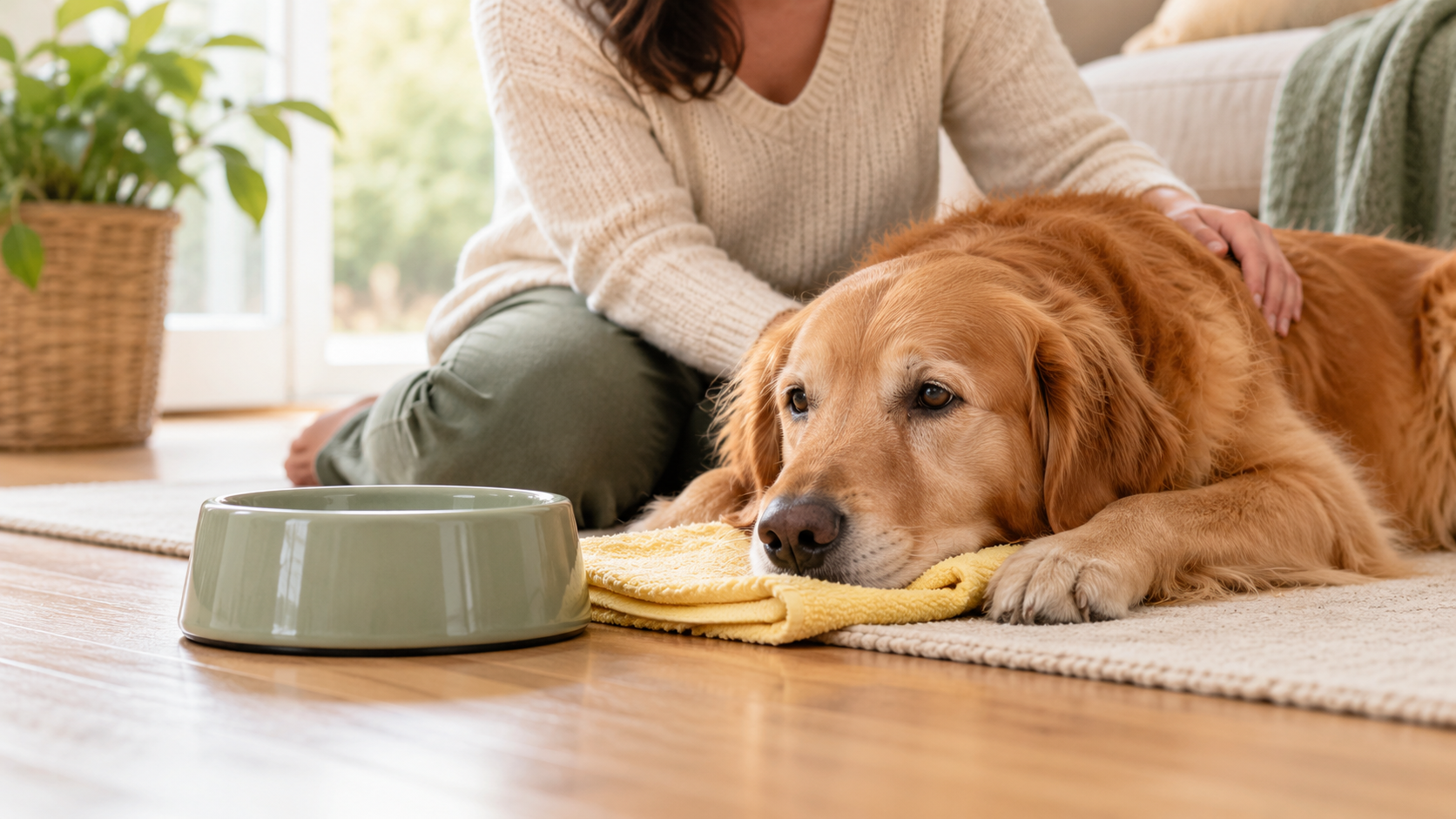
This guide is general information, not veterinary advice. Every dog is different. If your dog is vomiting repeatedly, seems unwell, or you are worried, contact your veterinarian, who can examine your dog and find the cause behind the yellow vomit.
Call your vet or an emergency clinic right away if you notice any of these
- Repeated or projectile vomiting, or vomiting that does not stop
- Blood in the vomit, or dark specks that look like coffee grounds
- Your dog cannot keep water down or is showing signs of dehydration
- A swollen, hard belly with unproductive retching, which can signal bloat, a life-threatening emergency
- Known or suspected poison, toxin, or a swallowed foreign object
- Lethargy, weakness, collapse, or obvious pain
Puppies and senior dogs have less reserve, so do not wait to see how things go. When in doubt, call.
Why Dogs Throw Up Yellow Bile
What the yellow color tells you, and why an empty stomach is so often behind it
Yellow means bile
Bile is a yellow-green digestive fluid made by the liver and stored in the gallbladder. It is released into the small intestine to help break down fat. When a dog vomits and the stomach is empty, bile is often the main thing that comes up, which is why the vomit looks yellow and sometimes foamy.
An empty stomach is the usual trigger
When the stomach sits empty for a long stretch, bile can flow back into it and irritate the lining, prompting a vomit. This is why it so often happens in the early morning or after a long gap between meals. Vets call this pattern bilious vomiting syndrome, and it is common in otherwise healthy dogs.
It is usually mild, but not always
A single yellow vomit in a dog who is bright, eating, and playing is usually nothing to panic about. The color itself is not the alarming part. What matters more is how often it happens and whether other symptoms come with it, such as lethargy, a painful belly, or an inability to keep water down.
Other causes are possible
Yellow vomit can also come from eating grass, scavenging or dietary indiscretion, acid reflux, or an underlying stomach upset. Occasionally it points to something more serious like pancreatitis, an infection, or an obstruction. The context around the vomiting is what helps tell these apart.
Common Causes of Yellow Vomit in Dogs
Most yellow vomiting traces back to a handful of everyday causes. Knowing which one fits your dog helps you decide whether to manage it at home or call the vet:
- Bilious vomiting syndrome. The most common reason, where an empty stomach lets bile build up and irritate the lining, often early in the morning or after a long gap between meals.
- Long gaps between meals. Dogs fed only once a day, or late, can go too long without food, which sets up the same empty-stomach bile vomit.
- Eating grass. Many dogs nibble grass and then bring up yellow, foamy liquid. It is common and usually harmless in isolation.
- Dietary indiscretion. Scavenging, table scraps, a sudden diet change, or eating something they should not can upset the stomach and produce bile vomit.
- Acid reflux. Stomach acid and bile flowing the wrong way, often overnight, can irritate the gut and trigger vomiting.
- An underlying issue. Less commonly, yellow vomiting is a sign of gastritis, pancreatitis, an infection, liver or kidney problems, an obstruction, or a toxin. Repeated vomiting or a dog that seems unwell needs a vet.
If your dog is a frequent grass-eater, our guide on why dogs eat grass explains when the habit is normal and when it is worth a closer look.
What You See, What It Likely Means, and What to Do
Use this as a starting point, not a diagnosis. When in doubt, or when symptoms repeat, call your vet.
| What you see | What it likely means | What to do |
|---|---|---|
| A small amount of yellow, foamy liquid, often first thing in the morning or after a long gap without food | Classic bilious vomiting syndrome. The stomach is empty and bile has irritated the lining. Usually mild in an otherwise well dog. | Offer a small meal, then feed smaller meals more often with a snack before bed. Watch for repeat episodes over the next day. |
| Yellow vomit shortly after eating grass or scavenging something outdoors | Dietary indiscretion or stomach irritation. The bile is mixed with whatever was eaten. | Usually settles on its own. Keep an eye on your dog, remove access to the trigger, and offer water. Call the vet if it continues. |
| Repeated yellow vomiting through the day, or your dog cannot keep water down | More than an empty stomach. Could be gastritis, an infection, pancreatitis, or another underlying issue. | Call your vet. Repeated vomiting risks dehydration and needs a proper assessment rather than home care alone. |
| Yellow vomit with blood, very dark specks, or a foul smell | Possible bleeding or a more serious gut problem. Not something to manage at home. | Contact your vet promptly. Note the color and frequency so you can describe it accurately. |
| Retching or unproductive heaving with a swollen, hard belly and obvious distress | Possible bloat (gastric dilatation-volvulus), a life-threatening emergency, especially in large, deep-chested breeds. | Treat as an emergency. Go to a vet or emergency clinic immediately. Do not wait to see if it passes. |
Home Care for Occasional Yellow Vomit
If your dog throws up yellow once but is otherwise bright, eating, and acting normal, you can usually help them at home. The aim is to settle the stomach and keep it from staying empty for too long:
- Offer a small, bland meal. Once your dog seems settled, a temporary bland diet such as plain boiled chicken and white rice for a day or two is gentle on an irritated stomach. Our bland diet for dogs guide walks through how to prepare and feed it.
- Feed smaller meals more often. Splitting the daily food into two or three smaller meals keeps the stomach from being empty for long stretches, which is what triggers many bile vomits.
- Add a bedtime snack. A small snack right before bed keeps a little food in the stomach overnight and often stops the classic early-morning yellow vomit.
- Keep water available. Make sure fresh water is always within reach so your dog stays hydrated, but do not force large amounts at once right after a vomit.
- Go back to normal food gradually. Once the vomiting has stopped and your dog is comfortable, mix their regular food back in over a couple of days rather than switching all at once.
Getting the daily amount right also matters, since both overfeeding and long fasting can upset the stomach. Our dog feeding calculator can help you set sensible meal sizes to spread across the day.
When to See the Vet
A one-off yellow vomit rarely needs a trip to the clinic, but some situations do. Contact your vet if you notice any of the following:
- Repeated or projectile vomiting, or vomiting that continues beyond a day
- Blood in the vomit, or dark, coffee-ground specks
- Your dog cannot keep water down, or shows signs of dehydration such as tacky gums or lethargy
- A painful, swollen, or hard belly, particularly with unproductive retching, which can signal bloat and needs emergency care
- Lethargy, weakness, a loss of appetite, or obvious discomfort alongside the vomiting
- A puppy or senior dog, or a dog with an existing health condition, since these need to be seen sooner
- Any suspicion your dog has eaten a toxin, a foreign object, or something dangerous
When you call, it helps to describe how often your dog has vomited, what the vomit looked like, whether they are eating and drinking, and anything unusual they may have eaten. That detail helps your vet decide how quickly your dog needs to be seen.
Preventing Bilious Vomiting
When yellow vomiting comes from an empty stomach, a few feeding-routine changes often prevent it from happening again:
- Feed more than once a day. Two or three smaller meals keep the stomach from sitting empty for the long stretches that let bile build up.
- Add a late snack. A small snack before bed is one of the most effective ways to stop early-morning bile vomit.
- Keep mealtimes consistent. A regular schedule steadies the digestive rhythm and avoids surprise long gaps.
- Avoid sudden diet changes. Switch foods gradually over several days so the stomach has time to adjust.
- Limit scavenging and grass-eating. Reducing access to trash, scraps, and things they should not eat cuts down on the dietary upsets that trigger vomiting.
Feeding the right total amount for your dog is part of the picture too. Our dog nutrition calculator and dog weight calculator can help you check that your dog is at a healthy weight and eating an appropriate amount across the day.
Frequently Asked Questions About Dogs Throwing Up Yellow
Common questions about yellow bile vomit, home care, and when it needs a vet
Why is my dog throwing up yellow bile?
Yellow vomit is almost always bile, a digestive fluid made by the liver and stored in the gallbladder. When the stomach sits empty for too long, bile can flow back into it and irritate the lining, triggering a vomit. This is why it often happens early in the morning or after a long gap between meals, a pattern known as bilious vomiting syndrome. Eating grass, scavenging, acid reflux, or an underlying stomach upset can produce yellow vomit too.
Is yellow vomit in dogs serious?
A single episode of yellow, foamy vomit in a dog who is otherwise bright, eating, and active is usually not serious and often reflects an empty stomach. It becomes a concern when the vomiting repeats, when your dog cannot keep water down, or when it comes with lethargy, blood, a painful or swollen belly, or a loss of appetite. Puppies and senior dogs have less reserve, so they should be seen sooner rather than later.
What should I feed a dog throwing up yellow bile?
Once the stomach has settled, offer a small, easily digested meal rather than a large one. A temporary bland diet such as plain boiled chicken and white rice for a day or two is gentle on the stomach. Feeding smaller meals more often, and adding a small snack before bed, keeps the stomach from staying empty overnight, which is what triggers many morning bile vomits in the first place.
When should I take my dog to the vet for yellow vomit?
Call your vet if the vomiting is repeated or projectile, if there is blood, if your dog cannot keep water down, if the belly looks swollen or hard, or if your dog is lethargic, in pain, or off their food. Unproductive retching with a bloated abdomen is an emergency and needs immediate care. Puppies, seniors, and dogs with existing health problems should be seen sooner, as should any dog you suspect has eaten a toxin or a foreign object.
How can I stop my dog vomiting bile in the morning?
Morning bile vomit usually comes from an overnight stomach that has been empty too long. Splitting the daily food into smaller, more frequent meals and giving a small snack right before bed often solves it by keeping a little food in the stomach overnight. Keeping mealtimes consistent, making sure water is always available, and limiting scavenging all help. If the pattern continues despite these changes, your vet can rule out an underlying cause.
Explore More Dog Health Guides
Understand your dog's symptoms and know when to call the vet.
Free dog printables
Keep these dog care guides handy
A rotating selection of practical dog guides chosen from our free printable library.Dog Feeding Guide
Portion guidance by weight, age, and life stage.
Puppy Calorie Guide
Calorie targets by breed size and age.
Raw Feeding Reference Card
A printable BARF and 80/10/10 portion guide.