
Last updated: October 3, 2026
Air Dried Dog Food: What It Is, Benefits, and How to Feed It
Air dried dog food sits between raw and kibble: gently dried to be shelf-stable and minimally processed, yet dense and ready to serve. This guide explains what it is, how it compares to other formats, its real benefits and downsides, and how to transition and portion it correctly.
What Is Air Dried Dog Food?
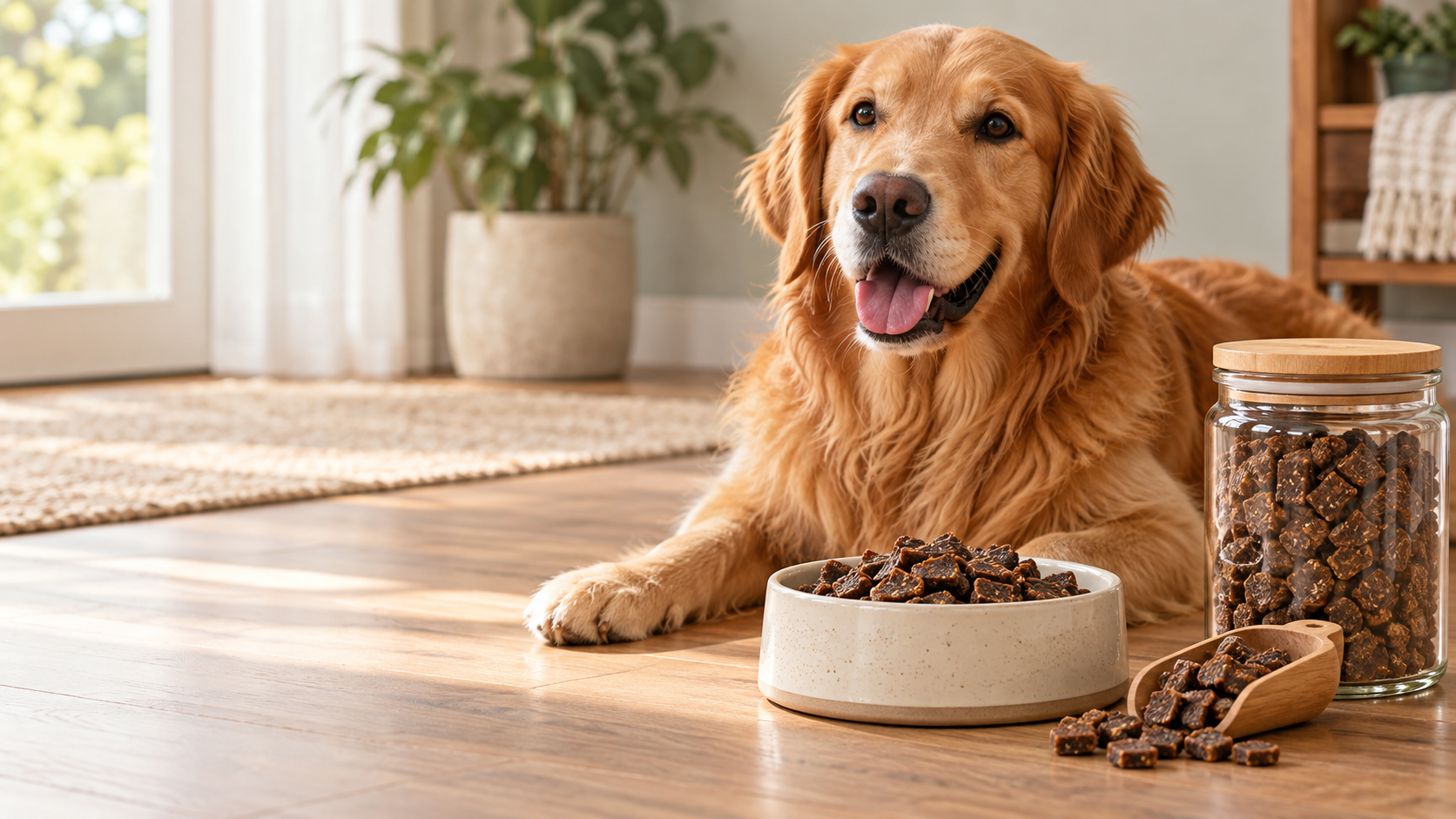
Air dried dog food is made by slowly drying meat and other ingredients in warm, moving air at low temperatures, often over several hours. The goal is to remove most of the moisture so the food becomes shelf-stable, while using gentle heat rather than the high-temperature cooking that kibble goes through. Because the process is slow and low-heat, more of the natural nutrients and protein in the ingredients are preserved.
The result is a dense, minimally processed food. It usually looks like small, firm pieces or a jerky-like texture, and unlike freeze-dried food it does not need to be rehydrated before serving. You can store it at room temperature, scoop or weigh out a portion, and serve it straight from the bag. That combination of raw-style ingredients and everyday convenience is the main reason owners consider it.
As with any diet, the label matters more than the marketing. Look for a food that carries an AAFCO complete-and-balanced statement for your dog life stage, so you know it supplies every nutrient your dog needs. Air dried is a format, not a guarantee of quality on its own.
Air Dried vs Kibble vs Raw vs Freeze-Dried
The easiest way to understand air dried food is to place it next to the other common formats. The table below compares how each is made, how processed it is, and the main pros and trade-offs. There is no single best answer for every dog, so weigh these against your budget, your dog needs, and how much convenience matters to you.
| Food type | How it is made | Moisture & processing | Pros | Things to consider |
|---|---|---|---|---|
| Air dried | Ingredients are gently dried in warm, moving air at low heat over hours until most moisture is gone. | Low moisture, minimally processed. Warm enough to reduce pathogens but low enough to preserve many nutrients. | Shelf-stable, nutrient-dense, no rehydration needed, convenient to store and serve. | More expensive per serving than kibble, calorie-dense so easy to overfeed by volume. |
| Kibble (extruded) | Ingredients are ground, mixed, then cooked under high heat and pressure and shaped into dry pieces. | Low moisture, highly processed. High-heat cooking can reduce some heat-sensitive nutrients, which are added back. | Lowest cost, widely available, long shelf life, easy to portion. | More heavily processed, often higher in carbohydrate fillers than air dried or raw. |
| Raw (fresh or frozen) | Uncooked meat, organ, and other ingredients, sold fresh, frozen, or as a mix you serve raw. | High moisture, unprocessed. No cooking step, so nutrients are unaltered by heat. | Minimal processing, high moisture, palatable to many dogs. | Needs refrigeration or freezing, carries a higher food-safety risk, less convenient to store and travel with. |
| Freeze-dried | Ingredients are frozen, then placed under vacuum so ice turns straight to vapor, removing moisture with almost no heat. | Very low moisture, minimally processed. Little to no heat, so texture stays light and crumbly. | Shelf-stable, lightweight, retains much of the raw nutrient profile. | Usually the most expensive option, often rehydrated before serving, lighter and airier than air dried. |
In short, air dried food aims to keep much of the appeal of raw feeding, dense nutrition and minimal processing, without the refrigeration, food-safety demands, and inconvenience. It is generally pricier than kibble and lighter on the wallet than most freeze-dried lines, sitting in the middle on both cost and convenience.
How Air Dried Differs From Freeze-Dried and Dehydrated
These three formats are easy to confuse because all of them remove moisture, but the method changes the texture and how you serve them. Air dried food uses gentle warm air over hours, which leaves a dense, firm food you can serve straight from the bag.
Freeze-dried food is frozen first, then has its moisture pulled off under vacuum with almost no heat. That leaves a light, crumbly texture that many brands suggest rehydrating with water before serving, and it is often the most expensive option. Dehydrated food is the closest cousin to air dried, using warm air to remove moisture, though some dehydrated products use slightly higher heat or are designed to be rehydrated into a mash. If ready-to-serve density and room-temperature storage are what you want, air dried is usually the most convenient of the three.
Benefits of Air Dried Dog Food
Air dried food appeals to owners who want something closer to raw without the hassle. Its main advantages come from the gentle, low-heat process and the low moisture content that follows.
Minimally processed
The slow, low-heat drying avoids the high-temperature, high-pressure cooking used for kibble, so the food stays closer to its raw ingredients and retains more of their natural character.
Nutrient- and protein-dense
Removing water concentrates the nutrition, so a small serving delivers a lot of protein and calories. Gentle heat also helps preserve nutrients that high-heat cooking can degrade.
Shelf-stable and convenient
Because most of the moisture is gone, air dried food stores at room temperature and does not need refrigeration or freezing, which makes it easy to keep, travel with, and serve.
Ready to serve
Unlike many freeze-dried and dehydrated foods, air dried food usually needs no rehydration. You portion it out and serve it, either as a full meal or as a topper over another food.
Often highly palatable
The concentrated meat content and jerky-like texture make air dried food appealing to many dogs, which can help with picky eaters or as a way to add interest to a bowl.
Lower food-safety burden than raw
The warm-air process is designed to reduce pathogens, so air dried food avoids much of the handling and storage risk that comes with feeding fresh raw meat, while keeping a similar minimally processed feel.
How to Transition Your Dog to Air Dried Food
Any diet change should be gradual to avoid digestive upset, and this is especially true when moving to a richer, more nutrient-dense food. Plan for a switch over 7 to 10 days, mixing the new air dried food into the current food and shifting the ratio a little each day.
| Days | New air dried food | Current food |
|---|---|---|
| Days 1 to 3 | About 25% | About 75% |
| Days 4 to 6 | About 50% | About 50% |
| Days 7 to 9 | About 75% | About 25% |
| Day 10 onward | 100% | None |
Go slower if your dog has a sensitive stomach or shows any signs of loose stool, and pause at the current ratio for a few extra days if needed. Keep fresh water available at all times, which is doubly important with low-moisture food. If digestive upset persists, check in with your veterinarian before continuing the switch.
How Much Air Dried Food to Feed
This is where air dried food catches people out. Because almost all the moisture has been removed, it is far more calorie-dense than kibble, so the correct portion by volume looks surprisingly small. If you scoop out the same amount you used to feed as kibble, you will almost certainly overfeed.
Feed by weight, not by scoop. Start from the calorie or gram guidance for your dog weight, weigh each portion on a kitchen scale, and split it across the day. Then let body condition be your final check: over a few weeks you should be able to feel your dog ribs with a light touch and see a visible waist from above. Adjust the amount up or down based on what you see, not on a fixed cup measure.
To get an accurate starting point, use our dog feeding calculator for a daily amount, and the dog nutrition calculator for a calorie estimate tailored to your dog. If you are not sure of your dog current weight, the dog weight calculator can help. To read body condition properly, see our guide to the dog body condition score.
Not sure how much air dried food to serve?
Get a calorie-based daily amount for your dog, then weigh out portions of this calorie-dense food with confidence.
Is Air Dried Right for Your Dog?
Air dried food suits owners who want a minimally processed, raw-style diet with everyday convenience, who travel or lack freezer space for raw, and who are happy to feed by weight rather than by scoop. It also works well as a topper to make another meal more appealing, even if you do not switch to it fully.
There are honest trade-offs to weigh. Cost is the biggest one: air dried food is more expensive per serving than kibble, and feeding a large or very active dog entirely on it can add up. Because it is calorie-dense, portion discipline really matters, and it is easy to let a dog gain weight if you eyeball servings. If your dog has food allergies or sensitivities, read the ingredient list carefully and pick a recipe that avoids the trigger. And whatever you choose, confirm the food carries an AAFCO complete-and-balanced statement for the right life stage so it meets your dog full nutritional needs.
If your dog is already overweight, focus on portion control and body condition first. Our guide on the overweight or fat dog and the broader dog weight guides hub can help you set a sensible plan. When in doubt about your dog specific needs, ask your veterinarian.
Frequently Asked Questions About Air Dried Dog Food
Common questions about what air dried dog food is and how to feed it
What is air dried dog food?
Air dried dog food is made by gently drying meat and other ingredients in warm, circulating air at low temperatures over several hours. The slow, low-heat process removes most of the moisture, which makes the food shelf-stable, while preserving more of the natural nutrients than high-heat cooking does. The result is a dense, minimally processed food that you can store at room temperature and serve without rehydrating.
Is air dried dog food better than kibble?
It is not automatically better, but it is different. Air dried food is usually less processed and more nutrient- and protein-dense than typical kibble, and many owners like that it needs no cooking or rehydration. The trade-offs are cost, since air dried food is more expensive per serving, and portion control, because it is calorie-dense and easy to overfeed by volume. What matters most for any food is that it is complete and balanced to AAFCO standards for your dog life stage.
How is air dried different from freeze-dried or dehydrated food?
All three remove moisture, but the method differs. Air dried food uses gentle warm air over hours. Freeze-dried food is frozen and then has its moisture pulled off under vacuum with almost no heat, which leaves a lighter, crumblier texture that is often rehydrated. Dehydrated food is similar to air dried but sometimes uses slightly higher heat and can be intended for rehydration. In practice, air dried food tends to be denser and ready to serve straight from the bag.
How much air dried dog food should I feed?
Because air dried food has very little moisture, it is calorie-dense, so you feed a smaller volume than you would with kibble. Always feed by weight rather than by scoop, following the calorie or gram guidance for your dog weight, and weigh portions on a kitchen scale for accuracy. Then watch your dog body condition over a few weeks and adjust up or down. A feeding calculator gives you a good starting daily amount to portion from.
Is air dried dog food safe?
Air dried food is generally considered safe and convenient. The warm-air process is designed to reduce harmful pathogens while keeping the food minimally processed, and reputable products are formulated to be complete and balanced. As with any diet, choose a food that carries an AAFCO complete-and-balanced statement for the right life stage, store it as directed, and check with your veterinarian if your dog has specific health needs or food sensitivities.
Feed Air Dried Food With Confidence
Use our free calculators to size calorie-dense portions, then choose a complete and balanced food that fits your dog.
Free dog printables
Keep these dog care guides handy
A rotating selection of practical dog guides chosen from our free printable library.Puppy Calorie Guide
Calorie targets by breed size and age.
Dog Body Condition Chart
A printable 1–9 body condition reference.
Raw Feeding Reference Card
A printable BARF and 80/10/10 portion guide.